Tacos al Pastor Recipe (Achiote Pork and Pineapple Tacos)
Quick answer
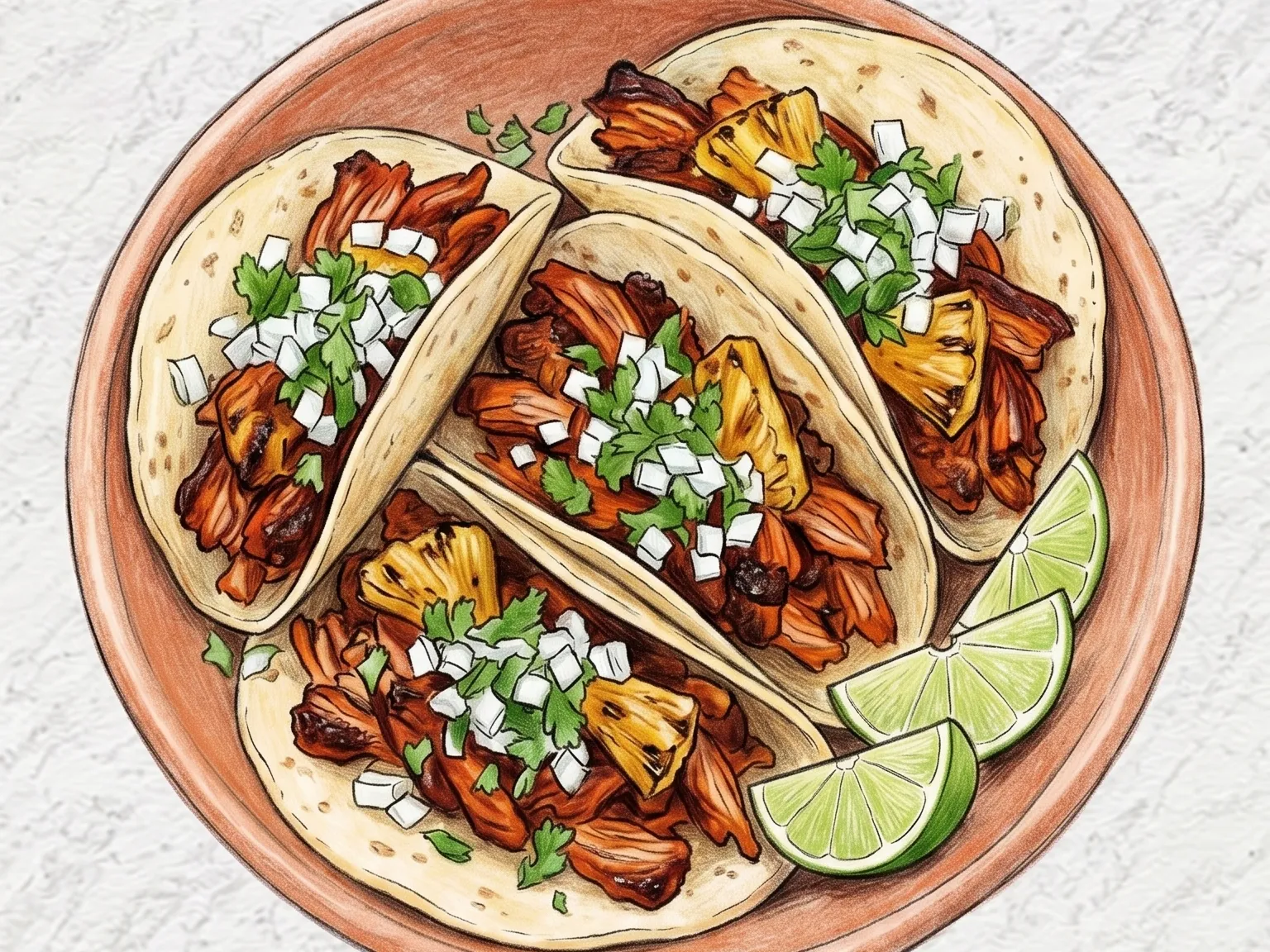
Tacos al pastor are achiote-marinated pork and pineapple tacos, one of Mexico's best-known street foods.
What makes this special
- Achiote, guajillo, and orange juice marinade penetrates one hour before pork shoulder chars on high heat.
- Achiote, guajillo, and orange juice marinade needs at least one hour to penetrate the meat
- Grilling pineapple alongside caramelizes its sugars for a sweet contrast to the spiced pork
Key ingredients
Core cooking flow
- 1 Soak the 3 guajillo chilies in water until pliable, then drain them well.
- 2 Slice 600 g pork shoulder thinly so the marinade can coat a wide surface area.
- 3 Cut 100 g pineapple into pieces that can sit flat on the pan or grill.
Tacos al pastor are achiote-marinated pork and pineapple tacos, one of Mexico's best-known street foods. Thinly sliced pork shoulder marinates in a paste of achiote, rehydrated guajillo chilies, and fresh orange juice for at least an hour, then cooks on a hot grill or pan until the edges caramelize and char. The achiote paste provides an earthy, brick-red color and a subtle annatto flavor, while the guajillo chilies add moderate heat and a dried-fruit sweetness that orange juice amplifies with its citric acidity. Grilled pineapple creates a sweet-tart counterpoint to the spiced meat, and raw onion, cilantro, and lime finish the tacos with brightness.
Instructions
Read the steps as a cooking flow: prep, heat, seasoning, doneness control, and finish.
- 1Step
Soak the 3 guajillo chilies in water until pliable, then drain them well.
Blend them with 2 tablespoons achiote paste and 100 ml orange juice until the marinade is smooth and brick red.
- 2Prep
Slice 600 g pork shoulder thinly so the marinade can coat a wide surface area.
Toss the meat thoroughly in the marinade, press it into an even layer, and let it rest for at least 1 hour.
- 3Heat
Cut 100 g pineapple into pieces that can sit flat on the pan or grill.
Finely chop the onion and cilantro, cut the limes for squeezing, and keep the 8 corn tortillas ready nearby.
- 4Control
Heat a pan or grill over medium high heat until very hot.
Cook the pork in batches without crowding, about 2 to 3 minutes per side, until the edges darken and caramelize instead of steaming.
- 5Finish
Transfer the cooked pork to a plate and let it rest briefly.
Place the pineapple on the same hot surface and grill both sides until brown spots appear and the fruit smells sweet and lightly caramelized.
- 6Finish
Warm the corn tortillas just until flexible so they fold without cracking.
Fill each one with pork and pineapple, then finish with chopped onion, cilantro, and a squeeze of lime before serving right away.
After the steps
Pick a recipe that fits this dish.
Continue with shared ingredients, meal pairings, or a similar method.
Recipes That Go Well With This
More Western →Based on shared ingredients and meal pairing
Ground Beef Tacos
Beef tacos season ground beef with chili powder, cumin, garlic powder, and smoked paprika, then cook it in a skillet until the moisture cooks off and every granule of meat is coated in a concentrated spice crust. Spooned into crispy taco shells, the filling creates an immediate textural contrast as the shell cracks and the seasoned meat gives a dense, juicy resistance underneath. Salsa adds tomato acidity and chili heat on top, while avocado slices provide a cooling, fatty layer that moderates the spice without neutralizing it. Sour cream contributes a mild dairy tang, and a squeeze of lime over everything sharpens all the other flavors at once. The handheld format makes it easy to eat a second and third shell, since each one delivers the full range of spicy, tangy, creamy, and savory in a few bites.
Chicken Quesadilla
Chicken quesadilla seasons diced chicken thigh with paprika, sautees it with onion and bell pepper, then presses the filling between flour tortillas with cheddar and mozzarella and toasts on low heat until crisp. Spreading a thin layer of cheese to the edges acts as glue, sealing the tortilla shut so the filling stays in place and the wedges cut cleanly. Low heat is essential - it gives the cheese time to melt evenly through the filling before the tortilla surface browns. The sharp flavor of cheddar and the stretch of mozzarella together wrap around the lean chicken, while paprika and onion add a sweet, smoky undertone. Sliced into eight wedges and served warm with sour cream or salsa on the side.
Mexican Shredded Beef Salad
Salpicon de res simmers beef brisket for 50 to 60 minutes until the connective tissue breaks down, then shreds the cooled meat along the grain and tosses it with romaine lettuce, tomato, red onion, and jalapeno in a lime-and-apple-cider-vinegar dressing. The long braise converts collagen into gelatin, which makes the fibers pull apart cleanly and creates a rough surface that traps the dressing in every strand. The double acidity of lime and vinegar cuts through residual fat with precision, and jalapeno delivers a grassy heat that lingers without overwhelming. Shredding the beef only after it has cooled completely produces clean, distinct strands rather than a mushy pile.
Taco Salad
Taco salad combines seasoned ground beef with crisp romaine, kidney beans, and corn in a single bowl, dressed with tomato salsa and brightened with a squeeze of lime just before serving. The beef is cooked over high heat and stirred until every trace of moisture has evaporated from the pan, which gives the surface a slightly caramelized edge and prevents the released liquid from making the salad soggy. Kidney beans serve a dual function: their starchy softness absorbs the Cajun seasoning heat clinging to the meat, moderating the intensity, while also providing a filling protein base alongside the beef. Corn kernels add bursts of sweetness and a clean pop of texture that cuts through the heavier elements. Shredded cheddar cheese is added at the end, and its fat content softens the sharp acidity of the salsa without dulling it. The final step, a squeeze of fresh lime, lifts the entire dish by adding brightness that cuts through the richness of both the meat and the melted cheese.
Serve with this
Korean Fish Cake Soup (Clear Anchovy Radish Broth)
Eomuk-tang is a Korean fish cake soup in which skewered fish cakes and thick radish slices simmer in a clear broth built from dried anchovies and kelp. The kelp must be removed the moment the water begins to boil, otherwise it releases a slimy texture that clouds the broth. Cutting the radish thick allows it to slowly release natural sweetness over the long simmer. Rinsing the fish cakes in hot water before adding them washes away surface oil and keeps the broth clear and clean. Soup soy sauce adjusts the seasoning, and green onion and black pepper finish the pot. Adding the radish before the fish cakes ensures it has enough time to fully soften and sweeten the broth, since it takes longer than the eomuk to cook through.
Gotgam Cream Cheese Roll (Dried Persimmon Rolls)
Gotgam cream cheese roll is a no-cook Korean dessert that requires nothing more than a knife, a bowl, and a refrigerator. Dried persimmons are slit open and flattened into thin sheets, each one acting as the outer wrapper. The filling is cream cheese mixed with honey and fresh lemon juice to balance its natural richness with acidity, and finely chopped walnuts are folded in throughout to add a crunchy, nutty element to every bite. The filling is spread across the opened persimmon, which is then rolled tightly and wrapped in plastic wrap. Twenty minutes in the refrigerator firms the roll enough to slice cleanly. Dipping the knife in warm water and wiping it dry before each cut produces the smoothest cross-sections. The finished slices reveal clearly defined layers: the chewy, caramel-sweet dried persimmon on the outside, the tangy cream cheese in the middle, and flecks of walnut distributed throughout. The combination makes it a natural pairing with wine or a polished addition to a traditional holiday table.
Soy Butter Steak Garlic Spaghetti
Thick-cut sirloin seared at high heat, then glazed in soy sauce and butter, forms the base of this steak pasta. The fond left in the pan gets deglazed with soy sauce and butter, then emulsified with pasta water into a thin, shiny coating that clings to each strand without turning greasy. Generous garlic browned in olive oil beforehand builds a deep, roasted-garlic base that runs through the entire sauce, and tsuyu -- a Japanese seasoning concentrate made from kombu and bonito -- adds the round umami depth of dashi without any extra steps. The steak is best cooked to medium-rare and sliced against the grain before laying over the pasta; resting the meat first keeps the juices from running out when cut. Black pepper and sliced scallions cut through the richness at the end. The full cook time is about 20 minutes, and pasta water volume controls the final sauce consistency.
Similar recipes
Burrito
A burrito layers seasoned ground beef, cooked rice, black beans, shredded cheese, and salsa inside a large flour tortilla that gets folded and rolled into a tight cylinder. Warming the tortilla briefly on a hot pan makes it pliable enough to wrap without tearing. The filling goes down the center in a long line, both ends fold inward first, then the whole thing rolls forward into a sealed package that holds together in the hand. Black beans add starchy substance and protein that make the burrito filling even without the meat at the center, and the tomato acidity in salsa cuts through the melted cheese and beef fat. A line of sour cream inside provides a cool, tangy buffer against the cumin-chili heat. For the cheese, Monterey Jack or cheddar melts evenly without clumping and binds the filling together well. Wrapping the finished burrito tightly in foil keeps the shape and makes it easier to eat on the go.
Beef Enchiladas
Beef enchiladas are made by seasoning ground beef with chili powder, cumin, and oregano, wrapping it with shredded cheese inside corn tortillas, and arranging the rolls seam-side down in a baking dish before drowning them in red enchilada sauce and baking until bubbling. During baking, the dried-chili-based sauce penetrates the tortillas from the outside in: the interior absorbs moisture and turns soft, while the portions near the exposed edges dry into chewy, concentrated bites. Melted cheese inside binds the meat into a cohesive, creamy layer. The quality of the enchilada sauce is the defining variable - a sauce built on rehydrated dried chilies rather than canned tomato produces a smokier, more complex base that store-bought versions rarely match. Sour cream and coarsely chopped cilantro added at the table cut through the fat and reset the palate between bites. Three or four per plate make a substantial meal, and the dish reheats well the next day as the sauce continues to saturate the tortillas overnight.
Tres Leches Cake (Latin Three-Milk Soaked Sponge Cake)
A light sponge cake is baked, perforated with a fork, and then drenched in a mixture of three milks - whole milk, sweetened condensed milk, and evaporated milk - until the crumb absorbs the liquid and transforms into something closer to custard than cake. Each milk contributes a distinct quality: whole milk provides clean dairy flavor, condensed milk adds concentrated sweetness and body, and evaporated milk brings a faintly caramelized undertone. The soaking liquid must be poured in stages so the sponge absorbs evenly rather than pooling at the bottom. After at least two hours of refrigeration - overnight is better - the cake reaches its signature ultra-moist state, wet enough to spoon yet firm enough to slice. Whipped cream spread over the top provides a cool, airy contrast to the dense, sweet base, and the combination of the cold cream with the soaked cake is what gives tres leches its distinctive character across Latin American celebrations.