Taiwanese Beef Noodle Soup

Taiwanese Beef Noodle Soup

Quick answer

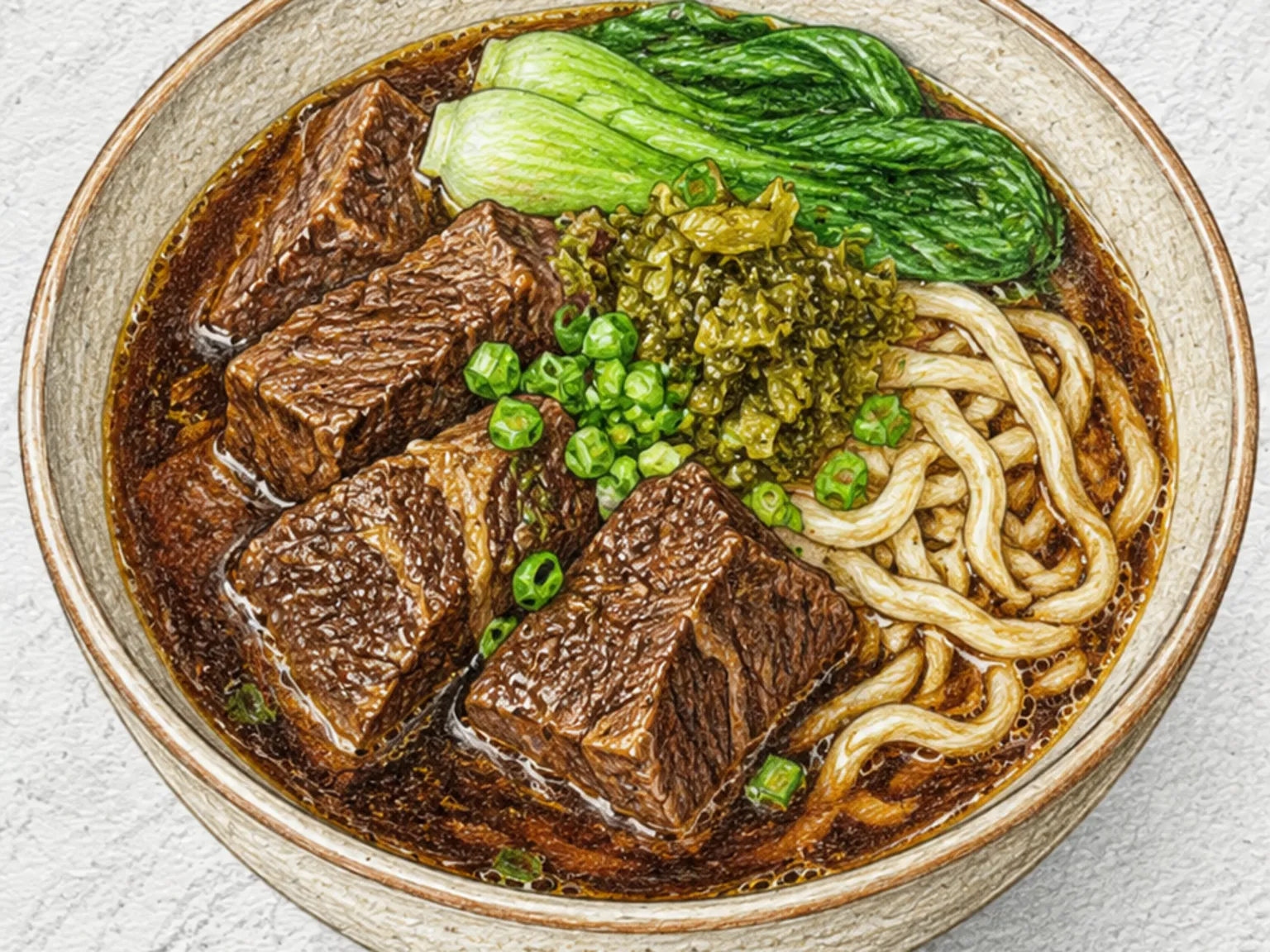
Taiwanese beef noodle soup slow-braises beef brisket in a soy-based broth seasoned with doubanjiang, star anise, cinnamon, and Sichuan peppercorns.

What makes this special

  • Taiwanese beef noodle soup slow-braises brisket in a soy broth seasoned with star anise.
  • Doubanjiang, star anise, and cinnamon add Taiwan's layered spice to soy broth
  • Brisket simmered 90 minutes pulls apart easily along the grain
Total time
115 min
Level
Hard
Servings
4 servings
Ingredients
9
Calories
690 kcal
Protein
41 g

Key ingredients

beef brisketwheat noodlessoy saucedoubanjiangginger

Core cooking flow

  1. 1 Cut 600 g beef brisket into large chunks and blanch it in boiling water for 3 minutes.
  2. 2 Heat a pot over medium heat, add oil, then saute 20 g ginger, 70 g green onion, and 6 garlic cloves.
  3. 3 Add 1 tbsp doubanjiang and fry it for about 30 seconds to open its spicy aroma.

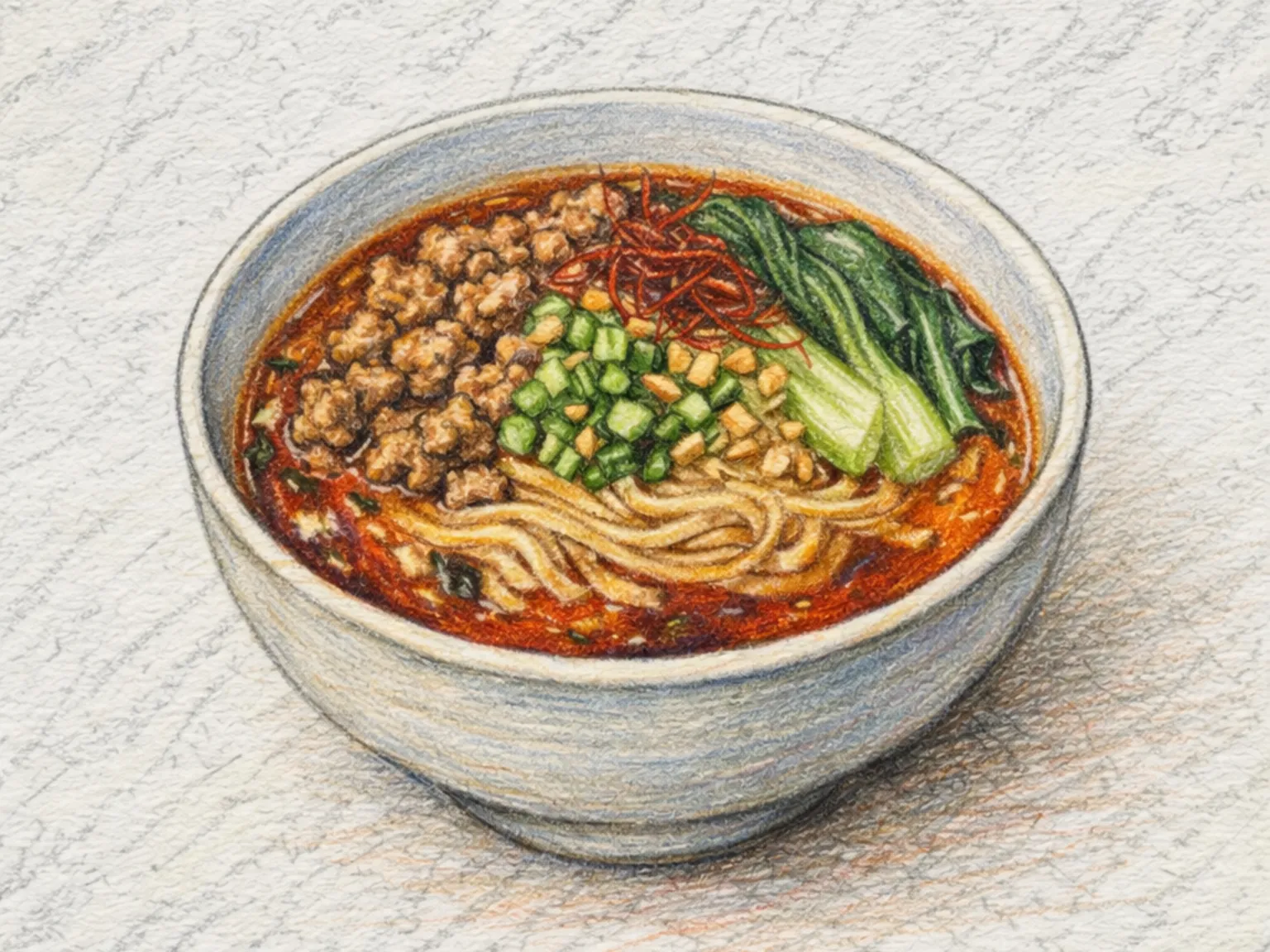
Taiwanese beef noodle soup slow-braises beef brisket in a soy-based broth seasoned with doubanjiang, star anise, cinnamon, and Sichuan peppercorns. The minimum 90-minute simmer renders the meat fork-tender while building a deeply layered broth. Thick wheat noodles are served in the finished broth, soaking up its concentrated flavor. Spice level is adjustable by varying the amount of doubanjiang. Common garnishes include pickled mustard greens and blanched bok choy, adding brightness to the rich bowl.

Prep 25min Cook 90min 4 servings

Instructions

Read the steps as a cooking flow: prep, heat, seasoning, doneness control, and finish.

6 steps
  1. 1
    Finish

    Cut 600 g beef brisket into large chunks and blanch it in boiling water for 3 minutes.

    Rinse off foam and blood residue so the finished broth stays cleaner and less cloudy.

  2. 2
    Control

    Heat a pot over medium heat, add oil, then saute 20 g ginger, 70 g green onion, and 6 garlic cloves.

    When they smell fragrant, lower the heat before the aromatics scorch.

  3. 3
    Season

    Add 1 tbsp doubanjiang and fry it for about 30 seconds to open its spicy aroma.

    Add the blanched beef and 4 tbsp soy sauce, turning the pieces until the seasoning coats the surface evenly.

  4. 4
    Control

    Pour in 1600 ml water and bring it to a boil over high heat.

    Skim foam, reduce to low heat, and simmer gently for at least 70 minutes, or preferably 90 minutes, until the beef softens.

  5. 5
    Control

    While the broth simmers, cook 500 g wheat noodles separately so excess starch does not thicken the soup.

    Blanch 120 g bok choy briefly, keeping its green color and slight crispness.

  6. 6
    Finish

    When the beef separates easily with chopsticks, check the seasoning and adjust only if needed.

    Place noodles and bok choy in bowls, then ladle over plenty of hot broth and beef and serve immediately.

After the steps

Pick a recipe that fits this dish.

Continue with shared ingredients, meal pairings, or a similar method.

Recipes That Go Well With This

More Noodles →

Based on shared ingredients and meal pairing

Wonton Noodle Soup
Shared ingredient: ginger Noodles

Wonton Noodle Soup

Wonton noodle soup is a Cantonese classic that pairs thin egg noodles with shrimp-and-pork wontons in a clear pork bone broth. The broth is deliberately kept light and clean, relying on long simmering rather than heavy seasoning for its flavor. Each wonton has a thin wrapper that barely conceals a filling with noticeable shrimp texture. The egg noodles are springy and slightly alkaline, a hallmark of Hong Kong-style noodle making. Wrapping wontons from scratch adds about 30 minutes of prep, though pre-made wontons shorten the process significantly.

Chinese Soy-Braised Beef Shank
Shared ingredient: ginger Steamed

Chinese Soy-Braised Beef Shank

Jiang niu rou is a Chinese soy-braised beef shank simmered for at least ninety minutes with soy sauce, dark soy sauce, star anise, ginger, green onion, and sugar. The long, unhurried braise gradually breaks down the dense connective tissue in the shank while keeping the meat structurally intact, so it can be sliced cleanly across the grain once it has cooled completely. Star anise infuses the fatty cut with its distinctive warm, licorice-edged fragrance, and dark soy sauce deepens the color to a lacquered mahogany while adding a subtle sweetness that rounds out the saltiness. The sweet-savory balance of soy and sugar penetrates all the way through the meat rather than staying on the surface, which means the flavor holds up even when the shank is served cold straight from the refrigerator. The leftover braising liquid retains its full concentration of aromatics and is traditionally repurposed for cooking soy-braised eggs, making it a practical two-for-one preparation.

Yu Sheng Prosperity Salad
Serve together Salads

Yu Sheng Prosperity Salad

Yu sheng prosperity salad arranges thinly sliced sashimi-grade salmon and finely julienned daikon, carrot, and cucumber in a ring on a large platter, dressed with plum sauce, lemon juice, and sesame oil, then tossed vigorously just before eating. The salmon must be sashimi-grade for food safety, and patting it dry before slicing thin allows the sweet-tart plum sauce to cling more effectively to the fish surface. Cutting all vegetables as finely as possible maximizes the surface area in contact with the dressing, ensuring every chopstick-full carries the full spectrum of flavors. Keeping the prepared vegetables chilled maintains the freshness of the raw fish once assembled. Sesame seeds sprinkled on top add a nutty aroma that layers over the fruity plum sauce, completing the festive character of the dish.

Tomato Egg Lamian (Chinese Home-Style Tomato Scrambled Egg Noodle Soup)
Similar recipe Noodles

Tomato Egg Lamian (Chinese Home-Style Tomato Scrambled Egg Noodle Soup)

Tomato egg lamian is a Chinese home-style noodle soup where ripe tomatoes are sauteed until they break down into a tangy, slightly sweet broth. Soft-scrambled eggs are folded in, adding mild richness. Fresh wheat noodles go directly into the pot, picking up the broth's flavor as they cook. No heavy spices are involved - the dish relies on the natural taste of its few ingredients. It takes about 27 minutes total and is widely eaten across China as an everyday meal. It can be served as a noodle dish, with simple accompaniments chosen to match the sauce, broth, or topping.

Serve with this

Korean Flower Crab Pancake
Pancakes Hard

Korean Flower Crab Pancake

Fresh blue crab meat is picked clean, coated in a mixture of all-purpose flour and Korean pancake mix, dipped in beaten egg, and pan-fried until the surface turns golden. The crab's natural sweetness and mild brininess stay intact throughout the process, and minced ginger cuts through any residual fishiness without announcing itself in the finished jeon. Black pepper is added in small amounts - just enough to clean up the aftertaste without competing with the delicate crab. The egg coating holds moisture inside, keeping the meat tender while the outside crisps to a light, golden crust. A generous amount of crab filling in each piece is what makes the texture satisfying.

🍺 Bar Snacks 🎉 Special Occasion
Prep 18min Cook 12min 2 servings
Crispy Mushroom Tangsu (Sweet & Sour)
Side dishes Medium

Crispy Mushroom Tangsu (Sweet & Sour)

Double-fried oyster mushrooms with the same two-stage frying technique used for Korean tangsu pork. Oyster mushrooms fully dried of moisture are coated in a potato starch and flour batter, fried at 170°C, rested to release steam, then returned to 180°C for a second fry that locks in a crisp exterior while keeping the interior chewy. A sweet-sour sauce of soy sauce, vinegar, and sugar is simmered with onion, bell pepper, and carrot, then thickened with a starch slurry. Pouring the sauce over the mushrooms in advance softens the crust quickly, so serving the sauce separately and ladling it on at the table preserves the crunch. The technique produces a texture comparable to the pork version without any meat.

🏠 Everyday 🎉 Special Occasion
Prep 20min Cook 18min 4 servings
Korean Salted Yellow Croaker Jeotgal
Kimchi Hard

Korean Salted Yellow Croaker Jeotgal

Jogi jeotgal is a Korean salted and fermented yellow croaker made by gutting the fish, layering it in coarse sea salt for an initial multi-day cure in the refrigerator, then folding in gochugaru, garlic, ginger, and rice wine for a second stage of aging. Over the extended fermentation, fish protein breaks down into a concentrated savory depth that bears no resemblance to the raw ingredient, while the sea salt continuously draws out moisture and causes the flesh to contract and firm. Gochugaru and ginger suppress the fermentation smell and add a mild heat and aromatic warmth, while rice wine smooths out the sharp, rough edges that develop early in the process. The finished jeotgal is used in small amounts, placed over rice or added to kimchi jjigae as a flavor amplifier, a condiment that delivers significant depth from a very small quantity.

🎉 Special Occasion 🍱 Lunchbox
Prep 35min 4 servings

Similar recipes

Lanzhou Beef Noodles (Clear Spiced Beef Shank Soup Noodles)
Noodles Hard

Lanzhou Beef Noodles (Clear Spiced Beef Shank Soup Noodles)

Lanzhou beef noodles are a clear-broth noodle soup originating from Lanzhou in China's Gansu province. Beef shank is soaked in cold water for thirty minutes to draw out blood, blanched, then simmered for two hours with star anise, a cinnamon stick, ginger, and garlic. Diligent skimming during the early stages of simmering is what keeps the broth transparent despite its long cooking time. Daikon radish is added to the strained broth and simmered until translucent, and the seasoning is kept to soy sauce and salt. The cooked beef is sliced thin and arranged over noodles in the bowl, with green onion, cilantro, and a drizzle of chili oil on top. Traditional versions use hand-pulled noodles stretched to order, but store-bought Chinese wheat noodles work as a practical substitute at home. The long cook time yields a broth that is clear yet deeply savory, which is the defining quality of this noodle.

🎉 Special Occasion 🌙 Late Night
Prep 30min Cook 120min 2 servings
Guilin Rice Noodles (Silky Rice Noodles in Beef Brisket Broth)
Noodles Medium

Guilin Rice Noodles (Silky Rice Noodles in Beef Brisket Broth)

Guilin rice noodles are the signature noodle dish of Guilin in Guangxi, China, built on a clear beef brisket broth that has been simmered until the collagen fully dissolves and the liquid turns deeply savory without becoming heavy. The slender rice noodle strands are smooth and slightly springy, and they absorb the broth as the bowl sits. Soy sauce seasons the soup with a salty, round undertone rather than any sharp edge. Pickled daikon radish is added as a topping for its crisp bite and vinegary tang, which cuts through the richness of the beef broth and resets the palate between mouthfuls. A drizzle of chili oil introduces a warm, slow-building heat that spreads through the soup. Fresh cilantro placed on top at the end adds a bright, citrus-forward herbal fragrance that ties the Southeast Asian-influenced profile of the bowl together. The combination of broth, noodles, and contrasting toppings is what makes Guilin rice noodles a dish people return to repeatedly.

🎉 Special Occasion 🍺 Bar Snacks
Prep 20min Cook 35min 2 servings
Yangchunmian (Shanghai Clear Soy Broth Noodle Soup)
Asian Easy

Yangchunmian (Shanghai Clear Soy Broth Noodle Soup)

Yangchunmian is a Shanghai noodle soup that focuses on a clear, soy-seasoned broth and fresh wheat noodles. The broth uses a chicken stock base seasoned with light soy sauce and sugar, heated gently to remain clear. Fresh wheat noodles are boiled until tender yet springy, while bok choy is blanched briefly in the same water to keep its green color and crisp texture. The noodles are placed in bowls, seasoned with white pepper for a clean aroma, and submerged in the hot broth. Thinly sliced scallions and the blanched bok choy are added as simple garnishes, finished with a drizzle of sesame oil to provide a layer of nutty warmth. Without heavy toppings, the dish relies on the clean flavor of the seasoned broth. It is served immediately while hot to prevent the noodles from softening.

🏠 Everyday 🌙 Late Night
Prep 10min Cook 12min 2 servings

Tips

Cook a day ahead and skim chilled fat for a cleaner broth.
Brisket becomes tender with long simmering.

Nutrition (per serving)

Calories
690
kcal
Protein
41
g
Carbs
66
g
Fat
27
g