Osaka-Style Takoyaki (Japanese Octopus Ball Street Snack)
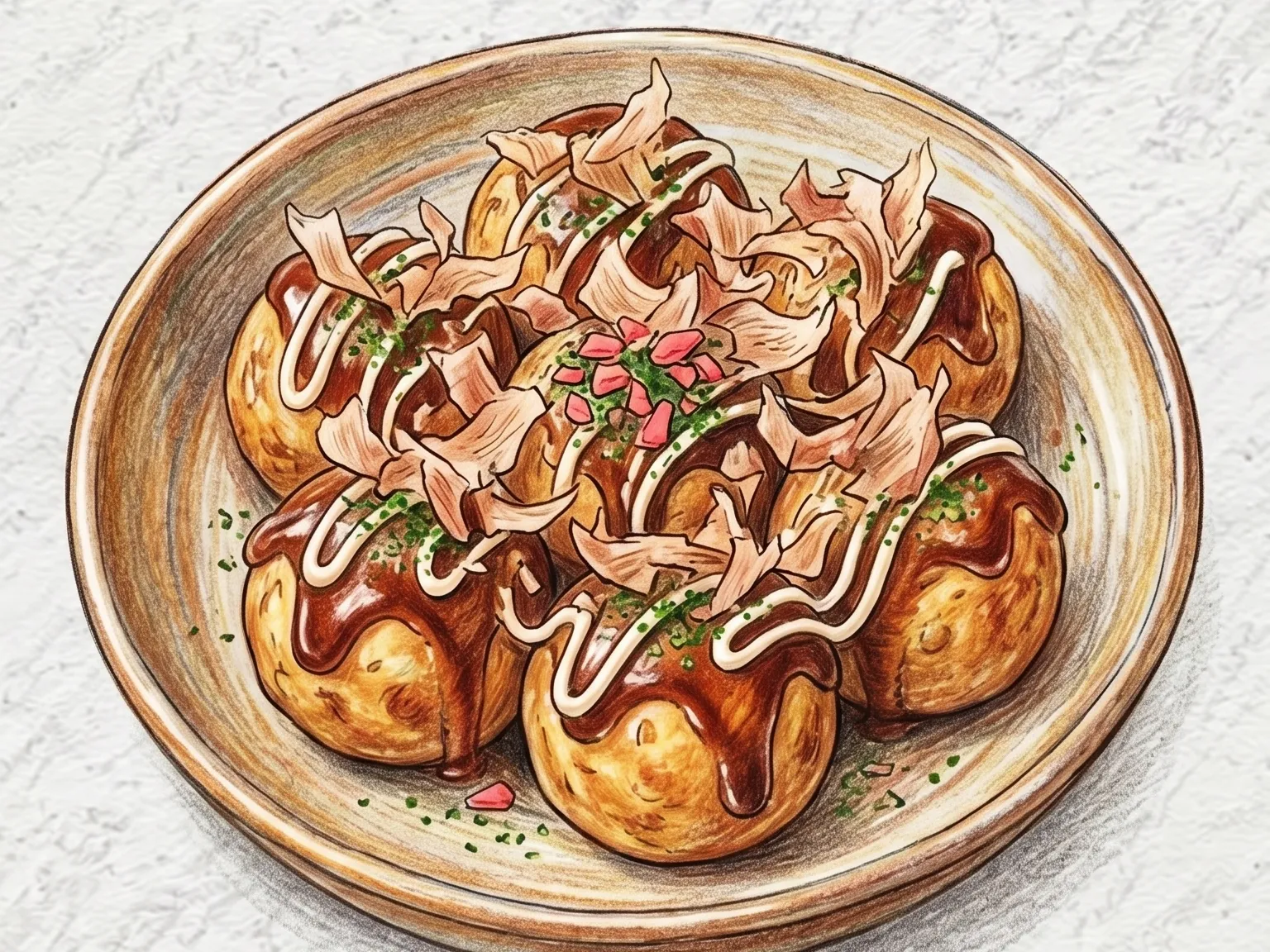
Osaka-style takoyaki are spherical batter balls filled with diced octopus, a street snack so closely tied to Osaka that it serves as an unofficial symbol of the city. The batter is deliberately thin and watery-flour, eggs, and dashi stock whisked together-which is what creates the signature contrast between a lightly crisp shell and a molten, custardy interior. Each well of the specialized cast-iron pan receives a pour of batter, a chunk of boiled octopus, sliced green onion, tenkasu tempura flakes, and pickled red ginger. As the edges set, each ball is rotated ninety degrees at a time with a pointed pick until it forms a perfect sphere. The finished takoyaki are lined up and drizzled with a thick, tangy-sweet takoyaki sauce and Japanese mayonnaise, then crowned with a flurry of bonito flakes that wave in the rising heat. The octopus delivers a chewy, briny bite at the center of each molten ball.
Adjust Servings
Instructions
- 1
Mix flour, eggs, and dashi to create a thin batter.
- 2
Cut octopus into 1.5cm pieces.
- 3
Oil the takoyaki pan and pour batter into each well.
- 4
Drop octopus, green onion, tenkasu, and ginger into each well.
- 5
When edges set, use a pick to rotate each ball 90 degrees at a time until round.
- 6
Once evenly golden, top with sauce, mayo, and bonito flakes to serve.
As an Amazon Associate, we may earn from qualifying purchases.
Tips
Nutrition (per serving)
More Recipes

Kimchi Octopus Balls (Korean-Style Takoyaki with Fermented Kimchi)
Kimchi takoyaki uses a thin batter of takoyaki flour, water, and egg poured into a takoyaki pan, with each well filled with boiled octopus, drained kimchi, and scallion, then rotated with a skewer into spheres. The outside crisps while the inside stays creamy, and the octopus's chewy resistance pairs with the kimchi's spicy tang within the mild batter. Excess kimchi liquid must be squeezed out to keep the batter from thinning, and leaving the balls untouched for the first minute allows them to set into clean rounds. They are finished with takoyaki sauce, mayonnaise, and bonito flakes.

Osaka-Style Okonomiyaki (Japanese Savory Cabbage Pancake)
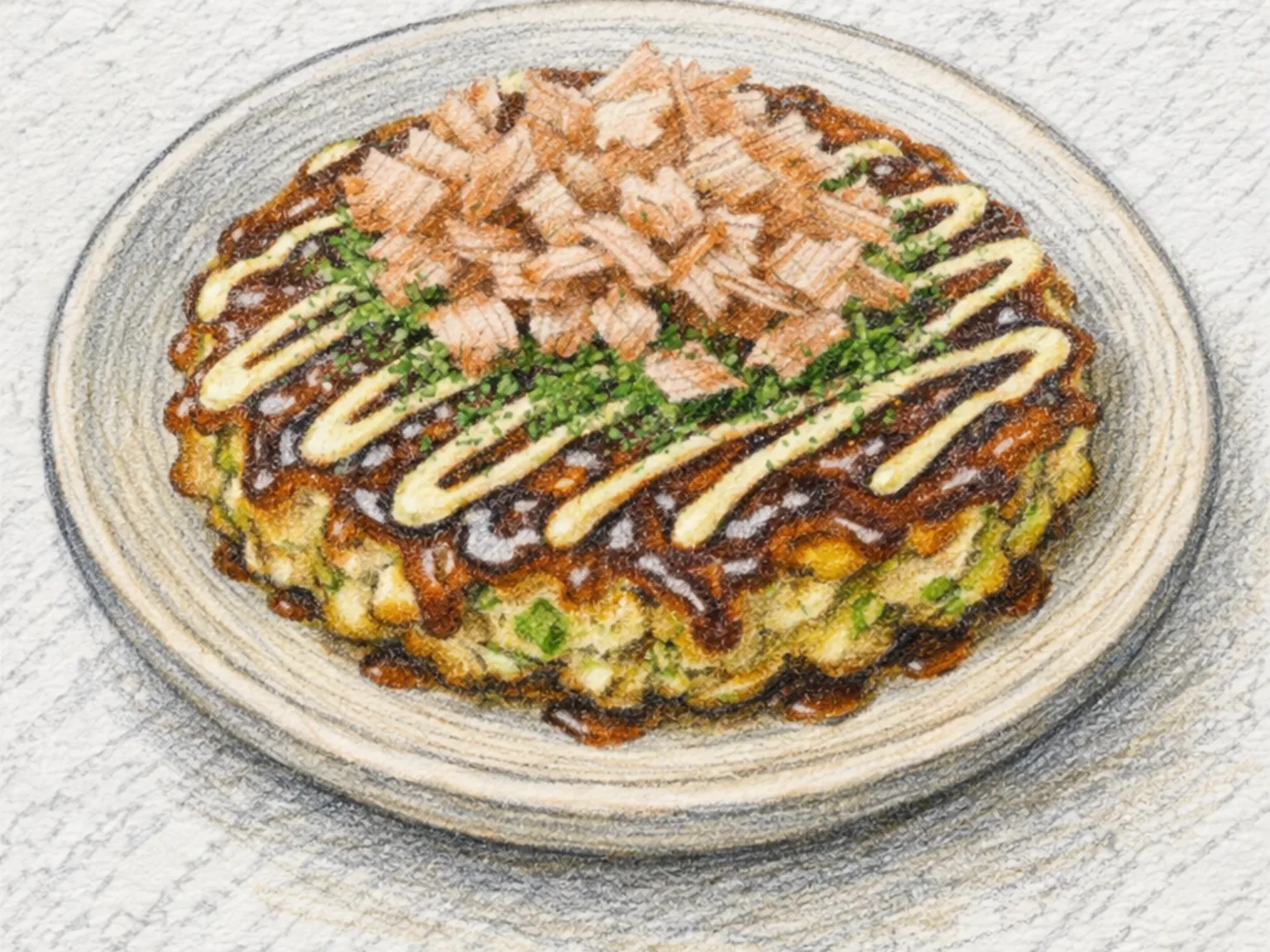
Osaka-style okonomiyaki is the signature griddle dish of Japan's Kansai region - a thick, cabbage-loaded savory pancake whose name means 'grilled as you like it.' Finely shredded cabbage is folded into a batter of flour, eggs, and dashi stock, then poured onto a hot griddle with strips of pork belly laid across the top. The pancake cooks slowly on medium heat, developing a golden crust on each side while the interior stays moist from the cabbage. Once done, it receives thick okonomiyaki sauce, zigzags of Japanese mayonnaise, a shower of bonito flakes that dance in the rising heat, and a dusting of aonori seaweed powder.

Osaka Kitsune Udon (Thick Noodles with Sweet Fried Tofu in Dashi)
Kitsune udon is Osaka's signature noodle bowl, defined by sweet simmered fried tofu draped over thick wheat noodles in a clear dashi broth. The broth is made from kombu and bonito flakes, seasoned with light soy sauce in the Kansai tradition - pale in color but full in umami. The aburaage tofu is simmered separately in a mixture of dashi, soy sauce, mirin, and sugar until it swells with sweet braising liquid, releasing a burst of flavor with each bite. Thick, chewy udon noodles sit in the steaming broth, their neutral wheat taste serving as a canvas for the delicate soup. A scattering of sliced green onion adds freshness and a mild bite. In Osaka, kitsune udon is eaten at all hours - a quick breakfast before work, a light lunch, or a late-night bowl after drinks - and every neighborhood udon shop has its own version of the sweet tofu recipe.

Pork Cutlet Sandwich
Katsu sando is a sandwich of breaded pork loin cutlet deep-fried at 170C until golden, layered with shredded cabbage dressed in mayonnaise between slices of soft milk bread spread with tonkatsu sauce. The contrast between the cutlet's crunchy panko crust and the pillowy bread defines the eating experience, while the dressed cabbage cuts through the richness. Wrapping the sandwich tightly in plastic and resting it for three minutes bonds bread and sauce together for a clean cross-section when sliced in half. Standing the cutlet upright for a minute after frying drains excess oil and prevents sogginess.

Nikujaga (Japanese Beef Potato Onion Soy-Sweet Stew)
Nikujaga is the quintessential Japanese home-cooked stew, often described as the dish that defines a mother's cooking in Japan. Thinly sliced beef, potatoes, onion, carrot, and shirataki noodles are simmered in a broth of dashi, soy sauce, mirin, and sugar. The dish traces its origins to the Meiji era, when a Japanese naval officer attempted to recreate British beef stew using local ingredients - resulting in a clear, soy-based braise rather than a thick, flour-bound stew. The potatoes absorb the seasoned liquid until soft at the edges but still holding shape, while shirataki noodles soak up flavor and add a springy contrast.

Edo-Style Tendon (Japanese Tempura Rice Bowl with Sweet Soy Tare)
Edo-style tendon is a Japanese rice bowl that crowns steamed rice with freshly fried tempura-typically shrimp, sweet potato, and eggplant-glazed in a warm, sweet-salty tare sauce. The shrimp are scored along the belly to prevent curling, then dipped in a lightly mixed batter and fried at 170 degrees Celsius until the coating turns golden and crisp. The tare is a simple reduction of tsuyu, soy sauce, and sugar, simmered for just two minutes to concentrate its flavor into a glossy, mahogany liquid. The sauce is drizzled over the tempura the moment it lands on the rice, so the batter absorbs just enough to glisten without losing its crunch entirely. This tension between the crisp tempura coating and the sticky-sweet tare is the defining characteristic of the Edo style, which favors bold, direct flavors over subtlety. The rice beneath soaks up any sauce that runs off, becoming deeply seasoned and intensely satisfying in its own right.