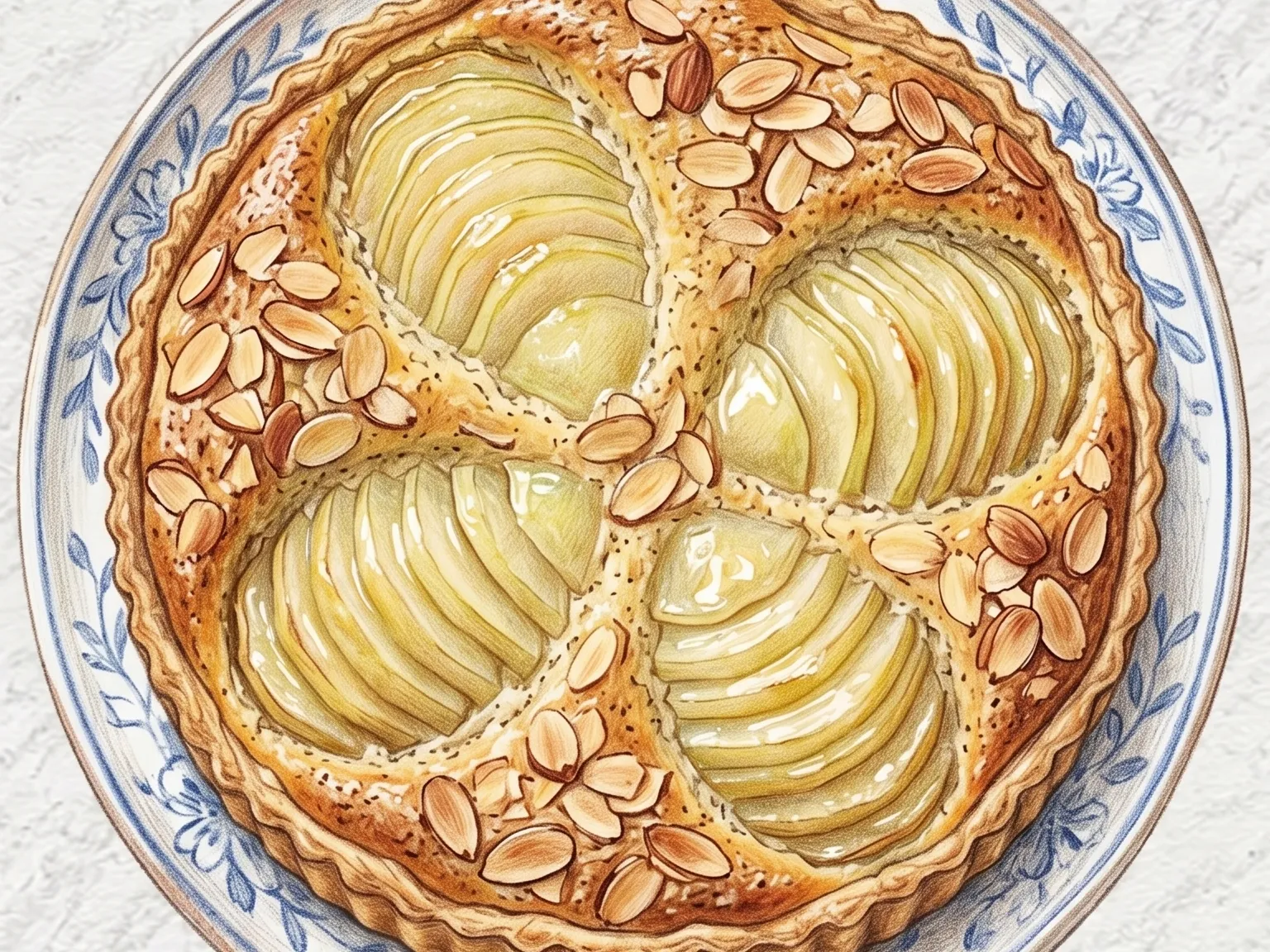
Tarte Bourdaloue (French Pear Almond Frangipane Tart)
A crisp tart shell is lined with frangipane - a mixture of almond flour, butter, egg, and sugar - then topped with halved or sliced pears and baked until the almond cream rises around the fruit and turns golden. The frangipane puffs gently in the oven, enveloping the pear in a dense, moist almond layer, while juice from the fruit seeps into the cream and lightens its richness. Poached pears produce the most tender result and cook evenly, but raw pears work if sliced thin enough to soften during baking. Overmixing the frangipane compacts the crumb and eliminates the delicate rise, so the batter should be combined only until the ingredients are incorporated. Scattered sliced almonds on top before baking add visual appeal and an extra layer of nutty crunch. This tart originated on Rue Bourdaloue in Paris and remains one of the essential recipes in French patisserie.
Adjust Servings
Instructions
- 1
Preheat oven to 180C and prepare tart shell.
- 2
Cream butter and sugar, then add egg, almond flour, and vanilla for frangipane.
- 3
Spread frangipane evenly in shell.
- 4
Slice pears thinly and arrange in fan shapes.
- 5
Bake 35-40 minutes until golden, then cool.
As an Amazon Associate, we may earn from qualifying purchases.
Tips
Nutrition (per serving)
More Recipes

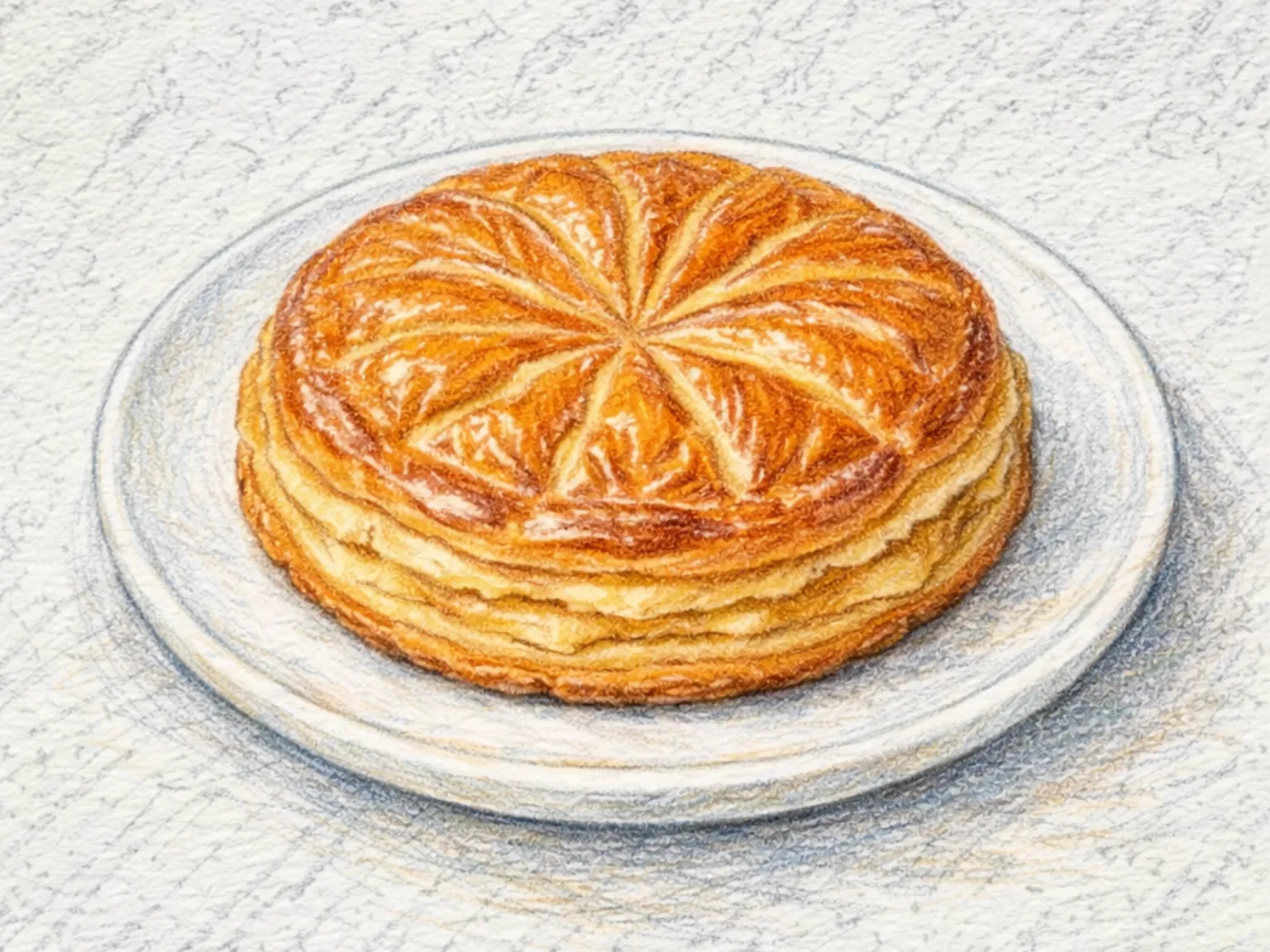
Galette des Rois (Puff Pastry Almond Frangipane Pie)
Galette des rois is the traditional French pie eaten during Epiphany in January, made from two rounds of puff pastry enclosing almond frangipane cream. The puff pastry contains hundreds of alternating layers of dough and butter that expand dramatically in the oven, shattering into golden fragments when cut. The frangipane bakes into a moist, dense cream with concentrated almond richness. A small porcelain figurine called a feve is hidden inside before baking - whoever finds it wears a paper crown and is declared the day's king or queen. The top layer is scored with decorative leaf or spiral patterns and given an egg wash for a lacquered shine.

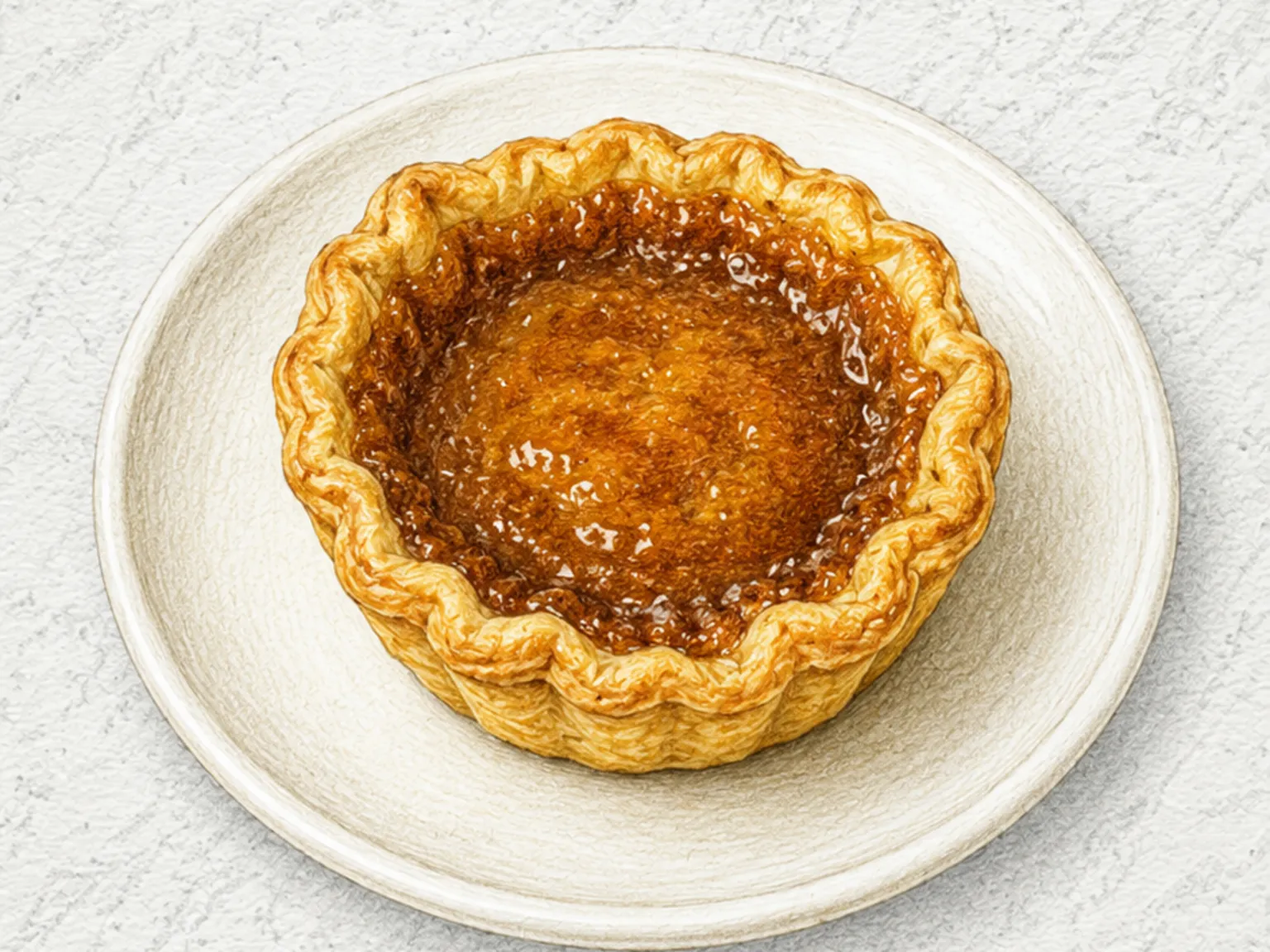
Flan Parisien (Parisian Vanilla Custard Tart)
Flan Parisien is a Parisian bakery staple found in nearly every boulangerie in the city. A buttery shortcrust pastry shell holds a thick, firm vanilla custard that bakes slowly until the top develops caramelized brown spots. The custard is made from milk, eggs, sugar, and cornstarch, which gives it a denser, sliceable consistency that distinguishes it from softer baked custards like creme brulee. When properly cooled, the filling holds its shape when cut yet melts smoothly on the tongue with a clean vanilla flavor. Vanilla bean seeds speckled throughout the custard signal that the real ingredient was used rather than extract. The pastry shell must be blind-baked first to prevent sogginess, then filled and baked again until set. It is served cold, and the contrast between the crisp, buttery shell and the cool, trembling custard makes each bite satisfying.

Tarte Tatin (French Upside-Down Caramelized Apple Tart)
Apples are cooked in butter and sugar on the stovetop until the caramel darkens to a deep amber, then a sheet of puff pastry is draped over the top and the whole pan goes into the oven. After baking, the tart is inverted onto a plate so the caramelized apples become the glossy, lacquered top. The long exposure to heat transforms the apples from firm slices into soft, butter-soaked segments that are nearly translucent. The caramel should be pushed slightly past golden - a faint bitterness at the edge of sweetness gives the tart its signature depth. Cutting the pastry slightly larger than the pan and tucking the edges down around the apples prevents juice from leaking during baking. The inversion must happen within a few minutes of leaving the oven, while the caramel is still liquid enough to release cleanly. Served warm with a spoon of creme fraiche, the contrast between the hot, sticky apples and the cool, tangy cream is the defining experience of this dessert.

Lemon Curd Tart
A buttery shortcrust shell holds a hand-cooked lemon curd made from fresh juice, zest, egg yolks, sugar, and butter. The curd is simultaneously tart and rich, with the lemon's acidity cutting through the butter's weight to leave a clean, bright finish. Powdered sugar in the pastry dough gives the shell a delicate, crumbly snap that contrasts with the smooth filling. When refrigerated, the curd sets firmly enough to slice neatly, while at room temperature it softens to a spoonable consistency. The tart works beautifully on its own or with additions such as a crown of whipped cream or a torched meringue cap that adds sweetness and visual drama. Lemon zest oils in the curd ensure that the citrus fragrance lingers well after each bite.

French Onion Tart
French onion tart starts with onions cooked low and slow in butter for over twenty minutes until they collapse into a deep amber mass with concentrated sweetness and no trace of their raw sharpness. The caramelized onions are spread over a blind-baked tart shell, covered with a custard of egg, heavy cream, and thyme, then topped with grated Gruyere cheese before baking at 190 degrees until the filling sets and the cheese browns into a salty crust. The onion flavor dominates every bite, and thyme provides an herbal note that keeps the sweetness from becoming heavy. This tart holds up well at room temperature, making it practical for brunch spreads or outdoor meals alongside wine.

French Toast
French toast soaks thick bread slices in a mixture of beaten eggs, milk, sugar, vanilla extract, and cinnamon until both sides absorb the custard evenly. The soaked bread is then cooked in melted butter over medium-low heat until each side turns golden brown and lightly caramelized on the surface while staying soft and moist inside. Slightly stale bread works better than fresh because its drier crumb absorbs more of the egg mixture without falling apart. Warm cinnamon and vanilla fragrance fills the kitchen during cooking. A drizzle of maple syrup and a dusting of powdered sugar finish the dish, and adding whipped cream or fresh fruit elevates it further.