Tarte Tatin (French Upside-Down Caramelized Apple Tart)
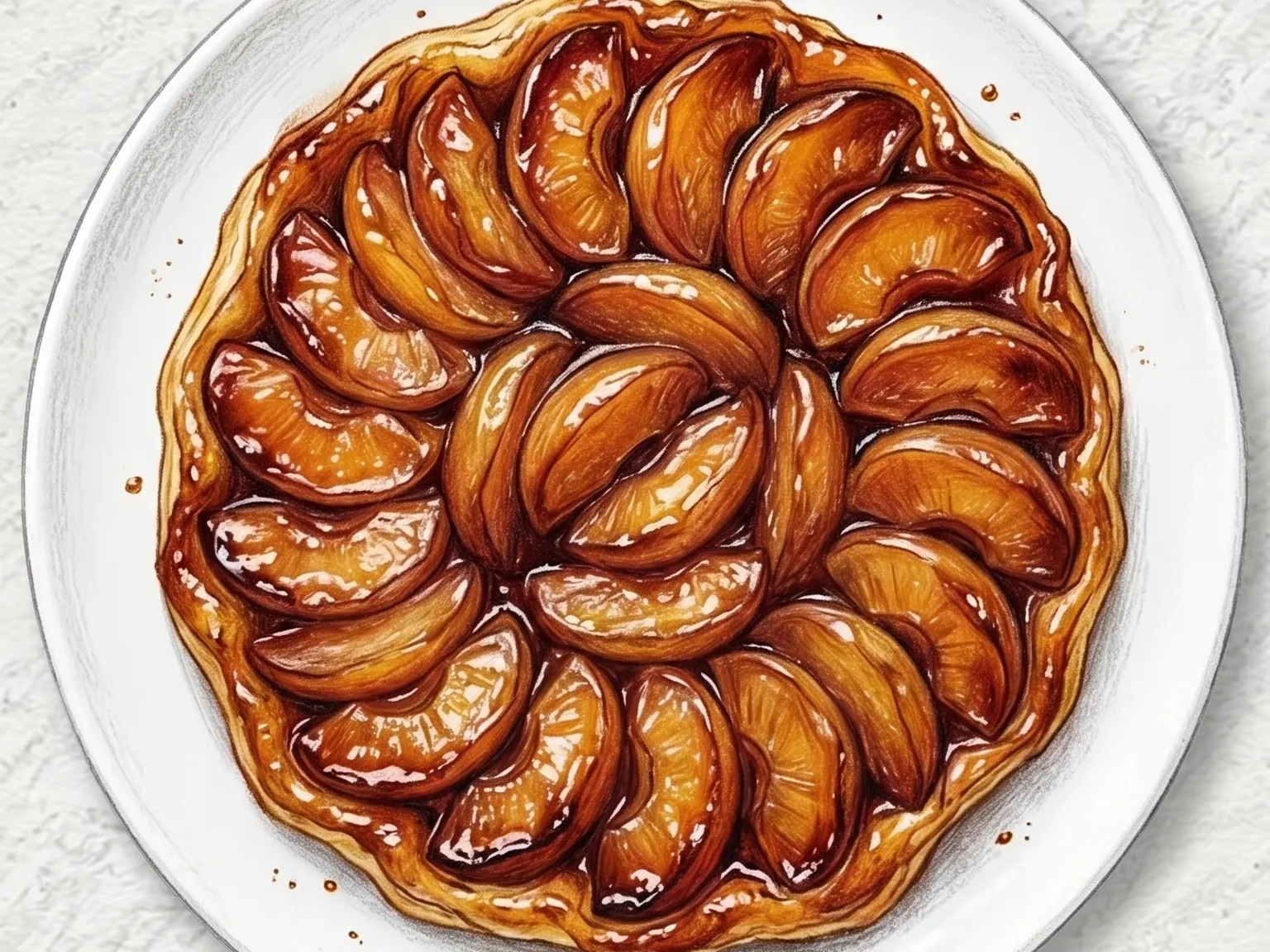
Apples are cooked in butter and sugar on the stovetop until the caramel darkens to a deep amber, then a sheet of puff pastry is draped over the top and the whole pan goes into the oven. After baking, the tart is inverted onto a plate so the caramelized apples become the glossy, lacquered top. The long exposure to heat transforms the apples from firm slices into soft, butter-soaked segments that are nearly translucent. The caramel should be pushed slightly past golden - a faint bitterness at the edge of sweetness gives the tart its signature depth. Cutting the pastry slightly larger than the pan and tucking the edges down around the apples prevents juice from leaking during baking. The inversion must happen within a few minutes of leaving the oven, while the caramel is still liquid enough to release cleanly. Served warm with a spoon of creme fraiche, the contrast between the hot, sticky apples and the cool, tangy cream is the defining experience of this dessert.
Adjust Servings
Instructions
- 1
Preheat oven to 200°C.
- 2
Melt butter in an oven-safe skillet and cook sugar to a golden caramel.
- 3
Arrange peeled apple slices tightly over the caramel.
- 4
Cover with pastry and bake 25 minutes. Cool briefly, then invert onto a plate.
As an Amazon Associate, we may earn from qualifying purchases.
Tips
Nutrition (per serving)
More Recipes

Tarte Bourdaloue (French Pear Almond Frangipane Tart)
A crisp tart shell is lined with frangipane - a mixture of almond flour, butter, egg, and sugar - then topped with halved or sliced pears and baked until the almond cream rises around the fruit and turns golden. The frangipane puffs gently in the oven, enveloping the pear in a dense, moist almond layer, while juice from the fruit seeps into the cream and lightens its richness. Poached pears produce the most tender result and cook evenly, but raw pears work if sliced thin enough to soften during baking. Overmixing the frangipane compacts the crumb and eliminates the delicate rise, so the batter should be combined only until the ingredients are incorporated. Scattered sliced almonds on top before baking add visual appeal and an extra layer of nutty crunch. This tart originated on Rue Bourdaloue in Paris and remains one of the essential recipes in French patisserie.

Baba au Rhum (French Rum-Soaked Yeast Cake)
Baba au rhum traces to 18th-century Poland, where King Stanislaw Leszczynski supposedly dipped a dry kugelhopf cake in rum and named it after Ali Baba from One Thousand and One Nights. The dessert migrated to Paris through Naples, where French patissiers refined it into the small, cylindrical yeast cakes known today. The dough is enriched with butter and eggs, producing a tender, open crumb riddled with air pockets that act as reservoirs for the soaking syrup. After baking, the cakes are submerged in a hot rum syrup - sugar, water, and dark rum in generous proportion - until they swell to nearly double their size and the syrup reaches the center. The texture is spongy and saturated, releasing a warm rush of rum with each bite. A rosette of crème chantilly - lightly sweetened, vanilla-scented whipped cream - sits on top, its cold airiness contrasting the dense, boozy cake beneath. The alcohol is deliberate and undisguised, making this a distinctly adult dessert.

Kouign-Amann (Caramelized Butter Sugar Pastry)
This Breton pastry is constructed by folding generous amounts of butter and sugar into a simple yeasted bread dough, then baking until the sugar caramelizes into a glassy, deeply bronzed crust. The exterior shatters audibly at the first bite, giving way to an interior where dozens of buttery layers remain soft and slightly chewy. Three rounds of rolling and folding build the laminated structure, and keeping the butter cold throughout the process is what prevents the layers from merging into a dense mass. At 200 degrees Celsius, the sugar melts and pools at the bottom of each portion, so lining the pan with foil is a practical necessity to catch the drips. The aroma of caramelizing butter and sugar fills the kitchen long before the timer sounds. Despite containing only five ingredients, flour, butter, sugar, yeast, and salt, the technique demands precision: under-laminated dough bakes flat, and over-proofed dough loses its layered definition. The result, when executed well, is one of the richest pastries in the French repertoire.

Sole Meunière (Butter-Fried Sole with Brown Butter Sauce)
Sole meuniere is a French classic where delicate sole fillets are seasoned with salt and pepper, dredged lightly in flour, and pan-fried in butter for two to three minutes per side until a thin golden crust forms. The flour coating must be minimal - just enough to create a crisp barrier that protects the tender fish without masking its flavor. The fish is flipped only once because the fillets are fragile and break apart with repeated handling. After the fish is removed, the butter remaining in the pan is cooked further until it turns brown and smells of toasted hazelnuts, then finished with a squeeze of lemon juice and chopped parsley. This brown butter sauce is the heart of the dish, its nutty richness elevating the mild, sweet flesh of the sole while the lemon's acidity keeps every bite clean and bright.

Almond Croissant
The almond croissant was born in French bakeries as a way to rescue day-old croissants - stale pastry soaked in almond syrup, filled with frangipane, and rebaked until golden. A simple solution to waste became one of the most requested items in the pastry case. The syrup soak revives the dried layers, and the almond cream - butter, sugar, ground almonds, egg, and a splash of amaretto or almond extract - melts into the interior during the second bake, turning the hollow center into a dense, marzipan-like filling. Sliced almonds pressed onto the surface toast in the oven, adding a brittle snap over the soft interior. The result is richer and more intensely almond-flavored than a plain croissant, with a sticky, caramelized bottom where the syrup has pooled. Many Parisian bakeries now bake them fresh rather than from leftovers, because demand outstrips the supply of day-old stock.

French Onion Tart
French onion tart starts with onions cooked low and slow in butter for over twenty minutes until they collapse into a deep amber mass with concentrated sweetness and no trace of their raw sharpness. The caramelized onions are spread over a blind-baked tart shell, covered with a custard of egg, heavy cream, and thyme, then topped with grated Gruyere cheese before baking at 190 degrees until the filling sets and the cheese browns into a salty crust. The onion flavor dominates every bite, and thyme provides an herbal note that keeps the sweetness from becoming heavy. This tart holds up well at room temperature, making it practical for brunch spreads or outdoor meals alongside wine.