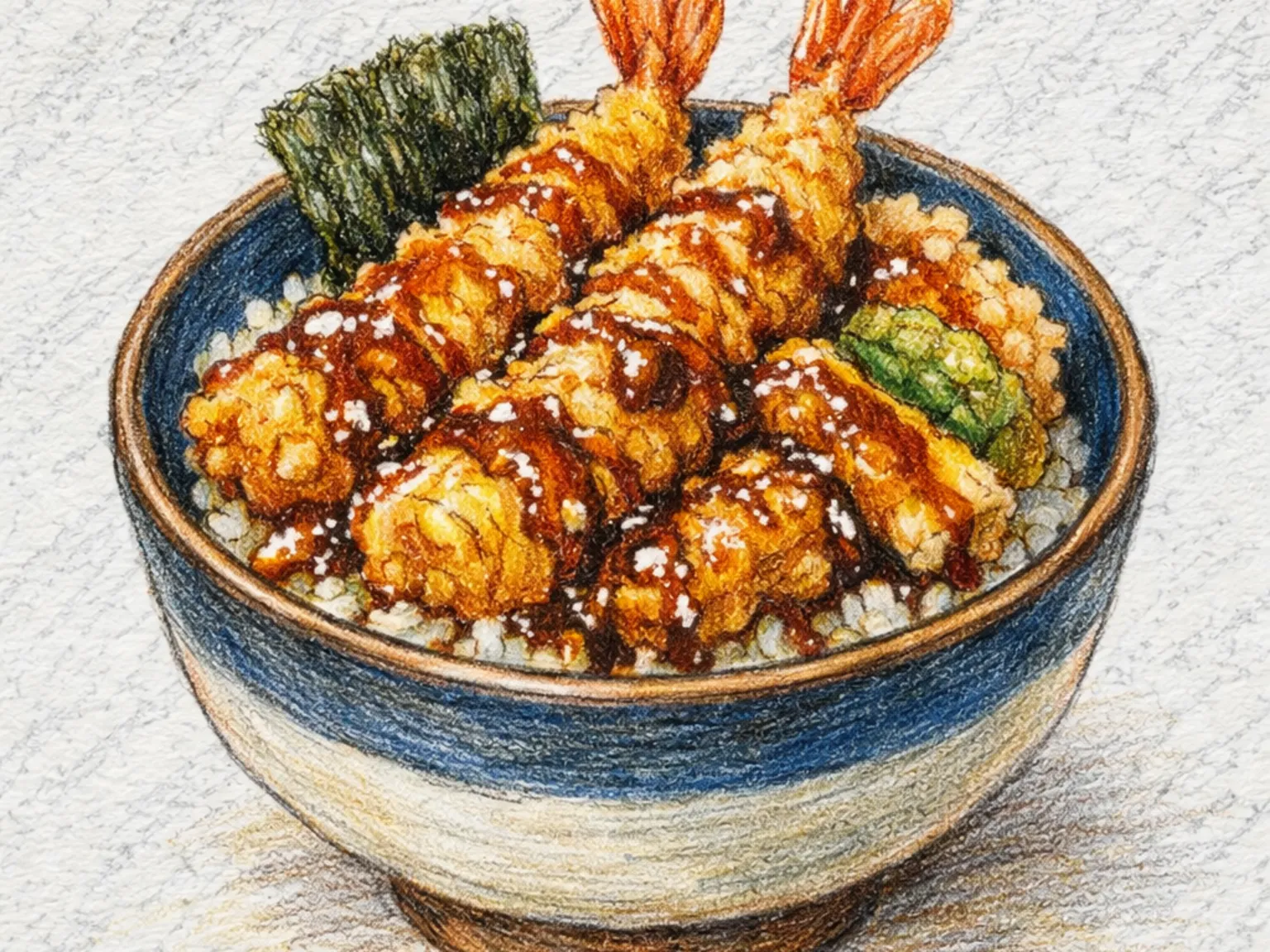
Edo-Style Tendon (Japanese Tempura Rice Bowl with Sweet Soy Tare)
Edo-style tendon is a Japanese rice bowl that crowns steamed rice with freshly fried tempura-typically shrimp, sweet potato, and eggplant-glazed in a warm, sweet-salty tare sauce. The shrimp are scored along the belly to prevent curling, then dipped in a lightly mixed batter and fried at 170 degrees Celsius until the coating turns golden and crisp. The tare is a simple reduction of tsuyu, soy sauce, and sugar, simmered for just two minutes to concentrate its flavor into a glossy, mahogany liquid. The sauce is drizzled over the tempura the moment it lands on the rice, so the batter absorbs just enough to glisten without losing its crunch entirely. This tension between the crisp tempura coating and the sticky-sweet tare is the defining characteristic of the Edo style, which favors bold, direct flavors over subtlety. The rice beneath soaks up any sauce that runs off, becoming deeply seasoned and intensely satisfying in its own right.
Adjust Servings
Instructions
- 1
Peel shrimp leaving tails, then score the belly to straighten them.
- 2
Slice sweet potato and eggplant to 0.7 cm and pat dry.
- 3
Loosely mix flour and ice-cold water; keep some lumps in the batter.
- 4
Fry vegetables first and shrimp last at 170C until crisp.
- 5
Boil tsuyu, soy sauce, and sugar for 2 minutes to make tare.
- 6
Top rice with tempura and drizzle warm tare; serve immediately.
As an Amazon Associate, we may earn from qualifying purchases.
Tips
Nutrition (per serving)
More Recipes

Unadon (Japanese Grilled Glazed Eel Rice Bowl)
Unadon is a traditional Japanese rice bowl featuring grilled freshwater eel glazed with tare sauce. The eel fillet is grilled over charcoal in stages, with a concentrated sauce of soy sauce, mirin, sake, and sugar brushed on between each pass over the flame. This repeated glazing builds a lacquered, caramelized coating on the surface while the flesh inside stays silky and rich with natural fat. The combination of smoky char and sweet-salty tare creates a depth of flavor that is unmistakably Japanese. A pinch of sansho pepper sprinkled on top adds a tingling, citrusy heat that cuts through the richness.

Mitsuba Oyakodon (Japanese Chicken Egg Rice Bowl with Mitsuba Herb)
Mitsuba oyakodon is a variation of Japan's classic chicken-and-egg rice bowl that adds mitsuba - Japanese wild parsley - as a finishing herb. Chicken thigh and sliced onion are simmered in a sauce of dashi, soy sauce, and mirin until the chicken is cooked through, then beaten eggs are poured over and left to set into a soft, barely-set custard. Mitsuba leaves are scattered on top just before the lid goes on, wilting slightly in the residual heat and releasing a clean, celery-like fragrance that lifts the richness of the egg and chicken. The whole mixture is slid over a bowl of steamed rice. It is everyday home cooking in Japan - quick to prepare yet dependent on timing, since overcooking the egg by even a minute changes the texture entirely.

Pork Rice Bowl (Sweet-Salty Glazed Pork over Rice)
Butadon is a Japanese pork rice bowl originating from Obihiro, Hokkaido, where thin slices of pork are simmered with onion in a sauce of soy sauce, mirin, and sugar until the meat absorbs every drop of the sweet-salty glaze. The onion melts down during cooking, adding natural sweetness that deepens the sauce. Served over a mound of steamed rice, it is straightforward comfort food - no complex techniques, no long ingredient lists, just well-balanced flavors that come together quickly. The caramelized edges of the pork develop a slight char that adds dimension to the otherwise smooth, saucy topping. It makes an excellent weeknight dinner when time is short but satisfaction cannot be compromised.

Steak Rice Bowl (Seared Beef with Soy-Garlic Glaze over Rice)
A thick-cut beef steak is seared at high heat until a deep brown crust forms, then sliced and fanned over a bowl of hot rice. A glaze of soy sauce, garlic, and mirin is spooned over the slices, coating them in a glossy, caramelized finish. As the warm rice absorbs the pan juices, each spoonful carries the full weight of the beef's seared flavor. A runny fried egg or a small dab of wasabi on the side balances the richness with creaminess or heat.

Chicken Soboro Rice Bowl (Ground Chicken and Scrambled Egg over Rice)
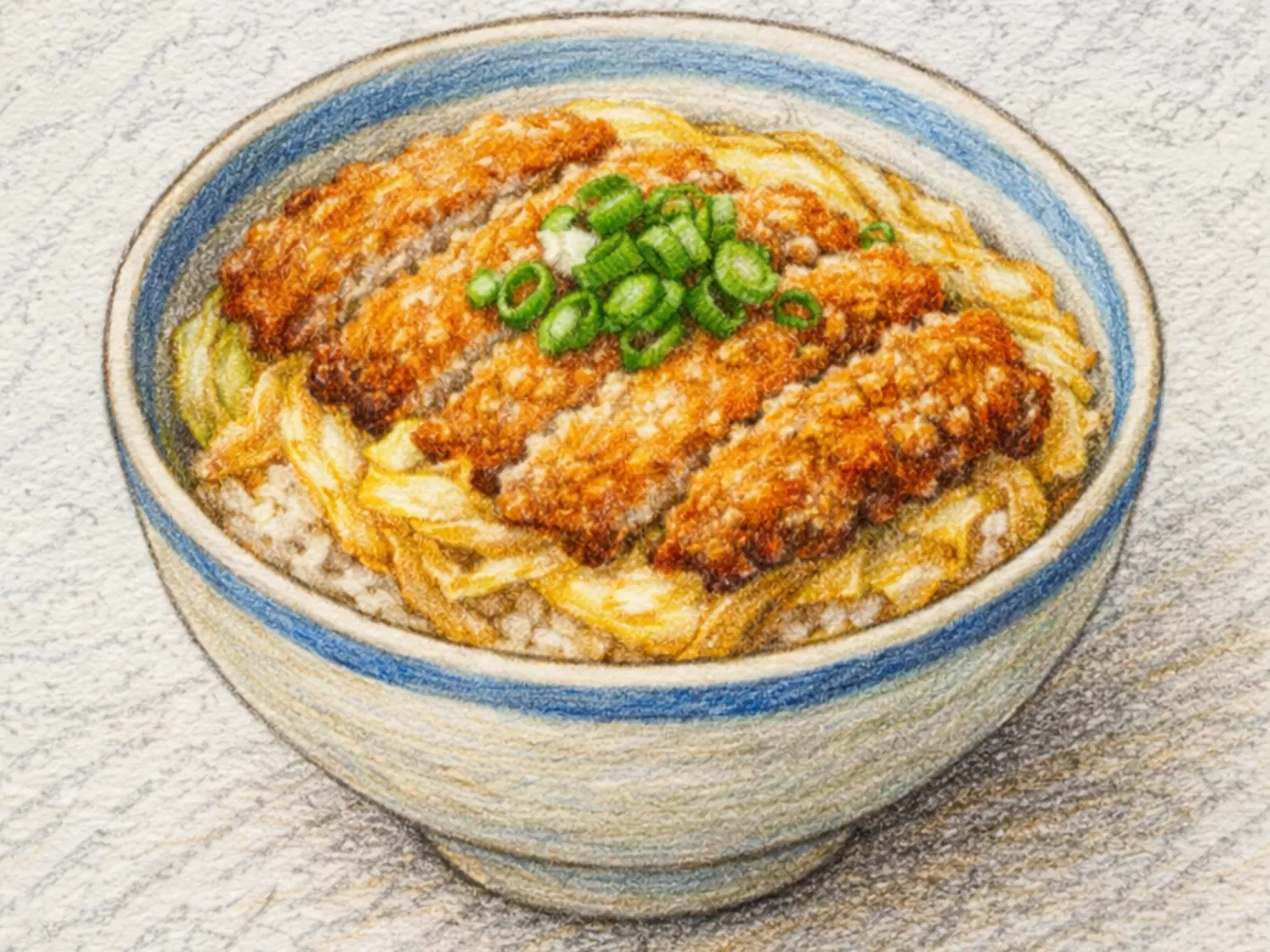
Soboro-don is a Japanese-style rice bowl that tops steamed rice with two side-by-side mounds: savory minced chicken and sweet scrambled egg. The chicken is seasoned with soy sauce, sugar, mirin, and ginger juice, then stirred constantly with chopsticks over medium heat until it breaks into fine, crumbly grains that are individually coated in glaze. The egg is treated the same way - beaten, poured into a pan, and stirred into soft, fluffy curds. Arranged half-and-half on the rice, the brown chicken and bright yellow egg create a visual contrast that makes the bowl inviting. Both toppings share a gentle sweetness balanced by soy umami, and their fine, loose texture means every bite blends effortlessly with the rice beneath.

Assorted Japanese Tempura
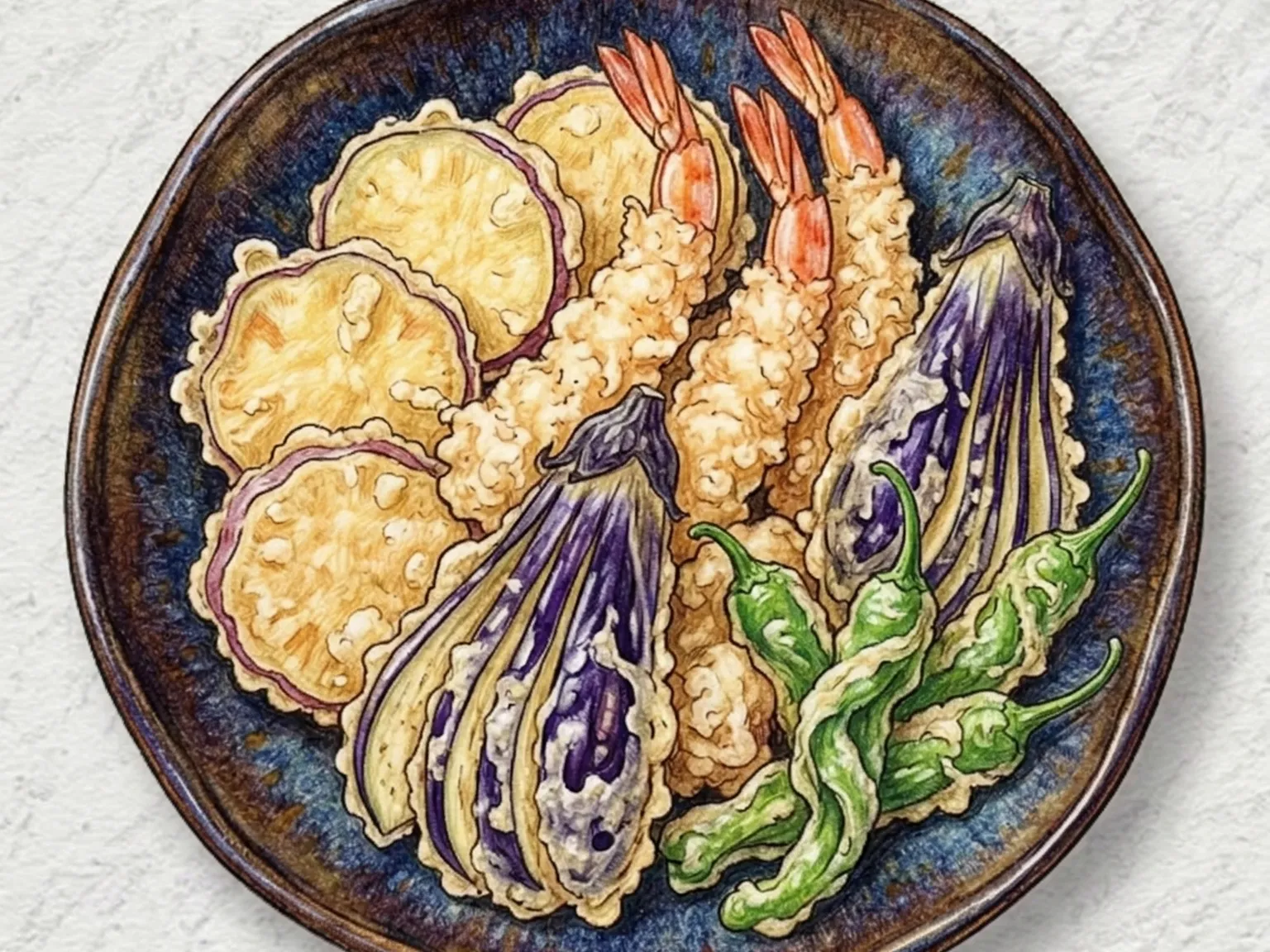
Tempura moriawase is an assorted platter of Japanese tempura featuring shrimp, sweet potato, eggplant, and shishito peppers, each coated in a light, shatteringly crisp batter. The batter is the heart of the technique: egg and ice-cold water are combined with cake flour and stirred only a few times with chopsticks, leaving visible lumps. This minimal mixing prevents gluten development, which is what keeps the coating featherlight rather than dense. Each piece is fried at 170 to 180 degrees Celsius for a short time-long enough to cook the interior while the batter puffs into an airy, lacy crust. Patting ingredients dry before dipping ensures the batter adheres properly. The tentsuyu dipping sauce, made from dashi, soy sauce, and mirin, is served with freshly grated daikon radish, whose mild sharpness cuts through the oil and refreshes the palate between bites. Tempura moriawase is meant to be eaten immediately after frying, when the contrast between the crackling exterior and the just-cooked filling is at its peak.