Teriyaki Chicken
Asian Easy

Teriyaki Chicken

Quick answer

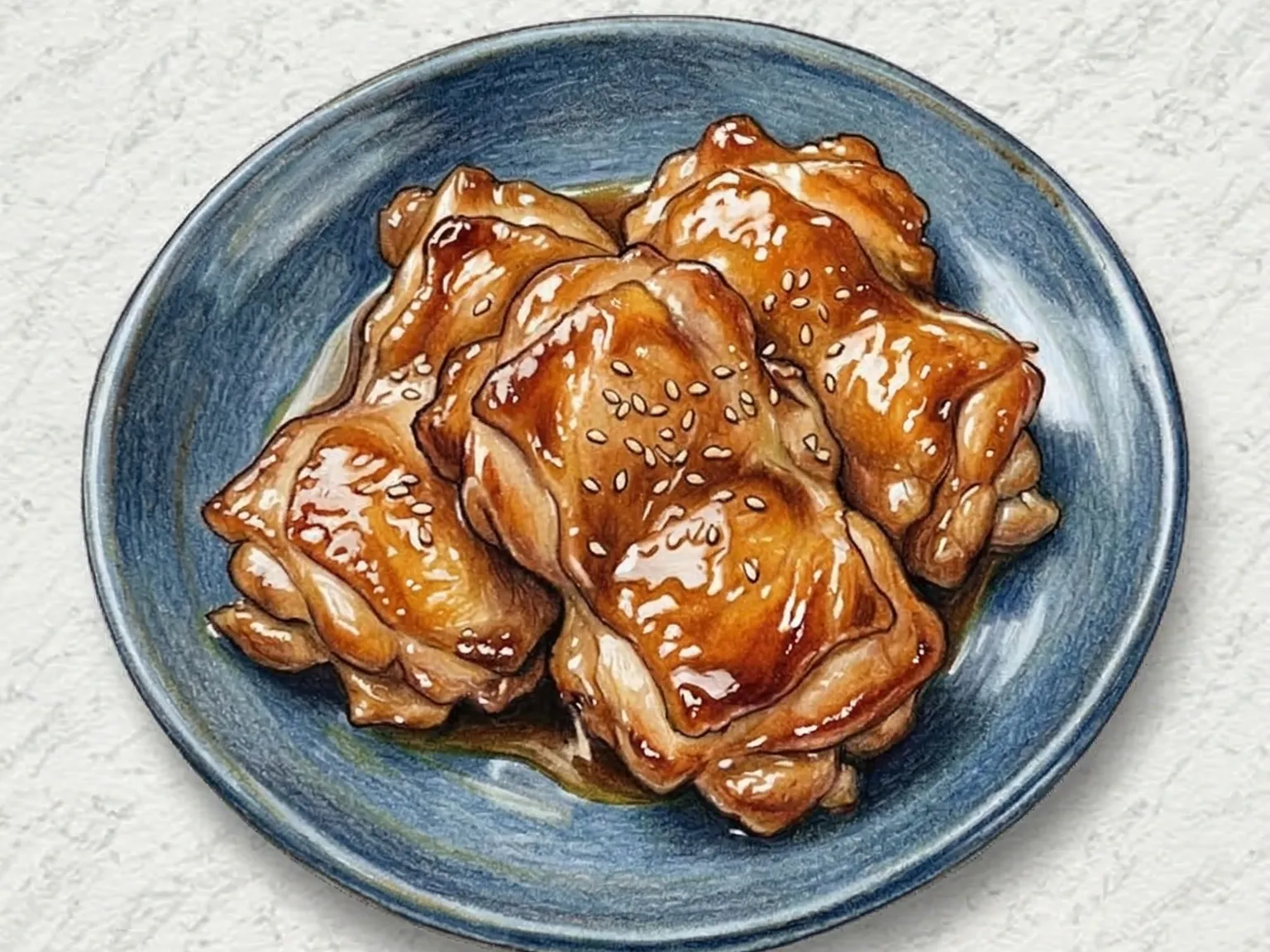
Teriyaki chicken is a Japanese dish of pan-seared chicken thighs glazed in a sweet-savory sauce made from soy sauce, mirin, sugar, and sake.

What makes this special

  • Teriyaki Chicken is pan-seared skin-side down and glazed with a sweet mixture of soy sauce and mirin.
  • Skin-side pressed down first to render fat and maximize crispness
  • Soy sauce, mirin, sugar, and sake reduce into a glossy lacquer coating
Total time
30 min
Level
Easy
Servings
2 servings
Ingredients
7
Calories
380 kcal
Protein
28 g

Key ingredients

chicken thighssoy saucemirinsugarsake

Core cooking flow

  1. 1 Mix 3 teaspoons soy sauce, 3 teaspoons mirin, 1 teaspoon sugar, and 2 teaspoons sake first.
  2. 2 Pat 400 g chicken thighs dry and open out any thick parts so the pieces cook evenly.
  3. 3 Preheat the pan over medium heat and place the chicken skin-side down.

Teriyaki chicken is a Japanese dish of pan-seared chicken thighs glazed in a sweet-savory sauce made from soy sauce, mirin, sugar, and sake. The cooking begins skin-side down, pressing the chicken firmly against the pan to render the fat and crisp the skin to a deep golden color. Once flipped, the teriyaki sauce is poured in and the heat is lowered so the liquid reduces slowly, coating the chicken in a glossy, caramelized lacquer. Garlic and ginger, minced and added to the sauce, contribute a warm aromatic undercurrent that prevents the sweetness from becoming one-dimensional. As the sauce thickens, it clings to every surface of the chicken, creating a sticky, burnished exterior that contrasts with the moist meat beneath. The dish comes together in under thirty minutes and pairs equally well over steamed rice, alongside a green salad, or sliced into a bento box.

Prep 15min Cook 15min 2 servings

Instructions

Read the steps as a cooking flow: prep, heat, seasoning, doneness control, and finish.

6 steps
  1. 1
    Season

    Mix 3 teaspoons soy sauce, 3 teaspoons mirin, 1 teaspoon sugar, and 2 teaspoons sake first.

    Add minced garlic and 5 g ginger, then stir until the sugar is fully dissolved.

  2. 2
    Heat

    Pat 400 g chicken thighs dry and open out any thick parts so the pieces cook evenly.

    Keep the skin flat, because folded skin will not touch the pan and will soften instead of crisping.

  3. 3
    Control

    Preheat the pan over medium heat and place the chicken skin-side down.

    Press with a spatula for 2 to 3 minutes to render the fat, then cook until the skin is deeply golden.

  4. 4
    Season

    When the skin is crisp enough, flip the chicken and cook the other side for 3 to 4 minutes.

    It is ready for the sauce when the surface turns opaque and feels springy when pressed.

  5. 5
    Season

    Pour the mixed sauce around the edge of the pan and lower the heat to low.

    Spoon the sauce over the chicken for 4 to 5 minutes, reducing it until glossy before it scorches.

  6. 6
    Finish

    Turn off the heat when the sauce lightly coats the spatula and clings to the chicken.

    Rest for 2 minutes, then slice across the grain and serve with rice or a green salad.

After the steps

Pick a recipe that fits this dish.

Continue with shared ingredients, meal pairings, or a similar method.

Recipes That Go Well With This

More Asian →

Based on shared ingredients and meal pairing

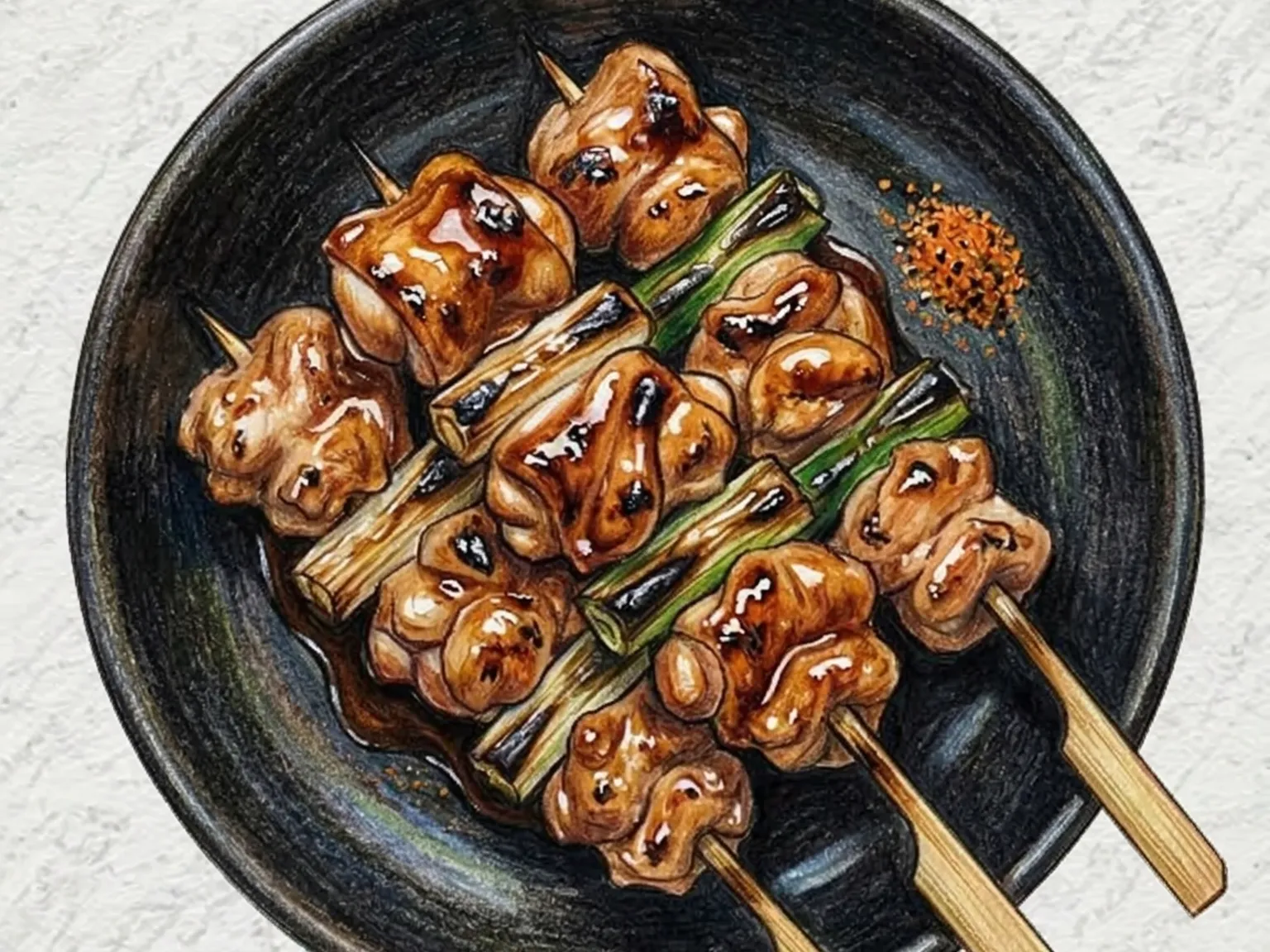
Yakitori (Japanese Charcoal-Grilled Chicken Skewers)
Shared ingredient: boneless chicken thigh Asian

Yakitori (Japanese Charcoal-Grilled Chicken Skewers)

Yakitori is a traditional Japanese chicken skewer dish where bite-sized pieces of chicken thigh and leek are threaded onto bamboo sticks and grilled. The cooking process involves repeatedly brushing the skewers with a sweet soy-based glaze made of soy sauce, mirin, sugar, and sake. This builds a glossy, caramelized coating that pairs with the smokiness from the grill. Threading the ingredients with small gaps allows heat to circulate, ensuring the meat cooks through evenly. As they grill, the leek segments soften and sweeten, balancing the savory glaze. While the glazed version is common, yakitori can also be seasoned simply with salt, a style known as shio, which highlights the natural juiciness of the chicken thigh. The skewers are served hot as a casual dining item.

Yuzu Karaage (Japanese Citrus-Marinated Fried Chicken)
Shared ingredient: boneless chicken thigh Asian

Yuzu Karaage (Japanese Citrus-Marinated Fried Chicken)

Yuzu karaage is a citrus-accented variation of Japanese fried chicken that incorporates yuzu into the traditional soy-ginger marinade. Boneless chicken thighs are marinated in soy sauce, cooking sake, garlic, ginger, and yuzu marmalade, which infuses the meat with a floral citrus fragrance distinct from lemon or lime. After marinating, the pieces are coated in potato starch and deep-fried until the exterior turns shatteringly crisp while the inside stays moist and well-seasoned. The yuzu adds a bright, aromatic acidity that lifts the richness of the fried coating and dark soy marinade, giving each bite a clean finish rather than a heavy aftertaste.

Chicken and Egg Rice Bowl
Serve together Rice

Chicken and Egg Rice Bowl

Oyakodon simmers bite-size chicken thigh and sliced onion in a soy-mirin broth, then binds everything with a soft-set egg before sliding it over steamed rice. The name means 'parent and child,' referring to the chicken and egg sharing the same bowl. Onion goes into the broth first to release its natural sweetness, followed by the chicken, which cooks just until tender. Beaten eggs are poured in a circular motion and the lid goes on briefly, leaving the egg custardy rather than fully set. That half-cooked egg absorbs the savory-sweet broth and coats each grain of rice. Despite using only a handful of ingredients, the layered umami from soy sauce and mirin gives the dish a satisfying depth.

Japanese Karaage (Soy-Ginger Fried Chicken)
Similar recipe Asian

Japanese Karaage (Soy-Ginger Fried Chicken)

Karaage is Japanese fried chicken where boneless thigh pieces are marinated in soy sauce, mirin, grated ginger, and minced garlic for at least fifteen minutes before being coated in potato starch and double-fried. Ginger in the marinade counters the stronger gaminess of dark meat, and mirin contributes a mild sweetness and sheen to the finished crust. Potato starch produces a lighter and crispier shell than wheat flour or cornstarch, but any excess coating must be shaken off before frying or the surface sets unevenly. The first fry at 170 degrees Celsius runs for three to four minutes, cooking the chicken fully through. Pulled from the oil and rested for two minutes, residual heat equalizes the interior temperature. The second fry at 180 degrees for one to two minutes drives off remaining surface moisture, leaving a thin, shattering crust that holds its texture far longer than a single fry would. This is the central technique that keeps karaage crisp even as it cools. Squeezing lemon juice over the pieces just before eating cuts through the richness and sharpens the contrast between the crust and the juicy interior.

Serve with this

Soba Sesame Salad (Chilled Buckwheat Noodle Sesame Dressing)
Salads Easy

Soba Sesame Salad (Chilled Buckwheat Noodle Sesame Dressing)

Soba sesame salad is a cold noodle dish in which cooked buckwheat noodles are rinsed repeatedly in cold water to remove surface starch, then tossed with julienned cucumber, carrot, and red cabbage in a dressing of soy sauce, rice vinegar, sesame oil, and sesame seeds. The earthy, nutty character of buckwheat pairs naturally with toasted sesame, and rice vinegar's light acidity keeps the dish from feeling heavy despite the sesame oil. Thorough rinsing in cold water is the technical cornerstone of this recipe: residual starch left on the noodles dilutes the dressing on contact and causes the strands to clump into an uneven mass, disrupting the balance of flavors in every bite. Cucumber and red cabbage introduce a fresh crunch that contrasts the springy noodle texture, and julienned carrot threads a mild sweetness through the bowl that offsets the saltiness and acidity of the dressing. Cutting the vegetables into thin, uniform strips allows them to distribute evenly among the noodles so that each forkful carries a balanced mix. The dressing should be mixed in advance but added to the noodles only just before serving, since soaking too long causes the noodles to absorb the liquid and soften. A light and satisfying single-bowl meal, particularly well suited to warmer months.

🥗 Light & Healthy ⚡ Quick
Prep 12min Cook 8min 2 servings
Mushroom Memil Soba (Warm Buckwheat Noodles in Mushroom Dashi)
Noodles Easy

Mushroom Memil Soba (Warm Buckwheat Noodles in Mushroom Dashi)

Beoseot memil soba is a warm buckwheat noodle soup built on dashi stock seasoned with soy sauce and mirin, with shiitake and oyster mushrooms simmered for five minutes so their concentrated woodsy depth moves fully into the broth. Dried shiitake contributes far more umami than fresh, and oyster mushrooms torn along the grain absorb more liquid than sliced. The soba noodles are cooked separately and rinsed in cold water to strip off surface starch, which keeps the broth clear and prevents the noodles from turning soft. A small curl of yuzu zest placed on top just before serving sends a sharp citrus note across the broth's earthy weight, lifting the finish without overpowering it. Green onion scattered on top adds a layer of fresh aroma and color.

🥗 Light & Healthy 🏠 Everyday
Prep 12min Cook 15min 2 servings
Korean Job's Tears Tea (Creamy Grain Porridge Drink)
Drinks Easy

Korean Job's Tears Tea (Creamy Grain Porridge Drink)

Yulmu-cha is a Korean grain tea made from Job's tears powder and glutinous rice powder, first dissolved in cold water to prevent lumps, then cooked on low heat with constant stirring. Once the mixture begins to thicken, milk is added for a creamier body, and honey with a pinch of salt balances the sweetness. Job's tears give the drink a distinctly nutty, toasted grain aroma that pairs smoothly with the milk, producing a texture thicker than typical tea but lighter than porridge. The glutinous rice powder contributes a subtle stickiness that coats the palate, and reducing the water ratio yields an even denser, more filling version.

🍺 Bar Snacks ⚡ Quick
Prep 5min Cook 12min 2 servings

Similar recipes

Gyoza
Asian Medium

Gyoza

Gyoza are Japanese pan-fried dumplings that evolved from Chinese jiaozi, brought back to Japan by soldiers and civilians returning from Manchuria after World War II, who recreated the dumplings they had eaten abroad. A thin wheat-flour wrapper encloses a filling of ground pork, napa cabbage (or regular cabbage), garlic chives, garlic, and ginger, pleated into a crescent shape. The dumplings are placed flat-side down in an oiled skillet, seared until golden, then water - sometimes mixed with a touch of flour - is added and the lid goes on to steam them through; as the water evaporates, the bottoms re-crisp and form the thin, lacy skirt called hanetsuki that connects all the dumplings in the pan. Each piece delivers three textures in one bite: the chewy steamed top, the crackling golden base, and the juicy meat filling inside. A dipping sauce of soy sauce, rice vinegar, and la-yu (chili oil) adds sharpness, salt, and heat atop the dumpling's savory richness. Gyoza are served as a ramen-shop side dish, an izakaya beer snack, and a weekend home-cooking staple - one of the most versatile foods in the Japanese repertoire.

🍺 Bar Snacks 🎉 Special Occasion
Prep 40min Cook 15min 4 servings
Chicken Curry Rice
Rice Easy

Chicken Curry Rice

Chicken curry rice is a Japanese-style curry where bite-sized chicken thigh, potato, carrot, and onion simmer together until the curry roux melts into a thick, glossy sauce. The spice blend is gentle rather than fiery, with a mellow sweetness drawn from the slowly cooked vegetables. Chicken thigh meat stays moist and succulent even after prolonged simmering, absorbing the curry flavor throughout. The potato pieces break down slightly at the edges, thickening the sauce further and giving it a starchy body that clings to each spoonful of rice. A one-pot format makes it easy to scale -- prepare a large batch and the flavor deepens further overnight as everything continues to meld, making it well-suited for family dinners or weekly meal prep.

🏠 Everyday 🧒 Kid-Friendly
Prep 15min Cook 25min 4 servings
Chicken Soboro Rice Bowl (Ground Chicken and Scrambled Egg over Rice)
Rice Easy

Chicken Soboro Rice Bowl (Ground Chicken and Scrambled Egg over Rice)

Soboro-don is a Japanese-style rice bowl that tops steamed rice with two side-by-side mounds: savory minced chicken and sweet scrambled egg. The chicken is seasoned with soy sauce, sugar, mirin, and ginger juice, then stirred constantly with chopsticks over medium heat until it breaks into fine, crumbly grains that are individually coated in glaze. The egg is treated the same way - beaten, poured into a pan, and stirred into soft, fluffy curds. Arranged half-and-half on the rice, the brown chicken and bright yellow egg create a visual contrast that makes the bowl inviting. Both toppings share a gentle sweetness balanced by soy umami, and their fine, loose texture means every bite blends effortlessly with the rice beneath.

🍱 Lunchbox ⚡ Quick
Prep 15min Cook 15min 2 servings

Tips

Press the skin down firmly for crispier skin.

Nutrition (per serving)

Calories
380
kcal
Protein
28
g
Carbs
15
g
Fat
22
g