Thai Boat Noodles (Intense Thai Canal Beef Noodle Soup)
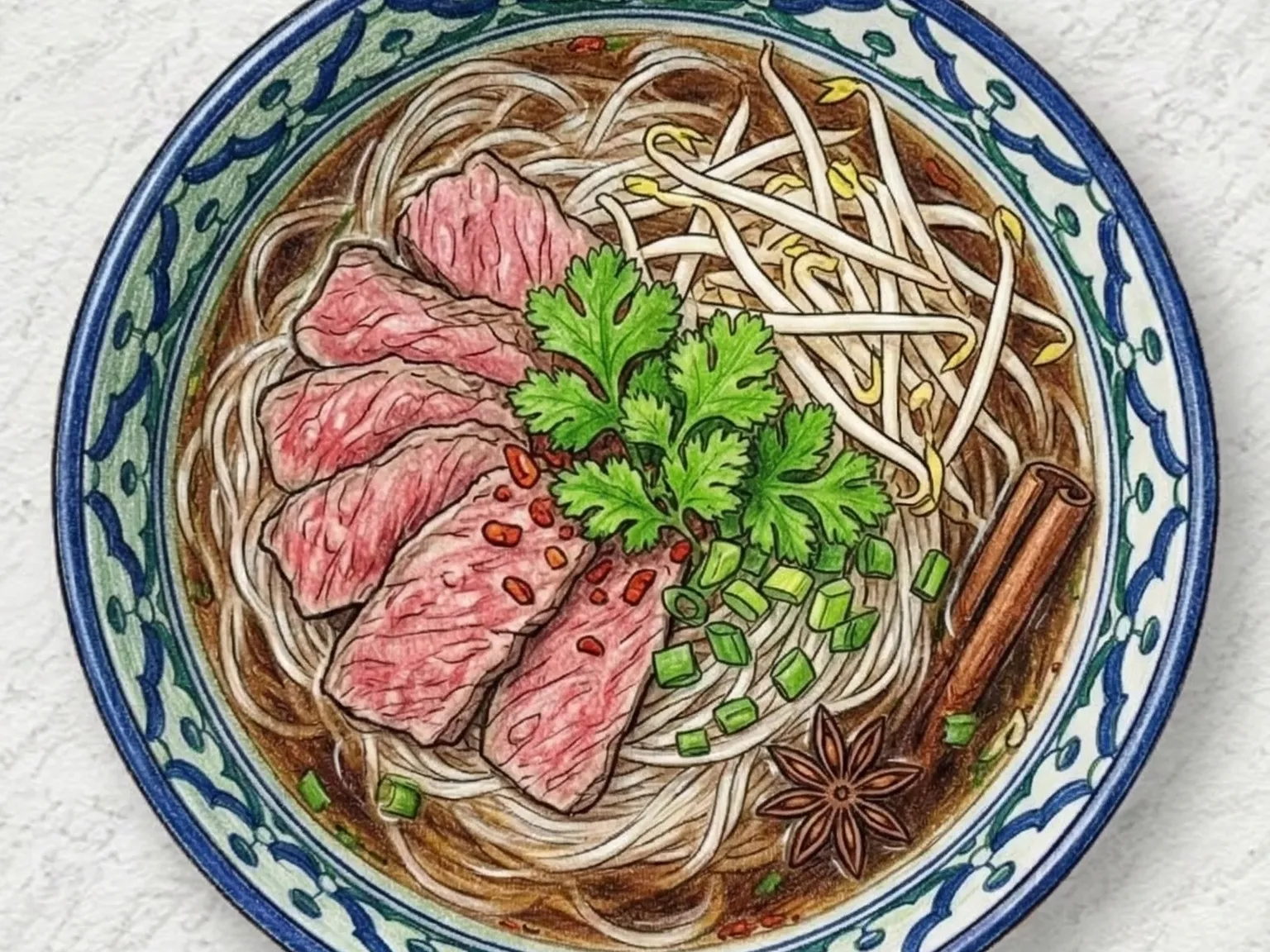
Thai boat noodles are an intensely flavored street noodle soup that originated on the small boats plying Bangkok's canals, where vendors would hand bowls across the water to customers on the banks. The broth is built by simmering beef stock with star anise and a cinnamon stick for fifteen minutes or more, extracting warm, aromatic notes that form the backbone of the dish. Fish sauce, dark soy sauce, and palm sugar are added to season the liquid into a deeply savory, slightly sweet, and mahogany-dark broth. Thinly sliced beef is poached in the simmering liquid for just a minute or two so it stays supple, then ladled over cooked rice noodles in a bowl. Fresh bean sprouts provide crunch and cilantro adds a bright herbaceous lift that counterbalances the concentrated broth. Boat noodle portions are traditionally small-designed to be eaten quickly and in multiples-so every spoonful delivers maximum impact.
Adjust Servings
Instructions
- 1
Simmer broth with star anise and cinnamon for 15 minutes.
- 2
Season with fish sauce, dark soy sauce, and palm sugar.
- 3
Cook rice noodles, rinse briefly, and drain.
- 4
Poach beef in the simmering broth for 1-2 minutes until just cooked.
- 5
Place noodles and bean sprouts in bowls, then add beef and broth.
- 6
Top with cilantro and optional chili flakes before serving.
As an Amazon Associate, we may earn from qualifying purchases.
Tips
Nutrition (per serving)
More Recipes

Beef Pad See Ew (Thai Wok-Fried Wide Rice Noodles in Dark Soy)
Beef pad see ew is a Thai wok-fried noodle dish built around wide rice noodles and dark soy sauce. The name translates to 'fried with soy sauce,' and broad, silky noodles are stained deep brown by dark soy, balanced with light soy and oyster sauce for a sweet-savory glaze. Thinly sliced beef is seared first in a blazing wok, then noodles go in to absorb the sauce and char slightly against the hot metal. Chinese broccoli or kale adds crunch from its stems and softness from its leaves. The defining element is wok hei - the smoky flavor that only comes from letting noodles sit against the wok until they pick up toasted spots.

Khao Man Gai Tod (Thai Fried Chicken Rice Bowl)
Khao man gai tod is the fried variation of Thailand's beloved chicken rice, replacing the poached bird with a crispy, deep-fried version. Chicken pieces are marinated in garlic, white pepper, and fish sauce, then dusted in seasoned flour and fried until the crust turns golden and audibly crunchy. The rice is cooked in chicken broth with garlic and ginger, absorbing the fat and aroma of the stock into each grain. What ties the plate together is the sweet chili dipping sauce - a blend of fermented soybean, vinegar, chili, and sugar - that provides a sharp counterpoint to the rich fried chicken and oily rice. Sliced cucumber and a small bowl of clear broth with winter melon round out the standard serving. Street vendors across Bangkok keep vats of oil at the ready for this dish throughout the day.

Drunken Noodles
Pad kee mao - drunken noodles - is a Thai stir-fried noodle dish whose name sparks competing origin stories: some say it was designed as drinking food, others that the chili heat itself is intoxicating. Wide sen lek rice noodles hit a smoking-hot wok with holy basil, fresh chilies, and garlic, and the key is letting the noodles char slightly where they press against the wok surface, developing a smoky sear that defines the dish. Thai holy basil (krapao) differs sharply from Italian basil - it carries a peppery, almost clove-like bite and a faint heat that blooms instantly when it meets the wok's flame. A dark sauce of oyster sauce, soy sauce, fish sauce, and sugar stains the noodles nearly black, layering salt, sweetness, and umami in every strand. In Thailand, the dish is typically made with seafood or pork and crowned with a crispy fried egg whose runny yolk is broken and mixed through the noodles at the table.

Khao Kha Moo (Thai Braised Pork Leg Rice Bowl)
Khao kha moo is a Thai braised pork leg rice bowl that rewards patience with deeply satisfying flavor. A whole pork leg is simmered for upward of two hours in a dark soy and palm sugar broth perfumed with star anise, cinnamon, and whole garlic cloves. The prolonged cooking breaks down connective tissue until the meat yields to the lightest pull. The braising liquid reduces into a glossy, mahogany-colored sauce that is both salty and gently sweet. Thick slices of the pork are arranged over steamed jasmine rice, and the sauce is spooned over until the grains glisten. Traditional garnishes include a halved hard-boiled egg stained brown from the braising liquid, pickled mustard greens that cut through the richness, and a fiery chili-vinegar dipping sauce. It is one of the most beloved night-market dishes in Thailand.

Korean Andong Guksi (Clear Beef Broth Celebration Noodles)
Andong guksi is a noodle tradition from the city of Andong in North Gyeongsang Province, where it has been served at weddings, ancestral rites, and important family events for centuries - in Korean culture, long noodles symbolize longevity. The broth is made by simmering beef brisket and bones for hours until the liquid is clear yet deeply flavored, with a clean gelatin richness that coats the lips. Wheat noodles - historically hand-pulled but now usually dried - are boiled separately, rinsed, and placed in the strained broth. The toppings are deliberately understated: thin strips of egg jidan, julienned zucchini, and perhaps a few slices of the boiled brisket. Seasoning with soup soy sauce and a touch of garlic keeps the broth transparent and lets the beef flavor speak. Unlike the bold, chili-heavy soups of Andong's other famous dish (jjimdak), guksi is an exercise in restraint and clarity.

Guilin Rice Noodles (Silky Rice Noodles in Beef Brisket Broth)
Guilin rice noodles feature silky rice noodle strands in a clear, intensely flavored beef brisket broth seasoned with soy sauce. The broth draws its depth from long-simmered brisket, delivering a clean but concentrated beef flavor. Pickled radish contributes crunch and a vinegary tang that offsets the broth's richness, while a drizzle of chili oil introduces a warm, peppery heat. Fresh cilantro crowns the bowl with a bright, herbaceous aroma that ties the Southeast Asian-influenced flavors together.