Thai Green Curry with Shrimp
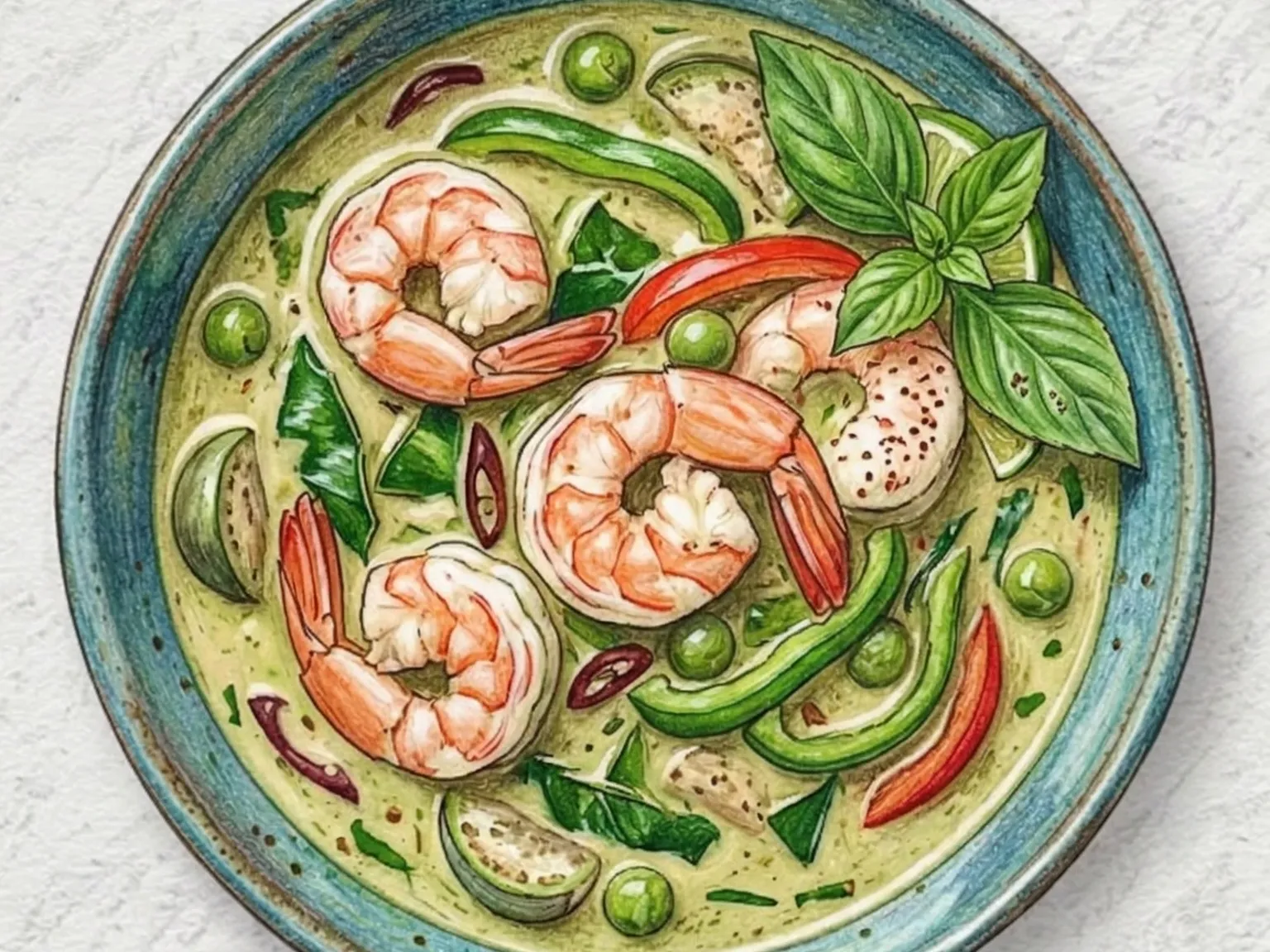
Thai green curry with shrimp is a coconut-based curry that balances the aromatic heat of green curry paste with the natural sweetness of fresh shrimp. The cooking starts by splitting the coconut milk: the thicker cream goes in first and is heated until it separates slightly, then the curry paste is fried in this fat to bloom its flavors-lemongrass, galangal, green chili, and kaffir lime all releasing their oils. The remaining coconut milk is added along with eggplant, which simmers until soft, followed by bell pepper and shrimp that cook for only three to four minutes so the shrimp stay plump and curled. Fish sauce provides salinity and palm sugar rounds the edges, while a generous handful of Thai basil stirred in off the heat fills the kitchen with a sweet, anise-like perfume. A squeeze of lime juice just before serving adds a final bright note that keeps the rich coconut from feeling heavy. The curry is traditionally spooned over jasmine rice.
Adjust Servings
Instructions
- 1
Clean shrimp; cut eggplant and bell pepper into bite-size pieces.
- 2
Heat part of the coconut milk and fry curry paste until fragrant.
- 3
Add remaining coconut milk and simmer eggplant first.
- 4
Add bell pepper and shrimp; cook for 3-4 minutes.
- 5
Season with fish sauce and palm sugar, then add basil.
- 6
Turn off heat and finish with lime juice.
As an Amazon Associate, we may earn from qualifying purchases.
Tips
Nutrition (per serving)
More Recipes

Thai Red Duck Curry (Thai Coconut Milk Red Curry with Crispy Duck)
Thai red duck curry marries the deep, fatty richness of duck breast with the pungent heat of red curry paste, all smoothed by coconut milk into a velvety, rust-colored sauce. The duck is cooked skin-side down first without any added oil, rendering its fat and crisping the skin before being sliced into bite-sized pieces. The curry paste is fried in a separate pot until fragrant, then coconut milk is added gradually and seasoned with fish sauce and palm sugar to achieve a balance of salty, sweet, and spicy. Bamboo shoots and red bell pepper are simmered in the sauce, the shoots providing a snappy crunch and the pepper a mild sweetness that complements the duck. Thai basil is stirred in at the very end, wilting just enough to release its distinctive aroma without losing its color. The finished curry is substantial and aromatic, with each serving delivering layers of flavor from the rendered duck fat, the fermented chili paste, and the coconut base.

Massaman Curry (Thai-Muslim Mild Chicken Potato Peanut Coconut Curry)
Massaman curry stands apart from other Thai curries with its mild, sweet-savory character and its roots in the Muslim communities of southern Thailand. The dish draws from Persian and Indian spice traditions - cinnamon sticks, cardamom pods, cloves, and star anise simmer alongside the coconut milk base, lending an aromatic warmth that has little to do with chili heat. Chicken thighs, whole shallots, potatoes, and roasted peanuts braise slowly until the potatoes begin to break down and thicken the sauce. Tamarind paste and palm sugar balance the richness with a gentle tang and sweetness. It is one of the most approachable Thai curries for those unaccustomed to spice, yet its layered aromatics make it anything but plain.

Panang Curry (Thai Thick Peanut Coconut Curry)
Panang curry is the thickest and richest member of the Thai curry family, distinguished by its concentrated coconut base and the addition of ground peanuts. The cooking begins by splitting coconut cream in a hot pan until the fat separates, then frying the curry paste in that fat to bloom its aromatics. The remaining coconut milk is added gradually and simmered until the sauce reduces to a spoonable consistency. Peanut butter or finely ground roasted peanuts give it a subtle nuttiness that sets it apart from green or red curries. Fish sauce provides depth, palm sugar brings sweetness, and torn kaffir lime leaves contribute a bright citrus fragrance.

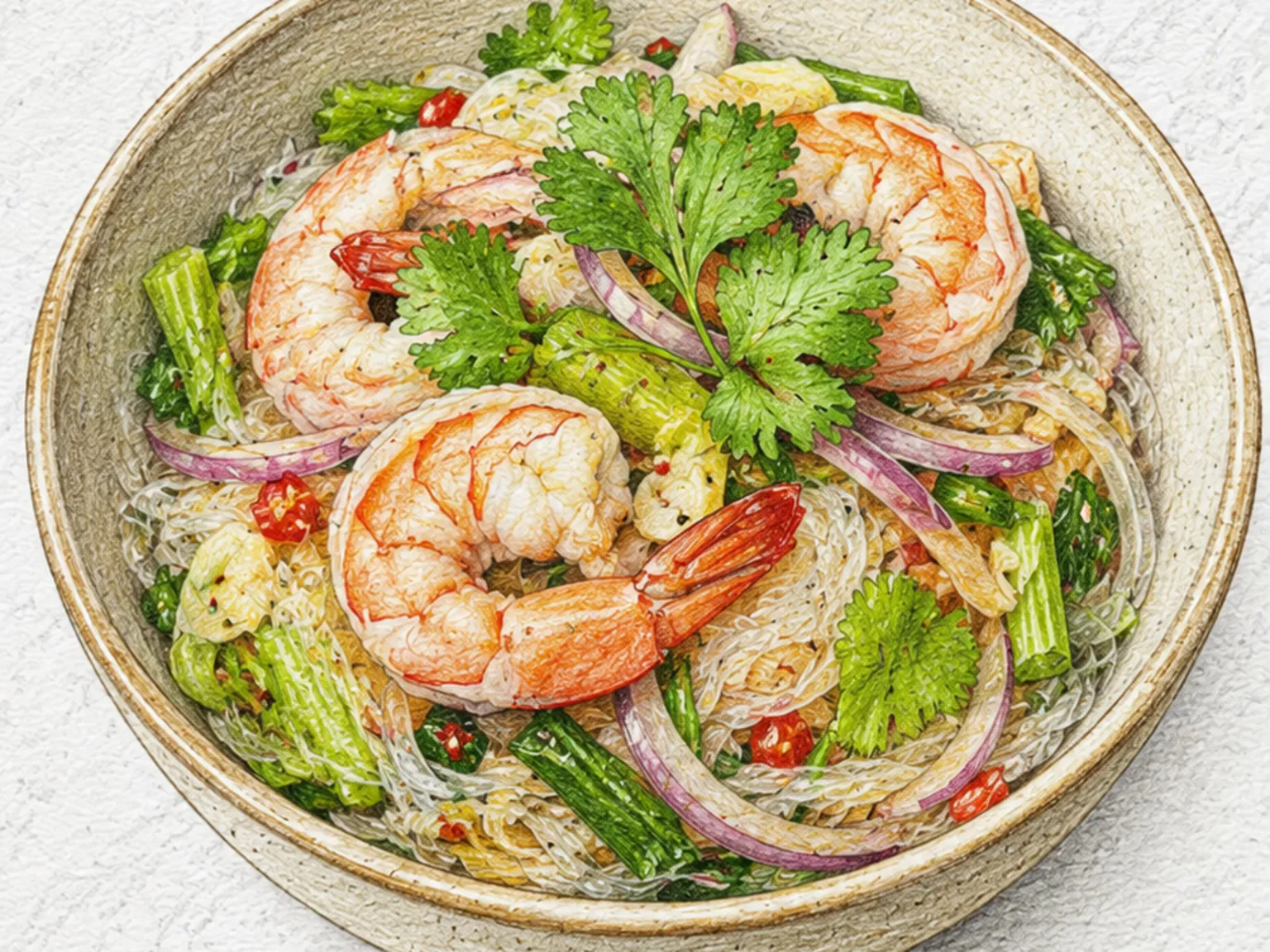
Pad Woon Sen (Thai Stir-Fried Glass Noodles with Shrimp and Egg)
Pad woon sen is a Thai stir-fried glass noodle dish that comes together in minutes. The noodles, made from mung bean starch, turn translucent when soaked and have a springy, slippery texture that absorbs sauce without becoming mushy. Shrimp is cooked first until just pink, then vegetables - typically cabbage and carrot - are tossed in over high heat to keep their crunch. Eggs are scrambled to one side of the wok and folded into the noodles along with soy sauce and oyster sauce. The seasoning is deliberately simple, allowing the natural sweetness of the shrimp and the clean bite of the vegetables to come through.

Northern Thai Coconut Curry Noodles
Khao soi is a coconut curry noodle soup from northern Thailand's Chiang Mai region. Red curry paste is fried in coconut cream until fragrant, then combined with more coconut milk and chicken stock to form a thick, spiced broth. Bone-in chicken thighs simmer in this liquid for about 20 minutes until the meat turns fork-tender. Egg noodles are boiled separately and placed in the bowl, but what sets the dish apart is a handful of the same noodles deep-fried until crisp and scattered on top - the crunch against the soft, soupy noodles below creates a sharp textural contrast. Shallots, cilantro, and a squeeze of lime cut through the richness, while fish sauce and a touch of sugar fine-tune the balance between salty, sweet, and sour.

Thai Iced Tea
Thai iced tea is a bold, sweet milk tea made by steeping black tea leaves with cardamom on low heat for five minutes to produce a deeply concentrated brew. The intentionally strong extraction ensures the tea flavor holds up against dilution from the ice. Sugar is dissolved while the tea is still warm, then the liquid is cooled and poured over a full glass of ice. Milk and condensed milk are layered on top to create a white-to-amber gradient, and once stirred, the drink becomes uniformly creamy with the cardamom's floral spice threading through the sweetened black tea base.