Thai Yellow Curry (Mild Thai Turmeric Coconut Curry with Chicken)
Quick answer
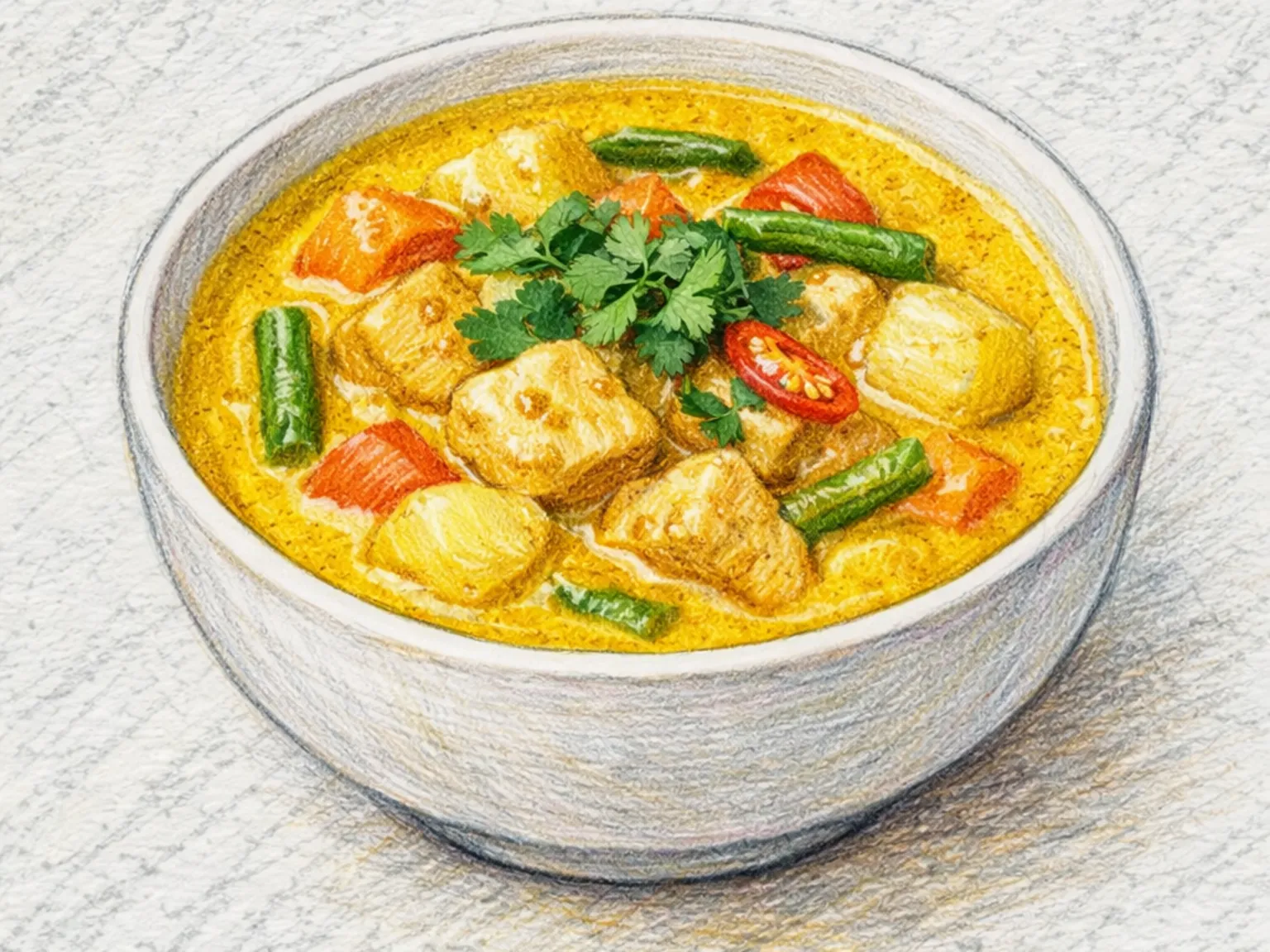
Thai yellow curry is the mildest of the three major Thai curries, built on a paste that features turmeric as its dominant spice, which gives the dish its distinctive gold...
What makes this special
- Thai Yellow Curry offers a mild profile defined by earthy turmeric and slow-simmered potatoes.
- Potato dissolves starch into the broth creating natural body without thickeners
- Turmeric in the yellow paste turns the coconut milk a vivid golden cream
Key ingredients
Core cooking flow
- 1 Cut 400 g chicken into bite-size pieces.
- 2 Warm a dry pan or pot over medium-low heat.
- 3 When the paste darkens slightly and smells aromatic, pour in 400 ml coconut milk a little at a time.
Thai yellow curry is the mildest of the three major Thai curries, built on a paste that features turmeric as its dominant spice, which gives the dish its distinctive golden color and a warm, earthy undertone. The paste is dry-fried in a pan until fragrant before coconut milk is poured in to form a creamy, gently spiced base. Chicken pieces, cubed potato, and sliced onion simmer in the liquid until the potato is fully tender, its starch thickening the curry slightly and giving the sauce a comforting body. Fish sauce is added last to season the pot, its salty depth rounding out the turmeric's earthiness and the coconut's sweetness. The result is a mild, aromatic curry with a smooth texture and a warmth that comes more from the spice blend than from chili heat. Yellow curry is often recommended as an entry point for those new to Thai cuisine, yet its layered flavor-turmeric, cumin, coriander, and coconut working in concert-rewards experienced palates as well.
Instructions
Read the steps as a cooking flow: prep, heat, seasoning, doneness control, and finish.
- 1Prep
Cut 400 g chicken into bite-size pieces.
Cut 2 potatoes into large chunks and slice 1 onion thickly, keeping the potatoes fairly large so they soften without breaking apart too early.
- 2Control
Warm a dry pan or pot over medium-low heat.
Add 3 tablespoons yellow curry paste and fry for 1 to 2 minutes, stirring constantly so the paste smells fragrant but does not scorch on the bottom.
- 3Heat
When the paste darkens slightly and smells aromatic, pour in 400 ml coconut milk a little at a time.
Stir well after each addition until the paste loosens smoothly, then bring it to a gentle boil.
- 4Control
Once the curry bubbles around the edges, add the chicken and cook over medium heat for about 3 minutes.
Stir often until the outside turns pale and the pieces are coated with sauce.
- 5Control
Add the potatoes and onion, then lower the heat to medium-low and simmer quietly for 15 to 20 minutes.
Press the potatoes into the liquid occasionally and avoid a hard boil, which can break them apart.
- 6Finish
Pierce a potato with a chopstick or fork; it should slide in easily.
Season with 1 tablespoon fish sauce, simmer briefly until the sauce looks lightly thickened, then turn off the heat and serve with rice.
After the steps
Pick a recipe that fits this dish.
Continue with shared ingredients, meal pairings, or a similar method.
Recipes That Go Well With This
More Asian →Based on shared ingredients and meal pairing
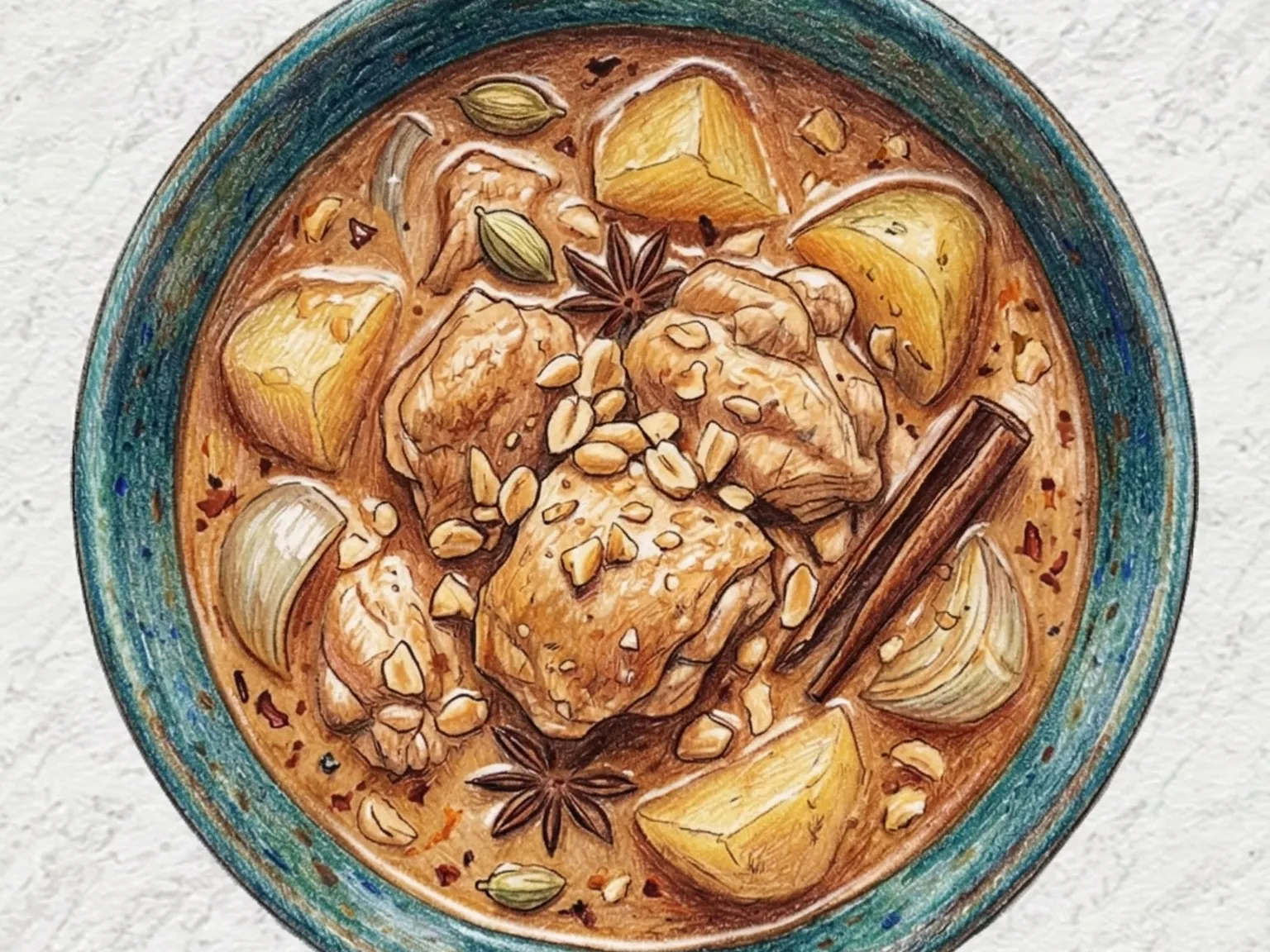
Massaman Curry (Thai-Muslim Mild Chicken Potato Peanut Coconut Curry)
Massaman curry stands apart from other Thai curries with its mild, sweet-savory character and its roots in the Muslim communities of southern Thailand, where trade routes from Persia and India brought cinnamon, cardamom, cloves, and star anise into the local kitchen long before chili became dominant. These whole spices simmer in the coconut milk base, lending an aromatic warmth that is closer to a slow-braised stew than to the fiery curries Thailand is more widely known for. Chicken thighs, whole shallots, potatoes, and roasted peanuts braise together until the potatoes begin to break apart and naturally thicken the sauce, absorbing the spiced oil along the way. Tamarind paste and palm sugar steer the richness toward a gentle tang and sweetness rather than a heavy or one-dimensional creaminess. The result is a deeply layered curry that uses almost no chili heat, making it one of the most approachable dishes in the Thai repertoire for those unaccustomed to spice while still rewarding more experienced palates with its complexity.
Tom Kha Gai (Thai Coconut Galangal Chicken Soup with Lime)
Tom Kha Gai is a classic Thai chicken soup built on a rich coconut milk base infused with traditional herbs. The preparation starts by simmering three key aromatics: thinly sliced galangal, bruised lemongrass, and torn kaffir lime leaves. These steep slowly in the coconut milk over low heat to release their layered citrus and herbal fragrances without letting the milk separate. Bite-sized chicken pieces are gently poached in this herbal broth until tender and opaque. The seasoning relies on fish sauce for a salty umami depth. Once the pot is removed from the heat, fresh lime juice is stirred in to preserve its bright acidity and balance the creamy texture of the coconut broth. The result is a smooth, aromatic soup where the rich coconut milk softens any sharp heat while showcasing the depth of the herbs. It is served hot, optionally removing the tough pieces of galangal and lemongrass before eating.
Grapefruit Shiso Shrimp Salad
Grapefruit shiso shrimp salad brings together ice-chilled blanched shrimp, membrane-free grapefruit segments, shredded shiso leaves, and thinly sliced cucumber and radish, all tossed in a yuja marmalade dressing. Blanching the shrimp for exactly two minutes and transferring them immediately to ice water locks in a firm, springy texture by contracting the protein rapidly while preventing the rubbery toughness that comes from overcooking. Removing all of the white pith from the grapefruit eliminates bitterness and leaves only the clean, tart juice of the flesh. Cutting the segments free from the membrane also makes the pieces easier to eat in a single bite. The dressing is built from yuja marmalade, rice vinegar, olive oil, and pepper, and the yuzu's floral acidity layers on top of the grapefruit to create a pronounced citrus profile that is bright but not harsh. The mint-like herbal quality of shiso leaves neutralizes any trace of fishiness from the shrimp and ties the Japanese-influenced flavor framework together. The crisp bite of cucumber and radish contrasts with the softness of the shrimp and grapefruit segments. Serving the salad well chilled is necessary to keep every texture and fragrance sharp and distinct rather than muted.
Panang Curry (Thai Thick Peanut Coconut Curry)
Panang curry is the thickest and richest member of the Thai curry family, distinguished by its concentrated coconut base and the addition of ground peanuts. The cooking begins by splitting coconut cream in a hot pan until the fat separates, then frying the curry paste in that fat to bloom its aromatics. The remaining coconut milk is added gradually and simmered until the sauce reduces to a spoonable consistency. Peanut butter or finely ground roasted peanuts give it a subtle nuttiness that sets it apart from green or red curries. Fish sauce provides depth, palm sugar brings sweetness, and torn kaffir lime leaves contribute a bright citrus fragrance.
Serve with this
Pasta alla Gricia (Roman Guanciale Pecorino Black Pepper Pasta)
Pasta alla Gricia is one of Rome's four classic pastas, made with only guanciale, Pecorino Romano, and black pepper. The cured pork jowl is rendered slowly until crisp, and its fat becomes the foundation of the sauce. Cooked pasta and a splash of starchy pasta water are tossed with finely grated Pecorino to form a creamy emulsion without any cream. It is considered the ancestor of both carbonara and amatriciana, predating the introduction of tomato and egg to those dishes. Serving it soon after cooking keeps the intended texture clearer, while brief resting lets the sauce or broth settle into the dish.
Korean Ssamjang Hwe Deopbap
This variation on hoe-deopbap replaces the standard cho-gochujang with a dressing of ssamjang mixed with vinegar and sesame oil, shifting the dominant flavor away from sweet heat and toward fermented bean depth. The doenjang component in ssamjang works against the rawness of the fish rather than masking it with chili, producing a rounded, earthy complexity that deepens with each bite. Vinegar cuts through ssamjang's thick, pungent weight and introduces a clean acidity that keeps the overall flavor from feeling heavy. Flounder sashimi is cut into bite-sized pieces and kept refrigerated, while the rice is served at room temperature so the two elements neither clash nor blend into an indistinct warmth. Julienned carrot and perilla leaves provide a crisp, juicy resistance that contrasts directly with the chewy elasticity of the fish. Dressing the vegetables in advance draws out moisture that would soften the rice, so all the components are placed in the bowl separately and tossed together only at the moment of eating to preserve every texture.
Korean Butter-Grilled Scallops
Garibi butter-gui sears fresh scallops in garlic butter until each side develops a deep golden-brown crust, then finishes with lemon juice and parsley to balance the richness. Removing every trace of surface moisture with paper towels before seasoning is the single most important step -- water on the surface of the scallop causes it to steam rather than sear, and no caramelized crust will form until that moisture has evaporated. Each side cooks for only one to two minutes at the highest heat the pan can sustain, leaving the center just barely opaque and the texture tender rather than rubbery. After flipping, butter and minced garlic are added directly to the hot pan and spooned continuously over the scallops so the aroma infuses the surface. A squeeze of lemon and a scatter of chopped parsley added just before removing from heat layers acidity and freshness over the butter richness. Simple to prepare and fast to cook, this dish appears regularly at home gatherings in Korea as a crowd-pleasing appetizer.
Similar recipes
Thai Red Duck Curry (Thai Coconut Milk Red Curry with Crispy Duck)
Thai red duck curry marries the deep, fatty richness of duck breast with the pungent heat of red curry paste, all smoothed by coconut milk into a velvety, rust-colored sauce. The duck is cooked skin-side down first without any added oil, rendering its fat and crisping the skin before being sliced into bite-sized pieces. The curry paste is fried in a separate pot until fragrant, then coconut milk is added gradually and seasoned with fish sauce and palm sugar to achieve a balance of salty, sweet, and spicy. Bamboo shoots and red bell pepper are simmered in the sauce, the shoots providing a snappy crunch and the pepper a mild sweetness that complements the duck. Thai basil is stirred in at the very end, wilting just enough to release its distinctive aroma without losing its color. The finished curry is substantial and aromatic, with each serving delivering layers of flavor from the rendered duck fat, the fermented chili paste, and the coconut base.
Northern Thai Coconut Curry Noodles
Khao soi is a coconut curry noodle soup from northern Thailand's Chiang Mai region. Red curry paste is fried in coconut cream until fragrant, then combined with more coconut milk and chicken stock to form a thick, spiced broth. Bone-in chicken thighs simmer in this liquid for about 20 minutes until the meat turns fork-tender. Egg noodles are boiled separately and placed in the bowl, but what sets the dish apart is a handful of the same noodles deep-fried until crisp and scattered on top - the crunch against the soft, soupy noodles below creates a sharp textural contrast. Shallots, cilantro, and a squeeze of lime cut through the richness, while fish sauce and a touch of sugar fine-tune the balance between salty, sweet, and sour.
Korean Curry Fried Rice (Golden Spiced Chicken Fried Rice)
Curry bokkeumbap is a Korean fried rice where curry powder coats each grain with warm spice and gives the rice a vivid golden color. Chicken breast, onion, carrot, and bell pepper are stir-fried together before the rice goes in, distributing protein and vegetables evenly through every serving. The curry fragrance develops gradually with each bite - more present than plain fried rice but lighter than a curry sauce, landing at a satisfying middle point between the two. Bell pepper adds sweetness and a visual contrast of color against the golden rice. Topping with a fried egg raises the dish further: when the yolk breaks and mixes into the rice, a layer of creaminess runs through each bite. The recipe works well with day-old rice and requires few ingredients, making it a practical weeknight meal.