Vietnamese Braised Pork and Eggs
Quick answer
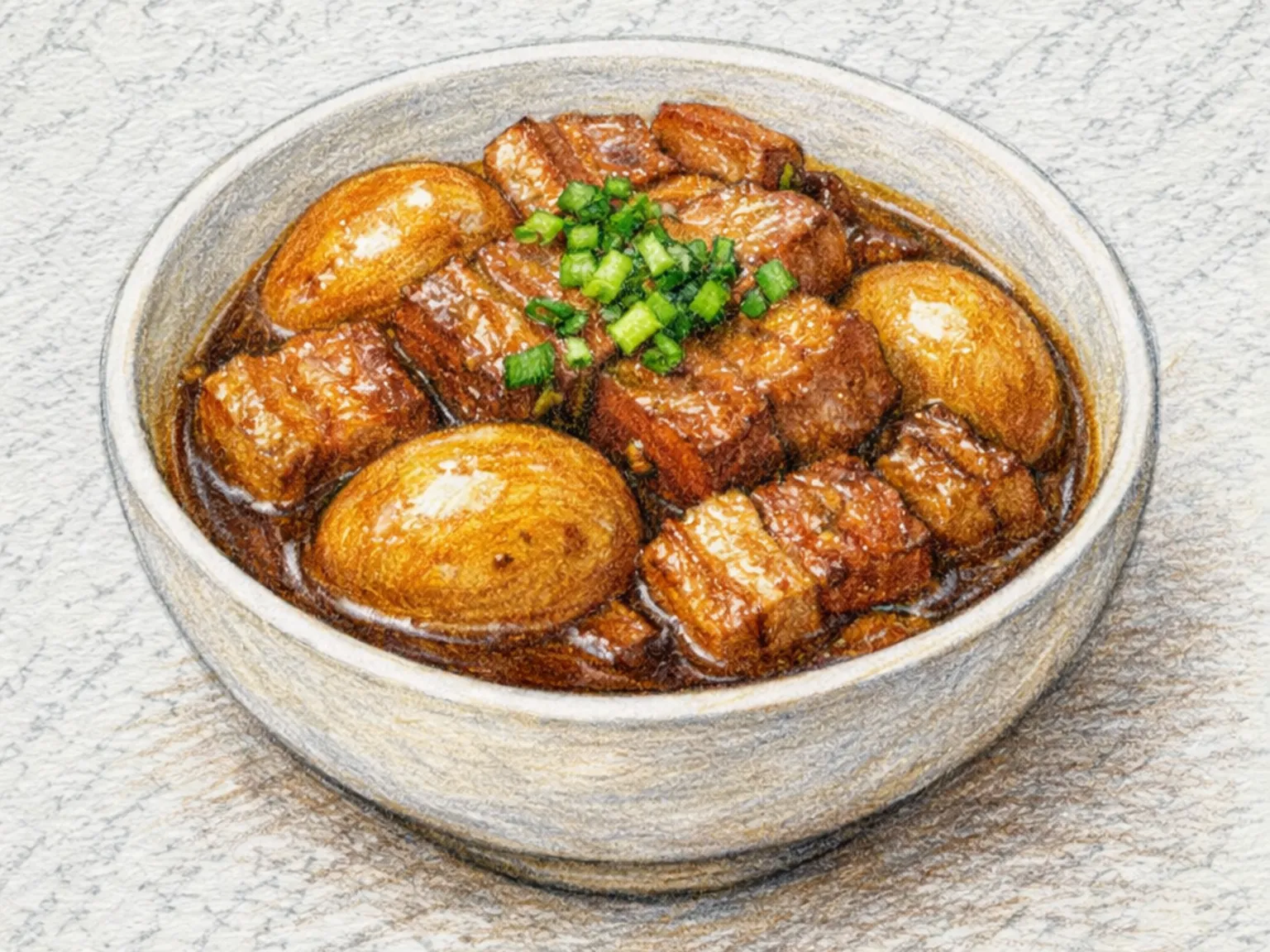
Thit kho trung is a Vietnamese home-style braise of pork and hard-boiled eggs simmered low and slow in coconut water, fish sauce, and a caramel base for nearly an hour.
What makes this special
- Thit kho trung simmers pork and eggs in coconut water and a bitter-sweet caramel base for a deep, amber Vietnamese braise.
- Sugar burned directly into caramel gives a bitter-sweet base across the whole braise
- Coconut water keeps pork moist through the full 40-minute simmer
Key ingredients
Core cooking flow
- 1 Hard-boil the 6 eggs, cool them in cold water, and peel them cleanly so the...
- 2 Put the 1.5 tablespoons sugar in a heavy pot over medium heat and let it melt without rushing.
- 3 Add the pork and stir for about 3 minutes, coating every surface with the caramel.
Thit kho trung is a Vietnamese home-style braise of pork and hard-boiled eggs simmered low and slow in coconut water, fish sauce, and a caramel base for nearly an hour. Sugar is cooked in the pot until it reaches a deep amber caramel before the pork is added, coating the meat in a dark, slightly bitter glaze that underpins the entire flavor of the dish. Coconut water contributes a gentle tropical sweetness and keeps the meat from drying out through the long simmer in a way that plain water cannot. The eggs, peeled and added from the start, absorb the braising liquid through the full cooking time and turn brown all the way to the yolk, taking on the complete range of salty-sweet seasoning. Spoon the sauce over steamed rice and the combination delivers the characteristic Vietnamese balance of fermented fish depth, caramel bitterness, and coconut softness all at once. Pork shoulder or pork belly with skin attached works best for this recipe because the collagen in the connective tissue melts into the braising liquid during the long cook, giving the sauce a glossy, slightly viscous body that clings to the rice.
Instructions
Read the steps as a cooking flow: prep, heat, seasoning, doneness control, and finish.
- 1Heat
Hard-boil the 6 eggs, cool them in cold water, and peel them cleanly so the braising liquid can stain the surface.
Cut the 700 g pork shoulder into large bite-size pieces and pat it dry before it goes into the caramel.
- 2Control
Put the 1.5 tablespoons sugar in a heavy pot over medium heat and let it melt without rushing.
When it turns deep amber and smells lightly toasted, lower the heat immediately so the caramel does not burn.
- 3Heat
Add the pork and stir for about 3 minutes, coating every surface with the caramel.
When the outside turns glossy brown, add the minced garlic and cook briefly until it smells fragrant, not scorched.
- 4Season
Add the 2 tablespoons fish sauce and 0.5 teaspoon black pepper, then cook for 1 more minute.
Scrape the bottom as you stir so the salty seasoning loosens into the caramel instead of sticking and burning.
- 5Control
Pour in the 500 ml coconut water and add the peeled boiled eggs so they braise with the pork.
Once it boils, reduce to medium-low, leave the lid slightly ajar, and simmer for about 45 minutes.
- 6Finish
Check that a chopstick slides into the pork easily and that the sauce has reduced to a glossy coating.
Roll the eggs through the sauce to deepen their color, adjust the final seasoning, and serve with steamed rice.
After the steps
Pick a recipe that fits this dish.
Continue with shared ingredients, meal pairings, or a similar method.
Recipes That Go Well With This
More Steamed →Based on shared ingredients and meal pairing
Cá Kho Tộ (Vietnamese Caramelized Braised Fish in Clay Pot)
Ca kho to is a southern Vietnamese home-style braised fish dish made with catfish or white fish simmered in a sauce of caramelized sugar, fish sauce, and coconut water. The process begins by cooking sugar until it reaches a deep amber caramel, which coats the fish in a rich, dark glaze and forms the flavor backbone of the whole dish. Fish sauce adds a sharp, concentrated saltiness and umami that defines the sauce's character. Shallots and garlic build the aromatic base, while black pepper leaves a warm, spicy finish that cuts through the richness of the caramel. Coconut water lightens and perfumes the braising liquid with a mild tropical sweetness distinct from plain sugar. Covering the pot and simmering over low heat allows the fish to absorb the seasoning deeply and the sauce to reduce to a glossy, lacquer-like coating. Unlike Korean braised fish, which often centers on chili heat, this dish balances caramel and black pepper as its primary flavors and is traditionally served over plain steamed rice.
Korean Soy-Braised Pork and Potatoes
Dwaejigogi-gamja-jorim is a Korean braised side dish of pork shoulder and potatoes simmered together in a soy-based seasoning until the liquid reduces to a thick glaze. The pork is browned first in a hot pot to develop a seared surface, then water, soy sauce, sugar, garlic, and gochugaru are added and the whole pot is brought to a simmer. As the liquid reduces, the pork releases its fat and juices into the broth, enriching the sauce. The potatoes cook through in this liquid, drawing in the seasoning and emerging with a glossy, salty-sweet coating on the outside and a fluffy, starchy interior. Onion softens and releases its natural sweetness during cooking, moderating the saltiness of the soy base. The dish is finished when the liquid has reduced to just enough to coat the ingredients. Served with rice, the potatoes and braising liquid together function almost as a sauce. Protein and starch cooked together in a single pot make this a practical, satisfying meal.
Korean Beef & Shiitake Japchae
Japchae originated as a Joseon royal court dish of stir-fried vegetables before sweet potato glass noodles were added to create the form recognized today. This version pairs glass noodles with soy-marinated beef and sliced shiitake mushrooms. Each component cooks separately: beef and mushrooms stir-fried with garlic, spinach blanched and squeezed dry, carrots and onions sauteed until just tender. A final toss with sesame oil brings everything together. The noodles should be translucent and springy, carrying a sweet-salty soy glaze into each forkful. A standard presence on every Korean holiday table at Chuseok, Seollal, and birthday celebrations alike.
Thai Five-Spice Braised Pork and Eggs
Moo palo is a Thai home-cooked braise of pork belly and soft-boiled eggs simmered slowly in a sauce built from soy sauce, palm sugar, and five-spice powder. The palm sugar goes into a dry pot first, caramelized until it turns a deep amber before the pork is added, which gives the meat a rich lacquered surface rather than a pale stew color. Five-spice powder draws together cinnamon, star anise, clove, fennel seed, and Sichuan pepper into a layered fragrance that permeates the braising liquid from the start, setting moo palo apart from simpler soy-based stews. Peeled eggs submerged in the liquid take on a uniform mahogany tint as they cook, absorbing the seasoning all the way to the yolk over the long simmer. Pork belly or shoulder with a good ratio of fat to lean is the right cut here, as the fat melts into the liquid and keeps the meat from drying out during the extended cooking time. Spooned over a bowl of steamed jasmine rice, the braise delivers a warm, sweet-salty depth punctuated by gentle spice heat, the kind of satisfying everyday meal that is central to Thai home cooking.
Serve with this
Korean Cockle & Water Parsley Mixed Rice
Kkomak-minari bibimbap is a seasonal rice bowl that comes together when cockles are at their peak in early spring, pairing the ocean sweetness of briefly blanched cockle meat with the clean, grassy sharpness of raw water parsley (minari). The cockle meat is rinsed in light salt water to remove any residual sand, then blanched for no more than thirty seconds in boiling water so the flesh stays springy rather than contracting into a rubbery texture. Julienned carrot and zucchini are each stir-fried separately, controlling moisture and flavor independently, then set aside to cool before assembly. A bowl of well-steamed rice is layered with the blanched cockles, the sauteed vegetables, and the raw minari placed on top last to protect its volatile fragrance from the heat below. A bibimbap sauce made from gochujang, sesame oil, minced garlic, and a touch of vinegar ties everything together when mixed, balancing the briny umami of the cockles against the brightness of the parsley. Sesame oil and toasted sesame seeds added at the end round the flavors and give the bowl a warm, nutty finish.
Korean Bitter Herb Kimchi
Sseumbagwi kimchi is a traditional spring fermented side dish made from sseumbagwi, a wild bitter herb that grows in Korea during early spring. The herb is soaked in cold water for at least twenty minutes to pull back its pronounced bitterness before being salted to soften the stalks. It is then dressed in a seasoning paste built from gochugaru, sand lance fish sauce, minced garlic, ginger, sweet rice paste, and plum syrup, mixed together with cut scallions. The rice paste adds body to the seasoning so it clings to the herb's thin stems and narrow leaves rather than sliding off. Plum syrup works on both the bitterness and the salt's edge at once, smoothing the overall profile without masking the herb's character. Sand lance fish sauce is preferred over anchovy sauce here because its gentler aroma does not compete with the plant's natural flavor. Five hours of room-temperature fermentation followed by refrigeration sets off lactic acid development, layering tangy depth over the bitter-green base. The flavor peaks around day three when bitterness, acidity, and umami reach the best balance. If the raw herb tastes too sharp, one additional soak in fresh cold water brings it within range before seasoning.
Imja-sutang (Royal Chilled Pine Nut Soup)
Imja-sutang is a royal Korean chilled soup that combines finely ground pine nuts and sesame seeds with chicken broth to create an opaque, creamy liquid of remarkable richness. The nut paste is blended with cooled chicken stock and a touch of milk until smooth, producing a porridge-like consistency that coats the palate with a gentle, lingering nuttiness. Poached chicken breast is shredded along the grain and submerged in the broth, and thin slices of cucumber are sometimes added for a cool, crisp contrast. The soup is traditionally served cold or at room temperature, making it especially refreshing in summer. Seasoning is minimal - just salt - because the natural oils in the pine nuts and sesame provide all the depth the dish needs. Imja-sutang traces its origins to Joseon dynasty court cuisine, where it was prepared for royal banquets, and it retains an air of elegance that elevates any table it appears on.
Similar recipes
Vietnamese Grilled Pork Vermicelli
Charcoal-grilled pork is placed over cold rice vermicelli and eaten mixed with nuoc cham in this southern Vietnamese noodle bowl. The pork marinates in fish sauce, sugar, and garlic before grilling, so direct heat caramelizes the surface sugars into a deep brown crust while the interior holds its moisture. Fresh mint, cilantro, and coarsely crushed roasted peanuts are scattered on top, layering herbal fragrance with crunch. Nuoc cham, built from lime juice, sugar, fish sauce, and chili, is the sweet-sour-salty binding agent that pulls together the warm meat, cool noodles, and raw herbs into a single coherent bowl. The temperature contrast between hot pork and chilled vermicelli is central to the eating experience. Pickled daikon and carrot add a final note of acidity that keeps each bite clean. No broth is needed; the bowl is filling and bright.
Korean Braised Beef and Radish
Sogogi mu jorim is a Korean braised beef and radish dish where brisket and thick-cut Korean radish are slowly simmered in soy sauce with garlic, ginger, and a touch of sugar. Boiling the beef first and skimming the foam produces a clean broth base for braising. The radish goes in later so it cooks until semi-translucent, absorbing the beef-enriched liquid and developing a natural sweetness that balances the soy. Green onion added at the end contributes a fresh note. Cutting the radish thick is important so it holds its shape through the braise, and resting the dish overnight before reheating deepens the flavor noticeably.
Bo Kho (Vietnamese Lemongrass Beef Shank Stew)
Bo kho is Vietnam's beef stew, born in the southern kitchens of Saigon where French colonial influence introduced slow-braised preparations and Vietnamese cooks adapted them with local aromatics. Beef shank and tendon are cut into large chunks and braised with lemongrass, star anise, cinnamon, and annatto oil - the annatto tinting the broth a vivid orange-red that sets bo kho apart from the darker tones of Western stews. Tomato paste and a spoonful of curry powder go in early, building a base that is simultaneously sweet, earthy, and warm. The stew simmers for two hours or more until the beef is fork-tender and the tendon has turned gelatinous, releasing its collagen into the broth and giving it a lip-coating richness. Carrots and daikon radish soften in the liquid during the final thirty minutes, absorbing the concentrated aromatics as they cook. Bo kho is eaten two ways - ladled over steamed rice, or alongside a crusty baguette torn for dipping into the broth. Street vendors in Ho Chi Minh City serve it from dawn, when the morning air carries the scent of star anise from their simmering pots across the alleyways.