Tinola (Filipino Ginger Chicken Soup with Green Papaya)
Asian Easy

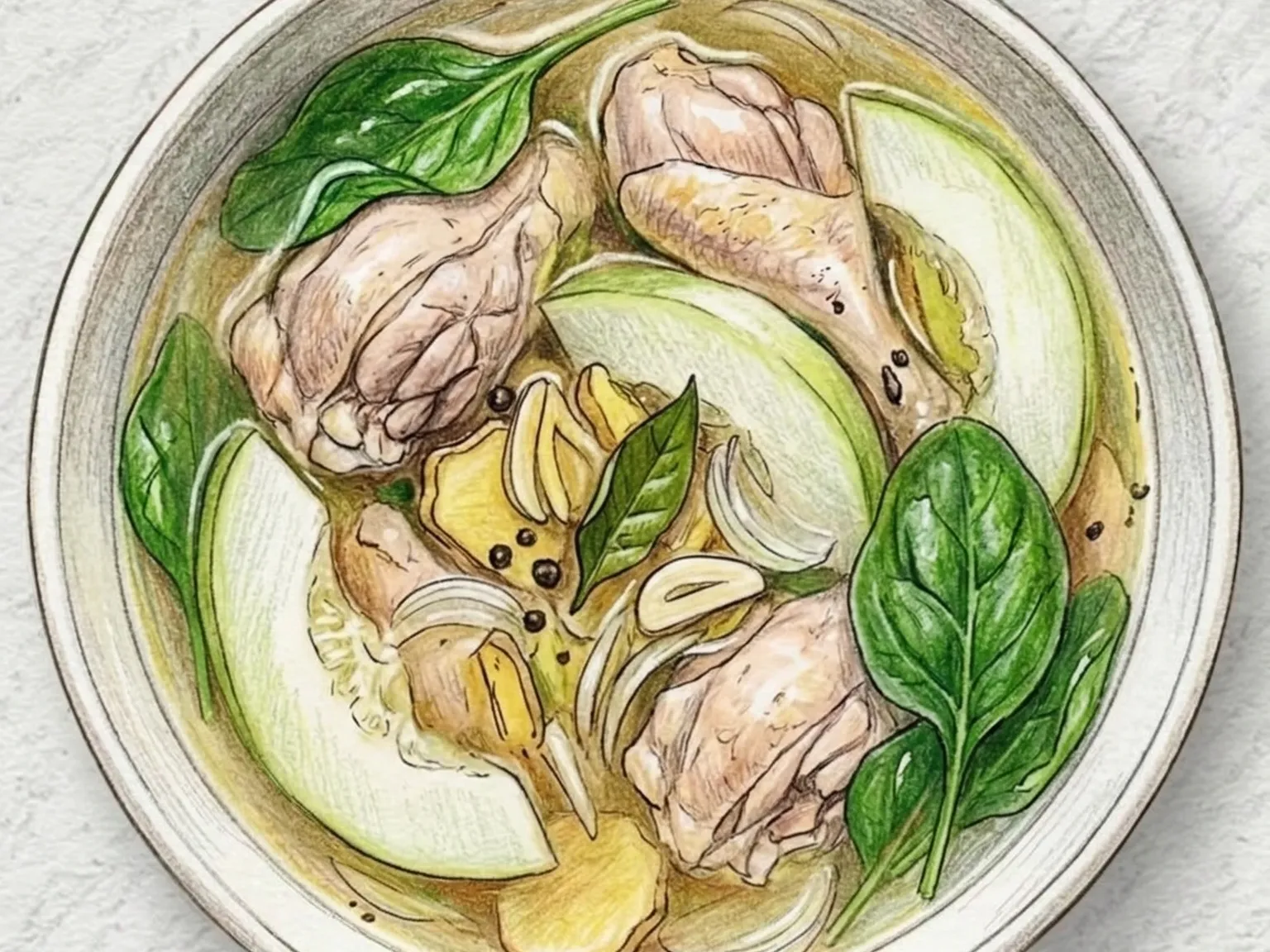
Tinola (Filipino Ginger Chicken Soup with Green Papaya)

Quick answer

Tinola is a Filipino home-style chicken soup defined by its prominent ginger character and its clear, light broth.

What makes this special

  • Tinola is a Filipino chicken soup centered on a clear broth infused with heavy ginger and papaya.
  • 40g ginger sliced and sauteed first infuses every spoonful with warm spice
  • Green papaya simmers into softness while absorbing the broth's sweetness
Total time
50 min
Level
Easy
Servings
4 servings
Ingredients
8
Calories
360 kcal
Protein
28 g

Key ingredients

chicken thighsgingergarliconiongreen papaya

Core cooking flow

  1. 1 Cut 700 g chicken thighs into bite-size pieces, then pat the surfaces dry so...
  2. 2 Warm a little oil in a pot over medium heat.
  3. 3 Add the chicken and cook over medium heat for about 4 minutes, turning the p...

Tinola is a Filipino home-style chicken soup defined by its prominent ginger character and its clear, light broth. The aromatic base is built by sauteing julienned ginger, sliced garlic, and onion in a little oil until fragrant, then adding chicken pieces and cooking them until the surfaces turn opaque. Fish sauce goes in next, providing a salty depth that anchors the broth, followed by a generous pour of water. The chicken simmers until fully tender, at which point wedges of green papaya are added-their mild sweetness and yielding texture complementing the peppery warmth of the ginger. Spinach or other leafy greens are stirred in at the very end, wilting in the residual heat and adding a fresh, verdant note to the bowl. The finished soup is remarkably clean in flavor despite its depth, with the ginger threading through every spoonful as a persistent, warming presence. In Filipino households, tinola occupies the same comforting role that chicken noodle soup holds elsewhere-it is the first dish prepared when someone is unwell or in need of nourishment.

Prep 15min Cook 35min 4 servings

Instructions

Read the steps as a cooking flow: prep, heat, seasoning, doneness control, and finish.

6 steps
  1. 1
    Prep

    Cut 700 g chicken thighs into bite-size pieces, then pat the surfaces dry so they sear instead of steaming.

    Julienne the ginger, slice the garlic and onion, and keep them ready before heating the pot.

  2. 2
    Control

    Warm a little oil in a pot over medium heat.

    Add the ginger, garlic, and onion, then cook for about 2 minutes, stirring often, until the onion softens slightly and the ginger smells clean and sharp.

  3. 3
    Control

    Add the chicken and cook over medium heat for about 4 minutes, turning the pieces so the outside turns opaque.

    Stir in 2 tablespoons fish sauce and cook 1 more minute so the seasoning coats the chicken.

  4. 4
    Control

    Pour in 1400 ml water and bring it to a boil over high heat.

    Skim off any foam, lower to medium-low, and simmer about 20 minutes until the chicken is cooked through and starting to feel tender.

  5. 5
    Control

    Add 300 g green papaya and simmer for about 8 minutes.

    Stop when a chopstick or fork enters with slight resistance, before the papaya breaks apart and clouds the clear broth.

  6. 6
    Finish

    Reduce the heat to low and add 120 g spinach for just 1 minute.

    As soon as the leaves wilt but stay bright green, turn off the heat and serve the soup while the broth is clear and hot.

After the steps

Pick a recipe that fits this dish.

Continue with shared ingredients, meal pairings, or a similar method.

Recipes That Go Well With This

More Asian →

Based on shared ingredients and meal pairing

Korean Chicken Radish Soup
Shared ingredient: boneless chicken thigh Soups

Korean Chicken Radish Soup

Dak mu-guk is a Korean chicken and radish soup that produces a clear, deeply flavored broth from two simple main ingredients. Chicken thigh meat, cut into bite-sized pieces, is blanched for one minute in boiling water before the main simmer - this step removes impurities and blood, which is the most reliable way to achieve a transparent broth rather than a cloudy one. Onion and ginger then build the aromatic backbone over twenty minutes of gentle, low heat, allowing the chicken's natural depth to develop without aggressive boiling. The radish is cut into thin, flat squares rather than thick slabs; this shape turns translucent within ten minutes and releases its clean sweetness into the liquid quickly and evenly. Soup soy sauce and salt season the broth, and diagonally sliced green onion goes in just before the heat is turned off to preserve its color and mild bite. The result balances the richness of chicken stock against the cool, vegetal sweetness of radish in a soup that is light enough to eat when recovering from illness yet satisfying as an everyday meal.

Sinigang na Baboy (Filipino Tamarind Sour Pork Rib Soup)
Shared ingredient: onion Asian

Sinigang na Baboy (Filipino Tamarind Sour Pork Rib Soup)

Sinigang na baboy is a Filipino sour soup that appears on family tables across the Philippines with the comforting regularity of a weekly ritual. Pork ribs are simmered until the meat loosens from the bone, then the broth is sharpened with tamarind - either fresh pods pounded and strained, or a spoonful of tamarind paste for convenience. Tomatoes, onions, and daikon radish go in early and soften into the broth, while eggplant, long green beans, finger chilies, and leafy greens like water spinach are added toward the end so they keep their color and bite. The resulting broth is clear, tart, and savory all at once, with the pork fat adding a subtle richness beneath the acidity. Filipinos ladle the soup generously over steamed rice, and the sourness is said to sharpen the appetite rather than satisfy it, which explains why second helpings are almost mandatory.

Pancit Palabok (Filipino Rice Noodles with Annatto Shrimp Sauce)
Serve together Noodles

Pancit Palabok (Filipino Rice Noodles with Annatto Shrimp Sauce)

Pancit palabok is a Filipino celebratory noodle dish built on thin rice noodles blanketed in an orange-hued shrimp sauce. The sauce draws its color from annatto powder, which also contributes a faint earthy sweetness, and its savory backbone from shrimp-shell stock simmered with fish sauce. Boiled egg halves and a squeeze of lime are the traditional garnish, cutting through the richness with acidity. Fried garlic, sliced scallions, and crushed chicharron scattered on top add texture contrast and bring multiple layers of flavor to a single serving. At Filipino birthday parties and holiday gatherings, palabok is presented on a large platter and shared family-style, making it one of the most recognizable celebration dishes in the cuisine.

Chicken Adobo (Filipino Vinegar Soy Braised Chicken)
Similar recipe Asian

Chicken Adobo (Filipino Vinegar Soy Braised Chicken)

Chicken adobo is the unofficial national dish of the Philippines, rooted in a pre-colonial preservation technique of braising meat in vinegar to extend its shelf life in tropical heat long before refrigeration. Chicken simmers uncovered in soy sauce, cane vinegar, crushed whole garlic cloves, bay leaves, and whole black peppercorns until the sharp acidity of the vinegar mellows into a layered, salty-sour sauce with a caramelized depth that no amount of shortcutting can replicate. Once braised, the chicken pieces are removed from the sauce and pan-fried until the skin turns deep golden and audibly crisp, then returned to the reduced liquid for a final coat. The moment the crackling skin absorbs the thick, glossy sauce is the defining pleasure of a well-made adobo. Every Filipino household holds its own ratio of soy sauce to vinegar as a point of pride, and the unresolvable debate over whose mother makes the best version is practically a national institution. This tolerance for variation is part of why the dish has endured for centuries across a country of more than seven thousand islands. It is always served over steamed white rice with extra sauce ladled over generously, and adobo famously tastes better the next day, after the proteins have had time to reabsorb the deepened, overnight flavors from the refrigerator.

Serve with this

Pork Bossam Apple Mustard Salad
Salads Medium

Pork Bossam Apple Mustard Salad

Bossam apple mustard salad uses thinly sliced cold boiled pork belly as its main component, arranged over shredded cabbage, cucumber, and crisp apple slices, then finished with a sharp mustard-soy vinaigrette. Chilling the boiled pork completely before slicing is not optional: warm pork crumbles under the knife, while cold pork yields clean, even cuts that hold their shape on the plate. Cabbage and cucumber provide a firm, crunchy base whose texture directly contrasts with the soft, fatty pork, and the apple slices introduce a cool sweetness along with a welcome burst of moisture. Korean hot mustard, dissolved generously into a soy-vinegar dressing, releases a nasal, sinus-clearing heat with each bite that cuts through the richness of the pork fat without the acidity becoming the dominant note. Perilla leaves placed underneath the pork act as both a flavoring layer and a suppressor of any residual pork odor, their herbal intensity complementing the mustard without competing with it. The salad works equally well as a standalone meal and as a second-day use for leftover bossam from the previous night, which is one reason it appears in Korean home kitchens as often as it does.

🥗 Light & Healthy 🎉 Special Occasion
Prep 22min Cook 8min 4 servings
Korean Seaweed Roe Pot Rice
Rice Medium

Korean Seaweed Roe Pot Rice

The preparation starts by layering finely diced radish at the bottom of a heavy pot before adding soaked rice. A specific technique defines this dish: warming the salted pollock roe and butter using only the residual heat of the vessel after the flame is extinguished. Avoiding direct heat prevents the roe's proteins from tightening into a dry or crumbly texture. Instead, the indirect warmth maintains a soft consistency where individual eggs pop and release their salty essence into the grains. As the butter melts, it coats each piece of rice, acting as a bridge between the sharp saltiness of the fish roe and the mild nature of the rice. Throughout the cooking process, the radish pieces release moisture upward, ensuring the rice remains hydrated while contributing a subtle sweetness and a clean finish. Before the meal begins, crumbling gamtae over the surface introduces a distinct oceanic scent that sits above the savory layers of butter and roe. Sliced scallions provide a sharp, crisp contrast to the overall richness. Pouring hot water into the pot at the end creates a toasted rice water that clears the palate. It is important to place the roe and butter within four minutes of turning off the heat to ensure the remaining warmth is sufficient to soften the ingredients.

🎉 Special Occasion 🏠 Everyday
Prep 15min Cook 25min 2 servings
Korean Fish Cake Soup (Clear Anchovy Radish Broth)
Drinks Easy

Korean Fish Cake Soup (Clear Anchovy Radish Broth)

Eomuk-tang is a Korean fish cake soup in which skewered fish cakes and thick radish slices simmer in a clear broth built from dried anchovies and kelp. The kelp must be removed the moment the water begins to boil, otherwise it releases a slimy texture that clouds the broth. Cutting the radish thick allows it to slowly release natural sweetness over the long simmer. Rinsing the fish cakes in hot water before adding them washes away surface oil and keeps the broth clear and clean. Soup soy sauce adjusts the seasoning, and green onion and black pepper finish the pot. Adding the radish before the fish cakes ensures it has enough time to fully soften and sweeten the broth, since it takes longer than the eomuk to cook through.

🍺 Bar Snacks 🥗 Light & Healthy
Prep 15min Cook 25min 4 servings

Similar recipes

Chicken Noodle Soup
Western Easy

Chicken Noodle Soup

Chicken noodle soup simmers chicken breast with onion, carrot, and celery in chicken stock, then finishes with egg noodles for a classic American home-cooked meal. Sauteing the vegetables in olive oil before adding the stock draws out their natural sweetness and infuses the broth with their flavor from the start. Poaching the chicken breast whole and shredding it along the grain produces long strands that mix naturally with the noodles on the spoon. Adding the noodles at the very end and cooking them only for the time listed on the package keeps them from turning soft and mushy. For leftovers, storing noodles separately and combining them when reheating preserves their texture.

🏠 Everyday 🍺 Bar Snacks
Prep 15min Cook 35min 4 servings
Korean Ginger Chicken Gomtang
Soups Medium

Korean Ginger Chicken Gomtang

This ginger chicken gomtang is a clear, restorative Korean soup made by simmering a whole chicken low and slow with fresh ginger, onion, garlic, and green onion until the broth turns golden and develops a quietly complex flavor. Unlike beef-bone soups, which derive their richness from marrow and connective tissue, chicken gomtang achieves its depth through the prolonged extraction of collagen and gelatin from the bones and skin, resulting in a broth that coats the palate softly without feeling heavy. The ginger is added early so its sharp, warming oils can fully disperse through the liquid, while sliced onion gradually sweetens the broth as it cooks down. Once the broth is strained, it is remarkably clean-tasting despite its depth: a quality that Korean cooks describe as siwonhada, a coolness and clarity that settles the stomach while nourishing the body. The chicken is pulled from the bones and shredded along the grain into generous pieces before being returned to the bowl. Seasoning is kept minimal, a small pour of soup soy sauce, a pinch of salt, and a very generous amount of freshly cracked black pepper, whose heat amplifies the ginger and warms the whole dish. Korean households reach for this soup when someone is ill or recovering from fatigue, but it is equally at home as a restorative weekday dinner or a refined first course when served in small portions before a larger meal.

🏠 Everyday
Prep 20min Cook 70min 4 servings
Chicken Inasal (Bacolod Citrus Lemongrass Grilled Chicken)
Asian Medium

Chicken Inasal (Bacolod Citrus Lemongrass Grilled Chicken)

Chicken inasal is the defining grilled chicken of Bacolod City in the Western Visayas region of the Philippines, so inseparable from its origin that it is commonly called Bacolod chicken. An overnight marinade of calamansi juice, cane vinegar, lemongrass, and garlic allows the acid to work deep into the muscle fibers, tenderizing the meat while coating it in layered citrus and herb fragrance. During grilling over coconut-shell charcoal, the chicken is basted repeatedly with annatto oil, which stains the skin a vivid orange and keeps the exterior perpetually moist so it never dries over the coals. The charcoal smoke combines with the calamansi and lemongrass aromatics to build a smoky-citrus flavor profile that distinguishes inasal from other grilled chicken preparations. The chicken is served alongside garlic rice with a small dish of chicken oil mixed with calamansi juice for dipping. In Bacolod, an entire street called Manokan Country is lined with dozens of inasal stalls that operate simultaneously every evening, filling the neighborhood with charcoal haze.

🎉 Special Occasion 🍺 Bar Snacks
Prep 20min Cook 30min 4 servings

Tips

Extra ginger gives a cleaner, brighter broth.
Add greens at the end to preserve color and texture.

Nutrition (per serving)

Calories
360
kcal
Protein
28
g
Carbs
10
g
Fat
22
g