Tiramisu
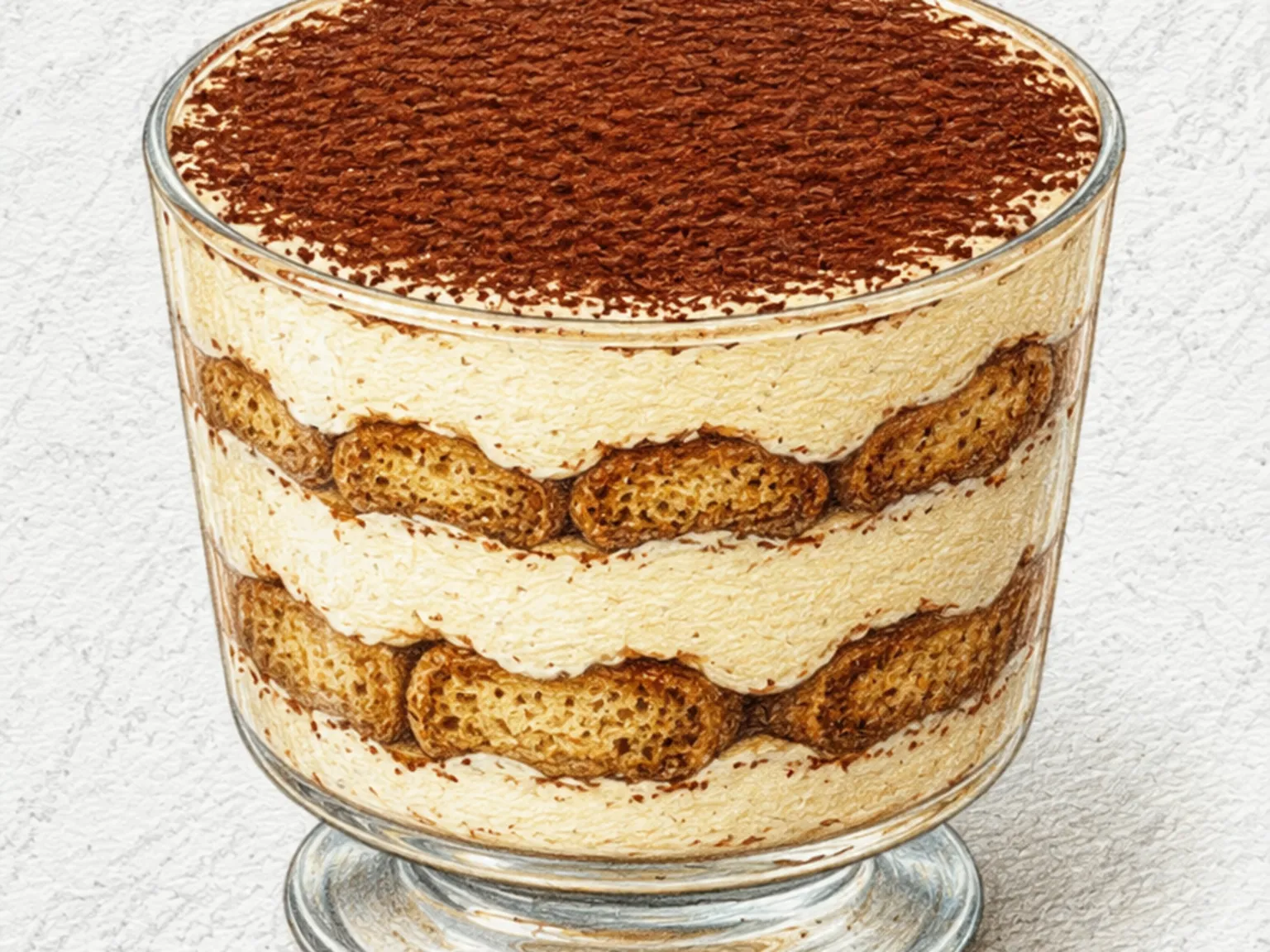
Layers of espresso-soaked savoiardi biscuits alternate with a whipped mascarpone cream and rest in the refrigerator until the components meld into a single, cohesive dessert. The cream is built by whisking egg yolks with sugar until pale and thick, then folding in mascarpone until the mixture is airy but still dense enough to hold its shape between layers. The biscuits are dipped quickly - one to two seconds per side - into strong espresso; any longer and they dissolve into mush that cannot support the cream above. At least six hours of refrigeration transforms the stack: the biscuits absorb moisture from the cream and soften to a cake-like consistency, while the cream firms slightly and develops a more unified flavor. A generous dusting of unsweetened cocoa powder through a fine sieve finishes the top, adding a bitter note that frames the sweetness of the cream and the roasted depth of the coffee. Traditional versions include a splash of Marsala wine or coffee liqueur in the soaking liquid, which adds warmth and complexity.
Adjust Servings
Instructions
- 1
Beat egg yolks with sugar until pale; fold in mascarpone.
- 2
Whip egg whites to stiff peaks and fold into the mascarpone mixture.
- 3
Dip ladyfingers in espresso and layer in a dish; spread cream over each layer.
- 4
Dust with cocoa powder and refrigerate for at least 4 hours.
As an Amazon Associate, we may earn from qualifying purchases.
Tips
Nutrition (per serving)
More Recipes

Dalgona Tiramisu (Korean Whipped Coffee Cream Layered Tiramisu)
This tiramisu borrows the whipped dalgona coffee technique that became a global trend and layers it into a classic Italian dessert structure. Instant coffee, sugar, and hot water are whipped into a thick, airy foam that intensifies the coffee presence far beyond what a simple espresso soak provides. Between layers of mascarpone cream and espresso-dipped ladyfingers, the dalgona foam adds both flavor concentration and a mousse-like lightness. After at least four hours of refrigeration, the layers meld together so that each spoonful captures biscuit, cream, and coffee foam simultaneously. A final dusting of cocoa powder across the top adds visual polish and a faint bitterness. For those who prefer a less sweet version, reducing the dalgona syrup brings the coffee's natural bitterness forward.

Classic Tiramisu
Classic tiramisu layers ladyfingers briefly soaked in a syrup of cooled espresso and Marsala wine with a cream made from egg yolks whipped with sugar over a bain-marie, then folded with mascarpone and softly whipped heavy cream. Dipping the ladyfingers for only about one second prevents them from absorbing too much liquid and collapsing. Whipping the cream to soft peaks and folding it gently keeps the filling light rather than dense. The bittersweet depth of espresso plays against the rich, buttery smoothness of mascarpone, creating a flavor contrast that develops further with chilling. A minimum of four hours in the refrigerator - ideally overnight - allows the layers to meld into a cohesive, melt-in-the-mouth texture.

Affogato
Affogato means 'drowned' in Italian - a scoop of vanilla gelato submerged under a shot of freshly pulled espresso. The dessert likely originated in Milan's coffee bars during the mid-20th century, though its exact origin remains debated. What makes it work is the collision of temperatures and flavors: near-boiling espresso meets frozen cream, creating a rapidly melting pool where bitter coffee and sweet vanilla swirl together. The espresso must be poured at the table, moments after extraction, so the crema is still intact and the heat is at its peak. A shaving of dark chocolate on top adds a snap of cocoa bitterness, while toasted almond slices provide a textural crunch against the dissolving ice cream. The entire experience lasts only a few minutes before it becomes a warm coffee drink - that urgency is part of its appeal.

Chestnut Espresso Tiramisu
Chestnut espresso tiramisu folds chestnut puree into the mascarpone cream, adding an autumnal dimension to the classic layered dessert. Savoiardi biscuits soaked in strong espresso are layered with a cream made from mascarpone whipped with chestnut puree and sugar. The chestnut contributes a mellow, nutty sweetness that tempers the espresso's bitterness rather than competing with it, giving the cream a denser body than the traditional version. Cocoa powder dusted on top adds another layer of bitterness, and each spoonful pulls through all the strata. Overnight refrigeration is essential, allowing the espresso to migrate into the cream layers and the chestnut flavor to deepen into a cohesive whole.

Almond Biscotti
Biscotti - meaning 'twice-cooked' in Italian - originated in the Tuscan city of Prato, where they have been baked since at least the 14th century as provisions for long sea voyages because the double baking drives out nearly all moisture. The dough is shaped into a flat log, baked once until firm, then sliced on the diagonal and baked again at a lower temperature until each slice is dry and hard throughout. Whole almonds embedded in the crumb provide a contrasting crunch and a toasted, slightly bitter note that balances the vanilla-scented dough. The resulting cookie is deliberately too hard to eat comfortably on its own - it is meant to be dipped into espresso, Vin Santo, or strong black coffee, where the liquid softens the outer layer while the core stays crisp. This dual texture, hard giving way to yielding, is the entire point of the biscotti tradition.

Chicken Piccata
Chicken piccata pounds chicken breast thin, dredges it in flour, and sears it in butter, then builds a pan sauce from white wine, lemon juice, and capers. Deglazing the pan with wine dissolves the browned bits on the surface, forming the flavorful base of the sauce. Lemon juice adds a sharp acidity that cuts through the butter's richness, while capers contribute a briny saltiness that deepens the overall flavor. Swirling in cold butter at the end emulsifies the sauce into a glossy, clinging consistency. The lemon juice should be added off the heat to preserve its fresh aroma, and this clean, bright acidity paired with the flour-coated chicken is what defines the dish.