Korean Pan-Fried Tofu with Soy Dipping Sauce

Korean Pan-Fried Tofu with Soy Dipping Sauce

Quick answer

Firm tofu is sliced 1.5 cm thick, patted thoroughly dry with paper towels, and lightly salted before going into an oiled pan for four to five minutes per side.

What makes this special

  • Tofu-gui achieves a crisp golden crust by removing surface moisture from firm slices before frying.
  • Thorough moisture removal with paper towels creates an even golden crust without oil splatter
  • 1.5 cm slices cooked 4-5 minutes per side maximize the crisp-to-soft textural contrast
Total time
25 min
Level
Easy
Servings
2 servings
Ingredients
7
Calories
200 kcal
Protein
16 g

Key ingredients

Firm tofuCooking oilSaltSoy sauceKorean chili flakes

Core cooking flow

  1. 1 Slice 300 g firm tofu into pieces about 1.5 cm thick.
  2. 2 Sprinkle 1/4 teaspoon salt over both sides and let the tofu stand for 3 minutes.
  3. 3 Before heating the pan, mix 2 tablespoons soy sauce, 1/2 teaspoon gochugaru...

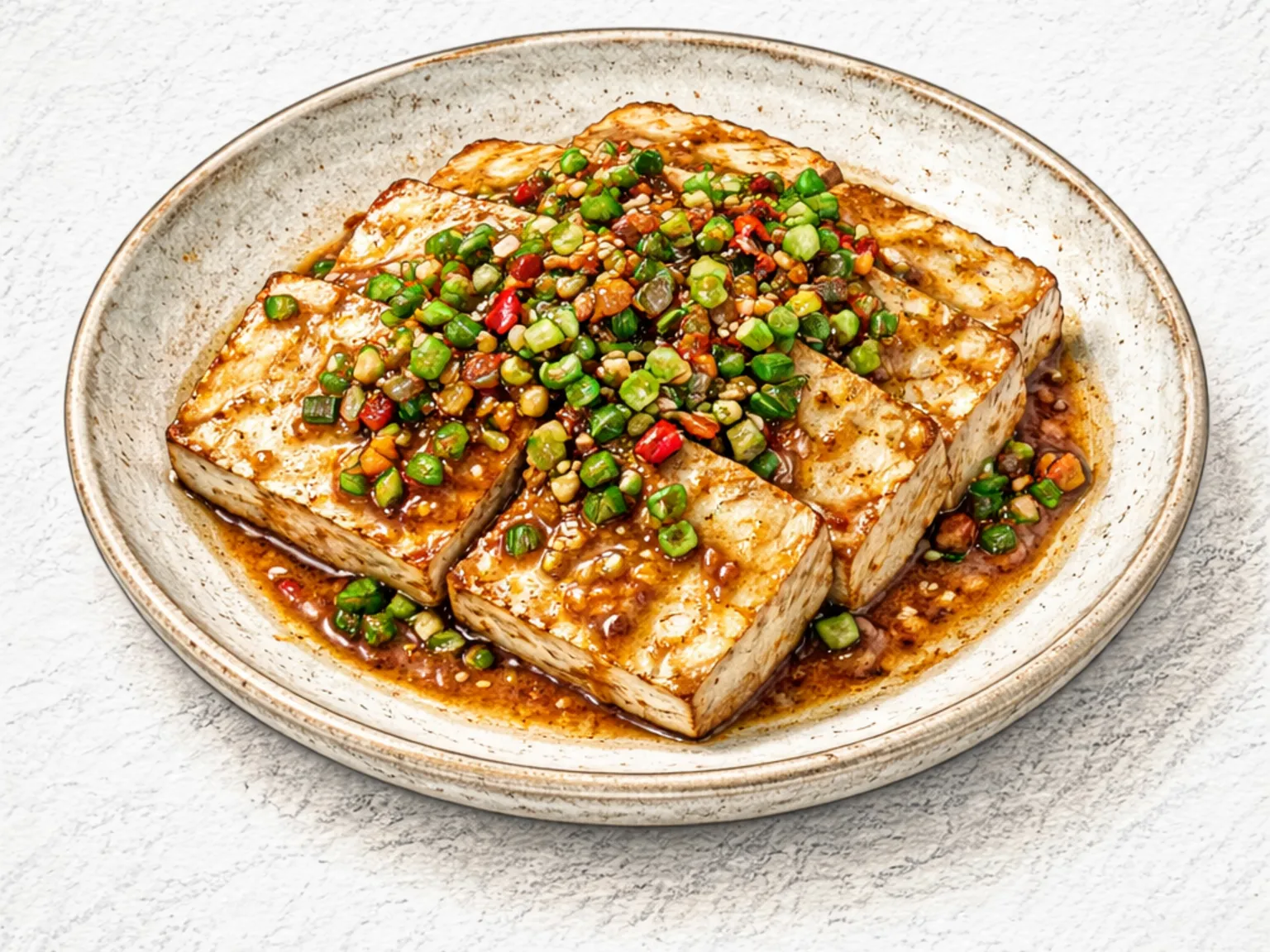
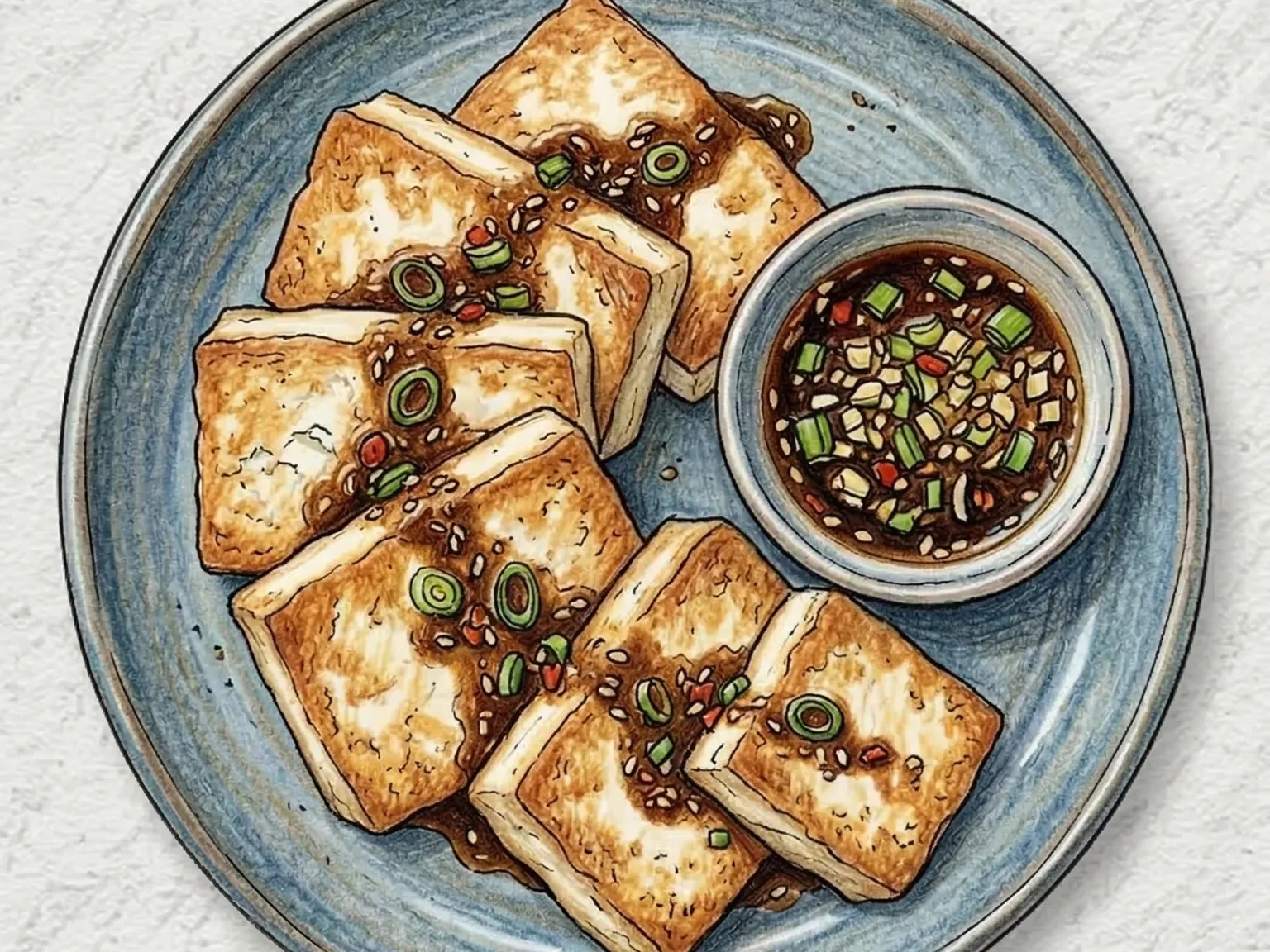
Firm tofu is sliced 1.5 cm thick, patted thoroughly dry with paper towels, and lightly salted before going into an oiled pan for four to five minutes per side. Removing surface moisture is the critical step - dry tofu does not splatter and develops an even golden crust. A dipping sauce of soy sauce, Korean chili flakes, chopped green onion, and sesame oil accompanies the fried slices, and the crisp exterior absorbs just enough sauce to add flavor while the soft interior stays mild. With minimal ingredients, this dish is entirely about the textural contrast between the crunchy shell and the silky center.

Prep 10min Cook 15min 2 servings

Instructions

Read the steps as a cooking flow: prep, heat, seasoning, doneness control, and finish.

6 steps
  1. 1
    Prep

    Slice 300 g firm tofu into pieces about 1.5 cm thick.

    Press the top, bottom, and sides with paper towels until the surface no longer looks wet or glossy.

  2. 2
    Season

    Sprinkle 1/4 teaspoon salt over both sides and let the tofu stand for 3 minutes.

    If moisture appears on the surface, blot it lightly with fresh paper towels before cooking.

  3. 3
    Finish

    Before heating the pan, mix 2 tablespoons soy sauce, 1/2 teaspoon gochugaru, 1 tablespoon chopped green onion, and 1/2 tablespoon sesame oil. Set the sauce aside so the hot tofu can be served right away.

  4. 4
    Control

    Add 2 tablespoons cooking oil to a pan and heat it over medium heat.

    When the oil moves easily across the pan, arrange the tofu in one layer without overlapping the pieces.

  5. 5
    Heat

    Cook the first side for 4-5 minutes without moving the tofu.

    When the edges turn golden and the bottom feels firm, flip each piece carefully with a wide spatula to avoid breaking it.

  6. 6
    Finish

    Cook the second side for another 4-5 minutes until both sides are evenly crisp and golden.

    Transfer the tofu to a plate, serve it warm, and offer the soy dipping sauce on the side.

After the steps

Pick a recipe that fits this dish.

Continue with shared ingredients, meal pairings, or a similar method.

Recipes That Go Well With This

More Grilled →

Based on shared ingredients and meal pairing

Korean Pan-Fried Tofu with Seasoned Soy Sauce
Shared ingredient: green onion Side dishes

Korean Pan-Fried Tofu with Seasoned Soy Sauce

Dubu buchim yangnyeom is one of the most common Korean home banchan, a dish that appears on the table because the technique is straightforward and the ingredients are always in the kitchen. Firm tofu is cut into thick slices, salted lightly to pull moisture from the surface, then pan-fried in a minimal amount of oil until both faces develop a golden, crackling crust while the interior stays soft and warm. The yangnyeom jang, the seasoned sauce, is assembled directly at the stove: soy sauce, gochugaru, chopped scallion, garlic, and sesame oil stirred together, then spooned over the hot tofu the moment it comes out of the pan. The residual heat of the tofu gently wilts the raw scallion and opens the sesame oil, releasing its fragrance into the sauce without any additional cooking. The ratio of ingredients in the sauce varies from household to household, with some reducing the gochugaru and adding toasted sesame seeds, and others adding cheongyang chili for extra heat. In Korean temple cuisine, this preparation has served for centuries as the primary protein source in meat-free meals.

Korean Silken Tofu with Seasoned Soy Sauce
Shared ingredient: green onion Side dishes

Korean Silken Tofu with Seasoned Soy Sauce

Chilled silken tofu is placed in a bowl and topped with a soy-based seasoning sauce that provides all the flavor the bland tofu needs. Silken tofu is coagulated with less agent than regular tofu, resulting in a custard-like texture that yields to a spoon and dissolves on the tongue. The sauce mixes soy sauce with gochugaru, minced garlic, chopped green onion, sesame oil, and toasted sesame seeds, concentrating salty, spicy, and nutty notes into a single spoonful. Each bite pairs the tofu's neutral softness with the sauce's concentrated punch, creating a rhythm of gentle and sharp that keeps the palate engaged. Sesame oil in the sauce adds a glossy sheen across the tofu's white surface, and the red flecks of chili powder provide a visual contrast that signals the heat to come. The soybean fragrance of the tofu itself acts as a quiet backdrop, grounding the louder flavors of the dressing. Because no cooking is required beyond mixing the sauce, this banchan comes together in minutes and is especially practical on busy evenings.

Korean Spicy Stir-Fried Anchovies
Serve together Side dishes

Korean Spicy Stir-Fried Anchovies

Spicy stir-fried anchovies (maeun myeolchi-bokkeum) toss medium-sized dried anchovies in a gochujang-gochugaru glaze, occupying the opposite end of the flavor spectrum from the sweet jiri-myeolchi version and targeting adult palates. Medium anchovies are larger and thicker than the tiny variety, requiring individual head-and-gut removal to eliminate bitterness - a tedious prep step that nonetheless determines the dish's clean finish. After dry-toasting to drive off moisture, the anchovies simmer in a sauce of gochujang, gochugaru, soy sauce, oligosaccharide, and minced garlic until each piece is coated in a rust-colored glaze. The gochujang's fermented heat combines with gochugaru's vivid red to create both flavor depth and visual appeal. The larger anchovy size delivers a satisfying crunch that lingers alongside a lasting savory umami. Heat intensity is adjustable via gochugaru quantity - adding chopped cheongyang chili ratchets it up another notch. This banchan doubles as a soju drinking snack, appearing as frequently on bar tables as on dinner tables.

Korean Chili Soy Grilled Tofu
Similar recipe Grilled

Korean Chili Soy Grilled Tofu

Chili-tofu-gui is a Korean pan-grilled tofu dish where firm tofu slices are browned on both sides, then glazed with a sauce of soy sauce, minced hot green chili, garlic, sesame oil, and sugar. Pressing moisture out of the tofu before cooking is essential for achieving a clean, golden-brown sear without oil spattering across the pan. Once the sauce is added, a brief simmer on low heat coats each slice in a glossy layer where the soy's saltiness, the sugar's sweetness, and the chili's sharp heat play against the tofu's neutral base. The dish works equally well as a weeknight side dish or as a quick drinking snack. Adding one tablespoon of water when simmering the sauce prevents it from reducing too sharply and ensures each slice is evenly coated rather than over-salted. A scattering of sesame seeds at the end is optional but recommended.

Serve with this

Korean Tuna Fried Rice (Quick Canned Tuna Stir-Fried Rice)
Rice Easy

Korean Tuna Fried Rice (Quick Canned Tuna Stir-Fried Rice)

Chamchi bokkeumbap is a staple Korean home-style fried rice made by stir-frying canned tuna together with its oil alongside diced onion, carrot, and green onion, then folding in cooked rice and seasoning with soy sauce and sesame oil. The tuna oil distributes through the rice during frying, coating each grain and building a savory, nutty richness that needs little else to feel complete. It is the kind of meal that comes together from pantry and fridge staples with no advance planning: one can of tuna plus whatever vegetables are on hand covers the whole recipe. Cold leftover rice works better than freshly cooked because lower moisture content keeps the grains separate and gives the fried rice its characteristic loose texture. Maintaining high heat throughout prevents clumping and develops a slight char on the rice that adds depth.

⚡ Quick 🏠 Everyday
Prep 5min Cook 10min 2 servings
Chicken Mu (Korean Fried Chicken Radish Pickle)
Kimchi Easy

Chicken Mu (Korean Fried Chicken Radish Pickle)

The crunchy, sweet-sour radish pickle served with every order of Korean fried chicken - now easy to make at home in under 15 minutes. Cubed radish is submerged in a cooled brine of vinegar, sugar, salt, and whole black peppercorns. Using fully cooled brine rather than hot is critical for maintaining the radish's firm, snapping crunch. Ready to eat after one day of refrigeration, its bright acidity cleanses the palate between bites of crispy chicken. Stored in a glass jar, this pickle keeps for over a week.

⚡ Quick 🏠 Everyday
Prep 10min Cook 5min 4 servings
Gyeran-guk (Egg Drop Anchovy Broth Soup)
Soups Easy

Gyeran-guk (Egg Drop Anchovy Broth Soup)

Gyeran-guk is Korea's most accessible comfort soup: a clear, golden broth seasoned with soy sauce and garlic into which a beaten egg is drizzled in a thin stream. When the egg hits the rolling boil, it sets almost instantly into delicate, flower-like ribbons that drift through the liquid in pale yellow sheets. Sliced green onion and a drop of sesame oil added at the end bring a gentle fragrance that lifts the otherwise clean, mild broth. The result is soothing and restorative, mild enough for a sick day yet substantial enough to anchor a full meal of rice and side dishes. Its near-universal appeal on Korean dinner tables comes partly from the fact that nearly every household keeps eggs, soy sauce, and garlic on hand, making it the soup most likely to appear with no planning at all. From start to finish the bowl is ready in under ten minutes.

🏠 Everyday ⚡ Quick
Prep 5min Cook 10min 2 servings

Similar recipes

Korean Grilled Corn with Soy Butter
Grilled Easy

Korean Grilled Corn with Soy Butter

Corn-gui is Korean grilled corn on the cob brushed with a glaze of soy sauce, melted butter, sugar, and minced garlic, then turned slowly over medium heat until the kernels develop a caramelized, salty-sweet crust. The corn is pre-cooked by boiling or microwaving before grilling, so time on the grill is dedicated entirely to building flavor through caramelization and char. Grilling over too-high heat burns the sugar before the corn colors evenly, so patience and repeated thin coats of glaze at every turn are essential. The result layers the corn natural starch sweetness with the richness of butter and the deep savoriness of fermented soy sauce, all in one bite.

🍺 Bar Snacks ⚡ Quick
Prep 5min Cook 20min 2 servings
Korean Grilled Mackerel (Crispy Skin Salt-Grilled Blue Fish)
Grilled Easy

Korean Grilled Mackerel (Crispy Skin Salt-Grilled Blue Fish)

Godeungeo-gui is Korea's classic grilled mackerel, prepared by salting the fish for ten minutes to draw out moisture and reduce fishiness, patting the surface completely dry, then pan-frying or grilling over direct heat. Cooking skin-side down first for five to six minutes renders the abundant subcutaneous fat and crisps the skin, while flipping and cooking the flesh side for four to five more minutes keeps the interior moist and flaky. Mackerel's high omega-3 fat content transforms under heat into a deeply savory, naturally rich flavor that requires no marinade beyond salt. A side of freshly grated daikon mixed with soy sauce provides a sharp, peppery counterpoint that clears the palate between bites. Autumn mackerel is considered peak eating, when fat content reaches its highest, and grilled mackerel has long been a centerpiece banchan on everyday Korean tables.

🍺 Bar Snacks ⚡ Quick
Prep 15min Cook 15min 2 servings
Korean Grilled Yellow Croaker
Grilled Medium

Korean Grilled Yellow Croaker

Yellow croaker is scaled and gutted, then salted for ten minutes to draw surface moisture out of the flesh, which simultaneously reduces any fishy odor and firms the exterior slightly before cooking. A light dusting of flour creates a thin barrier between the skin and the hot oil, preventing the delicate skin from sticking to the pan and forming a fine crisp layer that holds the juices inside. The mild, clean white flesh of yellow croaker is one of its most valued qualities, and the flour coating allows that flavor to express itself without interruption from heavy seasoning. Knowing when to flip is the central technique: the fish should not be touched until the underside has turned fully golden-brown and released naturally from the pan surface, at which point two wide spatulas used simultaneously keep the body intact through the turn. Yellow croaker has been a fixture on ancestral memorial tables (jesa-sang) and ceremonial spreads throughout Korean history, and remains a steady everyday banchan alongside rice and soup.

🍺 Bar Snacks 🏠 Everyday
Prep 15min Cook 15min 2 servings

Tips

Removing moisture from tofu prevents oil splatter and ensures a crispier result.

Nutrition (per serving)

Calories
200
kcal
Protein
16
g
Carbs
6
g
Fat
13
g