Tom Kha Gai (Thai Coconut Galangal Chicken Soup with Lime)
Asian Medium

Tom Kha Gai (Thai Coconut Galangal Chicken Soup with Lime)

Quick answer

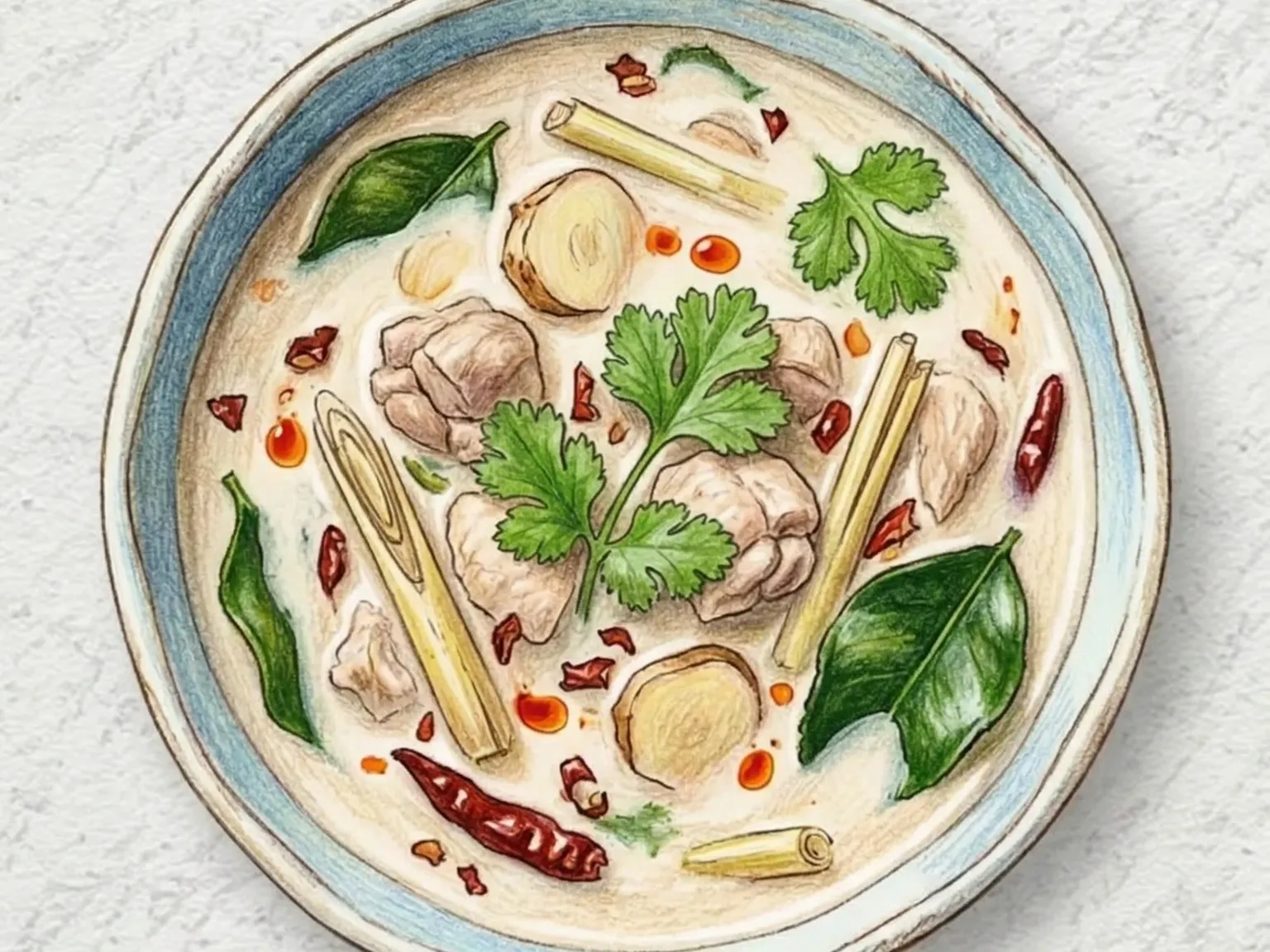
Tom Kha Gai is a classic Thai chicken soup built on a rich coconut milk base infused with traditional herbs.

What makes this special

  • Tom Kha Gai blends the citrus notes of galangal and lemongrass with a silky coconut milk base.
  • Three aromatics steep directly in coconut milk for layered fragrance
  • Coconut milk softens heat while preserving spice depth
Total time
40 min
Level
Medium
Servings
3 servings
Ingredients
7
Calories
380 kcal
Protein
24 g

Key ingredients

chickencoconut milkgalangallemongrasskaffir lime leaves

Core cooking flow

  1. 1 Slice 30 g galangal thinly, as you would ginger.
  2. 2 Pour 400 ml coconut milk into a pot and warm it over medium-low heat.
  3. 3 Lower the heat and simmer gently for 6 to 8 minutes.

Tom Kha Gai is a classic Thai chicken soup built on a rich coconut milk base infused with traditional herbs. The preparation starts by simmering three key aromatics: thinly sliced galangal, bruised lemongrass, and torn kaffir lime leaves. These steep slowly in the coconut milk over low heat to release their layered citrus and herbal fragrances without letting the milk separate. Bite-sized chicken pieces are gently poached in this herbal broth until tender and opaque. The seasoning relies on fish sauce for a salty umami depth. Once the pot is removed from the heat, fresh lime juice is stirred in to preserve its bright acidity and balance the creamy texture of the coconut broth. The result is a smooth, aromatic soup where the rich coconut milk softens any sharp heat while showcasing the depth of the herbs. It is served hot, optionally removing the tough pieces of galangal and lemongrass before eating.

Prep 15min Cook 25min 3 servings

Instructions

Read the steps as a cooking flow: prep, heat, seasoning, doneness control, and finish.

6 steps
  1. 1
    Prep

    Slice 30 g galangal thinly, as you would ginger.

    Press the firm parts of 2 lemongrass stalks to release their aroma, then lightly tear 5 kaffir lime leaves so they infuse the coconut milk more evenly.

  2. 2
    Control

    Pour 400 ml coconut milk into a pot and warm it over medium-low heat.

    When small bubbles appear around the edge, add the prepared galangal, lemongrass, and kaffir lime leaves without letting the milk boil hard.

  3. 3
    Control

    Lower the heat and simmer gently for 6 to 8 minutes.

    Keep only small bubbles moving through the coconut milk, because a hard boil can make the broth separate and can flatten the herbal fragrance.

  4. 4
    Control

    Add 300 g chicken in bite-size pieces and stir once so the pieces do not stick together.

    Cook over low heat for 7 to 9 minutes, until the chicken turns opaque and is cooked through.

  5. 5
    Control

    Stir in 2 tablespoons fish sauce and simmer for 1 more minute so the salty umami spreads through the broth.

    Taste the soup, and if it feels thin, reduce it briefly rather than adding unrelated seasonings.

  6. 6
    Finish

    Turn off the heat and stir in 2 tablespoons lime juice so the acidity stays fresh.

    Remove the firm aromatics before eating if desired, then serve the soup hot while the coconut broth is still fragrant.

After the steps

Pick a recipe that fits this dish.

Continue with shared ingredients, meal pairings, or a similar method.

Recipes That Go Well With This

More Asian →

Based on shared ingredients and meal pairing

Thai Yellow Curry (Mild Thai Turmeric Coconut Curry with Chicken)
Shared ingredient: bone-in chicken pieces Asian

Thai Yellow Curry (Mild Thai Turmeric Coconut Curry with Chicken)

Thai yellow curry is the mildest of the three major Thai curries, built on a paste that features turmeric as its dominant spice, which gives the dish its distinctive golden color and a warm, earthy undertone. The paste is dry-fried in a pan until fragrant before coconut milk is poured in to form a creamy, gently spiced base. Chicken pieces, cubed potato, and sliced onion simmer in the liquid until the potato is fully tender, its starch thickening the curry slightly and giving the sauce a comforting body. Fish sauce is added last to season the pot, its salty depth rounding out the turmeric's earthiness and the coconut's sweetness. The result is a mild, aromatic curry with a smooth texture and a warmth that comes more from the spice blend than from chili heat. Yellow curry is often recommended as an entry point for those new to Thai cuisine, yet its layered flavor-turmeric, cumin, coriander, and coconut working in concert-rewards experienced palates as well.

Larb Gai (Thai Isan Minced Chicken Herb Salad with Lime)
Shared ingredient: bone-in chicken pieces Asian

Larb Gai (Thai Isan Minced Chicken Herb Salad with Lime)

Larb Gai is a traditional herb salad from the Isan region of northeastern Thailand, featuring minced chicken as its base. The preparation starts by cooking ground chicken with a small amount of water until it is no longer pink, ensuring the meat remains tender and crumbly. Once removed from the heat, the warm chicken is seasoned with lime juice, fish sauce, sugar, and chili flakes. Adding the lime juice off the heat preserves its natural acidity and bright aroma. Thinly sliced shallots and toasted rice powder are then folded into the mixture. The toasted rice powder acts as a binding agent that absorbs the juices while providing a distinct nutty crunch. Fresh mint leaves are tossed in at the very end to prevent them from darkening. The salad is served alongside sticky rice, lettuce, or cabbage cups.

Lotus Root Crab Yuja Salad
Serve together Salads

Lotus Root Crab Yuja Salad

Thinly sliced lotus root, blanched until just crisp-tender, provides the structural crunch at the center of this salad, while gently separated crab meat drapes a delicate sweetness and umami over each bite. The yuja mayo dressing - yuja marmalade folded into mayonnaise with lemon juice - delivers citrus fragrance and creamy richness simultaneously. Half-moon cucumber slices and thin red onion add contrasting crunch, and a bed of mixed baby greens brings color and freshness to the plate. Keeping the blanching time under four minutes is critical; even a minute longer turns the lotus root soft and robs it of its signature snap.

Massaman Curry (Thai-Muslim Mild Chicken Potato Peanut Coconut Curry)
Similar recipe Asian

Massaman Curry (Thai-Muslim Mild Chicken Potato Peanut Coconut Curry)

Massaman curry stands apart from other Thai curries with its mild, sweet-savory character and its roots in the Muslim communities of southern Thailand, where trade routes from Persia and India brought cinnamon, cardamom, cloves, and star anise into the local kitchen long before chili became dominant. These whole spices simmer in the coconut milk base, lending an aromatic warmth that is closer to a slow-braised stew than to the fiery curries Thailand is more widely known for. Chicken thighs, whole shallots, potatoes, and roasted peanuts braise together until the potatoes begin to break apart and naturally thicken the sauce, absorbing the spiced oil along the way. Tamarind paste and palm sugar steer the richness toward a gentle tang and sweetness rather than a heavy or one-dimensional creaminess. The result is a deeply layered curry that uses almost no chili heat, making it one of the most approachable dishes in the Thai repertoire for those unaccustomed to spice while still rewarding more experienced palates with its complexity.

Serve with this

Korean Fish Cake Soup (Clear Anchovy Radish Broth)
Drinks Easy

Korean Fish Cake Soup (Clear Anchovy Radish Broth)

Eomuk-tang is a Korean fish cake soup in which skewered fish cakes and thick radish slices simmer in a clear broth built from dried anchovies and kelp. The kelp must be removed the moment the water begins to boil, otherwise it releases a slimy texture that clouds the broth. Cutting the radish thick allows it to slowly release natural sweetness over the long simmer. Rinsing the fish cakes in hot water before adding them washes away surface oil and keeps the broth clear and clean. Soup soy sauce adjusts the seasoning, and green onion and black pepper finish the pot. Adding the radish before the fish cakes ensures it has enough time to fully soften and sweeten the broth, since it takes longer than the eomuk to cook through.

🍺 Bar Snacks 🥗 Light & Healthy
Prep 15min Cook 25min 4 servings
Chogye Guksu (Korean Cold Chicken Noodles)
Noodles Medium

Chogye Guksu (Korean Cold Chicken Noodles)

Shredded poached chicken and julienned cucumber top thin wheat noodles served in an icy mustard-vinegar chicken broth. The broth starts as a clear, clean chicken stock, then gains its defining sharpness from dissolved mustard powder and rice vinegar, delivering a nasal tingle and bright acidity that revive the appetite on sweltering days. The chicken, torn along the grain into thin strips, adds lean protein without weight, while sliced Korean pear contributes a crisp, mildly sweet counterpoint that keeps the bowl from feeling heavy. Mustard heat flares briefly on the palate and fades quickly, leaving behind the savory clarity of well-made stock. Keeping the broth thoroughly chilled through service is essential: it prevents the noodles from softening and preserves the contrast that defines this dish. Floating a few ice cubes in the bowl ensures the temperature holds from the first chopstickful to the last.

🎉 Special Occasion 🏠 Everyday
Prep 20min Cook 25min 2 servings
Korean Seaweed Roe Pot Rice
Rice Medium

Korean Seaweed Roe Pot Rice

The preparation starts by layering finely diced radish at the bottom of a heavy pot before adding soaked rice. A specific technique defines this dish: warming the salted pollock roe and butter using only the residual heat of the vessel after the flame is extinguished. Avoiding direct heat prevents the roe's proteins from tightening into a dry or crumbly texture. Instead, the indirect warmth maintains a soft consistency where individual eggs pop and release their salty essence into the grains. As the butter melts, it coats each piece of rice, acting as a bridge between the sharp saltiness of the fish roe and the mild nature of the rice. Throughout the cooking process, the radish pieces release moisture upward, ensuring the rice remains hydrated while contributing a subtle sweetness and a clean finish. Before the meal begins, crumbling gamtae over the surface introduces a distinct oceanic scent that sits above the savory layers of butter and roe. Sliced scallions provide a sharp, crisp contrast to the overall richness. Pouring hot water into the pot at the end creates a toasted rice water that clears the palate. It is important to place the roe and butter within four minutes of turning off the heat to ensure the remaining warmth is sufficient to soften the ingredients.

🎉 Special Occasion 🏠 Everyday
Prep 15min Cook 25min 2 servings

Similar recipes

Khao Mok Gai (Thai-Muslim Spiced Chicken Biryani)
Asian Medium

Khao Mok Gai (Thai-Muslim Spiced Chicken Biryani)

Khao mok gai is a Thai-Muslim take on biryani, in which spice-marinated chicken is cooked together with turmeric-tinted rice until the grains absorb the meat's juices. The chicken is rubbed with yogurt, cumin, coriander, and cinnamon, then briefly seared before being buried in parboiled rice seasoned with cardamom, cloves, and bay leaves. The pot is sealed and left on low heat so steam circulates through the layers, infusing every grain with aromatic depth. Turmeric gives the rice its signature golden hue. The dish originated in the Muslim communities of southern Thailand and reflects the culinary crossroads of Indian, Middle Eastern, and Southeast Asian cooking traditions. It is served with a sweet chili sauce for dipping, a bowl of clear chicken broth on the side, and a scattering of crispy fried shallots on top.

🎉 Special Occasion 🍺 Bar Snacks
Prep 20min Cook 30min 4 servings
Northern Thai Coconut Curry Noodles
Noodles Medium

Northern Thai Coconut Curry Noodles

Khao soi is a coconut curry noodle soup from northern Thailand's Chiang Mai region. Red curry paste is fried in coconut cream until fragrant, then combined with more coconut milk and chicken stock to form a thick, spiced broth. Bone-in chicken thighs simmer in this liquid for about 20 minutes until the meat turns fork-tender. Egg noodles are boiled separately and placed in the bowl, but what sets the dish apart is a handful of the same noodles deep-fried until crisp and scattered on top - the crunch against the soft, soupy noodles below creates a sharp textural contrast. Shallots, cilantro, and a squeeze of lime cut through the richness, while fish sauce and a touch of sugar fine-tune the balance between salty, sweet, and sour.

🎉 Special Occasion 🌙 Late Night
Prep 20min Cook 30min 2 servings
Thai Larb Gai
Salads Medium

Thai Larb Gai

Larb gai is a traditional salad preparation originating from the Isan region of Thailand that uses ground chicken as its primary protein component. During the cooking process, the minced meat is simmered with a small volume of water to ensure that it remains soft and retains its natural moisture throughout the preparation. The chicken is then seasoned using a combination of fish sauce and the juice squeezed from fresh limes. A specific ingredient that gives this dish its unique character is khao khua, which is rice that has been dry-toasted and subsequently processed into a coarse powder. To create this, plain white rice is heated in a dry pan without the addition of any oil until the grains develop a golden brown color and release a toasted aroma. When this ground rice is added to the salad, it introduces a nutty and slightly smoky flavor profile that distinguishes larb from other types of minced meat preparations found in the region. The dish also incorporates thin slices of raw red onion, which provide a sharp flavor and a crisp texture. Additionally, fresh mint leaves are mixed in to provide a cooling herbal quality that balances the savory notes of the seasoned chicken. After the salad has been placed on a plate, the amount of lime juice can be adjusted according to individual preferences for acidity. The standard method for consuming larb gai involves placing a portion of the mixture into a fresh, crisp lettuce leaf, which provides an extra layer of crunch while helping to moderate the intensity of the spices.

🥗 Light & Healthy 🏠 Everyday
Prep 15min Cook 10min 2 servings

Tips

Slice galangal thinly like ginger for easy infusion.

Nutrition (per serving)

Calories
380
kcal
Protein
24
g
Carbs
10
g
Fat
28
g