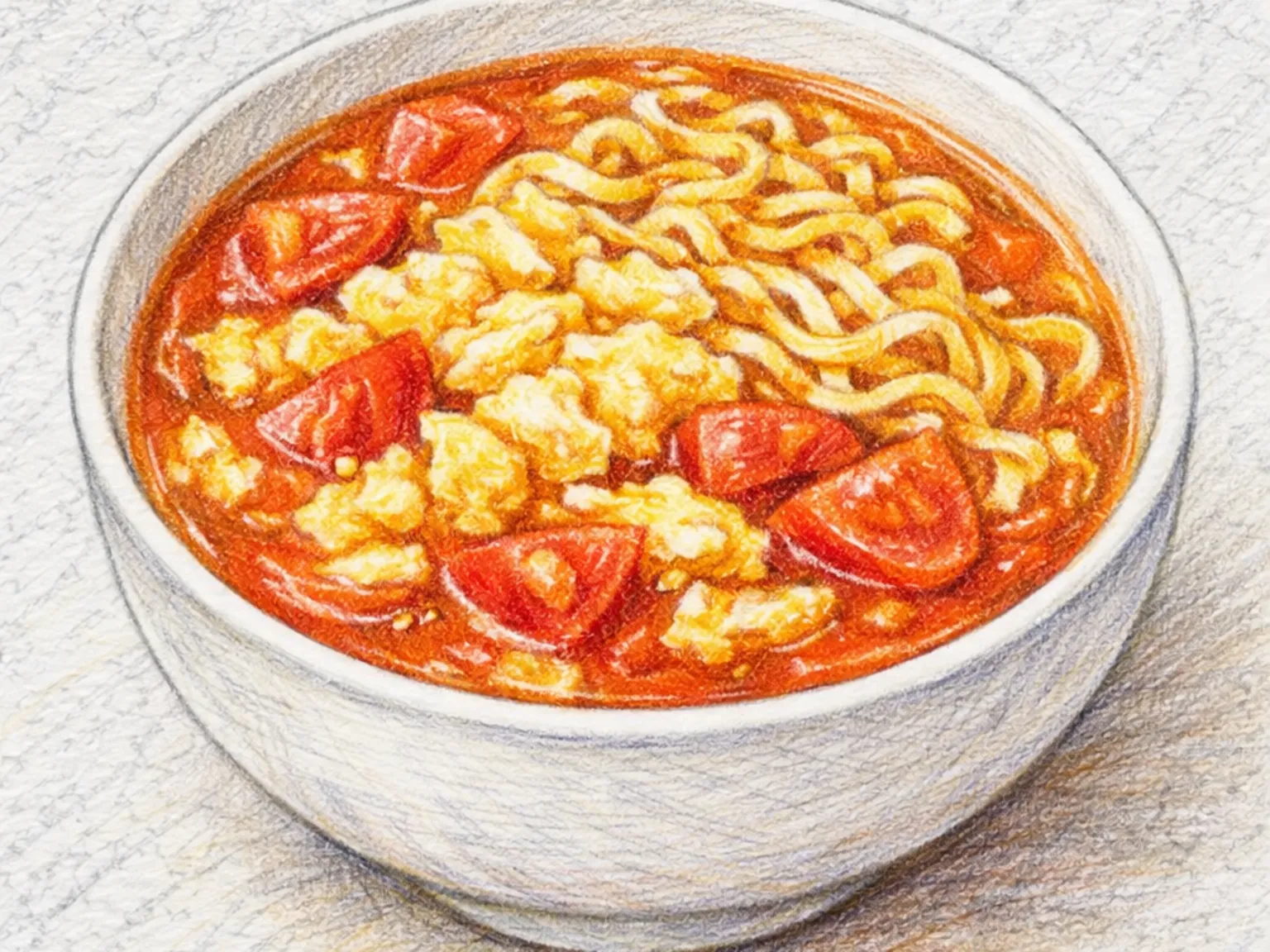
Tomato Egg Lamian (Chinese Home-Style Tomato Scrambled Egg Noodle Soup)
Quick answer
- Total time
- 27 min
- Level
- Easy
- Servings
- 2 servings
- Ingredients
- 9
About this dish
It tastes like Chinese home-style tomato and scrambled egg turned into a noodle soup, with sweet-sour tomato broth, soft egg curds and fresh noodles.
Read more
The eggs are folded briefly and lifted out while still slightly wet, then return for only a minute at the end; fully cooked at the start, they would toughen in the final simmer. Pressing the tomatoes as they cook draws out the red juice that lets the pieces and the stock blend instead of sitting apart, and cooking them down well deepens the savory flavor. A little soy sauce and sugar only round off the tomato's acidity. Fresh noodles cook fast in the hot broth and come off the heat while the centers are still slightly firm.
Ingredients
Instructions
- 1
Cut 300 g tomatoes into large pieces and finely slice 25 g green onion.
Beat 3 eggs until the whites and yolks are evenly combined.
- 2
Heat the pot over medium heat and add 1 tablespoon neutral oil.
Pour in the eggs, stir in broad folds for about 30 seconds, then remove them while still slightly wet to prevent toughness later.
- 3
Lower the pot to medium-low and cook half the scallion with 1 teaspoon minced garlic for 40 seconds.
Add the tomatoes and press them as they cook for 4 minutes. Reserve the remaining scallion for serving.
- 4
When the tomatoes release red juices, add 800 ml chicken stock, 1 tablespoon soy sauce, and 1 teaspoon sugar.
Bring to a boil, then simmer over medium heat for 5 minutes to round the broth.
- 5
When the broth tastes tangy and lightly sweet, add 240 g fresh wheat noodles and loosen them with chopsticks or tongs.
Boil until the centers are just slightly firm, avoiding overcooking in the hot broth.
- 6
Reduce the heat to medium low and return the reserved eggs, warming them for only 1 minute so they stay in soft pieces.
Transfer the noodles and broth to bowls, top with remaining scallion, and serve hot.
Official cooking and safety guidance
Public-agency cooking and food safety guidance that applies to this recipe.
Official cooking and safety guidance
-
Storage and reheating
Refrigerate leftovers in shallow containers within 2 hours and use them within 3 to 4 days. Reheat the center to 74°C.
Source: USDA Food Safety and Inspection Service. Leftovers and Food Safety
Sources checked 2026-08-03
Use-up ingredient planner
Turn these ingredients into two more meals
The overlap excludes basic seasonings. Open the next recipe and your selected dishes will stay with you.
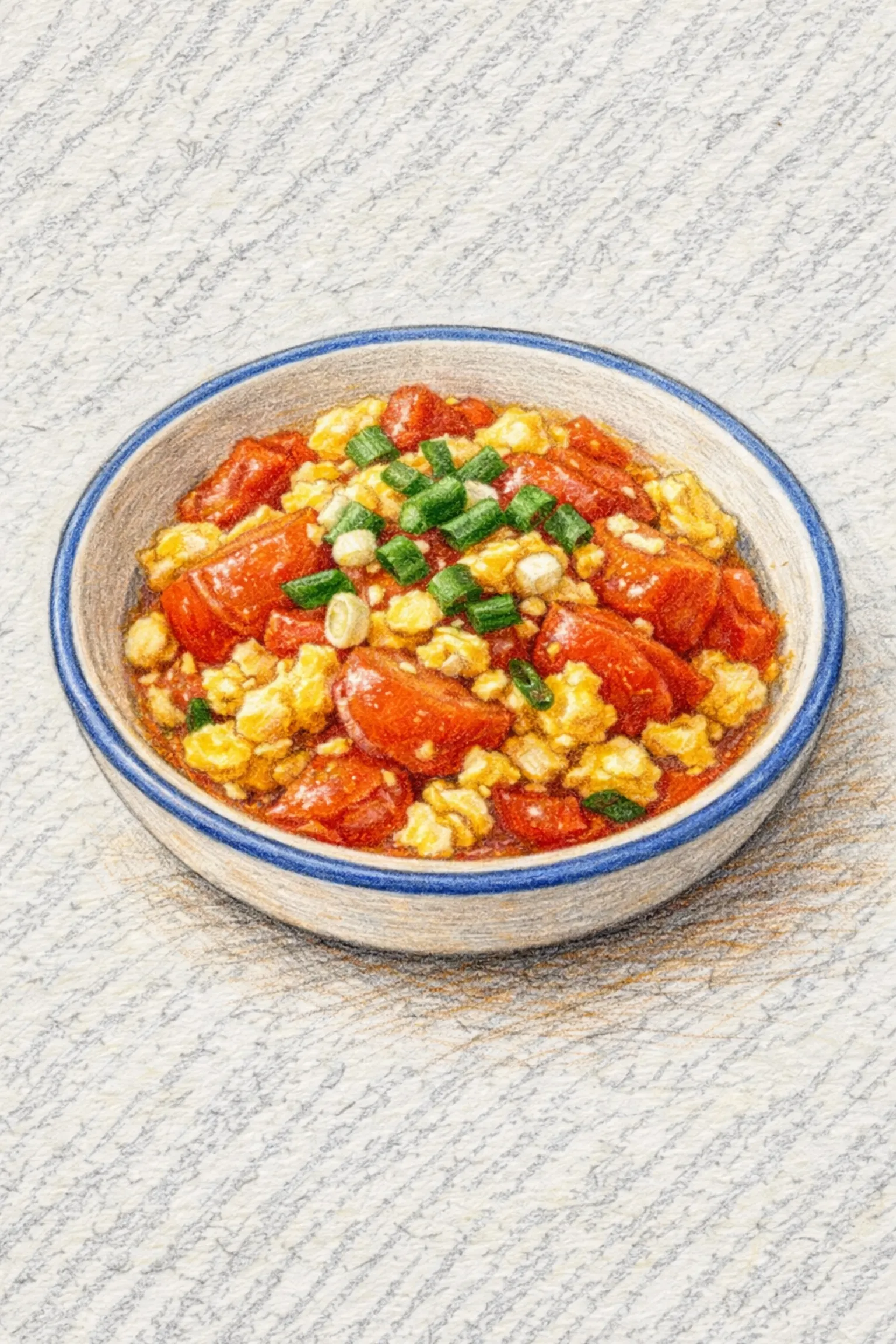
Korean Tomato Dalgyal Bokkeum (Tomato Egg Stir-fry)
tomatoes, eggs

Korean Tomato Egg Fried Rice
tomatoes, eggs

Tomato Egg Rice Bowl (Stir-fried Tomatoes with Soft Scrambled Eggs)
tomatoes, eggs