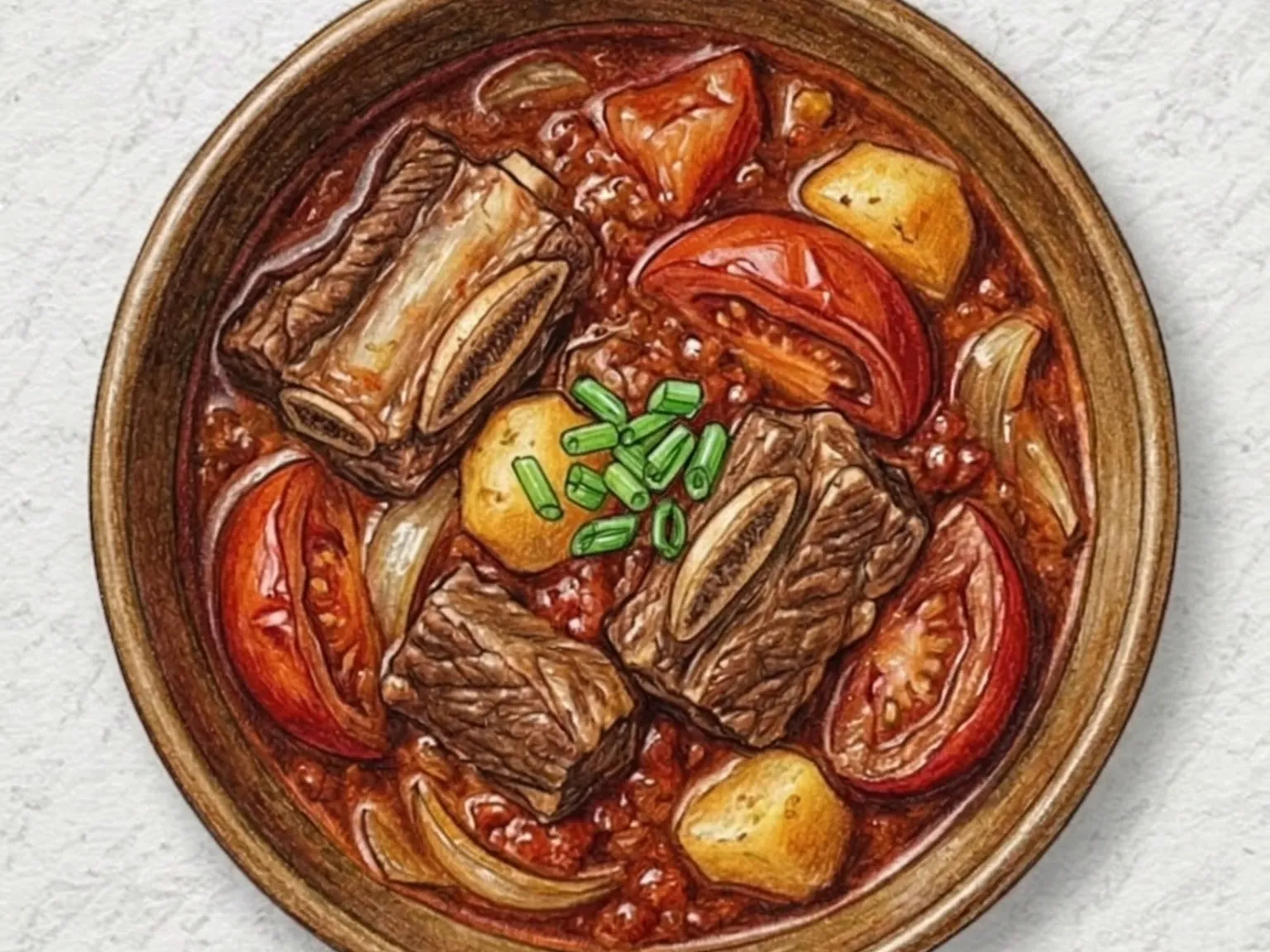
Korean Tomato Beef Rib Stew
This fusion-style stew pairs beef short ribs with ripe tomatoes in a broth seasoned with gochujang and gochugaru. The ribs are simmered until the broth is deeply infused with beefy richness, and the tomatoes break down to add natural acidity and sweetness. Potato chunks cook until fluffy, lending substance, while onion rounds out the broth's sweetness. The combination of soy sauce and chili paste with tomato's brightness creates a flavor that feels both novel and familiar.
Adjust Servings
Instructions
- 1
Soak short ribs in cold water for 20 minutes to remove blood, then rinse.
- 2
Parboil ribs in water for 10 minutes, then discard the water.
- 3
Add fresh water, ribs, onion, and garlic, then simmer 25 minutes over medium heat.
- 4
Roughly chop tomatoes and cube potatoes, then add them to the pot.
- 5
Stir in gochujang, gochugaru, and soy sauce; simmer 12 minutes until slightly thick.
- 6
When potatoes are tender, turn off heat and rest for 3 minutes before serving.
As an Amazon Associate, we may earn from qualifying purchases.
Tips
Nutrition (per serving)
More Recipes

Korean Spicy Fish Stew (Mackerel in Chili-Radish Broth)
Saengseon jjigae is a spicy Korean fish stew made with mackerel or beltfish cut into chunks, simmered alongside daikon radish and zucchini. Gochujang, gochugaru, soy sauce, and garlic build a bold, peppery broth in an anchovy stock base. The radish neutralizes any fishiness while adding natural sweetness to the soup. Picking the flaky fish off the bone and eating it with spoonfuls of the fiery broth over rice is the traditional way to enjoy it.

Korean Beef Mushroom Stew
This stew features sliced beef with both oyster and shiitake mushrooms in a beef stock base. The thinly sliced beef stays tender, and the two types of mushrooms contribute layered umami that enriches the broth considerably. Firm tofu adds substance, while onion and green onion provide sweetness and aroma. Seasoned simply with soup soy sauce and garlic, the stew lets the natural flavors of beef and mushroom take center stage.

Korean Beef Brisket & Water Parsley Chili Stew
Rich, marbled beef brisket melts into a fiery gochujang broth while fresh water parsley cuts through the heat with its herbal brightness. The brisket's marbling melts into the broth, tempering the heat with a fatty richness, while the water parsley adds an herbal freshness that cuts through the spice. Chunks of potato and firm tofu absorb the red-tinged broth, making the stew both filling and flavorful.

Korean Beef & Mung Bean Sprout Stew
This stew simmers beef brisket and mung bean sprouts together in a gochugaru-seasoned broth. The brisket renders a rich, meaty base, while the sprouts keep their crunch and add a fresh, clean note. Korean radish clarifies the broth, and oyster mushrooms contribute extra umami. Seasoned with soup soy sauce and chili flakes, the stew has a spicy kick that finishes clean on the palate.

Gochujang Beef Ragu Rigatoni
Gochujang beef ragu rigatoni sears ground beef hard over high heat to develop a deep browned crust, then adds gochujang and tomato puree with red wine for a twenty-minute simmer on medium-low heat. Leaving the beef undisturbed in the pan until a crust forms is essential - stirring too early releases moisture and prevents browning. Frying the gochujang in oil for one minute draws out its sweet fermented umami, which pairs naturally with the tomato's acidity. The red wine reduces and leaves behind a fruity complexity that layers into the ragu's depth. Rigatoni is boiled one minute short of al dente, then finished in the sauce pan with pasta water so the starch integrates into the sauce and coats the tubes both inside and out with a glossy, clinging finish.

Soy Galbi Ragu Pappardelle
Soy galbi ragu pappardelle braises seared short rib with aromatics, red wine, and soy sauce for 90 minutes until the meat falls apart into a rich, gelatinous ragu. The long braise dissolves the collagen in the short rib, giving the sauce a silky body that clings to the wide pappardelle ribbons. A soffritto of onion, carrot, and celery provides the sweet base, while canned whole tomatoes and tomato paste add acidity and thickness. Soy sauce - rather than just salt - introduces fermented depth that distinguishes this from a standard Bolognese, and red wine contributes tannin and fruit complexity. Parmigiano-Reggiano grated on top ties the Italian and Korean elements together. This is a weekend dish, with most of the 90-minute cook time being passive braising.