Korean Grilled Bellflower Root
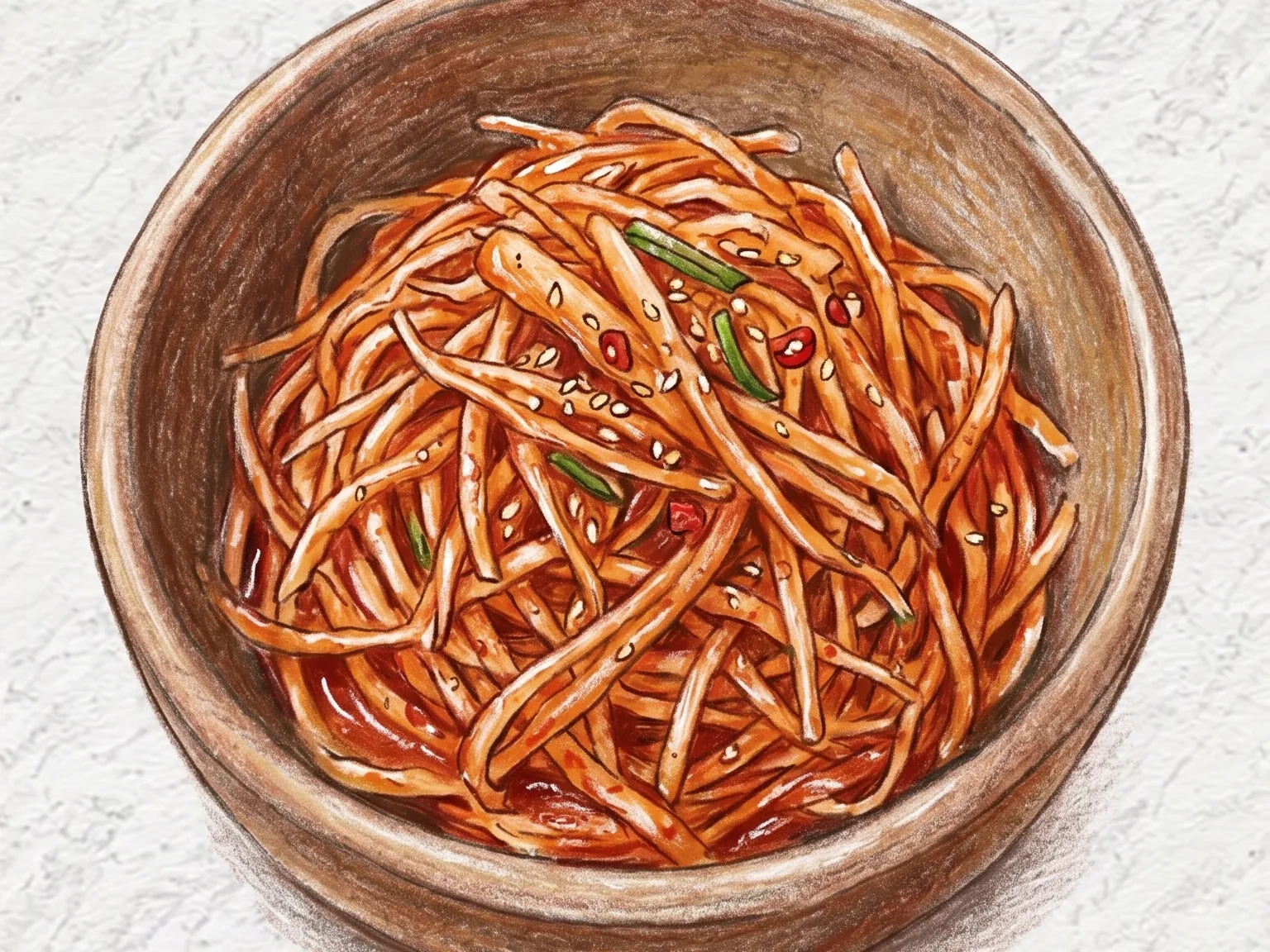
Bellflower root is shredded lengthwise, soaked in salted water, and blanched for one minute to draw out its characteristic bitterness without eliminating it entirely. A ten-minute soak in a sauce of gochujang, gochugaru, soy sauce, oligosaccharide syrup, garlic, and sesame oil seasons the root before it hits a medium-heat pan for three to four minutes per side. The result has a crisp, crunchy bite - distinct from any other vegetable - with a red-glazed surface that carries moderate heat. Open-flame grilling adds a smoky dimension that pairs well with the spicy coating, and sesame seeds provide a finishing touch.
Adjust Servings
Instructions
- 1
Shred the bellflower root, soak in salted water for 10 minutes, then rinse and squeeze out moisture.
- 2
Blanch the root in boiling water for 1 minute to reduce bitterness, then cool in cold water.
- 3
Mix gochujang, gochugaru, soy sauce, garlic, sesame oil, and syrup in a bowl.
- 4
Coat the root with the marinade and let it sit for 10 minutes.
- 5
Grill on a preheated pan or grill over medium heat for 3-4 minutes per side.
- 6
Finish with sesame seeds and serve hot.
As an Amazon Associate, we may earn from qualifying purchases.
Tips
Nutrition (per serving)
More Recipes

Korean Grilled Dried Pollack
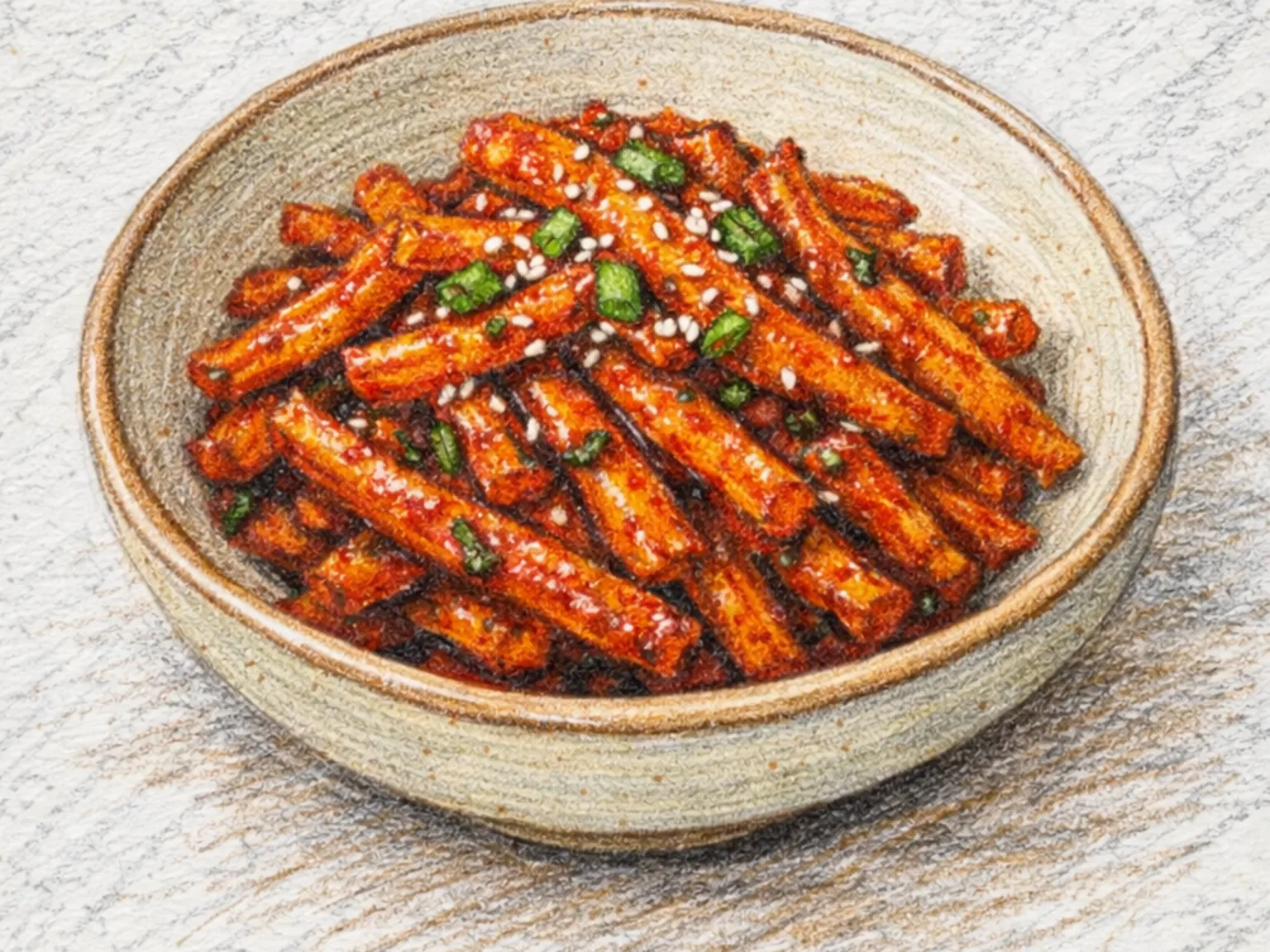
Dried pollack strips are briefly moistened, coated in a paste of gochujang, soy sauce, and oligosaccharide syrup, then grilled low and slow. The slow heat lets the glaze seep into the chewy dried fish without charring, building layers of spicy-sweet flavor. A touch of sesame oil applied at the finish adds a toasted aroma that rounds out the dish.

Korean Seasoned Bellflower Root
Doraji - balloon flower root - has been a staple of Korean herbal cooking since the Goryeo dynasty, valued both as medicine and food. Unlike the stir-fried doraji-bokkeum that uses gochujang and heat, this raw muchim preserves the root's firm, crunchy snap by dressing it cold. The roots must be shredded along the grain and vigorously rubbed with salt to extract the saponins responsible for their sharp bitterness, then rinsed repeatedly until the water runs clear. A gochujang-vinegar dressing with sugar and sesame oil wraps around each fibrous strand, balancing the root's residual earthiness with a bright, sweet-sour-spicy glaze. This banchan appears on Korean holiday tables - Chuseok and Seollal - as one of the five-color namul, where its white color represents metal in the five elements.

Korean Chili Soy Grilled Tofu
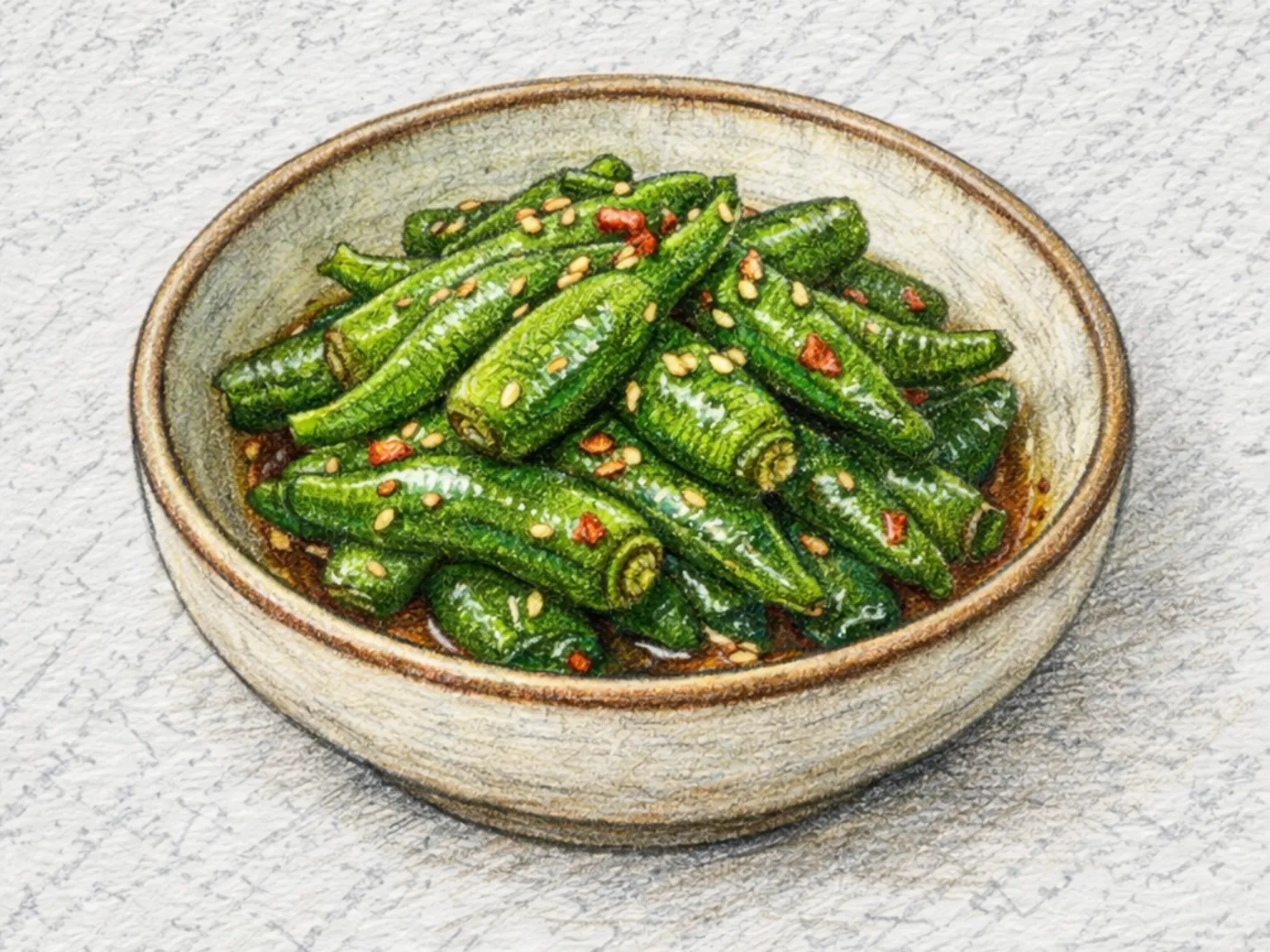
Chili-tofu-gui is a Korean pan-grilled tofu dish where firm tofu slices are browned on both sides, then glazed with a sauce of soy sauce, minced hot green chili, garlic, sesame oil, and sugar. Pressing moisture out of the tofu before cooking is essential for achieving a clean, golden-brown sear without oil spattering. Once the sauce is added, a brief simmer on low heat coats each slice in a glossy layer where the soy's saltiness, the sugar's sweetness, and the chili's sharp heat all converge against the tofu's neutral, creamy base. The dish works equally well as a weeknight side dish or as a quick drinking snack.

Korean Gochujang Grilled Anchovies
Myeolchi-gochujang-gui is a Korean gochujang-glazed anchovy side dish where medium-sized dried anchovies are first dry-toasted in a pan for one minute to reduce fishiness and drive off moisture, then tossed in a sauce of gochujang, soy sauce, oligosaccharide syrup, cooking wine, and minced garlic. The sauce is simmered briefly over low heat before the anchovies go in, cooking off the alcohol in the wine and thickening the glaze so it clings to each fish. Once the anchovies are added, the tossing should finish within two minutes-longer cooking hardens them rather than keeping them pleasantly chewy. Sesame oil and toasted sesame seeds folded in at the end round out the sweet-spicy-salty profile with a nutty finish.

Korean Gochujang Grilled Garlic Scapes
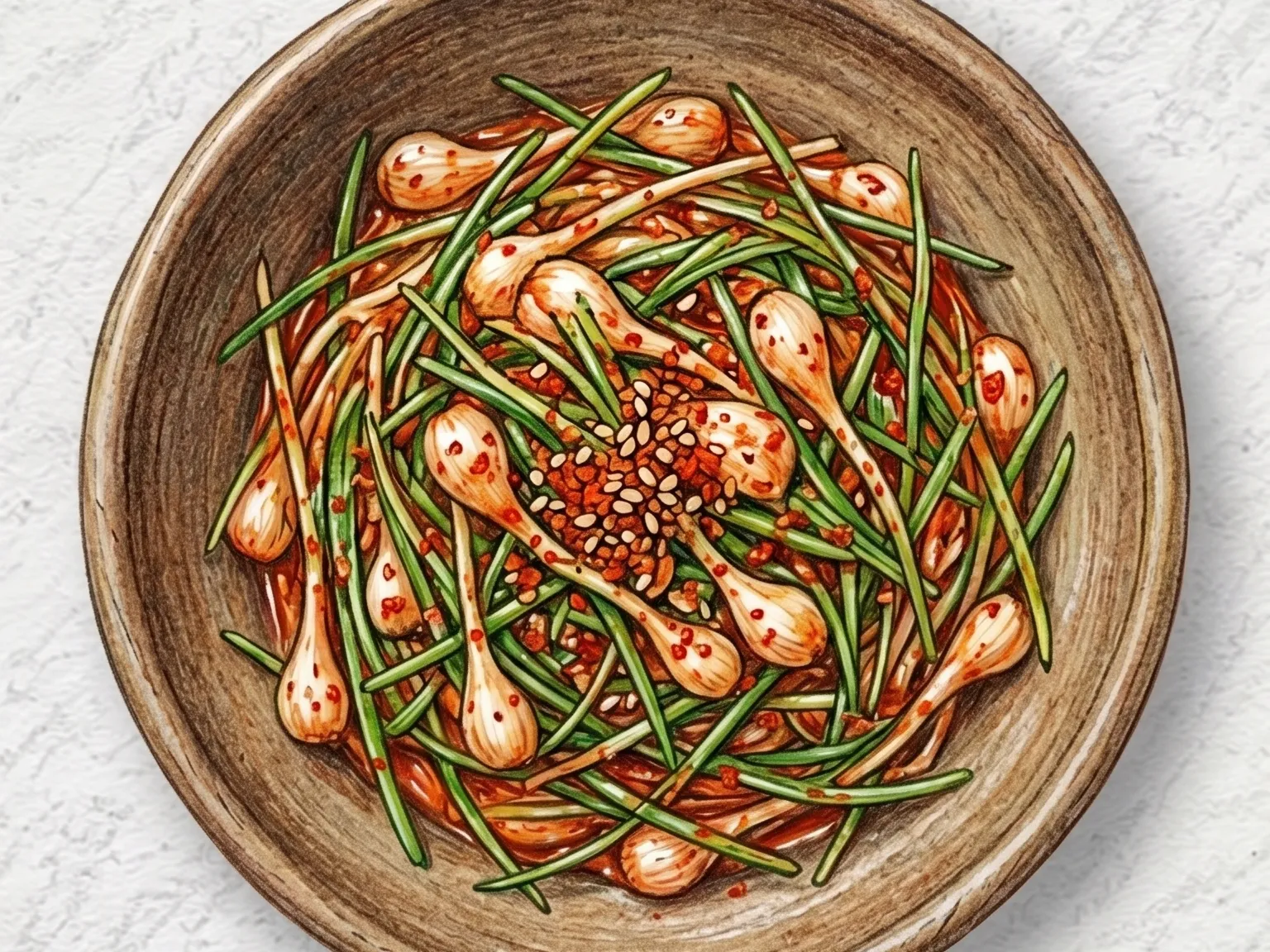
Maneuljjong-gochujang-gui is a Korean grilled garlic scape dish where the scapes are cut into six-centimeter pieces, blanched for just thirty seconds, then stir-grilled in a pan with a sauce of gochujang, gochugaru, soy sauce, oligosaccharide syrup, and minced garlic. The brief blanch softens the fibrous outer layer while preserving the interior crunch, and an immediate cold-water rinse stops carryover cooking. The garlic scapes' sharp, pungent bite compounds with gochujang's fermented heat to create a layered spiciness that goes beyond simple chili burn. If the sauce begins to stick and scorch, a tablespoon of water loosens it without diluting the flavor, and a final drizzle of sesame oil with toasted sesame seeds closes the dish with a roasted nuttiness.

Korean Stir-fried Balloon Flower Root
Doraji - balloon flower root - has been cultivated in Korea for centuries, valued in cooking and herbal medicine. The raw root is bracingly bitter, so it must be shredded, rubbed vigorously with salt, and rinsed twice. This salt-scrub extracts saponins while preserving the root's signature crunch. Stir-fried with green onion, then glazed in gochujang, soy sauce, and oligosaccharide syrup, the strips turn glossy and slightly sticky with a sweet-spicy coating.