Korean Taro Soup (Autumn Taro in Nutty Perilla Seed Broth)
Soups Medium

Korean Taro Soup (Autumn Taro in Nutty Perilla Seed Broth)

Quick answer

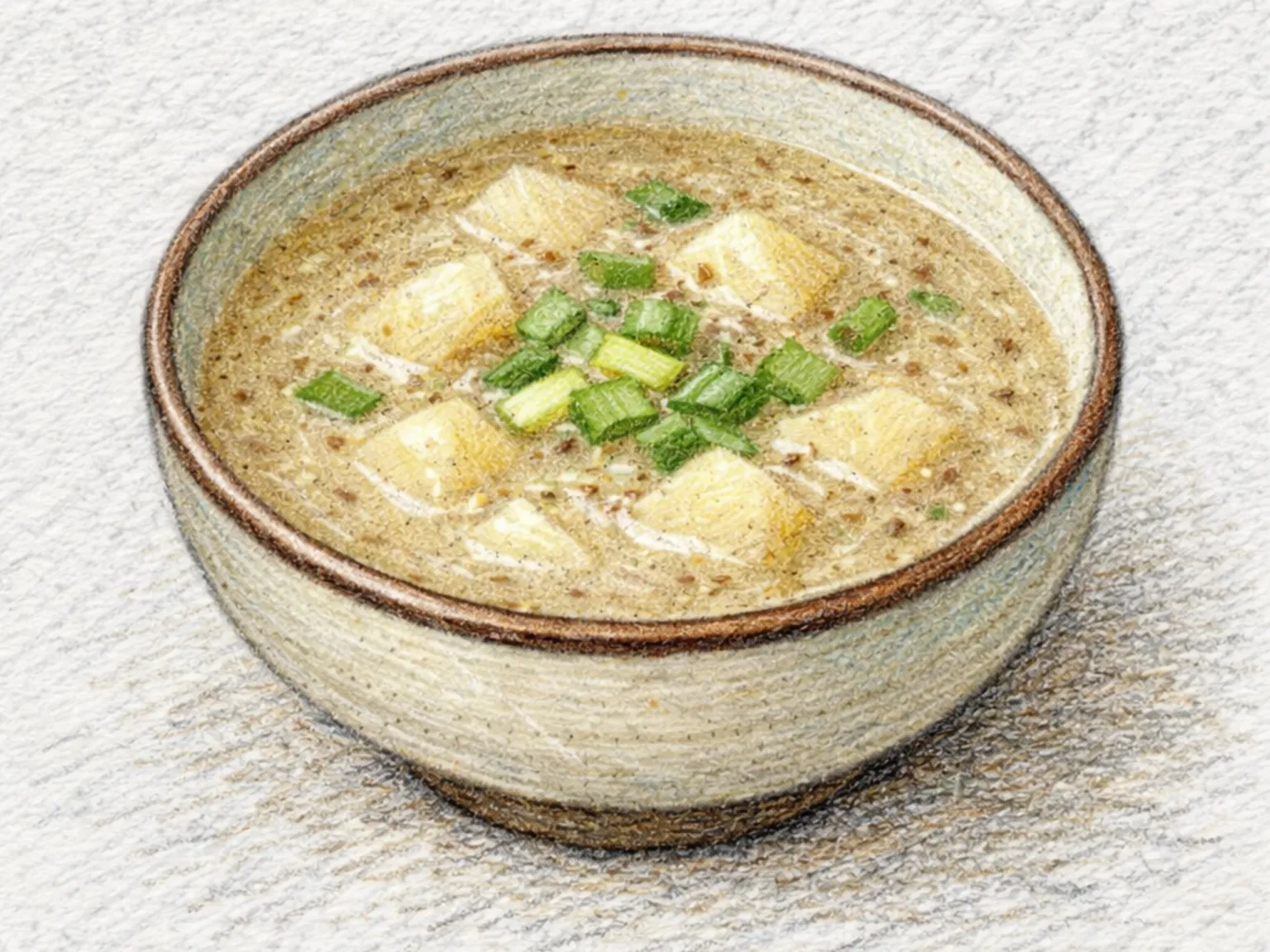
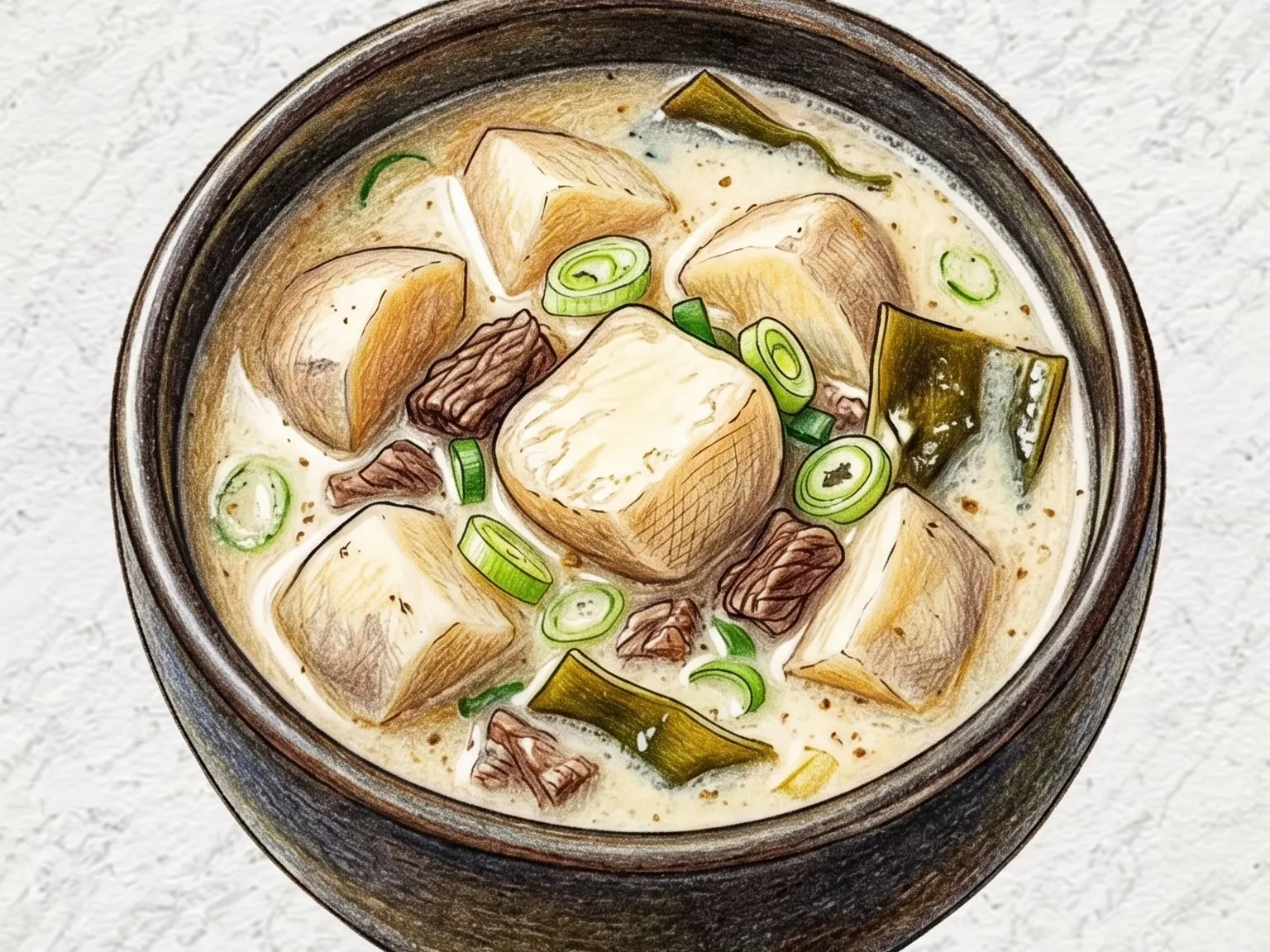
Toran-guk is an autumn soup centered on taro root, which is first parboiled to remove its slippery mucilage, then simmered in a broth thickened with ground perilla seeds.

What makes this special

  • Toran-guk features autumn taro roots simmered in a nutty, thick perilla seed broth base.
  • Taro turns mealy yet sticky when cooked, a texture unlike any other root vegetable
  • Perilla powder dissolves to turn broth milky white with nutty layered aroma
Total time
55 min
Level
Medium
Servings
2 servings
Ingredients
7
Calories
230 kcal
Protein
6 g

Key ingredients

taroperilla powderanchovy stockminced garlicsoup soy sauce

Core cooking flow

  1. 1 Wear gloves, scrub 300 g taro clean, and briefly parboil it with the skin on.
  2. 2 Let the taro cool just enough to handle, peel it, and rub it in salted water.
  3. 3 Pour 1300 ml anchovy stock into a pot and bring it to a boil, then add the taro.

Toran-guk is an autumn soup centered on taro root, which is first parboiled to remove its slippery mucilage, then simmered in a broth thickened with ground perilla seeds. The taro pieces cook to a texture that falls somewhere between potato and chestnut - they crumble softly on the tongue yet retain a subtle stickiness that gives each bite a gentle cling. Ground perilla dissolves into the liquid and turns it opaque and creamy, layering a nutty richness over the taro's mild, earthy flavor. Beef is often added for depth, its rendered fat and juices rounding out the broth, while an anchovy-kelp base underneath sharpens the umami. The soup is closely associated with Chuseok, the Korean harvest festival, when taro is freshly dug and at its peak sweetness. Cooking the taro just long enough to soften without disintegrating is the key challenge - underdone pieces are chalky and irritate the throat, while overcooked ones dissolve into the broth and lose their identity. Served hot with steamed rice, toran-guk is one of those seasonal dishes that Koreans anticipate all year and miss the moment autumn ends.

Prep 20min Cook 35min 2 servings

Instructions

Read the steps as a cooking flow: prep, heat, seasoning, doneness control, and finish.

6 steps
  1. 1
    Heat

    Wear gloves, scrub 300 g taro clean, and briefly parboil it with the skin on.

    When the outside feels slightly softened but the center is still firm, lift it out so it is easier to peel and less irritating.

  2. 2
    Season

    Let the taro cool just enough to handle, peel it, and rub it in salted water.

    Rinse away the slippery mucilage, then cut the pieces into bite-size chunks so they cook evenly without dissolving too fast.

  3. 3
    Control

    Pour 1300 ml anchovy stock into a pot and bring it to a boil, then add the taro.

    Lower to medium heat and simmer gently for about 18 minutes, keeping the bubbles steady but not violent.

  4. 4
    Season

    When the taro edges look fluffy and a chopstick slides in with slight resistance, add 1 tsp minced garlic and 1 tbsp soup soy sauce. Stir gently from the bottom so the pieces do not break apart.

  5. 5
    Control

    Mix 2 tbsp perilla powder with a little hot broth first, then pour it back into the pot.

    Once the soup turns cloudy and creamy, simmer 8 more minutes so the nutty flavor spreads evenly.

  6. 6
    Finish

    Add 0.5 sliced green onion and season with 0.5 tsp salt, tasting the broth before adding all of it.

    Turn off the heat before the taro crumbles into the soup, and serve it hot.

After the steps

Pick a recipe that fits this dish.

Continue with shared ingredients, meal pairings, or a similar method.

Recipes That Go Well With This

More Soups →

Based on shared ingredients and meal pairing

Korean Potato Perilla Seed Soup
Shared ingredient: perilla seed powder Soups

Korean Potato Perilla Seed Soup

Gamja-deulkkae-guk is a Korean home soup of potatoes and ground perilla seed simmered in anchovy stock. The potatoes go in first and cook until they begin to fall apart, releasing their starch into the liquid and giving the broth a natural, gentle thickness. Ground perilla seed is stirred in toward the end of cooking, turning the clear stock opaque and white and filling the pot with a toasty, earthy fragrance that is distinctive to perilla. The flavor sits in its own space: it has none of the fermented depth of doenjang soup and none of the oceanic quality of miyeok-guk, but the perilla leaves a long, nutty finish that builds with each spoonful rather than fading immediately. Soup soy sauce brings the seasoning together, and onion and green onion laid in at the start provide a background sweetness that keeps the broth from tasting flat. The texture is thick and warming without being heavy or greasy. This is a soup that rarely appears on restaurant menus but comes up frequently on home dinner tables during the cold months, the kind of everyday dish that fits naturally into a simple meal.

Korean Taro Stem Stew (Perilla-Thickened Soybean Broth)
Shared ingredient: perilla seed powder Stews

Korean Taro Stem Stew (Perilla-Thickened Soybean Broth)

Torandae jjigae is a traditional Korean autumn stew featuring taro stems simmered in a beef and doenjang broth thickened with perilla seed powder. First, beef soup cuts are boiled to make a rich stock, into which doenjang, gochugaru, and garlic are dissolved. Taro stems are soaked in cold water to reduce their natural slipperiness before being simmered in the broth for twelve minutes until tender. To ensure the perilla seed powder thickens the stew without clumping, it is mixed with hot broth before being added back in batches. The stew is seasoned with soup soy sauce and finished with green onions. This dish highlights the spongy texture of autumn taro stems paired with the warm richness of the thick perilla broth.

Korean Sesame Porridge (Toasted Sesame Silky Rice Porridge)
Serve together Rice

Korean Sesame Porridge (Toasted Sesame Silky Rice Porridge)

Kkaejuk is a traditional Korean porridge made by grinding toasted sesame seeds to a fine powder and simmering them with soaked rice, water, and milk until the mixture reaches a silky, cream-soup consistency. Toasting the seeds before grinding is not optional -- raw sesame lacks the deep, roasted fragrance that defines the dish, and the heat of toasting develops oils and aroma compounds that grinding alone cannot produce. Constant stirring over low heat prevents the mixture from scorching and coaxes the rice grains into breaking down completely, merging with the sesame base so no distinct texture remains. Milk enriches the body beyond what water alone provides and gives the finished porridge a warm ivory color. The simplest version is seasoned with nothing but salt and served with a drizzle of honey or rice syrup, letting the roasted sesame flavor carry the bowl without distraction. Easily digestible and gentle on the stomach, kkaejuk has a long tradition as a morning meal, a recovery food for the sick, and a postpartum nourishment dish in Korean households.

Korean Perilla Chicken Soup
Similar recipe Soups

Korean Perilla Chicken Soup

Deulkkae samgye-guk is a perilla-enriched Korean chicken soup that delivers the warming, restorative depth of samgyetang with a considerably simpler preparation -- no glutinous rice to stuff, no ginseng required, just chicken pieces and perilla seed powder. The chicken is cut into large pieces and placed in cold water from the start, then simmered for forty minutes so the collagen and flavor compounds dissolve gradually into the broth, turning it milky and full-bodied. Perilla powder must be pre-dissolved in a small cup of water before being stirred in -- adding it dry causes it to clump -- and ten more minutes of gentle simmering allows its oils to emulsify fully into the chicken stock, creating a broth with a smooth, nutty coating on every sip. Seasoning with only soup soy sauce and salt lets the natural savoriness of the chicken and the distinctive fragrance of perilla come through without distraction. Rich in the omega-3 fatty acids of perilla seed and the protein of chicken, this soup is eaten as a restorative meal during hot summers and whenever energy levels drop.

Serve with this

Korean Stir-fried Seaweed Stems
Side dishes Easy

Korean Stir-fried Seaweed Stems

Miyeok-julgi-bokkeum is stir-fried seaweed stems - specifically the thick midrib portions of salted miyeok (wakame) - offering a textural experience entirely different from miyeok-muchim (seaweed salad) or miyeok-guk (seaweed soup). While seaweed leaves are soft and slippery, the stems are thick and resilient, producing a distinctive crunchy pop with each bite. Salt levels vary by brand, so soaking in cold water for ten minutes is the baseline desalting step, but tasting before cooking and rinsing again if needed is essential. Julienned onion and carrot stir-fried alongside break the monotony of seaweed alone, adding sweetness and color. Garlic sauteed in oil first establishes an aromatic foundation. A finishing drizzle of sesame oil and sesame seeds bridges the oceanic seaweed flavor with a toasty nuttiness. The extremely low calorie count makes this banchan a staple in diet-conscious Korean meal plans.

🥗 Light & Healthy 🏠 Everyday
Prep 15min Cook 8min 4 servings
Korean Soy-Vinegar Carrot Pickles
Kimchi Easy

Korean Soy-Vinegar Carrot Pickles

Danggeun jangajji is a Korean pickled carrot made by cutting carrots into uniform half-centimeter sticks and layering them with onion, halved Cheongyang chili, and whole garlic in a sterilized jar, then covering with a boiled brine of soy sauce, vinegar, water, and sugar. Keeping the carrot sticks the same thickness ensures they pickle at an even rate for consistent crunch in every bite. The brine must be boiled until the sugar and salt dissolve completely, then cooled before pouring; adding hot liquid can make the vegetables go soft, and undissolved solids cause uneven seasoning and shorten shelf life. The carrot's natural sweetness plays against the soy's salinity and the vinegar's tartness, producing three distinct flavors in each piece. After cooling completely at room temperature and refrigerating, the pickle is ready in twenty-four hours. If the brine turns cloudy after a few days, reboiling and cooling it before pouring it back extends the shelf life considerably. Served alongside fatty meat dishes, the acidity and snap of the pickle cut through the richness and leave the palate clean.

🏠 Everyday 🍱 Lunchbox
Prep 15min Cook 8min 4 servings
Korean Burdock Matchstick Pancake
Pancakes Easy

Korean Burdock Matchstick Pancake

Burdock root, julienned into thin matchstick strips and pan-fried with onion and cheongyang chili, is a jeon with texture as its main argument. The combination of Korean pancake mix and tempura flour in the batter produces a result that is crispier than standard jeon, particularly at the edges where the thin strips of burdock protrude from the batter and catch the heat. Burdock has an earthy, faintly bitter flavor that holds up in the pan, and the onion provides sweetness alongside it. Cheongyang chili cuts through with a slow-building, lingering heat. Cold water keeps the batter loose and inhibits gluten development, so the finished jeon stays light rather than dense. Hot from the pan, the edges shatter; cooled, they turn chewy.

🍺 Bar Snacks ⚡ Quick
Prep 18min Cook 10min 2 servings

Similar recipes

Siraegi Guk (Korean Perilla Radish Greens Soup)
Soups Easy

Siraegi Guk (Korean Perilla Radish Greens Soup)

Deulkkae siraegi guk is a rich, nutty Korean soup made by simmering dried radish greens that have been pre-seasoned with doenjang and soup soy sauce in an anchovy broth for at least twenty minutes. Siraegi, which refers to radish leaves that have been dried and then rehydrated before cooking, carries a concentrated earthiness and a fibrous, chewy texture that fresh greens cannot replicate. Massaging the greens with doenjang and garlic before they go into the pot allows the fermented seasoning to penetrate into the fibers over the extended cooking time rather than merely coating the surface. The anchovy broth beneath provides a clean, saline umami that supports the deeper, fermented notes of the doenjang without competing. Perilla powder added in two separate additions dissolves evenly through the broth without clumping, turning the liquid an opaque, milky white and thickening it to a consistency that clings to each spoonful and gives the soup its characteristic weight. Green onion added during the final three minutes of cooking contributes a fresh, sharp aroma that sits lightly on top of the perilla fragrance, completing the layered, hearty character of the soup.

🏠 Everyday 🥗 Light & Healthy
Prep 18min Cook 35min 4 servings
Korean Perilla Radish Soup
Soups Easy

Korean Perilla Radish Soup

Deulkkae mu-guk is a Korean radish and perilla seed soup that belongs firmly to the cool-weather calendar. Sliced daikon simmers in anchovy stock for ten minutes first, releasing its clean sweetness into the broth before anything else goes in. Perilla seed powder, stirred in toward the end, thickens the liquid noticeably - its heavier, earthier fat behaves differently from sesame and coats the palate in a way plain radish broth cannot. Garlic simmers alongside the radish to build the underlying savory base. The powder must go in just before the heat is cut; leave it in too long and the toasted fragrance dissolves into the broth and disappears.

🏠 Everyday 🥗 Light & Healthy
Prep 10min Cook 20min 4 servings
Korean Burdock Perilla Seed Stew
Stews Medium

Korean Burdock Perilla Seed Stew

Ueong-deulkkae-jjigae is a Korean stew built on burdock root, potatoes, and oyster mushrooms simmered in an anchovy-kelp broth and thickened with perilla seed powder. The burdock root holds a firm, earthy crunch through the cooking while the potatoes soften and begin to break at the edges, and the oyster mushrooms add a pulling, fibrous chew that makes the stew feel substantial without any meat. Anchovy-kelp broth forms a clean, savory base, and a generous measure of perilla seed powder stirred in at the end creates a creamy, nutty consistency that coats every piece of vegetable and makes each spoonful feel round and warming. Soaking the burdock in cold water before cooking draws out bitterness and prevents the cut surfaces from darkening, which keeps the broth clear. Adding the potatoes after the burdock has partly cooked prevents them from collapsing entirely. Perilla seed powder should go in just before the heat is turned off so the toasted, nutty fragrance stays sharp rather than cooking away.

🏠 Everyday 🥗 Light & Healthy
Prep 18min Cook 30min 4 servings

Tips

Wear gloves when handling taro to avoid skin irritation.

Nutrition (per serving)

Calories
230
kcal
Protein
6
g
Carbs
35
g
Fat
8
g