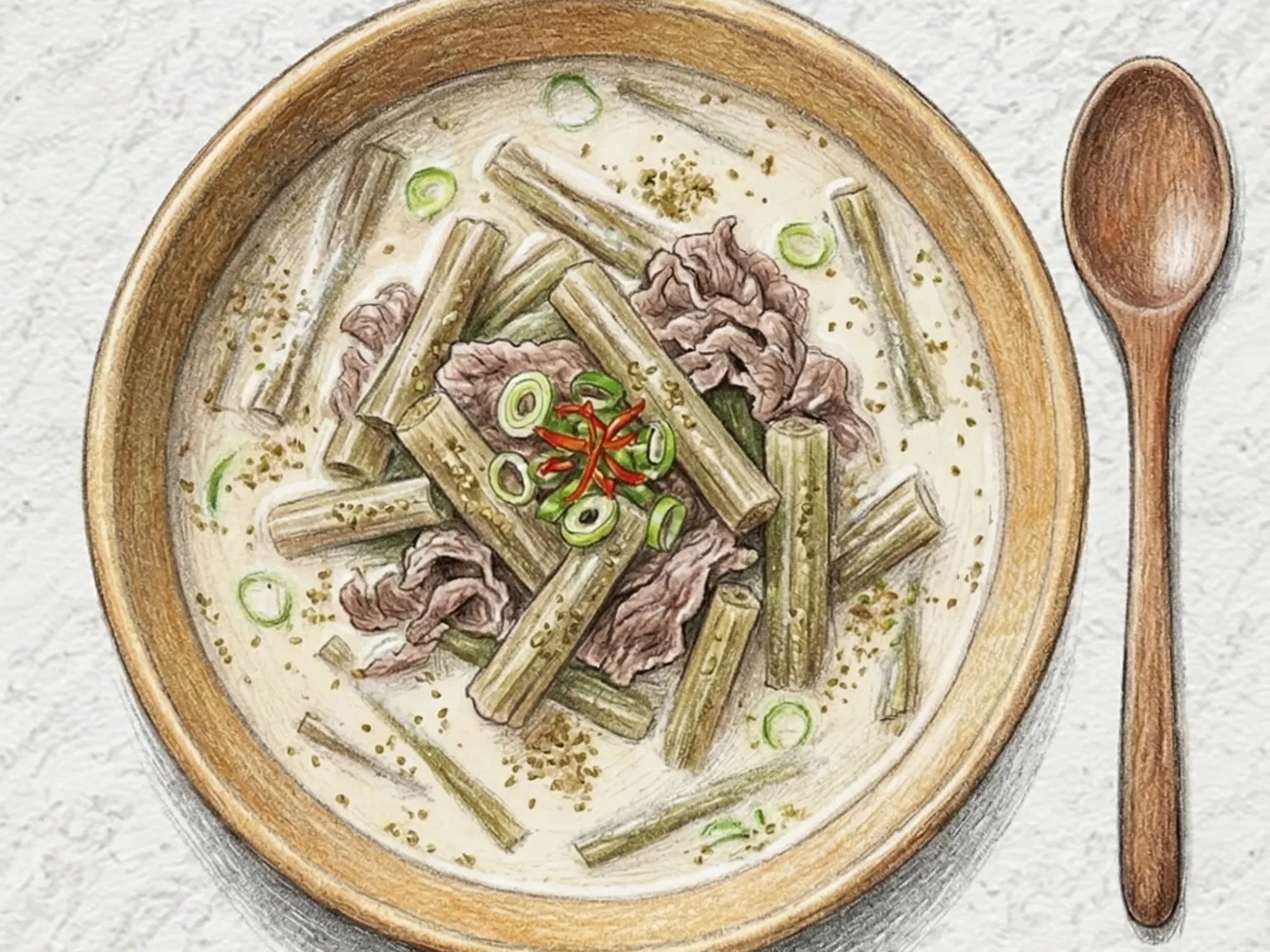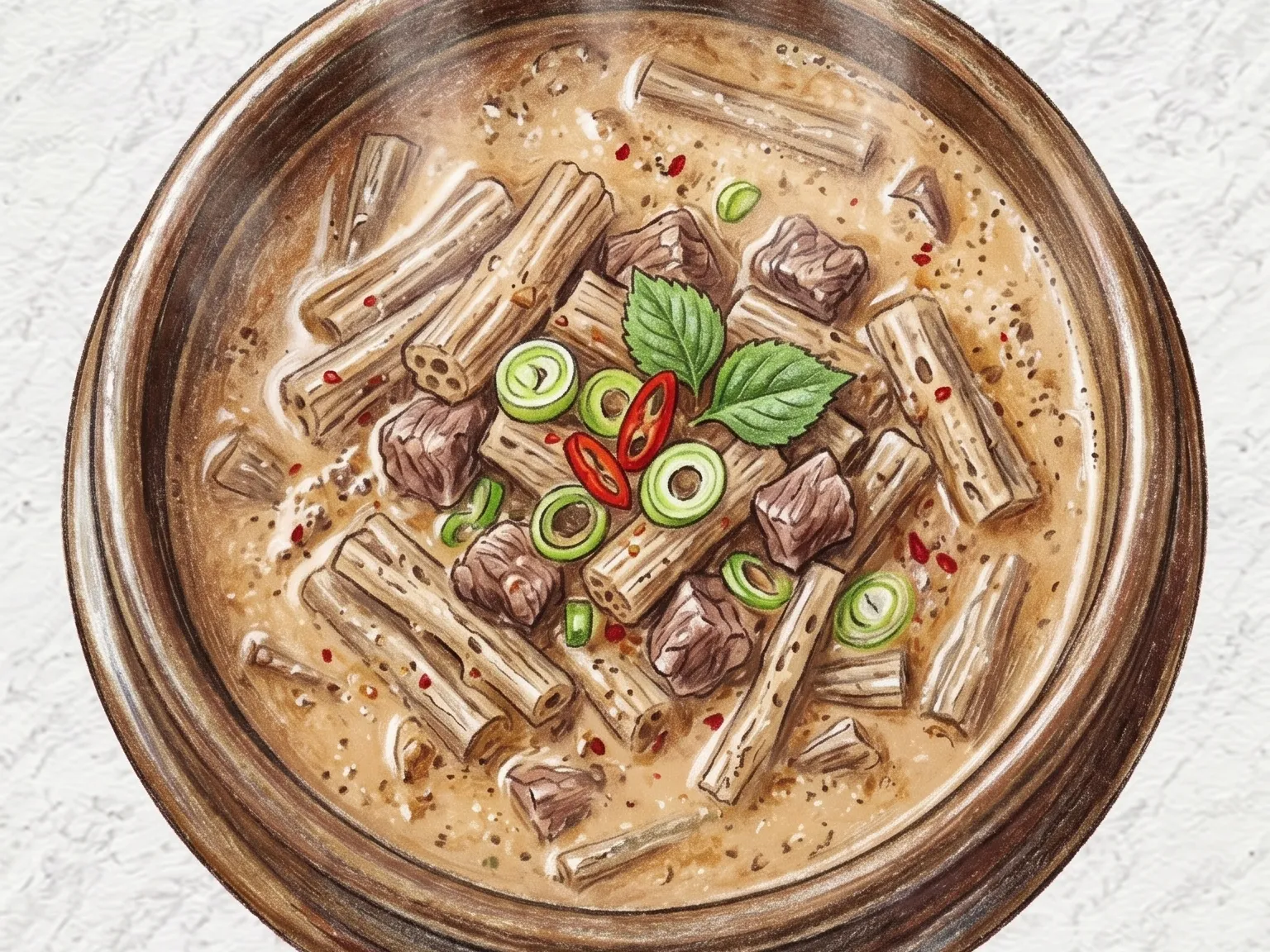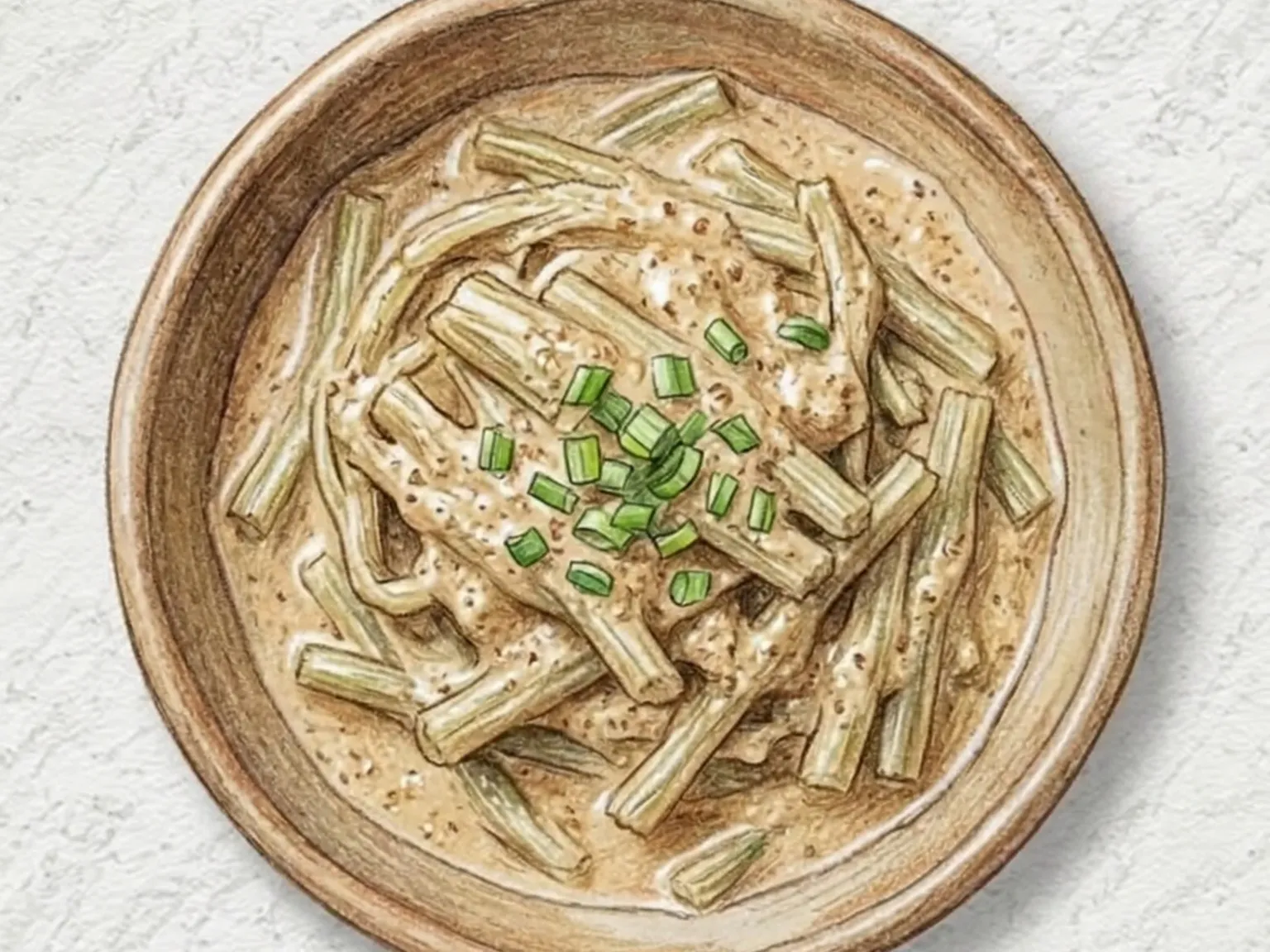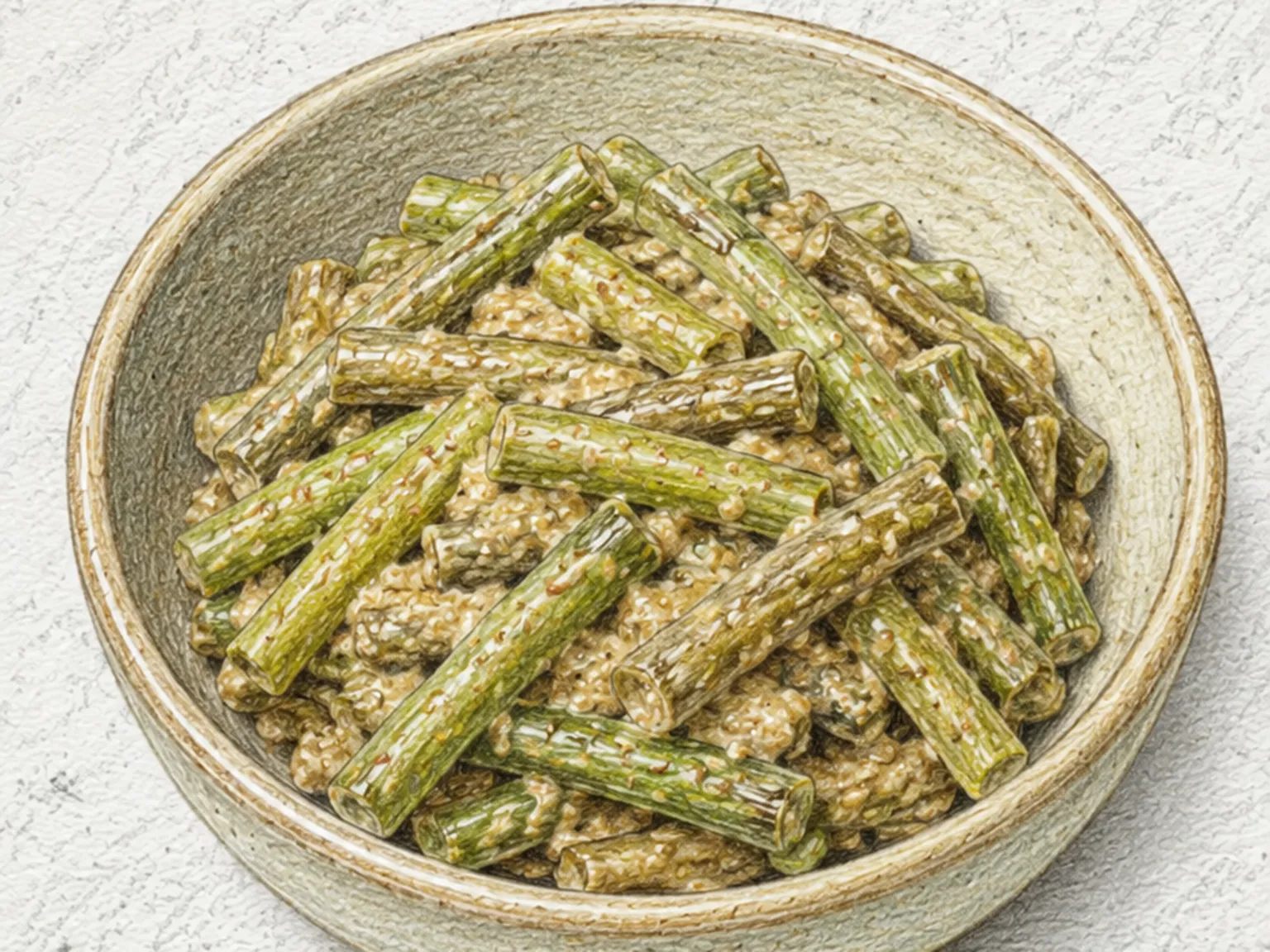
Korean Taro Stem Stir-fry with Perilla Powder
Torandae-deulkkae-bokkeum is a traditional Korean side dish of boiled taro stems stir-fried in perilla oil and thickened with ground perilla seeds. The taro stems have a tender texture with a subtle fibrous chew, and the perilla powder absorbs the simmering liquid of soup soy sauce and water to form a creamy coating. Double use of perilla - both the oil and ground seeds - builds a pronounced nutty aroma throughout the dish. It is a seasonal home-style banchan that highlights the taro stem's distinctive slippery mouthfeel paired with rich perilla depth.
Adjust Servings
Instructions
- 1
Cut taro stems into bite-size lengths.
- 2
Heat perilla oil, then sauté garlic and green onion.
- 3
Add taro stems and stir-fry for 2 minutes.
- 4
Add soup soy sauce and water, then simmer for 5 minutes.
- 5
Stir in perilla powder and cook until lightly thickened.
As an Amazon Associate, we may earn from qualifying purchases.
Tips
Nutrition (per serving)
More Recipes

Korean Butterbur Stem Stir-fry with Perilla
Meowi-dae-deulkkae-bokkeum is a seasonal Korean stir-fry of boiled butterbur stems coated in perilla seed powder and perilla oil. The stems are peeled of their tough outer fibers and cut into 5 cm lengths before a brief boil removes their natural bitterness, leaving a soft, slightly slippery texture. Soup soy sauce seasons the base, and perilla powder is folded in at the end to preserve its nutty, toasty fragrance. This dish appears most often in spring, when fresh butterbur is in season across Korean markets.

Korean Stir-fried Radish Greens with Perilla
Siraegi deulkkae-bokkeum is a Korean stir-fry of pre-boiled dried radish greens seasoned with soup soy sauce and garlic, then cooked in perilla oil and finished with generous perilla powder. The greens are first tossed in the seasoning to let the flavors penetrate, stir-fried for three minutes, then simmered briefly with water and perilla powder until a thick, nutty sauce coats every strand. Green onion added at the end provides a fresh aromatic lift. Compared to the doenjang-based siraegi jorim, this version leans lighter and more distinctly nutty from the perilla.

Korean Stir-fried Radish with Perilla Powder
Mu-deulkkae-bokkeum is a mild Korean side dish of finely julienned radish stir-fried and then simmered with perilla seed powder. Garlic and scallion are sauteed first for aroma, then the radish goes in and cooks under a lid with water and soup soy sauce until translucent and soft. Perilla powder is stirred in at the end, melting into the radish's released moisture to form a creamy, nutty coating. The dish has no heat at all, making it a versatile banchan; winter radish yields a noticeably sweeter result.

Korean Seaweed Stem & Shrimp Stir-fry
Miyeokjulgi-deulkkae-saeu-bokkeum combines desalted seaweed stems and medium shrimp, stir-fried in perilla oil and finished with a generous coating of perilla seed powder. The seaweed stems are soaked for ten minutes to reduce saltiness, then cut into 5 cm pieces that retain a distinctive chewy-crunchy bite - a textural contrast to the springy shrimp. Onion and garlic are sauteed first to establish a sweet base, and soup soy sauce provides the only salt. Perilla powder goes in at the very end so its nutty aroma stays intact through serving.

Korean King Oyster Mushroom Stir-fry with Perilla
This stir-fry combines 250 grams of julienned king oyster mushrooms with onion, cooked rapidly over high heat in a blend of perilla oil and cooking oil to prevent the mushrooms from releasing too much water. Garlic is sauteed for 20 seconds first to infuse the oil, followed by onion for one minute to draw out its natural sweetness. The mushrooms then go in for a quick two-minute toss before soup soy sauce and a splash of water are added to create a light braising liquid. One and a half tablespoons of ground perilla seeds are stirred in during the final minute, thickening the sauce into a creamy coating without becoming pasty. Scallion is added off heat for a finishing touch of color and freshness.

Korean Stir-Fried Taro Stems
Boiled taro stems are stir-fried in perilla oil with soy sauce and garlic to create a banchan prized for its uniquely chewy texture. Dried taro stems, once soaked and simmered, lose their rawness but retain a springy, almost rubbery bite along the center of each stalk, setting them apart from softer namul greens. Stir-frying in perilla oil first builds a nutty base note, and soy sauce with minced garlic layers savory depth onto the stems' neutral flavor. A splash of stock added mid-cook allows the seasoning to penetrate the fibrous interior during a brief simmer. Sliced green onion introduces a fresh aromatic accent, and a finishing spoonful of ground perilla seeds dissolves into the residual moisture, creating a creamy coating that clings to each piece. Mixed into a bowl of steamed rice, the chewy stems provide satisfying resistance with every bite, and their mild character lets them complement bolder dishes like doenjang jjigae without competing for attention.