Korean Taro Stem Stew (Perilla-Thickened Soybean Broth)
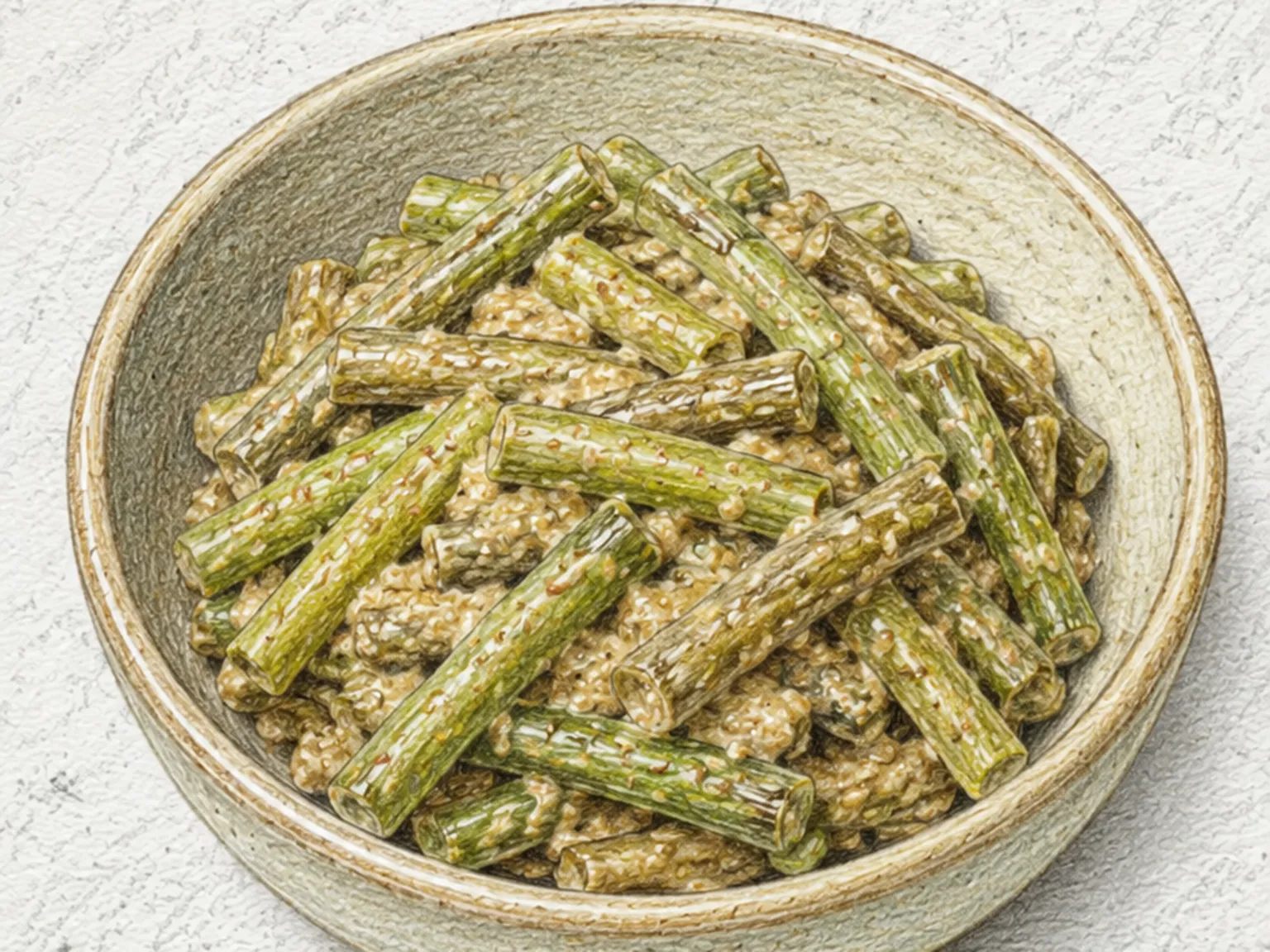
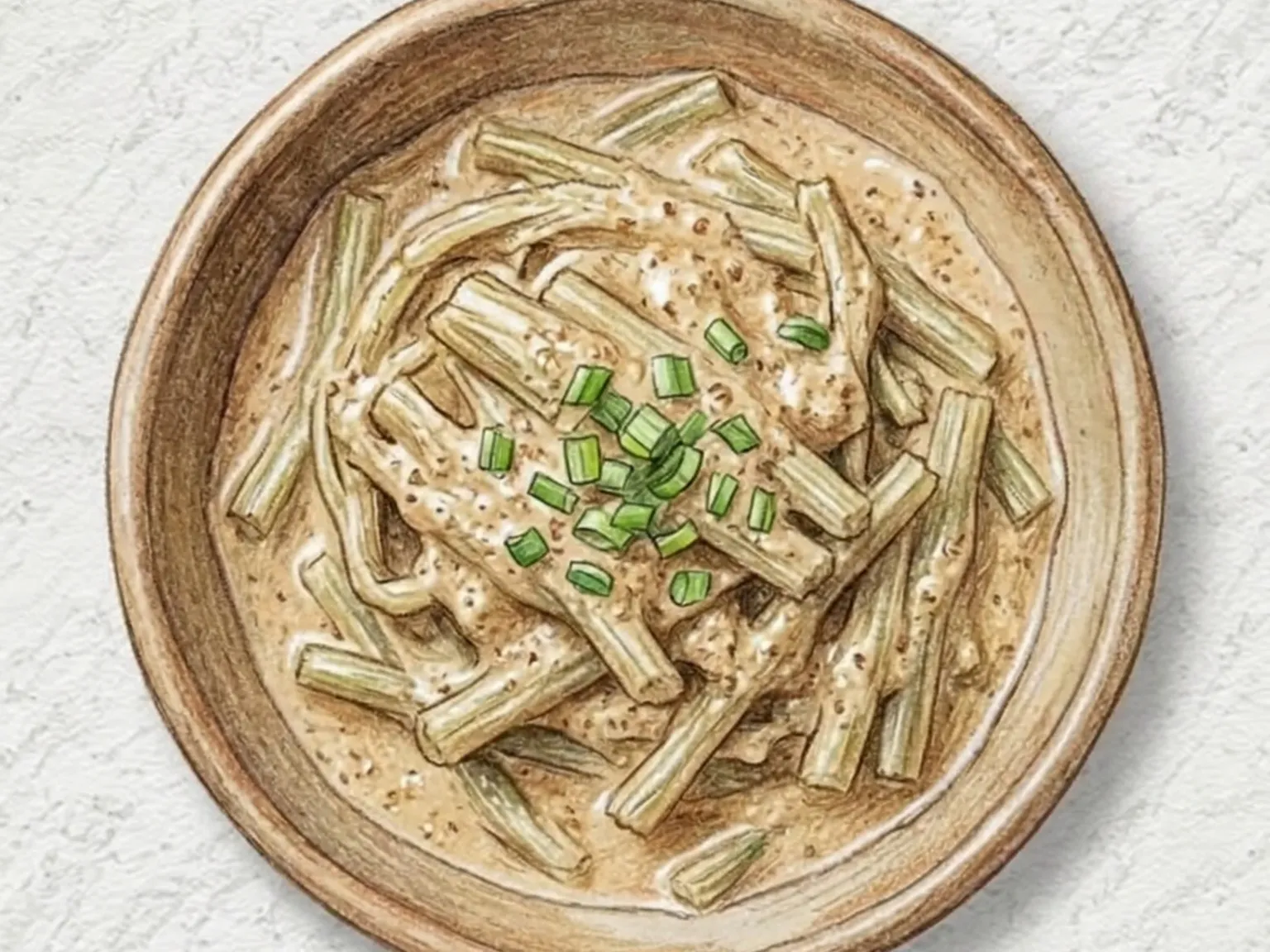
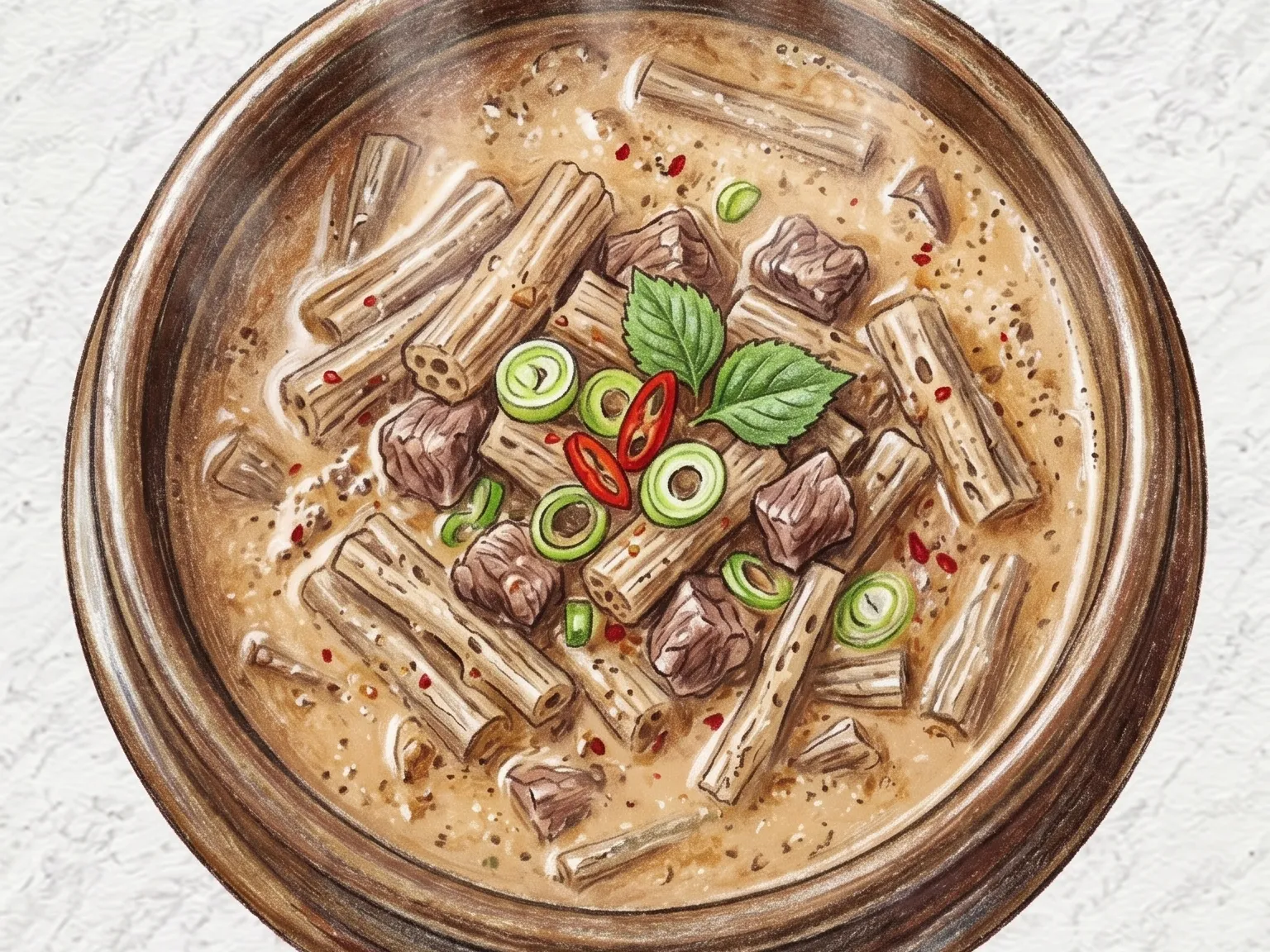
This stew features boiled taro stems simmered in a broth thickened with perilla seed powder and doenjang soybean paste. Beef soup meat adds depth while gochugaru provides a mild heat that balances the nutty richness of the broth. The taro stems contribute a soft, slightly chewy texture that absorbs the savory flavors of the soup soy sauce and garlic. It is a traditional Korean autumn dish that highlights seasonal taro stems at their best.
Adjust Servings
Instructions
- 1
Cut boiled taro stems and rinse in cold water to reduce sliminess.
- 2
Boil beef with water for 10 minutes to build a base broth.
- 3
Add and dissolve doenjang, gochugaru, and garlic; simmer 2 minutes.
- 4
Add taro stems and simmer 12 minutes over medium heat.
- 5
Stir in perilla powder for body, then season with soup soy sauce.
- 6
Add green onion and simmer 3 minutes to finish.
As an Amazon Associate, we may earn from qualifying purchases.
Tips
Nutrition (per serving)
Goes Well With

Korean Ginger Pumpkin Porridge
Kabocha pumpkin is steamed for 15 minutes and pureed until velvety, then thickened with sweet rice flour dissolved in cold water to prevent lumps. A teaspoon of fresh ginger juice adds a warm, peppery undercurrent beneath the pumpkin's natural sweetness, sharpening the finish without overpowering the squash. The porridge is stirred continuously over medium-low heat as the rice flour gradually builds body, and pine nuts scattered on top contribute an oily, resinous richness that complements the sweetness. This recipe yields four servings, making it well suited for sharing.

Korean Blanched Young Napa with Doenjang
Eolgari is young napa cabbage cut before the head has formed a tight ball, leaving it with thinner leaves and more tender ribs than fully mature baechu. A quick blanch of about one minute wilts the leaf while the pale ribs retain a gentle crunch that holds even after seasoning. After blanching, the cabbage is squeezed firmly to remove water, then dressed with doenjang, soup soy sauce, minced garlic, and sesame oil. The fermented paste penetrates the tender leaves quickly, spreading a salty, earthy coating evenly through each piece. The flavor profile is mild and round with no sharp edges, making it one of the most approachable doenjang-based namul dishes for people who are new to Korean fermented seasonings. The dish comes from the Korean countryside tradition of turning whatever young greens were growing between major kimchi-making seasons into simple dressed vegetables. Eolgari is a seasonal green, available at Korean markets from late spring through early autumn.

Korean Soy Pickled Burdock
Ueong jangajji is a soy-pickled burdock root prepared by soaking cut burdock in vinegar water to prevent browning, blanching to remove any earthiness, then submerging in a brine of soy sauce, vinegar, and sugar. Kelp, dried red chili, and whole peppercorns boiled into the brine contribute umami depth and a subtle warmth. The root's natural nuttiness and earthy aroma meld with the sweet-salty-tangy brine into a layered, lingering flavor. Its firm, crunchy texture holds up well over days of storage, and reboiling the brine on the third day extends the pickle's shelf life further. Because burdock oxidizes quickly once cut, transferring it to the vinegar soak immediately after slicing is essential for keeping the finished pickle looking clean and bright rather than muddy.

Korean Shiitake Tofu Pancake
Shiitake-tofu jeon is a savory Korean pancake made by finely chopping fresh shiitake mushrooms and firm tofu, then mixing them into a batter of pancake mix, egg, and a touch of sesame oil before pan-frying. The shiitakes contribute a meaty chew and pronounced umami depth, while the tofu lightens the texture and keeps the interior moist. Carrot and chives are added for color contrast and a fresh, slightly pungent bite. The egg binds everything together, and the sesame oil in the batter gives a nutty fragrance. Cooked uncovered over medium-low heat until both sides are golden, the exterior crisps up while the inside stays tender. When using dried shiitakes, soaking them in water first is worthwhile because the soaking liquid can be reserved for use in soups or braising liquid. Served with a dipping sauce of soy sauce and vinegar, the salty acidity sharpens the overall savory flavor.
More Recipes

Korean Beef and Taro Stem Soup
Torandae soegogi-guk pairs rehydrated taro stems with beef brisket in a clear, soy-seasoned broth. The brisket is simmered until it yields a clean yet deeply flavored stock, with surface fat skimmed periodically to keep the liquid transparent. Taro stems, soaked until pliable, are added to the broth and cooked until they drink in the beefy liquid - each bite releases a rush of savory juice, while the stems' stubborn fibers maintain a chewy resistance that contrasts with the fork-tender meat. Soup soy sauce tints the broth a light amber and adds umami without heaviness, and minced garlic provides a quiet warmth in the background. Sliced scallion goes in at the end for freshness. The shredded brisket is typically arranged on top as a garnish, so each bowl delivers a balanced combination of tender meat, textured stems, and aromatic broth. It is a homestyle soup that benefits from simplicity, letting the interplay between the two main ingredients speak for itself.

Korean Perilla Leaf Beef Stew
This stew features thinly sliced beef and a generous handful of perilla leaves simmered in anchovy stock. Twelve perilla leaves infuse the entire broth with their distinctive herbaceous, slightly minty aroma, while the beef releases its umami into the liquid. Firm tofu cubes absorb the gochugaru-seasoned broth, and onion adds a sweet undertone. Seasoned primarily with soup soy sauce, the stew lets the perilla and beef flavors stay in the foreground.

Korean Mussel Stew
Honghap jjigae uses a generous 900g of mussels to build an intensely briny, clean-tasting broth that defines this stew. Thick-cut Korean radish simmers alongside the shellfish, soaking up the ocean-flavored liquid and contributing a quiet natural sweetness. Cheongyang chili and gochugaru deliver a moderate, lingering heat, while soup soy sauce and cooking wine round out the seasoning without drowning the seafood flavor. Using the liquid the mussels release during cooking as the base of the broth provides depth without requiring a separate stock. Sliced green onion added at the end lifts the aroma without adding any fishy note. Selecting only mussels whose shells are tightly closed before cooking reduces the chance of grit or off-flavors in the finished stew.

Korean Clear Broth Tofu Stew
Tofu simmers in a deep beef stock alongside shiitake mushrooms and zucchini in this clean-flavored stew. The quality of the beef stock drives the entire dish, with shiitake mushrooms reinforcing the umami depth. Soft tofu cubes absorb the rich broth, while zucchini contributes a mild sweetness. Seasoned only with soup soy sauce and salt, this stew showcases a restrained, elegant approach to Korean jjigae without any chili heat.

Korean Turnip Perilla Seed Stew
Sunmu deulkkae jjigae is a gentle Korean stew that simmers turnip with ground perilla seed in a kelp stock base. As the turnip cooks slowly, it softens and releases a quiet natural sweetness, while the perilla powder thickens the broth into a creamy, nutty layer that coats each spoonful. Oyster mushrooms add a chewy bite and soft tofu contributes protein, rounding out the bowl into a balanced meal on its own. Adding the perilla powder late in the cooking process preserves its aroma, and the stew should be finished within two to three minutes of the broth returning to a boil to prevent any bitterness from developing. Seasoned with soup soy sauce and a drizzle of sesame oil at the end, the result is a clean, quietly satisfying stew that is easy on the stomach.

Korean Taro Stem Perilla Soup
Torandae deulkkae-tang is built around dried taro stems - the stalks of the taro plant, sun-dried for preservation and rehydrated before cooking. Once soaked, the stems become spongy enough to absorb broth while retaining a fibrous chew that provides the soup's defining texture. They are first stir-fried in perilla oil to tame any grassy rawness and coat the fibers with a toasty fragrance. Ground perilla seeds are then stirred into the simmering stock, turning the liquid an opaque cream color and filling it with a deep, nutty richness that carries every spoonful. Adding beef brisket to the pot contributes body and a meaty undertone, while a small amount of doenjang blended into the broth introduces a fermented complexity that deepens the perilla's already layered flavor. The soup is a staple of the colder months, when its warming richness is most welcome. Spooned over rice, the thick perilla broth clings to each grain, making this one of the most comforting bowls in the Korean autumn and winter table.