Truffle Mushroom Tagliatelle
Quick answer
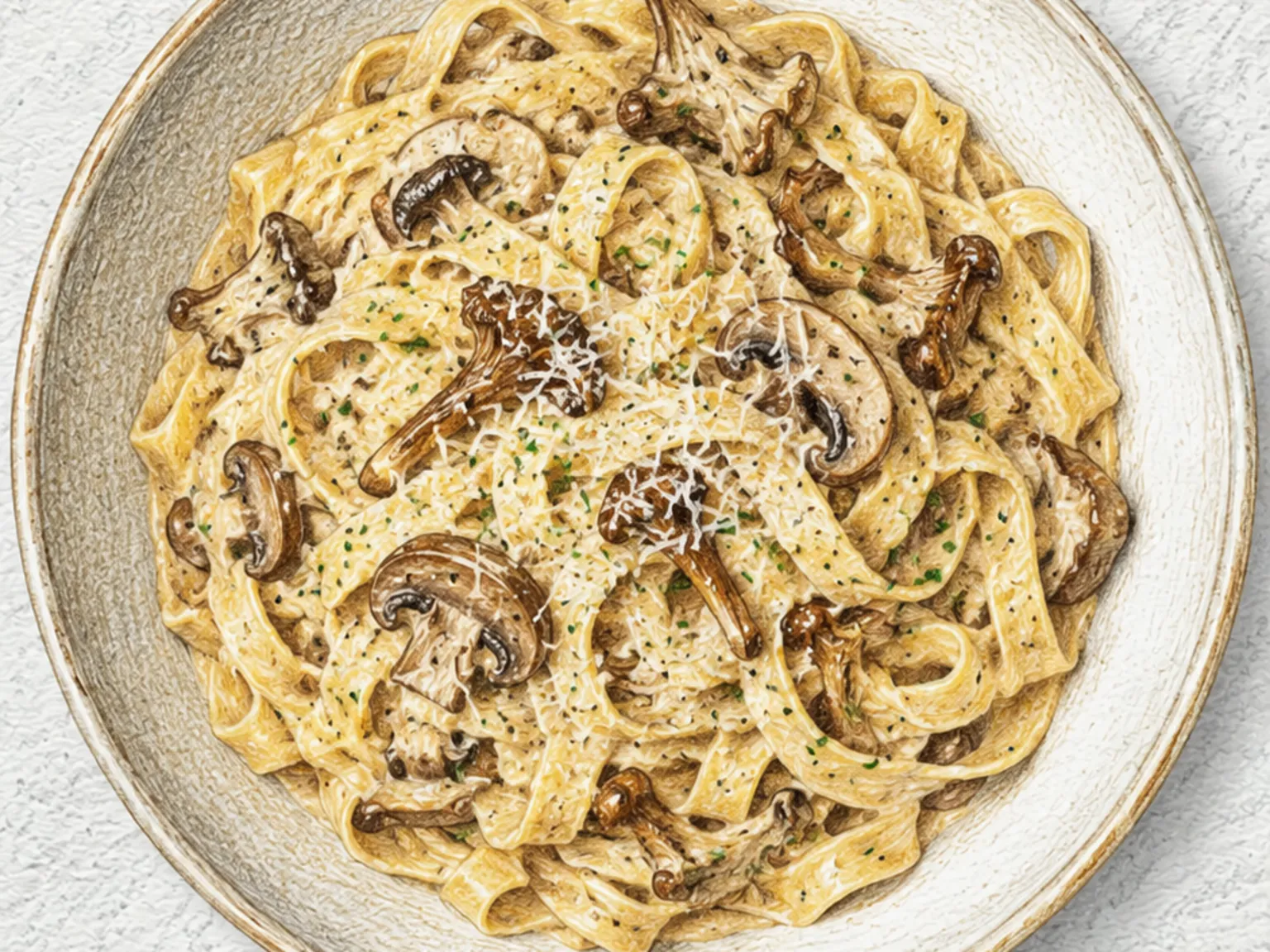
This Italian pasta pairs wide tagliatelle ribbons with a creamy sauce built from sauteed mixed mushrooms, shallot, and garlic.
What makes this special
- Truffle mushroom tagliatelle tosses wide pasta ribbons with an umami-rich cream sauce.
- Truffle oil must go in off heat or its aroma evaporates completely
- Pasta water adjusts the cream sauce to the right clinging consistency
Key ingredients
Core cooking flow
- 1 Slice 180 g button mushrooms evenly, then finely chop 40 g shallot and 2 garlic cloves.
- 2 Bring a large pot of salted water to a full boil and cook 200 g tagliatelle until al dente.
- 3 Heat the wide pan over medium-high heat, add 1 tablespoon olive oil, and sau...
This Italian pasta pairs wide tagliatelle ribbons with a creamy sauce built from sauteed mixed mushrooms, shallot, and garlic. The mushrooms release their liquid during cooking, which concentrates into an umami-rich base before cream is added. A drizzle of truffle oil at the end provides a distinctive earthy aroma without overpowering the dish. Grated Parmigiano-Reggiano is folded in for additional depth. The flat, broad shape of tagliatelle holds the thick sauce effectively. Total cooking time is about 33 minutes.
Instructions
Read the steps as a cooking flow: prep, heat, seasoning, doneness control, and finish.
- 1Prep
Slice 180 g button mushrooms evenly, then finely chop 40 g shallot and 2 garlic cloves.
Have a wide pan ready so the mushrooms can spread out and brown instead of piling up and steaming.
- 2Finish
Bring a large pot of salted water to a full boil and cook 200 g tagliatelle until al dente.
Reserve 100 ml pasta water before draining, then drain promptly so the noodles do not soften too much.
- 3Control
Heat the wide pan over medium-high heat, add 1 tablespoon olive oil, and saute the shallot for about 1 minute.
Add the garlic only briefly, just until fragrant, to keep it from browning and turning bitter.
- 4Control
Add the mushrooms and saute over high heat for 5-7 minutes, letting their moisture evaporate.
If liquid collects in the pan, pause stirring briefly so the bottom dries out and the mushrooms start to brown.
- 5Control
Pour in 140 ml heavy cream and simmer gently over medium heat for 2-3 minutes.
When the sauce lightly coats a spoon, melt in half of the 35 g Parmesan, keeping the heat moderate so it stays smooth.
- 6Finish
Add the pasta and part of the reserved 100 ml pasta water, then toss for about 1 minute until the sauce clings to the ribbons.
Season with 0.5 teaspoon salt and pepper, turn off the heat, then add 1 teaspoon truffle oil and the remaining cheese.
After the steps
Pick a recipe that fits this dish.
Continue with shared ingredients, meal pairings, or a similar method.
Recipes That Go Well With This
More Noodles →Based on shared ingredients and meal pairing
Porcini Truffle Mushroom Tagliatelle
Porcini truffle mushroom tagliatelle relies on the liquid left over from rehydrating dried porcini as the flavor engine of the entire dish. Soaking dried porcini for thirty minutes or more produces a deep brown, intensely earthy liquid that carries far more umami than any fresh mushroom can alone. Shallots and garlic are cooked slowly in butter and olive oil until soft, then white wine is added to deglaze the pan and lift the savory residue from the bottom. Rehydrated porcini and a selection of fresh mixed mushrooms go in next, followed by the strained soaking liquid, and the sauce is simmered down until concentrated and thick. Truffle paste is stirred in only after the pan is removed from heat - adding it while still on the flame burns off the volatile compounds responsible for its aroma. Grated Parmigiano-Reggiano and flat-leaf parsley are folded through at the end. Wide tagliatelle ribbons are the ideal carrier: their surface area and chewy structure hold the dense sauce without falling apart.
Slow-Simmered Meat Sauce Pasta
Beef ragu tagliatelle is an Italian braised meat sauce pasta built on slow cooking rather than speed. Ground beef and a soffritto of finely diced onion, carrot, and celery are cooked together in a heavy pot for ninety minutes or longer until the vegetables dissolve entirely into the sauce. Tomato paste is stirred in and caramelized during the early stages to deepen its sweetness and concentrate flavor, then red wine deglazes the pot, lifting the browned fond from the bottom into the liquid. The long, low simmer breaks the meat down into small, tender pieces suspended in a thick, glossy sauce. Wide tagliatelle ribbons are ideal here because their surface texture and broad folds trap the heavy ragu rather than letting it slide off, delivering concentrated beef flavor with every bite.
Antipasto Salad
Antipasto - literally 'before the meal' in Italian - is a first course of cured meats, cheeses, olives, and preserved vegetables, and this salad compresses that entire tradition into a single composed bowl. Crisp romaine or iceberg forms the base, layered with sliced salami, capicola, provolone, marinated artichoke hearts, roasted red peppers, and briny Kalamata olives. A red wine vinegar dressing built with dried oregano and minced garlic draws the components together with a sharp, herbal acidity that cuts through the fat of the cured meats. The salami is rolled into loose cylinders and the provolone cut into thick chunks so both hold their presence against the dressed greens rather than disappearing into the mix. The reason the salad works is the contrast in salt levels and textures: heavily cured meat against mild cheese, smoky-sweet pepper against bitter greens, silky olive against crunchy romaine - no two bites taste the same. Italian-American delis in New York and New Jersey popularized this format in the mid-twentieth century, and it has since become a reliable fixture of catered lunches, potlucks, and family gatherings across the United States.
Beef Brisket Perilla Cream Fettuccine
Chadol perilla cream fettuccine pairs Italian cream sauce with thinly sliced Korean beef brisket and the resinous fragrance of perilla leaves. The brisket is seared in a dry, hot pan without added oil, since its own fat content is sufficient and extra oil prevents proper caramelization on the edges. After searing and draining the rendered fat, the crisped brisket is folded back into a sauce of heavy cream and milk so its savory depth permeates every drop. Perilla leaves must be added only when the heat is turned off, because their volatile aromatic oils evaporate quickly; adding them too early leaves only a faint bitterness. The perilla's herbal note lifts the heaviness of the cream and introduces a register absent from any European herb. Fettuccine's broad, flat surface catches sauce generously, ensuring each bite is fully coated without the sauce pooling at the bottom of the bowl. Grated Parmigiano-Reggiano adds sharpness and salt, while cracked black pepper gives a punctuating finish. The dish works because the rich fat of the brisket and the clean herbal top note of perilla occupy different flavor registers and strengthen rather than compete with each other.
Serve with this
Crispy Mushroom Tangsu (Sweet & Sour)
Double-fried oyster mushrooms with the same two-stage frying technique used for Korean tangsu pork. Oyster mushrooms fully dried of moisture are coated in a potato starch and flour batter, fried at 170°C, rested to release steam, then returned to 180°C for a second fry that locks in a crisp exterior while keeping the interior chewy. A sweet-sour sauce of soy sauce, vinegar, and sugar is simmered with onion, bell pepper, and carrot, then thickened with a starch slurry. Pouring the sauce over the mushrooms in advance softens the crust quickly, so serving the sauce separately and ladling it on at the table preserves the crunch. The technique produces a texture comparable to the pork version without any meat.
Korean Chive Clam Jeon (Garlic Chive and Clam Seafood Pancake)
Buchu-bajirak-jeon is a seafood pancake of garlic chives and clam meat, pan-fried in a batter made with a mix of all-purpose pancake flour and rice flour. The rice flour addition increases the chew and gives the finished jeon a slightly more resilient texture than plain flour batters. Clam meat releases a briny, oceanic liquid as it cooks that seeps into the batter and flavors it throughout, while the chives add a sharp, grassy counterpoint. Minced garlic and diagonally sliced cheongyang chili worked into the batter suppress any fishiness and build a layered fragrance. A generous amount of oil in the pan over medium heat produces edges that crisp and brown like the outside of a fritter. Waiting until the bottom is fully set before flipping prevents the pancake from tearing. Served with soy dipping sauce or a seasoned soy mixture, the clean salinity of the clams comes through clearly.
Korean Scallion Kimchi (Whole Stalk Anchovy Shrimp Paste)
Jjokpa kimchi is a traditional Korean scallion kimchi made by briefly brining whole scallions in coarse salt, then coating them from root to tip with a seasoning paste of anchovy fish sauce, fermented shrimp, gochugaru, and sweet rice flour paste. Using both anchovy fish sauce and salted shrimp together is intentional: the two condiments each carry a different profile of seafood umami, and combining them produces a more complex, layered depth than either alone could achieve. The sweet rice flour paste acts as a binder, adhering the seasoning evenly to the surface of each scallion and keeping it in place as moisture releases during fermentation. Without this paste, the pickling liquid would dilute the coating and the flavor would fade over time. The white bulb sections of the scallion hold their crunch through the brining and fermentation process while absorbing the spice of the gochugaru, and the green tops wilt to a silky texture that releases the scallion's characteristic sweet, pungent aroma. After six hours at room temperature followed by a day of refrigeration, the seasoning has fully penetrated the scallion and the kimchi is ready to eat alongside grilled pork belly or bossam. After three or more days of fermentation, a gentle lactic acidity develops that makes the kimchi equally useful as an ingredient in stews or stir-fries.
Similar recipes
Mentaiko Cream Pasta
Mentaiko cream pasta is a Japanese-style cream pasta in which salted pollock roe is stirred into a warm butter, heavy cream, and milk base until the sauce turns silky and coats the spaghetti in a fine layer studded with tiny bursts of roe. Minced garlic is sauteed gently in butter over low heat until just fragrant and sweet, then the cream and milk are poured in and brought only to the point before a full boil, as a rolling boil causes the sauce to break and separate. Once the temperature is controlled, two-thirds of the roe goes into the sauce along with the drained spaghetti, everything tossed quickly so the roe cooks only through the residual heat of the pasta and sauce rather than direct flame, which would make it taste fishy. Reserved pasta water, added a spoonful at a time, adjusts the consistency without diluting the richness. Finely grated Parmesan adds another tier of umami and salt, while a few drops of fresh lemon juice cut through the cream and leave a clean, bright finish that keeps the dish from feeling too heavy. The remaining raw roe and crumbled roasted seaweed are arranged on top before serving, creating a contrast of red and black that signals the flavors inside, and folding them in at the table releases a fresh, briny aroma.
Penne alla Vodka
Penne alla vodka combines tomato puree, heavy cream, and a splash of vodka into a smooth, coral-colored sauce. The vodka helps release flavor compounds in the tomato that are not soluble in water or fat alone, then cooks off to leave only a subtle warmth. Butter-softened onions and a pinch of chili flakes round out the base before cream is stirred in on low heat. The tubular shape of penne catches the thick sauce inside each piece. Controlling noodle texture and sauce coating helps the ingredients cook evenly while keeping the final seasoning balanced.
Fettuccine Alfredo
Fettuccine Alfredo is an exercise in simplicity where technique matters more than a long ingredient list. Wide fettuccine noodles are tossed with unsalted butter and finely grated Parmigiano-Reggiano cheese, using starchy pasta water to create a smooth emulsion that clings to every strand. The original Roman recipe contains no cream at all - the silky texture comes from the marriage of melted butter fat, cheese protein, and the starch released by the pasta during cooking. The pan must stay off direct heat while tossing, as excessive temperature breaks the emulsion and turns the sauce grainy and clumped. Speed is essential: the dish should move from pan to plate in under a minute. Generous freshly cracked black pepper provides a sharp counterpoint to the rich, concentrated cheese flavor. Born in Rome in the early twentieth century, this pasta remains one of the most recognizable Italian dishes served worldwide.