Korean Peanut Bread (Mold-Baked Peanut-Studded Street Snack)

Korean Peanut Bread (Mold-Baked Peanut-Studded Street Snack)

Quick answer

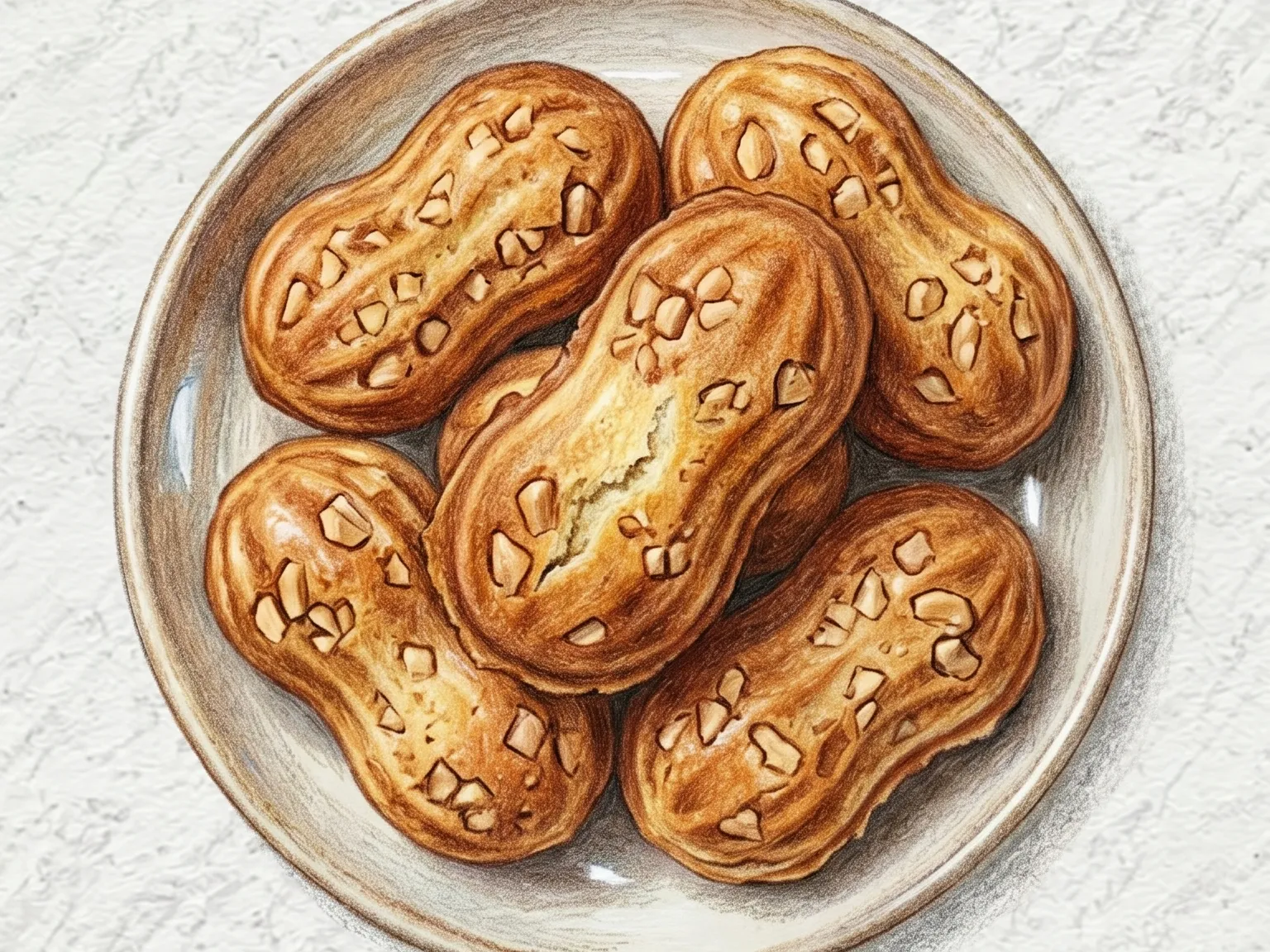
Ttangkong-ppang is Korean peanut bread baked in a shaped mold from a batter of flour, eggs, milk, and melted butter mixed with roughly chopped roasted peanuts.

What makes this special

  • Mold-baked peanut bread featuring a nutty crumb studded with roasted, crushed peanut pieces.
  • Coarsely crushed roasted peanuts create nutty chunks throughout the crumb
  • Swapping butter for oil lets the peanut flavor come through more directly
Total time
30 min
Level
Easy
Servings
4 servings
Ingredients
8
Calories
390 kcal
Protein
11 g

Key ingredients

all-purpose floursugarbaking powdersalteggs

Core cooking flow

  1. 1 Roughly chop the 80 g roasted peanuts so the pieces stay noticeable when bitten.
  2. 2 Place the 200 g flour, 50 g sugar, 1 teaspoon baking powder, and 1/4 teaspoon salt in a bowl.
  3. 3 In another bowl, whisk the 2 eggs until smooth, then mix in 140 ml milk and 25 g melted butter.

Ttangkong-ppang is Korean peanut bread baked in a shaped mold from a batter of flour, eggs, milk, and melted butter mixed with roughly chopped roasted peanuts. The natural oils in the peanuts infuse the batter with a toasted, nutty richness, and each peanut chunk provides a crunchy interruption in the soft crumb. Cooking on medium-low heat and flipping regularly develops a thin crust on both sides while butter keeps the interior moist. Sugar supplies sweetness and a pinch of salt balances against the nuttiness, resulting in a flavor profile that stays engaging bite after bite.

Prep 15min Cook 15min 4 servings

Instructions

Read the steps as a cooking flow: prep, heat, seasoning, doneness control, and finish.

6 steps
  1. 1
    Prep

    Roughly chop the 80 g roasted peanuts so the pieces stay noticeable when bitten.

    Set aside a small spoonful for topping, and avoid grinding them too fine because powdery peanuts disappear into the batter.

  2. 2
    Season

    Place the 200 g flour, 50 g sugar, 1 teaspoon baking powder, and 1/4 teaspoon salt in a bowl.

    Stir thoroughly so the leavening and salt are evenly distributed before any liquid is added.

  3. 3
    Heat

    In another bowl, whisk the 2 eggs until smooth, then mix in 140 ml milk and 25 g melted butter.

    Let the butter cool to lukewarm first so it does not cook the eggs.

  4. 4
    Prep

    Pour the wet mixture into the dry ingredients and fold from the bottom with a spatula.

    Stop as soon as no dry flour remains, then fold in the chopped peanuts briefly to keep the crumb tender.

  5. 5
    Finish

    Preheat the peanut bread mold well over medium-low heat, then fill each cavity about 80 percent full.

    Scatter the reserved peanuts on top before closing the mold so the batter can expand without overflowing.

  6. 6
    Finish

    Keep the heat at medium-low and turn the mold every 2 to 3 minutes.

    Remove the breads when both sides are golden with a thin crisp crust, then cool briefly on a rack and serve warm.

After the steps

Pick a recipe that fits this dish.

Continue with shared ingredients, meal pairings, or a similar method.

Recipes That Go Well With This

More Street food →

Based on shared ingredients and meal pairing

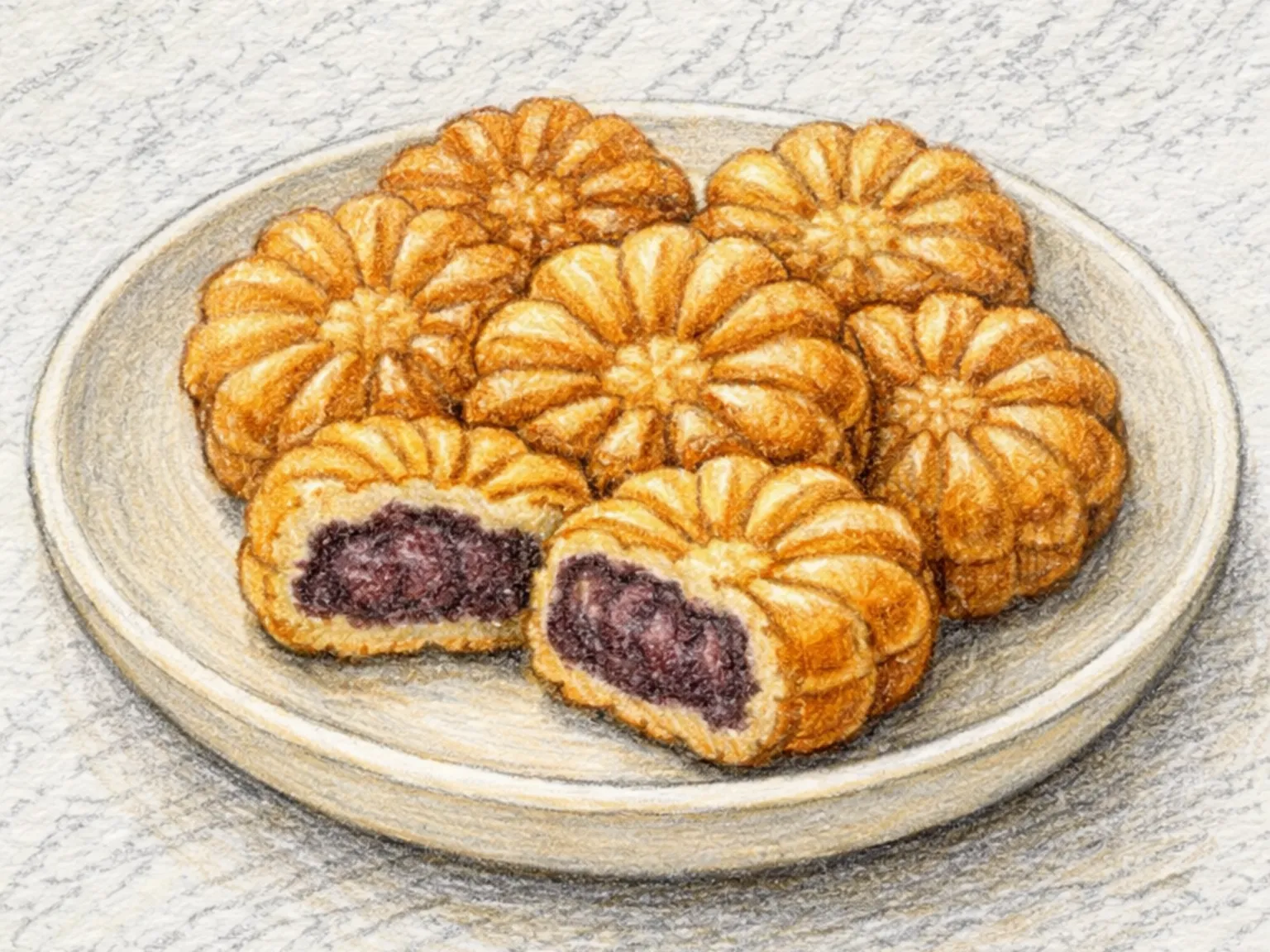
Korean Chrysanthemum Bean Cakes
Shared ingredient: all-purpose flour Street food

Korean Chrysanthemum Bean Cakes

Gukhwa-ppang is a Korean winter street pastry baked in a chrysanthemum flower-shaped cast-iron mold, filled with sweet red bean paste at the center. The batter of flour, baking powder, sugar, milk, egg, and melted butter is stirred together with minimal mixing to keep gluten development low, then poured to fill only one-third of the mold before a spoonful of bean paste is placed in the middle and covered with more batter, ensuring the filling sits centered in the finished pastry. Cooking over medium-low heat for three to four minutes on each side produces a golden crust with sharply defined flower-petal ridges pressed into the surface, while the bean paste inside stays soft and flows when the pastry is broken apart. It is often grouped with bungeoppang as a sibling street food, but the dough ratio is heavier and the shell is noticeably thicker, giving it a stronger bread-forward flavor and a slightly smaller proportion of filling to outer crust. The pastry is best eaten immediately after cooking, while the exterior is still crisp and the paste still hot. In recent years vendors have begun filling gukhwa-ppang with cream, chocolate, and sweet potato paste as alternatives to the traditional red bean filling.

Korean Street Waffle (Crispy Folded Waffle with Jam and Cream)
Shared ingredient: baking powder Street food

Korean Street Waffle (Crispy Folded Waffle with Jam and Cream)

Gilgeori waffle is a Korean street stall dessert made from a thin batter of cake flour, egg, milk, and melted butter, cooked in a waffle iron and folded around a filling of strawberry jam and whipped cream. Using cake flour and mixing the batter only until just combined keeps gluten development minimal, which is what produces the characteristic contrast between a crisply patterned exterior and a soft, airy interior. Overmixing develops gluten strands that result in a tough, chewy texture after baking. The waffle iron must be fully preheated before the batter is poured to ensure sharp grid definition and even browning, and a generous coating of oil or butter on the plates prevents sticking. Immediately after cooking, the waffle holds trapped steam inside its pockets, so a brief rest on a cooling rack is important -- skipping this step causes condensation to collect underneath, making the bottom layer soggy before the filling even goes in. Because the batter itself carries only a light butter fragrance rather than heavy richness, the gentle dairy sweetness of the cream and the tangy brightness of the strawberry jam come through with clarity. Folded in half and held in one hand, the waffle is designed for eating while walking -- a functional form that is central to its identity as street food.

Korean Sweet Spicy Pollock Floss Stir-fry
Serve together Side dishes

Korean Sweet Spicy Pollock Floss Stir-fry

Myeongyeopchae-bokkeum stir-fries finely shredded dried pollock floss in gochujang and oligosaccharide syrup until each fiber strand is evenly coated and moist. Myeongyeopchae is thinner and softer-fibered than hwangtaechae, the wider dried pollock strips, arriving in a dense cotton-like bundle that must be loosened strand by strand before cooking. Running your fingers along the grain separates the fibers cleanly, allowing the seasoning to penetrate evenly and preventing the finished banchan from clumping together in the mouth. A dry toast of thirty seconds in an oil-free pan drives off residual moisture and coaxes out a toasted fish aroma before gochujang, gochugaru, oligosaccharide syrup, soy sauce, and minced garlic go in over the lowest heat for a rapid coating. The fine fibers absorb the sauce almost immediately and turn pliant and glistening, but heat held too long draws the moisture back out, leaving them tough and stiff, so the entire stir-fry must be completed within two minutes. A finishing drizzle of sesame oil and a scatter of sesame seeds deepen the nutty aroma. The resulting banchan occupies a middle ground between the chewier, more aggressively seasoned hwangtaechae-muchim and the bolder jinmichae-bokkeum, its mild sweet-spicy profile approachable enough for children. The relatively dry finish means the seasoning does not bleed into adjacent items in a lunchbox, and stored in an airtight container in the refrigerator the flavor holds well for up to five days.

Korean Honey Bread Balls (Fried Yeast Dough Balls Glazed with Honey and Peanut)
Similar recipe Street food

Korean Honey Bread Balls (Fried Yeast Dough Balls Glazed with Honey and Peanut)

Kkul-ppang is a regional street snack from Tongyeong made by deep-frying yeast-leavened dough balls at 170 degrees Celsius until the outside firms into a thin, crisp shell. The fermentation process fills the interior with air pockets, producing a soft, bread-like crumb rather than the dense texture of unbaked dough. Whole dough is fried without any batter coating, which is what keeps the shell thin and crackly rather than puffy or thick. Immediately after frying, while still hot, the balls are brushed generously with warm honey so it soaks into the crust, then rolled in finely chopped peanuts for a layer of roasted nuttiness. Using rice syrup instead of honey softens the sweetness and brings the flavor closer to traditional Korean confectionery. Once cooled the shell stiffens and loses some of its snap, so these are best eaten fresh from the oil.

Serve with this

Korean Dalgona Coffee (Whipped Instant Coffee Foam Milk)
Drinks Easy

Korean Dalgona Coffee (Whipped Instant Coffee Foam Milk)

Dalgona coffee is made by whipping equal parts instant coffee, sugar, and hot water with a hand mixer for three to five minutes until stiff, caramel-colored peaks form, then spooning the foam over iced milk. The whipped layer carries a concentrated, bittersweet coffee flavor that gradually blends into the cold, neutral milk below as you stir. A light dusting of cocoa powder on top introduces a faint chocolate note, and increasing the sugar slightly helps the whipped cream hold its stiff structure longer.

🍺 Bar Snacks 🧒 Kid-Friendly
Prep 8min 2 servings
Omija Bead Ice Cream
Desserts Medium

Omija Bead Ice Cream

This dessert features omija syrup shaped into small frozen spheres using a molecular gastronomy technique. The natural five-flavored profile of omija berries is concentrated into each tiny bead. The recipe uses two types of base mixtures: a clear pink omija juice and an opaque pink liquid made by blending the juice with milk and yogurt powder. These liquids are dropped from a pipette into a cup of cooking oil that has been chilled in the freezer for at least one hour. Upon contact with the cold oil, the droplets solidify into round spheres. The frozen beads are scooped out with a strainer, rinsed in cold water to remove the oil coating, and stored in the freezer. The clear red and milky pink beads are served mixed together, and they can also be added to sparkling water to make a beverage.

🔥 Trending Now ⚡ Quick
Prep 20min 2 servings
Korean Dongchimi Buckwheat Noodles
Noodles Easy

Korean Dongchimi Buckwheat Noodles

Dongchimi makguksu is a Gangwon-do cold noodle dish of buckwheat noodles in the broth of well-fermented dongchimi, a white water kimchi of salted radish. The broth is strained clean and chilled in the freezer until a thin layer of ice crystals forms on the surface, which sharpens the tangy, lactic acidity to its fullest. Buckwheat noodles are rinsed thoroughly in cold water after cooking to strip away all surface starch, keeping the broth clear and clean around each strand. Julienned Korean pear contributes fruit sweetness and a juicy texture against the chewy noodles. Korean mustard, stirred in at the table, delivers a sharp nasal heat that punctuates each cold sip. The bowl contains no fat at all, making it one of the lighter noodle dishes in Korean cuisine and a natural palate-cleanser after rich, oily meat such as samgyeopsal or suyuk.

🏠 Everyday ⚡ Quick
Prep 20min Cook 10min 2 servings

Similar recipes

Korean Grilled Rice Cake Skewers
Street food Easy

Korean Grilled Rice Cake Skewers

Tteokkochi are pan-seared rice cake skewers glazed in a thick gochujang-based sauce that builds depth through a combination of ketchup, oligosaccharide syrup, soy sauce, and minced garlic simmered down until the sauce reduces and concentrates. The rice cakes are first seared in a thin layer of oil until a lightly crisp shell forms across the surface before any sauce is applied, creating a textural contrast between the outer crust and the soft, chewy interior that defines what a good tteokkochi should feel like. The ketchup introduces a mild tomato acidity that tempers and rounds the raw heat of the gochujang, while the syrup adds sweetness without the grainy texture of sugar. After the sauce is brushed on, rolling the skewers over low heat for another minute fuses the glaze to the rice cake surface so it adheres firmly and does not peel off as the skewers cool. Adjusting the ratio of ketchup to syrup shifts the balance between sweetness and acidity, making it straightforward to tailor the sauce to individual preference. Making the sauce in a larger batch and storing it separately saves time on repeat preparations.

🧒 Kid-Friendly 🌙 Late Night
Prep 10min Cook 10min 2 servings
Korean Street Egg Bread (Sweet Batter Muffin with Whole Egg)
Desserts Easy

Korean Street Egg Bread (Sweet Batter Muffin with Whole Egg)

Winter streets in Seoul feature this warm handheld snack prepared by baking a whole egg atop a sweet batter. The base consists of cake flour, baking powder, milk, and melted butter poured into muffin molds. Adding a layer of finely diced ham beneath the egg creates a salty contrast against the sweetness of the dough. When baked at 180 degrees Celsius, sixteen minutes results in a soft and runny yolk, while eighteen minutes produces a firm center. Vanilla extract mixed into the batter helps neutralize the natural scent of the egg for a clean finish. A light dusting of dried parsley on the domed surface adds a subtle herbal scent as the bread turns golden in the oven. Small amounts of shredded cheese can be added to the batter to balance the sweetness. Serving the bread while it remains warm ensures the interior stays moist. This egg bread functions well as a quick breakfast option and can be made in paper muffin cups if metal molds are unavailable.

🧒 Kid-Friendly 🌙 Late Night
Prep 15min Cook 18min 4 servings
Red Bean Pastry (Korean Gyeongju Soft Bun with Anko)
Desserts Medium

Red Bean Pastry (Korean Gyeongju Soft Bun with Anko)

Gyeongju-ppang is a baked Korean pastry made from a yeast-leavened dough enriched with milk and butter, wrapped generously around a core of sweet red bean paste. The dough is rolled thin, formed around the filling with the seam placed down, and baked at 180 degrees Celsius until the top domes up smooth and the surface takes on a pale golden color. Because the filling-to-dough ratio is deliberately high, the dominant flavor in each bite is the dense, sweet red bean, with the thin enriched shell contributing a quiet dairy aroma. The pastry traces its lineage to hwangnam-ppang, originating in the Hwangnam district of Gyeongju, and has become one of the city's defining food souvenirs. It stays moist after cooling, which makes it practical both as a packaged gift and as an everyday snack eaten at room temperature.

🧒 Kid-Friendly
Prep 30min Cook 18min 4 servings

Tips

Top with extra peanuts before cooking for better presentation.
Using oil instead of butter gives a lighter texture.

Nutrition (per serving)

Calories
390
kcal
Protein
11
g
Carbs
36
g
Fat
23
g