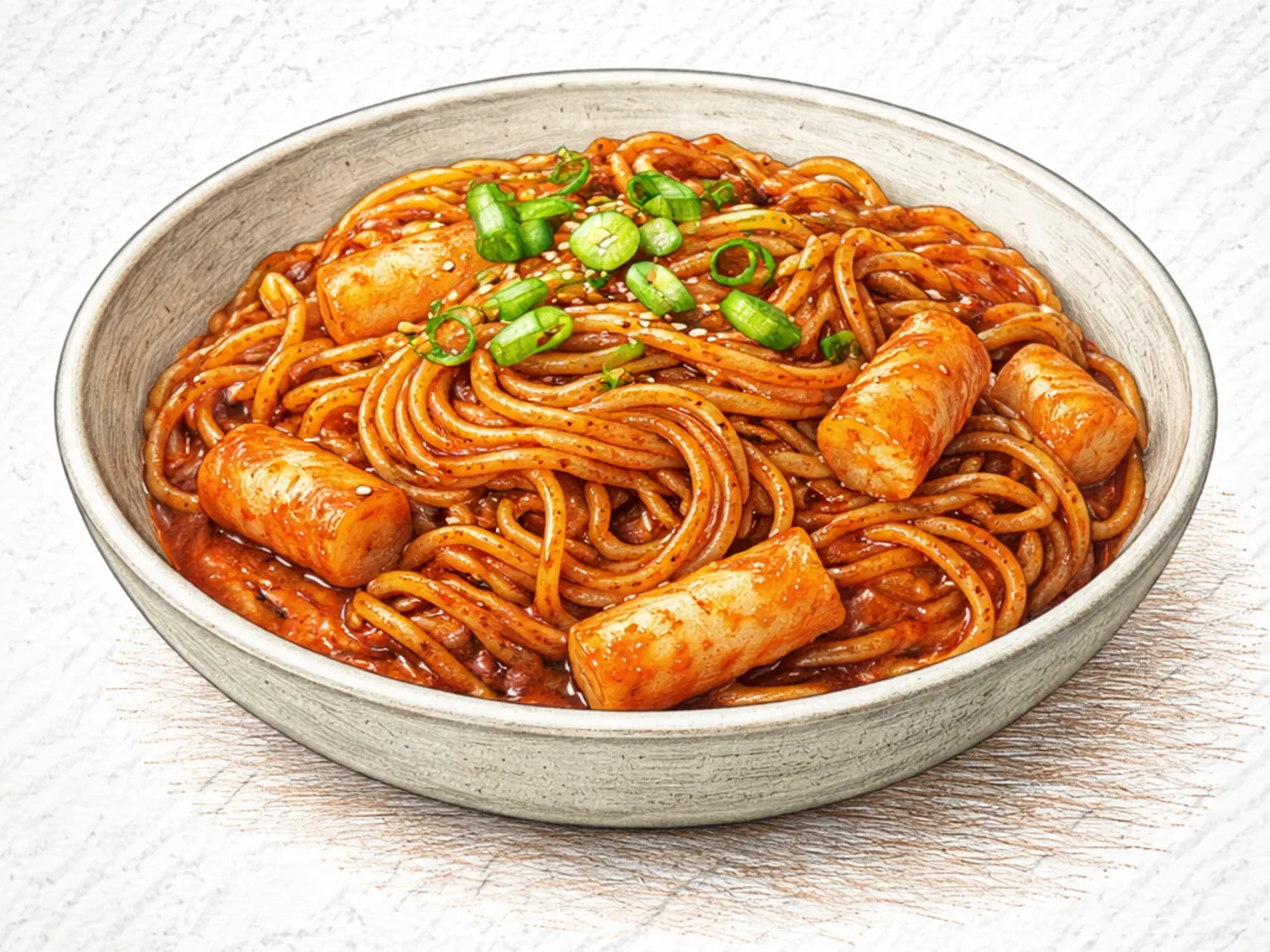
Korean Tteokbokki Noodles
Simmer the rice cakes and fish cake in the gochujang, sugar, and soy sauce liquid over medium heat for about 5 minutes, until the rice cakes soften. Add the udon last so it does not clump, and stir for about 2 minutes without raising the heat too high. If the sauce looks thin, reduce it over medium-low heat for another 3 to 4 minutes, until it clings thickly to a spoon.
Quick answer
- Total time
- 25 min
- Level
- Easy
- Servings
- 2 servings
- Ingredients
- 6
About this dish
Tteokbokki sauce, made from gochujang, sugar and soy sauce, coats both chewy rice cakes and thick udon for a bowl that alternates between two kinds of chew.
Read more
The rice cakes need longer to soften, which gives them and the fish cakes a head start while the udon cooks only briefly. The moment the sauce clings thickly, the udon is plated, before a longer simmer can swell and break it.
Ingredients
Instructions
- 1
Separate any stuck tteokbokki rice cakes and cut the fish cake into bite-size pieces.
Keep the udon noodles aside until the last moment, then loosen them gently so they do not clump in the pan.
- 2
Pour water into a wide pan and add 3 tablespoons gochujang, 1 tablespoon sugar, and 1 tablespoon soy sauce.
Heat over medium heat while stirring until the sauce dissolves smoothly and turns evenly red.
- 3
When the seasoned liquid starts bubbling, add the rice cakes and fish cake first.
Keep the heat at medium and simmer for about 5 minutes, until the rice cakes soften and the fish cake takes on the red color.
- 4
Add the 2 servings of udon noodles last and separate them slowly with chopsticks or tongs.
Do not raise the heat too high; stir for about 2 minutes so the noodles loosen without breaking.
- 5
If the sauce looks thin, reduce it for another 3 to 4 minutes over medium-low heat.
Scrape around the edges and bottom as you stir so the sauce coats the rice cakes and noodles without scorching.
- 6
Turn off the heat when the sauce clings thickly to a spoon and the rice cakes are soft through the center.
Serve immediately while hot, before the udon absorbs too much sauce and loses its springy texture.
Use-up ingredient planner
Turn these ingredients into two more meals
The overlap excludes basic seasonings. Open the next recipe and your selected dishes will stay with you.
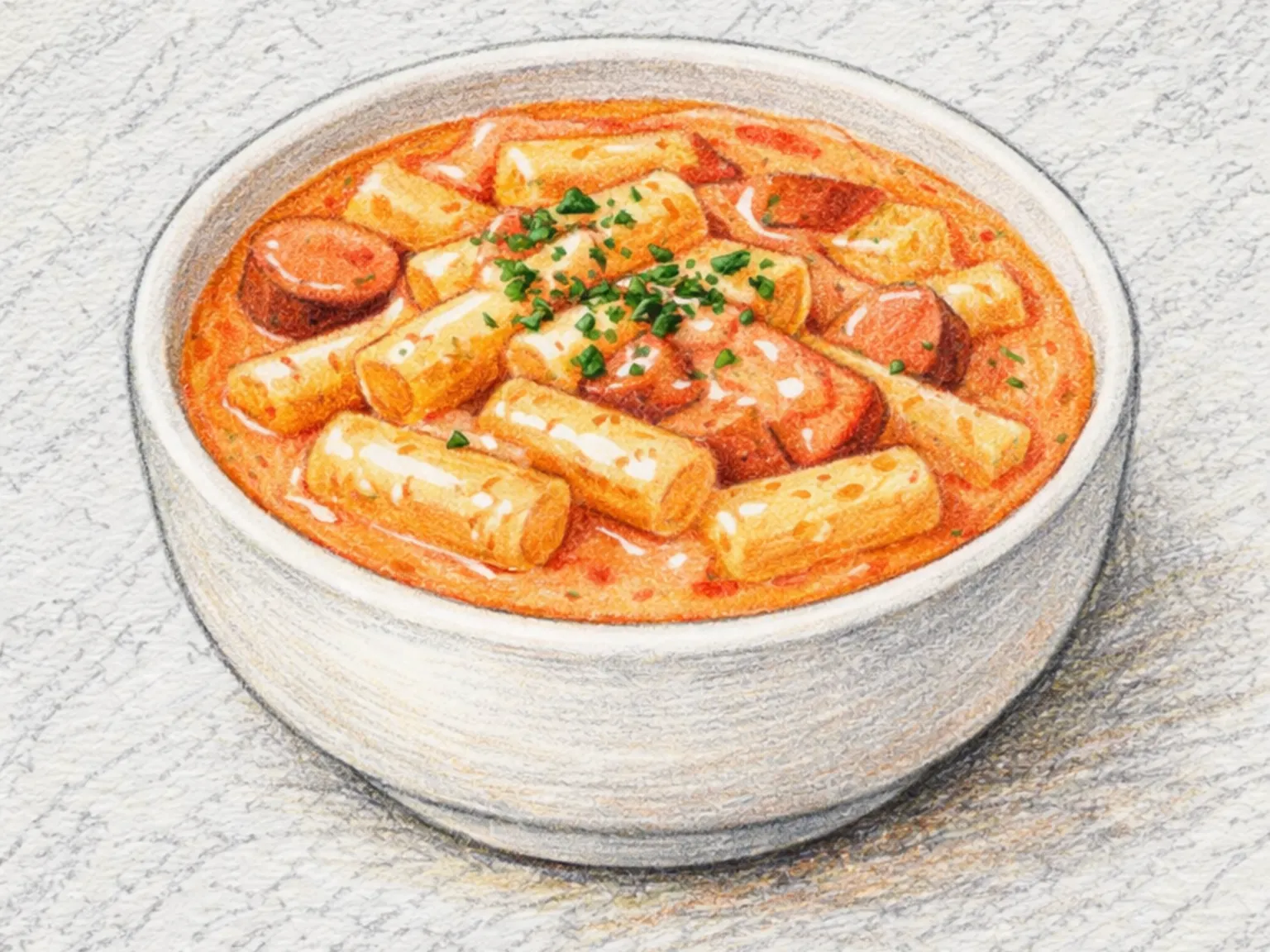
Korean Rosé Cup Tteokbokki
tteokbokki rice cakes, fish cake
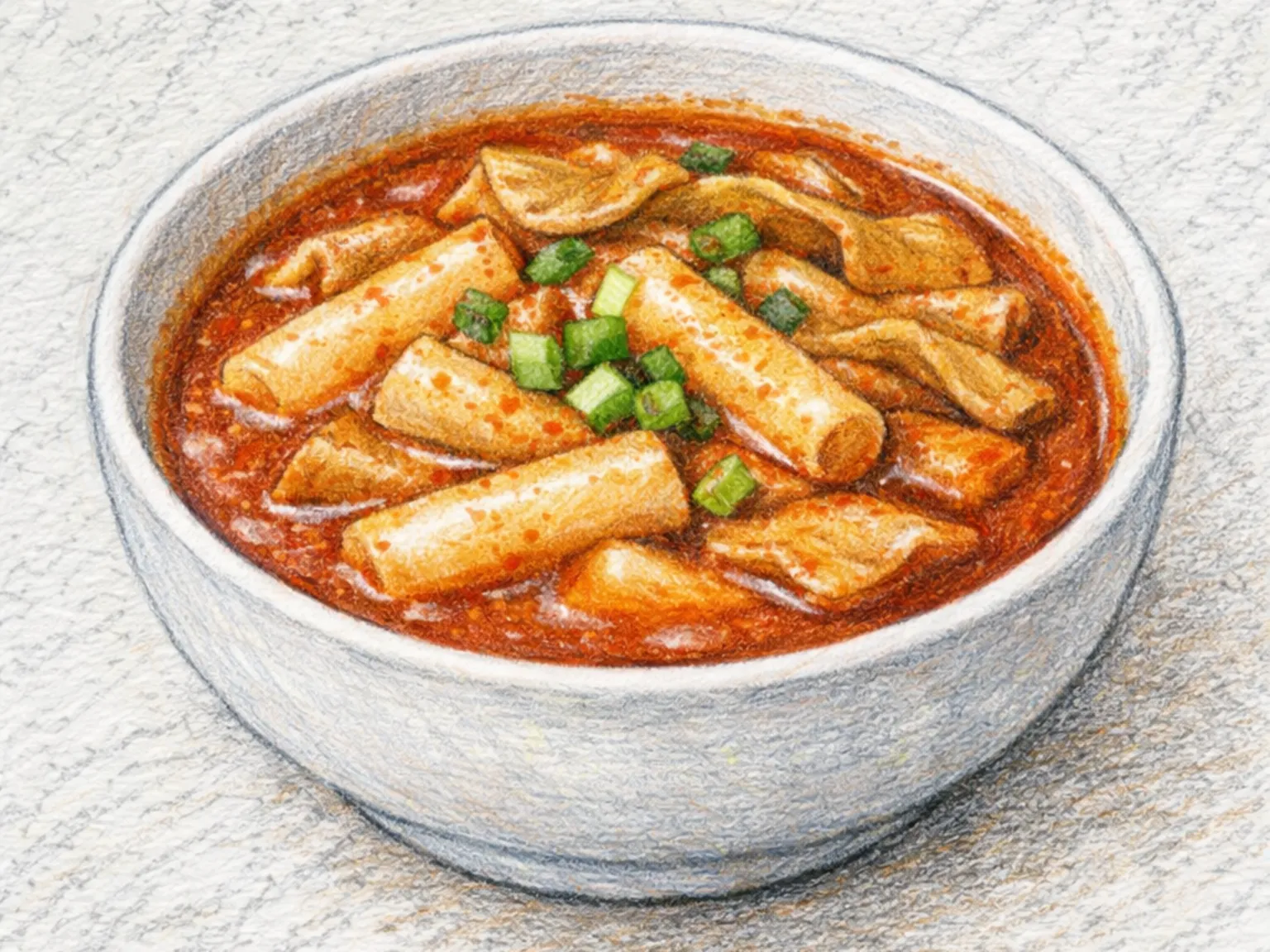
Korean Soupy Tteokbokki (Rice Cakes in Spicy Gochujang Broth)
tteokbokki rice cakes, fish cake
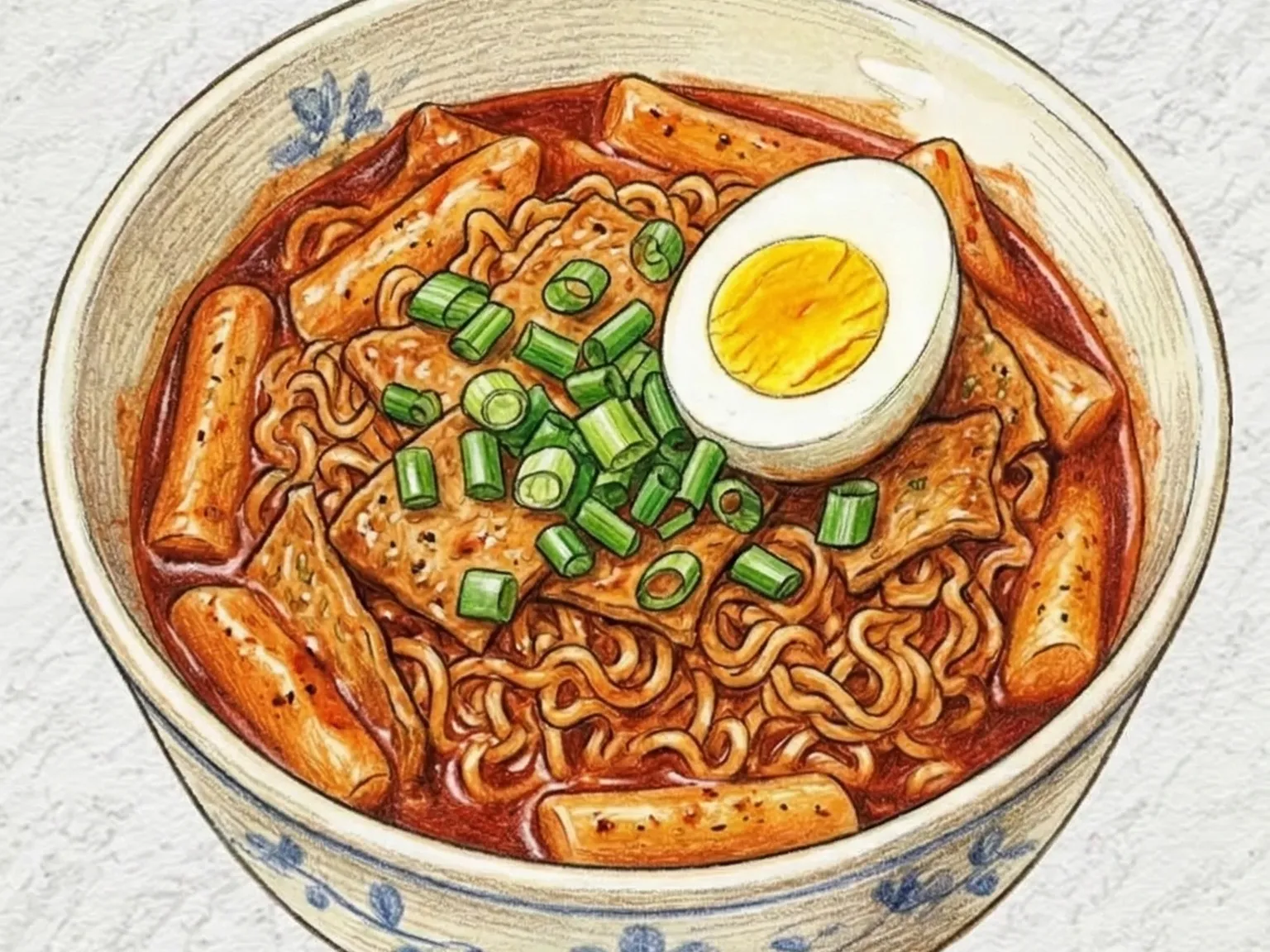
Korean Ramen Tteokbokki (Spicy Rice Cake and Ramen Noodle Stir-Fry)
tteokbokki rice cakes, fish cake