Korean Rice Cake Dumpling Soup
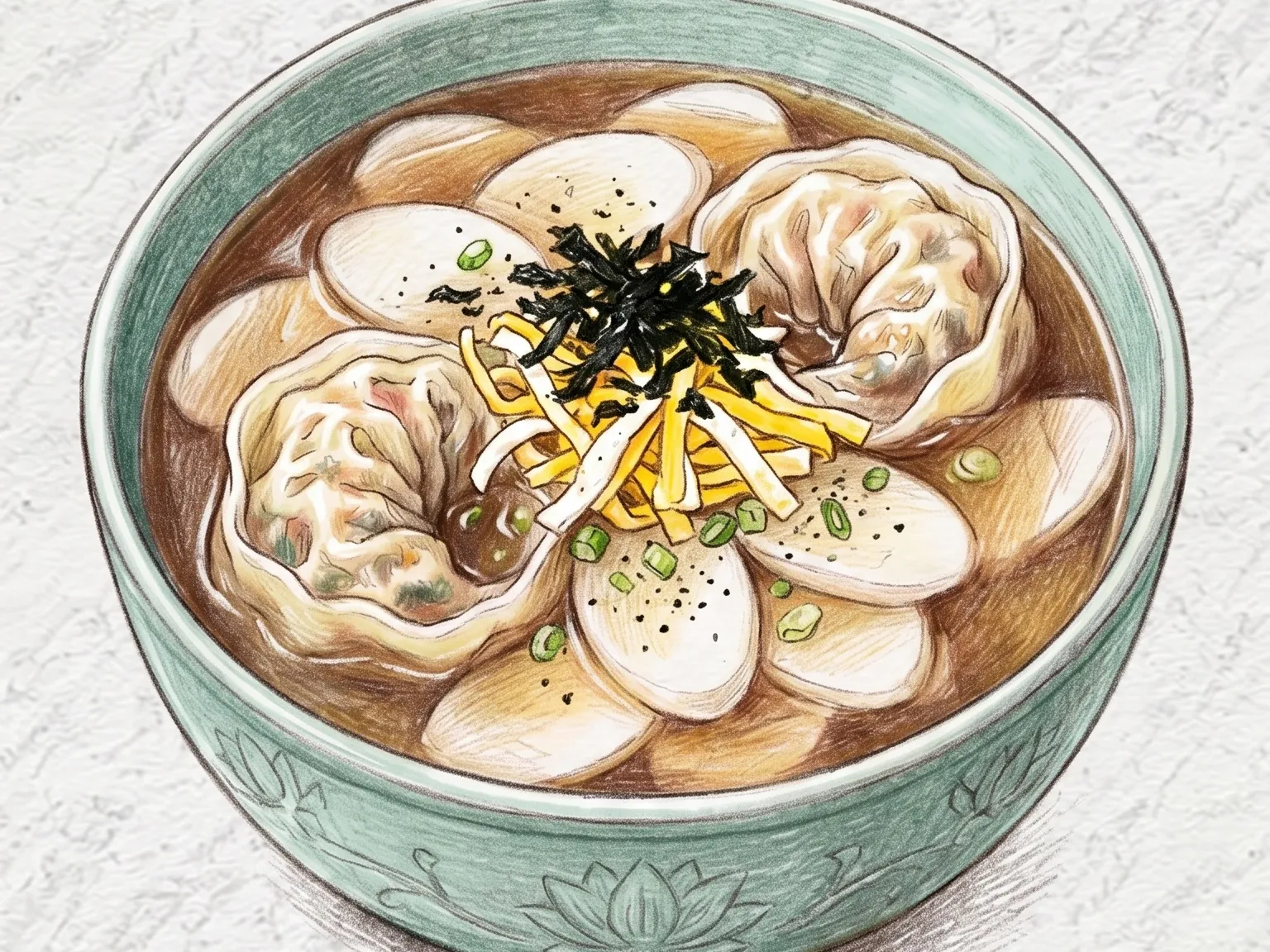
Tteok-mandu-guk combines two of Korea's most beloved New Year foods - sliced rice cakes and handmade dumplings - in a single bowl of clear beef broth. The broth, typically drawn from simmered brisket or bone stock, serves as a clean canvas for the two main ingredients. Rice cake ovals absorb the hot liquid and swell into a pleasantly chewy mass, while the dumplings, stuffed with a mixture of ground pork, tofu, scallion, and garlic, release their savory filling into the soup as they cook. Starch from the dumpling wrappers lends the broth a slight silkiness that binds everything together. Julienned egg garnish and a pinch of crushed dried seaweed are scattered over the top, adding color and a whisper of ocean fragrance. The soup is seasoned simply with soup soy sauce, letting the stock and fillings carry the flavor. While practically it extends a pot of tteokguk to feed more people, the real appeal lies in the textural variety - sticky rice cakes and soft, yielding dumplings in the same spoonful create a satisfaction that neither achieves alone.
Adjust Servings
Instructions
- 1
Soak rice cakes in cold water for 10 minutes.
- 2
Bring broth to a boil and season lightly with soup soy sauce.
- 3
Add rice cakes and cook until they float.
- 4
Add dumplings and cook for 5 to 6 minutes.
- 5
Adjust with salt, add beaten egg and green onion, and simmer briefly.
As an Amazon Associate, we may earn from qualifying purchases.
Tips
Nutrition (per serving)
More Recipes

Korean Rice Cake Soup (New Year Sliced Rice Cake Beef Broth)
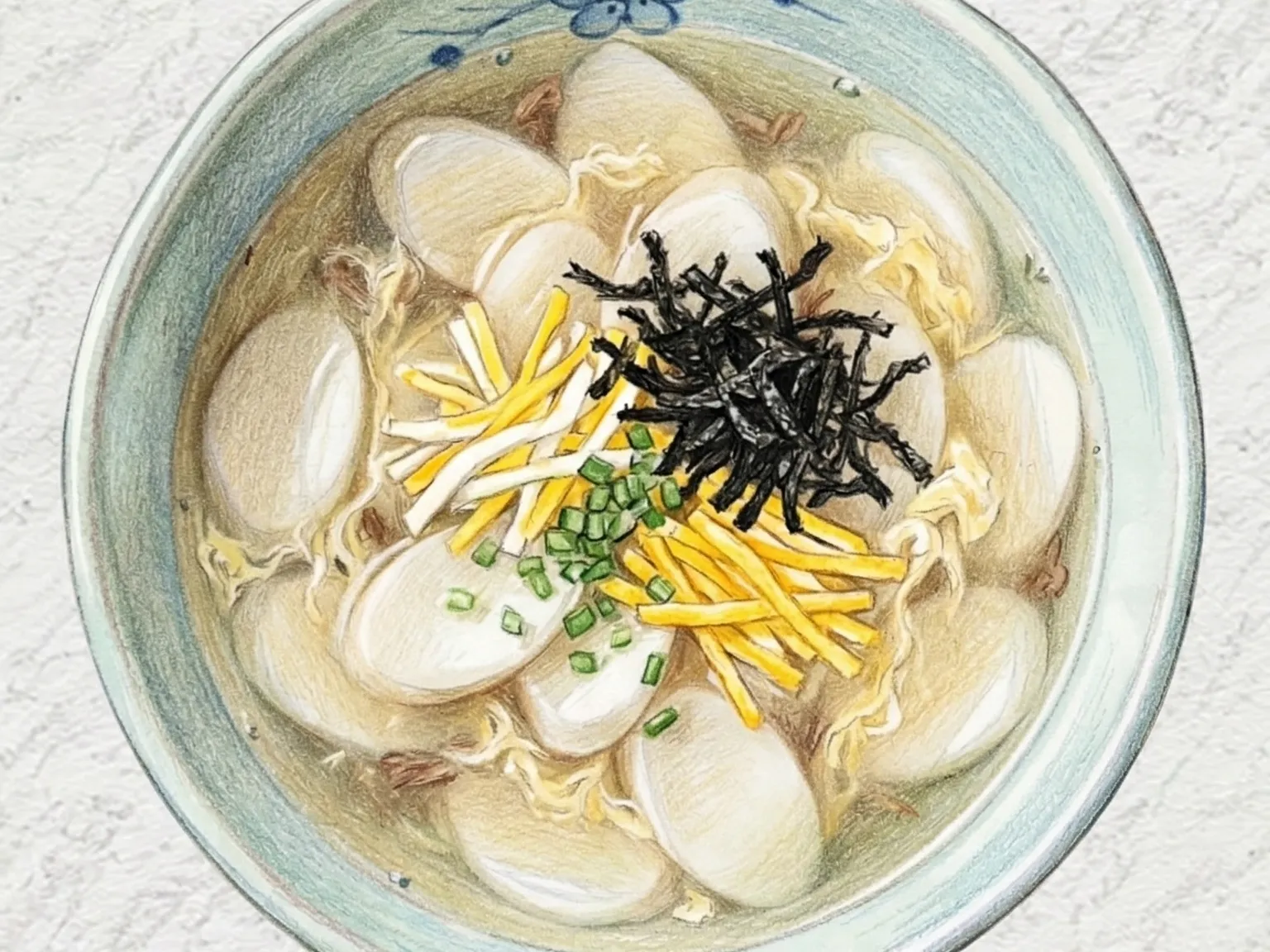
Tteokguk is the soup that marks the Korean New Year - eating a bowl is said to add one year to your age, and no Lunar New Year table is complete without it. Thinly sliced oval rice cakes made from garaetteok, a long cylindrical rice cake, are dropped into a clear beef broth that has been carefully skimmed of fat until it gleams. In the hot liquid, the rice cake surfaces soften just enough to release a faint starch that gives the broth the barest hint of body, while the interiors hold a dense, satisfying chew. The broth itself is kept deliberately simple - brisket simmered low and slow, seasoned only with soup soy sauce and salt - so that the rice cakes and their subtle sweetness remain the focus. Beaten egg swirled into the boiling soup forms wispy threads that add a delicate texture, and strips of egg garnish, crushed seaweed, and sometimes sliced scallion complete the bowl. Despite its apparent simplicity, tteokguk carries deep cultural weight: the white color of the rice cakes symbolizes purity and a fresh start, and the round shape of the slices represents coins and wishes for prosperity.

Korean Rice Cake Dumpling Noodle Soup
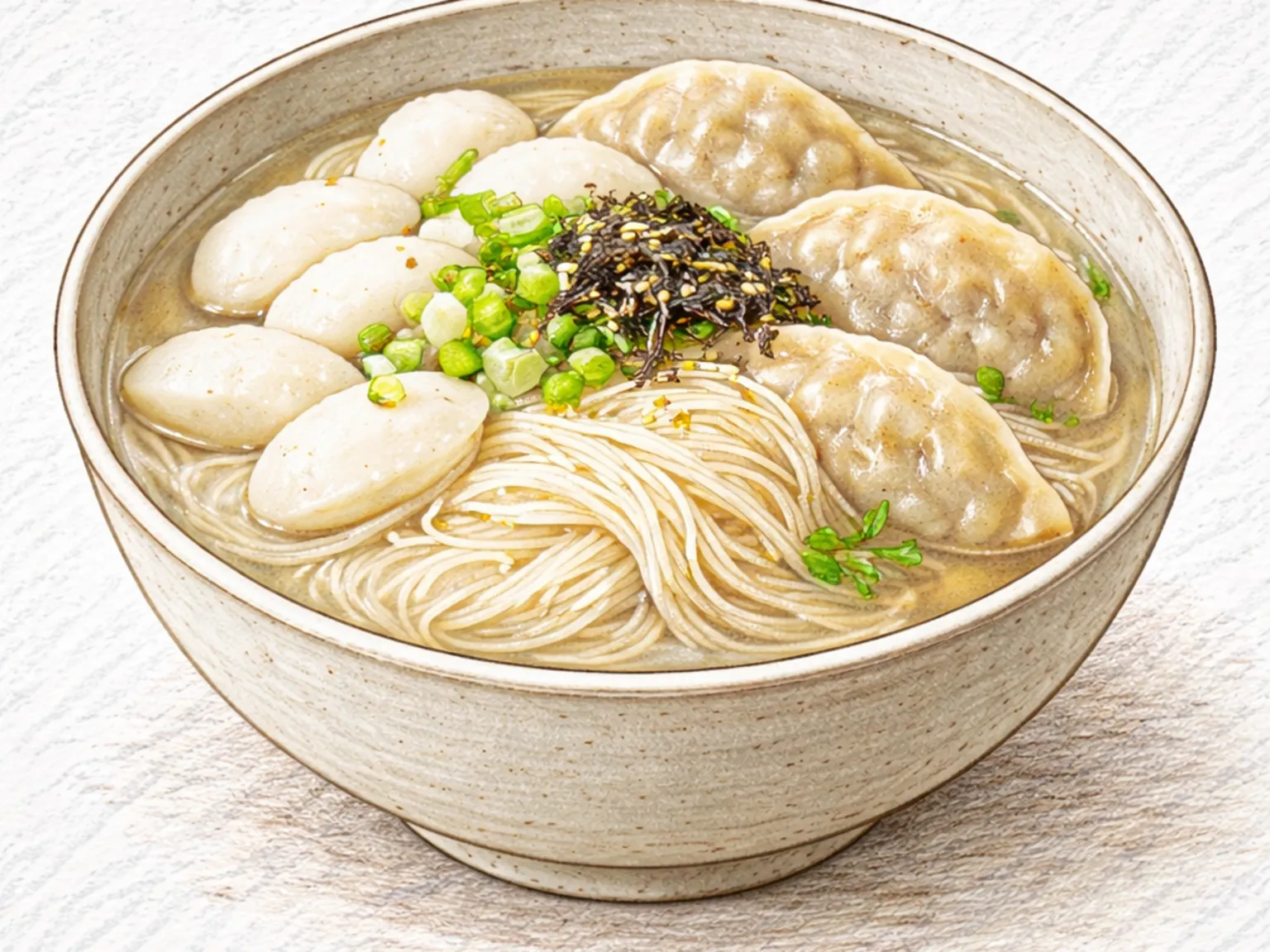
Tteok-mandu-guk-myeon combines sliced rice cakes, dumplings, and thin somyeon noodles in a rich beef bone broth. Each component contributes a different texture - chewy rice cakes, plump filled dumplings, and soft noodles - making the bowl substantial. The broth is typically garnished with egg strips, shredded seaweed, and scallions. This dish merges two traditional Korean soups (tteokguk and manduguk) into a single, filling meal. Using store-bought dumplings and pre-made broth, it can be ready in under 40 minutes.

Eomuk-guk (Fish Cake Radish Clear Soup)
Eomuk-guk is a straightforward Korean fish cake soup that relies on radish-infused water for its clean, faintly sweet base. Sliced fish cakes simmer in the broth for six minutes, long enough to soak up the seasoning of soup soy sauce and garlic without falling apart. A finish of green onion and black pepper lifts the aroma and adds a touch of warmth. The entire pot comes together in about twenty minutes, making it a practical choice when you need a warm bowl in a hurry.

Manduguk (Korean Dumpling Clear Broth Soup)
Manduguk is a Korean dumpling soup built on a clear, steaming broth - typically anchovy-kelp or beef - into which hand-folded dumplings stuffed with ground pork, tofu, scallion, and garlic are dropped and simmered until they float. As the dumplings cook, their thin wheat-flour wrappers release a light starch that gives the broth a subtle body, while the filling leaks savory juices that deepen the liquid with every passing minute. Egg strips and shredded dried seaweed are scattered on top for color and a faint oceanic note. Many Korean households serve manduguk on Lunar New Year as an alternative to tteokguk, and some combine the two by adding sliced rice cakes alongside the dumplings for a richer, more textured bowl. The dumplings themselves can be prepared in bulk and frozen, making this soup a practical weeknight option that still carries the weight of tradition. Served with a small dish of soy-vinegar dipping sauce on the side, the interplay between the mild broth and the concentrated dumpling filling is what makes manduguk quietly satisfying rather than dramatic.

Korean Fish Soup (White Fish and Radish Clear Broth)
Saengseon-guk is a traditional Korean fish soup made with white-fleshed fish and radish in a clear broth. The radish simmers first, building a base of natural sweetness, before garlic and soup soy sauce are added for depth. The fish goes in once the radish is halfway cooked, and timing matters - it should cook only until the flesh turns opaque and begins to flake, as prolonged boiling would break it apart and cloud the broth. Tofu and sliced Korean chili peppers join near the end, adding soft texture and a mild kick. Green onion finishes the bowl with a fresh note. The result is a light, transparent soup where the fish's own clean, marine flavor does most of the work. It is the kind of straightforward home cooking that appears on Korean dinner tables throughout the year, requiring little more than fresh fish and basic pantry staples.

Korean Soupy Tteokbokki (Rice Cakes in Spicy Gochujang Broth)
Gukmul-tteokbokki is a broth-based tteokbokki where rice cakes and fish cakes simmer in a kelp stock seasoned with gochujang, gochugaru, soy sauce, and sugar. Unlike dry or stir-fried versions, the generous broth lets the seasoning penetrate each rice cake while the fish cakes boost the soup's savory depth. Simmering over medium heat for eight to ten minutes softens the rice cakes while preserving a chewy core, and scallions stirred in at the end add freshness. The leftover broth is commonly enjoyed with a bowl of rice stirred in or with added ramyeon noodles.