Korean Tteok and Ramyeon (Instant Ramen with Chewy Rice Cakes)

Korean Tteok and Ramyeon (Instant Ramen with Chewy Rice Cakes)

Quick answer

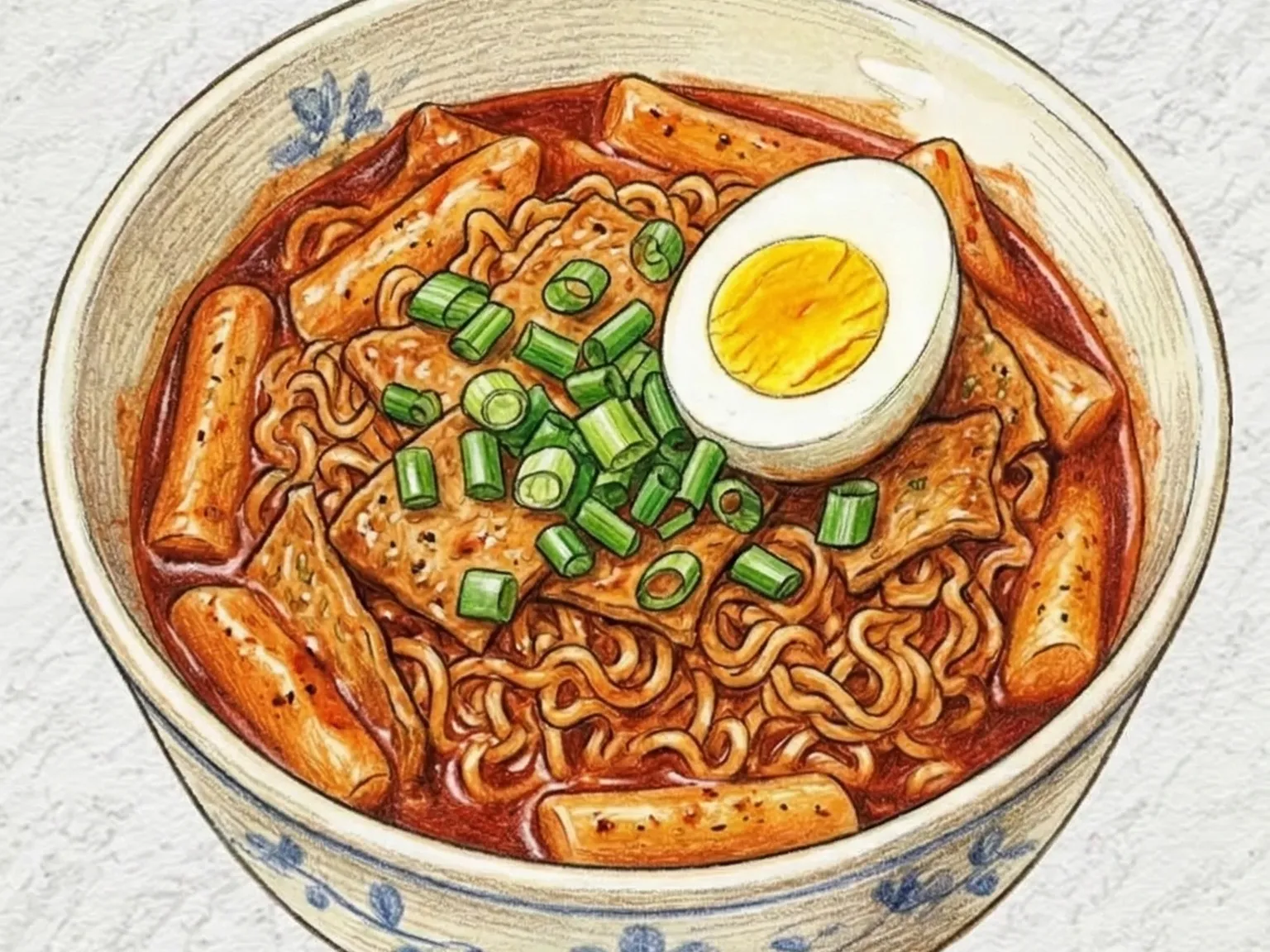
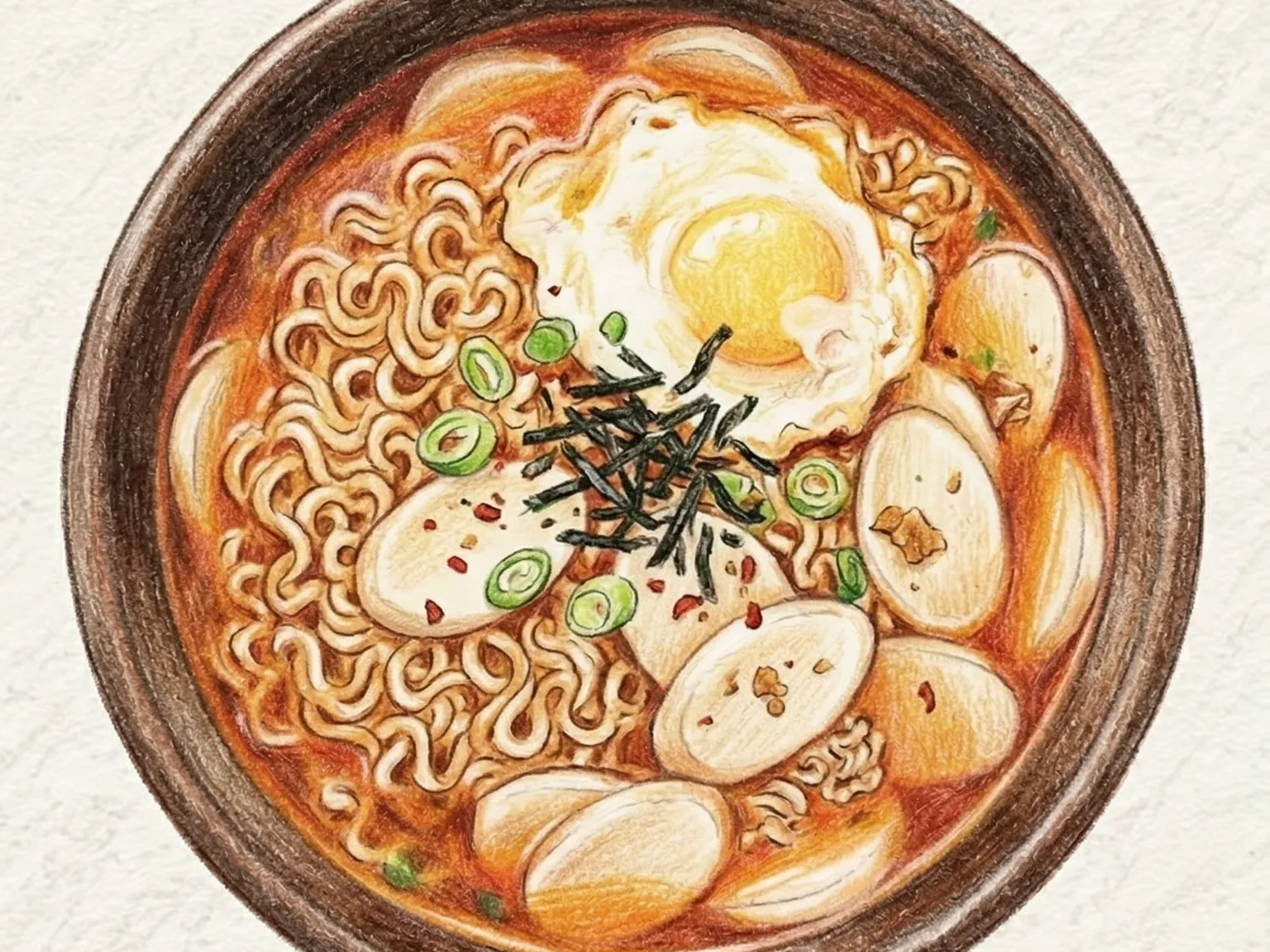
Tteok-ramyeon is a Korean shortcut dish that adds chewy rice cakes to a pot of instant ramen.

What makes this special

  • Tteok-ramyeon adds bouncy rice cakes to spicy instant noodles to intensify the chewy texture.
  • Soaking rice cakes 10 minutes beforehand prevents the noodles from overcooking first
  • Tteok absorbs the broth as it cooks, concentrating the spicy seasoning packet
Total time
13 min
Level
Easy
Servings
1 servings
Ingredients
5
Calories
520 kcal
Protein
16 g

Key ingredients

Instant ramenTteok (rice cake)EggGreen onionWater

Core cooking flow

  1. 1 Separate any stuck pieces of tteok, then soak 100 g in cold water for 10 min...
  2. 2 Pour 550 ml of water into a pot and bring it to a strong boil over high heat.
  3. 3 Keep the heat at medium-high and boil the rice cakes for about 2 minutes.

Tteok-ramyeon is a Korean shortcut dish that adds chewy rice cakes to a pot of instant ramen. The rice cakes absorb the spicy broth as they cook, intensifying the seasoning while providing a bouncy texture that instant noodles alone lack. An egg or a slice of cheese is often cracked in near the end for added richness. The entire dish is ready in about 13 minutes with no knife skills required - just boiling water and timing. It is one of the most common late-night snacks in Korea. Adding seasoning in stages makes it easier to adjust saltiness, sweetness, and heat without covering the base ingredients.

Prep 5min Cook 8min 1 servings
Recipes by ingredient → egg green onion

Instructions

Read the steps as a cooking flow: prep, heat, seasoning, doneness control, and finish.

6 steps
  1. 1
    Prep

    Separate any stuck pieces of tteok, then soak 100 g in cold water for 10 minutes so they soften before the noodles go in.

    Prepare 20 g of green onion for topping while the rice cakes soak.

  2. 2
    Control

    Pour 550 ml of water into a pot and bring it to a strong boil over high heat.

    Drain the soaked tteok, then add it first so it starts cooking before the ramen noodles.

  3. 3
    Heat

    Keep the heat at medium-high and boil the rice cakes for about 2 minutes.

    Stir once or twice from the bottom so the tteok does not stick while the broth returns to a steady boil.

  4. 4
    Season

    Add the ramen noodles and seasoning packet, then press the noodles gently into the broth to wet them evenly.

    Boil for 3 minutes, loosening the noodles midway so they cook without becoming mushy.

  5. 5
    Control

    When the noodles are mostly loosened, crack in 1 egg.

    Spoon hot broth over the egg for a soft set, or simmer about 1 minute longer if you prefer the yolk and white firmer.

  6. 6
    Finish

    Turn off the heat when the tteok is soft and the noodles still have a little spring at the center.

    Top with green onion and serve immediately before the noodles absorb too much broth.

After the steps

Pick a recipe that fits this dish.

Continue with shared ingredients, meal pairings, or a similar method.

Recipes That Go Well With This

More Noodles →

Based on shared ingredients and meal pairing

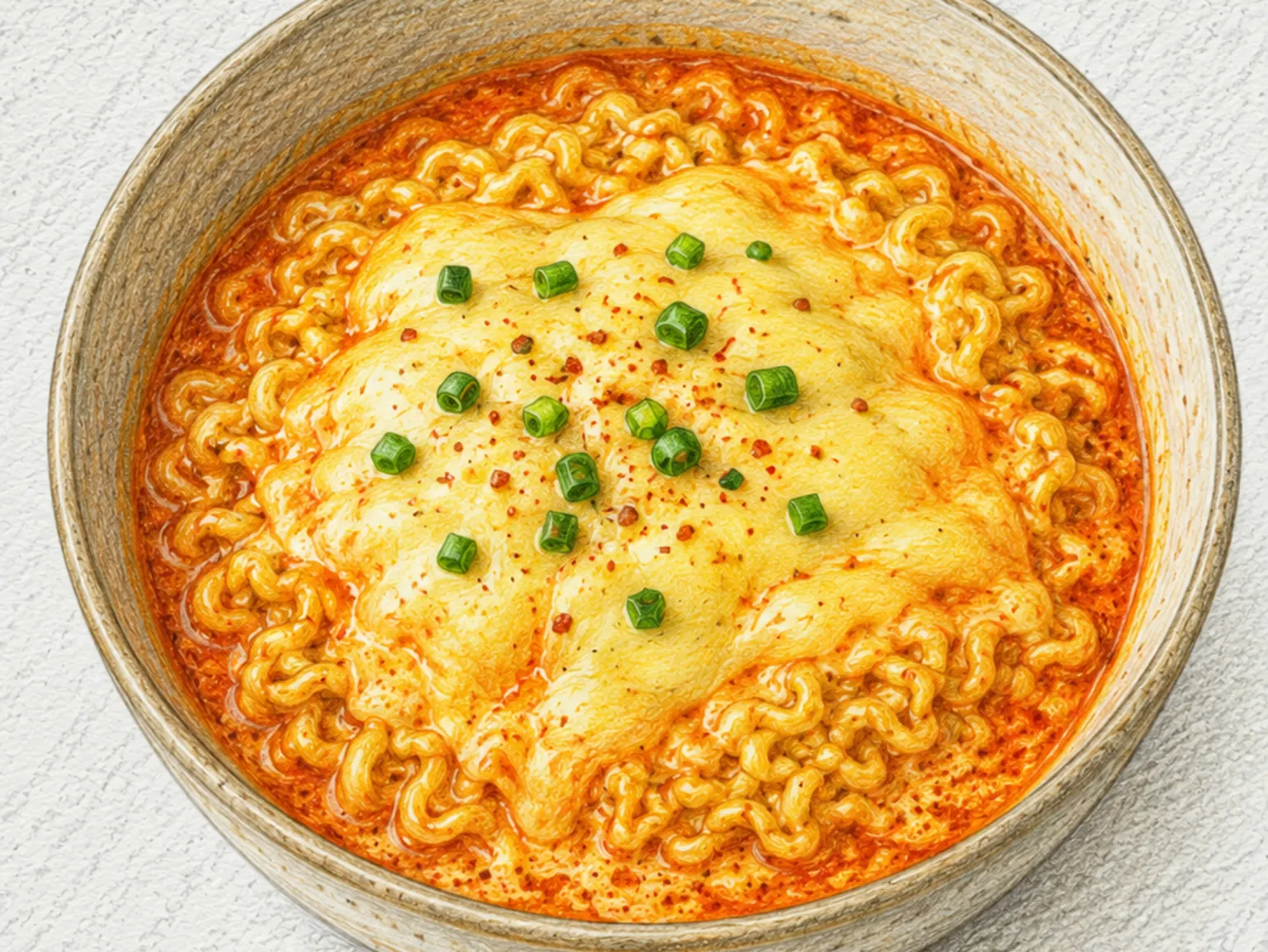
Korean Cheese Ramen (Cheesy Spicy Noodles)
Shared ingredient: instant ramen noodles Noodles

Korean Cheese Ramen (Cheesy Spicy Noodles)

Sliced cheese melted into spicy Korean ramen produces a creamy, stretchy result in under ten minutes. Added at the final simmer, the cheese melts slowly across the boiling broth and forms a pale, savory film. The dairy fat wraps around the gochugaru heat, softening the spice without eliminating it, while the salt in the cheese draws out more depth from the seasoning packet. Lifting noodles through the molten layer coats each strand in a sticky, rich film. Drinking the broth straight reveals alternating waves of chili heat and mild creaminess. A raw egg cracked into the pot or a handful of sliced rice cakes makes the bowl more substantial and filling. Among home-style ramen variations in Korea, this is one of the most consistently popular.

Korean Instant Ramen (Spicy Chewy Noodles in Five Minutes)
Shared ingredient: egg Noodles

Korean Instant Ramen (Spicy Chewy Noodles in Five Minutes)

Ramyeon is Korea's iconic instant noodle dish, ready in under five minutes by boiling chewy wheat noodles with seasoning packets in water. Common additions include egg, scallion, kimchi, sliced rice cakes, and cheese, each customizing the bowl to personal taste. Cooking the noodles one minute less than the package suggests lets residual heat finish them at the right chewiness. Using slightly less water than directed concentrates the broth into a more intense flavor. It can be served as a noodle dish, with simple accompaniments chosen to match the sauce, broth, or topping.

Korean Pan-Fried Tofu with Seasoned Soy Sauce
Serve together Side dishes

Korean Pan-Fried Tofu with Seasoned Soy Sauce

Dubu buchim yangnyeom is one of the most common Korean home banchan, a dish that appears on the table because the technique is straightforward and the ingredients are always in the kitchen. Firm tofu is cut into thick slices, salted lightly to pull moisture from the surface, then pan-fried in a minimal amount of oil until both faces develop a golden, crackling crust while the interior stays soft and warm. The yangnyeom jang, the seasoned sauce, is assembled directly at the stove: soy sauce, gochugaru, chopped scallion, garlic, and sesame oil stirred together, then spooned over the hot tofu the moment it comes out of the pan. The residual heat of the tofu gently wilts the raw scallion and opens the sesame oil, releasing its fragrance into the sauce without any additional cooking. The ratio of ingredients in the sauce varies from household to household, with some reducing the gochugaru and adding toasted sesame seeds, and others adding cheongyang chili for extra heat. In Korean temple cuisine, this preparation has served for centuries as the primary protein source in meat-free meals.

Korean Spicy Tteok and Sundae Stir-Fry
Similar recipe Stir-fry

Korean Spicy Tteok and Sundae Stir-Fry

Tteokbokki-sundae-bokkeum combines chewy rice cakes and Korean blood sausage in a spicy-sweet gochujang, soy sauce, and sugar sauce. The rice cakes are soaked first and then simmered in the sauce so the seasoning penetrates their dense, glutinous interior. Sundae is added near the end and stirred briefly to prevent the casing from bursting. Each bite alternates between the elastic pull of the rice cakes coated in red sauce and the heavier, starchy chew of the sundae filling - a recreation of the classic Korean street food pairing of tteokbokki and sundae in a single pan.

Serve with this

Korean Burdock Matchstick Pancake
Pancakes Easy

Korean Burdock Matchstick Pancake

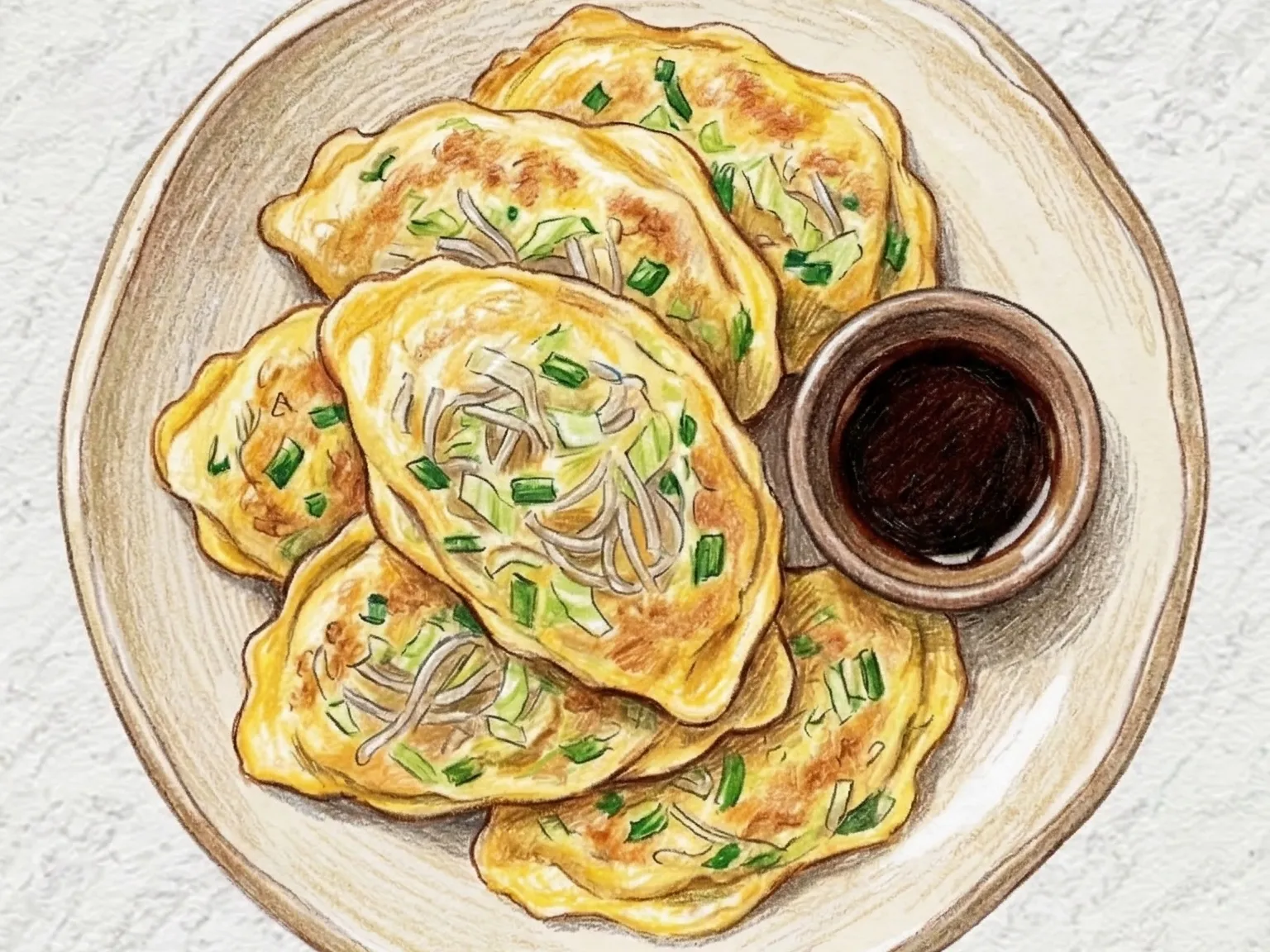
Burdock root, julienned into thin matchstick strips and pan-fried with onion and cheongyang chili, is a jeon with texture as its main argument. The combination of Korean pancake mix and tempura flour in the batter produces a result that is crispier than standard jeon, particularly at the edges where the thin strips of burdock protrude from the batter and catch the heat. Burdock has an earthy, faintly bitter flavor that holds up in the pan, and the onion provides sweetness alongside it. Cheongyang chili cuts through with a slow-building, lingering heat. Cold water keeps the batter loose and inhibits gluten development, so the finished jeon stays light rather than dense. Hot from the pan, the edges shatter; cooled, they turn chewy.

🍺 Bar Snacks ⚡ Quick
Prep 18min Cook 10min 2 servings
Korean Young Napa Kimchi (Spring Cabbage Quick Ferment)
Kimchi Medium

Korean Young Napa Kimchi (Spring Cabbage Quick Ferment)

Eolgari kimchi is a spring kimchi made with young napa cabbage, briefly salted for twenty to thirty minutes, then dressed in gochugaru, fish sauce, garlic, and glutinous rice paste before fermenting at room temperature for about a day. Limiting the salting time to no more than thirty minutes is important: the young cabbage's thin leaves and tender stems absorb salt quickly, and over-salting destroys the crisp texture before fermentation even begins. Because the leaves are thinner and more porous than those of mature napa, the seasoning penetrates quickly and fermentation produces a pleasant acidity within twenty-four hours. Salted shrimp compensates for the short fermentation period by adding immediate depth, and the young cabbage itself contributes a clean sweetness that balances the chili heat without any added sugar. Using a generous amount of glutinous rice paste helps the seasoning cling evenly to each leaf, which supports uniform fermentation throughout the batch. This is a seasonal kimchi meant as a lighter, fresher alternative to aged kimchi as temperatures begin to rise in spring.

🏠 Everyday 🍱 Lunchbox
Prep 40min Cook 10min 4 servings
Tofu Salad (Pan-Seared Tofu on Fresh Greens)
Salads Easy

Tofu Salad (Pan-Seared Tofu on Fresh Greens)

Dubu salad is made by pressing firm tofu to remove excess moisture, then pan-searing it until the outside turns golden and crisp while the inside stays soft and tender. The seared tofu is placed over a bed of baby greens, sliced cucumber, and cherry tomatoes. Wrapping the tofu in two layers of paper towels and setting a weight on top for twenty to thirty minutes draws out enough water so the surface browns properly in the pan without steaming. A dressing of soy sauce, sesame oil, lemon juice, and olive oil moves easily between Korean and Western flavor profiles. The salad is high in plant protein and low in fat, making it a practical and satisfying option when a light, clean-tasting meal is the goal.

🥗 Light & Healthy ⚡ Quick
Prep 15min Cook 8min 2 servings

Similar recipes

Korean Tteokbokki Noodles
Noodles Easy

Korean Tteokbokki Noodles

Tteok-bokkeum-myeon stir-fries udon noodles and cylindrical rice cakes together in a gochujang-based sauce that is both spicy and slightly sweet. The two main components offer contrasting textures - stretchy rice cakes and springy noodles - coated in the same thick, red sauce. Fish cake and boiled eggs are common additions. The dish takes about 25 minutes from start to plate, with most of the work being chopping ingredients and stirring everything in a single pan. It is a staple of Korean street-food culture.

🏠 Everyday 🌙 Late Night
Prep 10min Cook 15min 2 servings
Korean Mugwort Rice Cake Latte
Drinks Medium

Korean Mugwort Rice Cake Latte

Ssuk-tteok latte is a Korean dessert drink that tops a warm mugwort milk base with chewy bite-size rice cakes. Dark brown sugar dissolves into the milk to provide a deep, almost caramel-like sweetness, layered further with a spoonful of condensed milk. The sweet rice cake pieces are briefly microwaved to soften before being placed on top, so they remain pleasantly chewy even as they sit in the hot latte. Each sip and bite brings together the grassy fragrance of mugwort, the molasses-like richness of brown sugar, and the sticky, satisfying pull of glutinous rice cake.

🍺 Bar Snacks ⚡ Quick
Prep 10min Cook 8min 2 servings
Cinnamon Rice Cake (Layered Korean Steamed Rice Cake)
Desserts Medium

Cinnamon Rice Cake (Layered Korean Steamed Rice Cake)

Gyepi-tteok is a layered Korean steamed rice cake made from non-glutinous and glutinous rice flours combined in the same batch. Water is added gradually and the mixture is rubbed by hand until it reaches a fine, damp-sand texture. Half the batch is mixed with cinnamon powder, and the plain and cinnamon portions are layered alternately in a steamer tray. Sieving the flour twice before steaming is the step that ensures even moisture distribution and a smooth, fine grain in the finished cake. High heat for twenty minutes, followed by a five-minute rest off the heat, cooks the cake all the way through. Julienned jujubes and whole pine nuts pressed into the top surface add color, a gentle date-like sweetness, and a resinous, fatty aroma. The non-glutinous rice keeps the crumb light, and the glutinous rice adds a soft, resilient chew.

🧒 Kid-Friendly 🎉 Special Occasion
Prep 30min Cook 20min 4 servings

Tips

Pre-soaking the rice cakes ensures they cook at the same rate as the noodles.

Nutrition (per serving)

Calories
520
kcal
Protein
16
g
Carbs
82
g
Fat
14
g