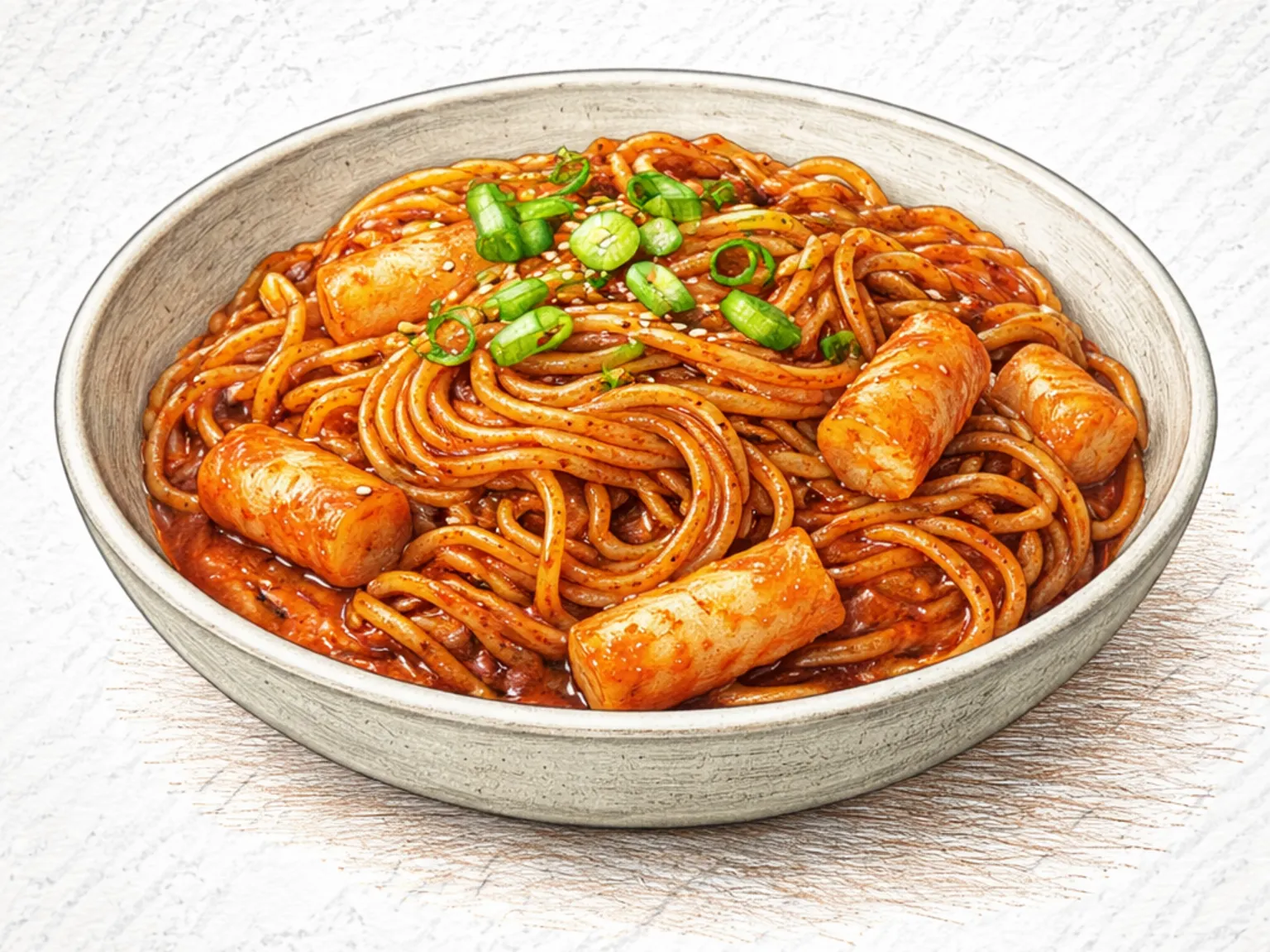
Charim and HAP
Korean Spicy Rice Cakes (Gochujang Braised Chewy Tteok with Fish Cake) cooking process
HAP turned Charim's Korean Spicy Rice Cakes (Gochujang Braised Chewy Tteok with Fish Cake) recipe into a 20-second cooking video.
See more from HAP on YouTubeKorean Spicy Rice Cakes (Gochujang Braised Chewy Tteok with Fish Cake)
Quick answer
- Total time
- 25 min
- Level
- Easy
- Servings
- 2 servings
- Ingredients
- 8
About this dish
As the liquid reduces, starch from the rice cakes thickens the sauce into a glossy film on the cakes and fish cake.
Read more
Stir in only half the seasoning paste at first and add the rest as you taste. Boiled eggs, sundae, or fried snacks alongside make it the full market-stall spread.
Ingredients
Instructions
- 1
Rinse 300 g rice cakes to remove surface starch.
If they feel hard, soak them in warm water for 10 minutes, then drain well. Cut 100 g fish cake into bite-size pieces and slice 1 green onion on the diagonal.
- 2
Reserve 2 tablespoons from the measured 400 ml water and pour the rest into a pot.
Stir in half of the 2 tablespoons gochujang, 1 tablespoon gochugaru, 1 tablespoon sugar, and 1 tablespoon soy sauce, then bring to a boil over high heat.
- 3
When the seasoned liquid boils, add the rice cakes and reduce the heat to medium.
Cook for about 4 minutes, scraping the bottom often so the starch and sugar do not catch or scorch.
- 4
When the rice cakes soften on the outside, add the fish cake and cook for 3 more minutes.
Add the remaining seasoning gradually, and if the sauce becomes too thick, loosen it with a little of the reserved water.
- 5
Simmer for 1 to 2 minutes more, until the sauce clings to the rice cakes with a glossy coating.
The thickness is right when a spoon briefly exposes the bottom of the pot before the sauce flows back.
- 6
Add the green onion and cook just 30 seconds so it softens lightly but keeps its aroma.
Turn off the heat, check that the rice cakes are tender through the center, and serve immediately while hot.
Use-up ingredient planner
Turn these ingredients into two more meals
The overlap excludes basic seasonings. Open the next recipe and your selected dishes will stay with you.
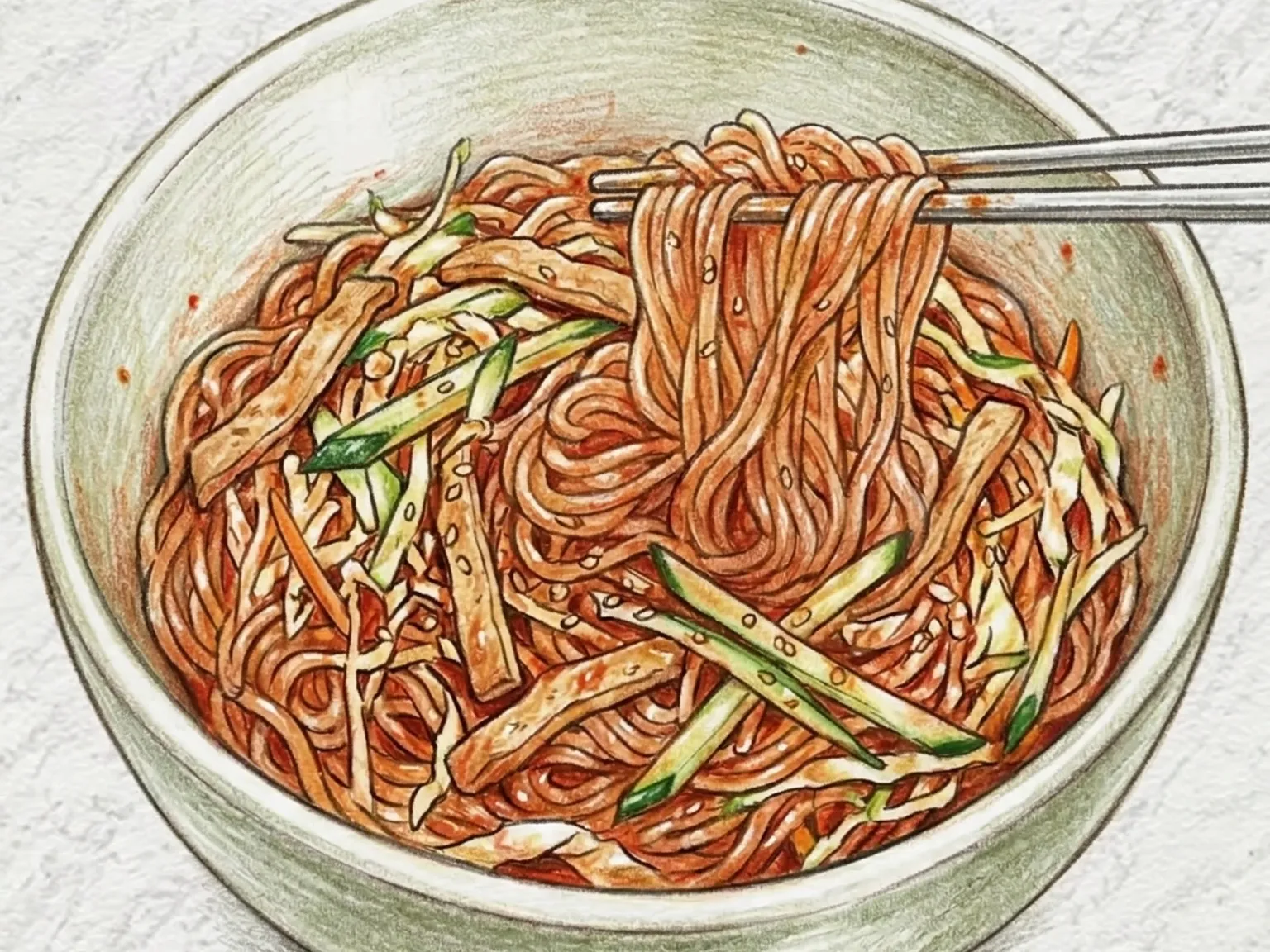
Korean Spicy Mixed Glass Noodles
Fish cakes, Green onion
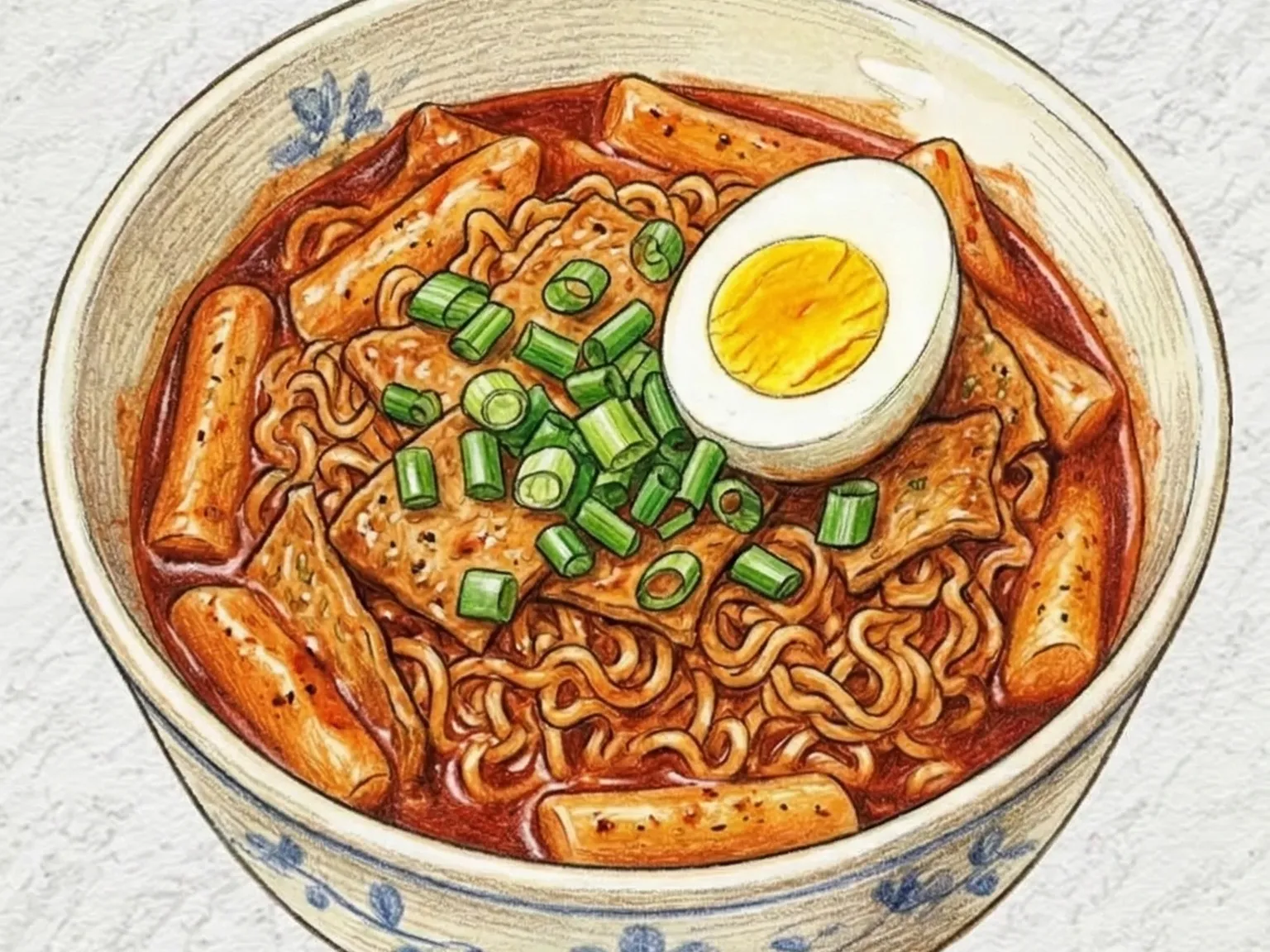
Korean Ramen Tteokbokki (Spicy Rice Cake and Ramen Noodle Stir-Fry)
Fish cakes, Green onion
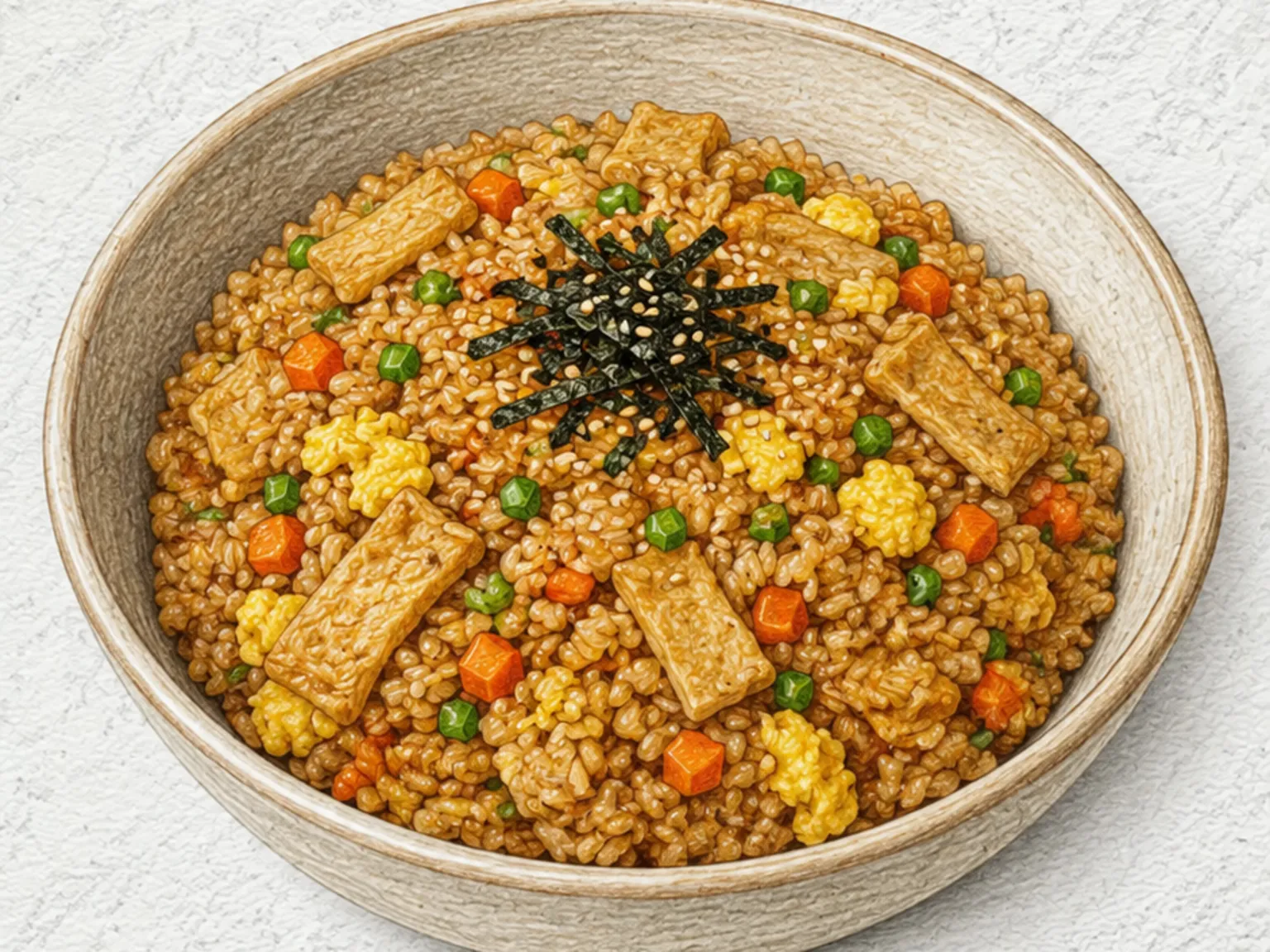
Korean Fish Cake Fried Rice
Fish cakes, Green onion
Tips
Variations
Seafood Tteokbokki
Spicy rice cakes loaded with shrimp, squid, and mussels. The natural sweetness from the seafood balances the fiery gochujang sauce.
Cheese Tteokbokki
Classic spicy tteokbokki topped with a generous layer of melted mozzarella cheese. The gooey cheese mellows the heat and adds creamy richness.
Chewy Jjoldduk Tteokbokki
Tteokbokki made with extra-chewy jjoldduk instead of regular rice cakes. The bouncier texture pairs wonderfully with the sweet-spicy sauce.