Korean Spicy Tteok and Sundae Stir-Fry

Korean Spicy Tteok and Sundae Stir-Fry

Quick answer

Tteokbokki-sundae-bokkeum combines chewy rice cakes and Korean blood sausage in a spicy-sweet gochujang, soy sauce, and sugar sauce.

What makes this special

  • Tteokbokki-sundae-bokkeum simmers soaked rice cakes in gochujang until the spicy seasoning reaches the core.
  • Soaked rice cakes simmered in sauce absorb seasoning all the way through
  • Sundae's glass noodles and blood sausage deliver deep umami in every bite
Total time
25 min
Level
Easy
Servings
2 servings
Ingredients
7
Calories
420 kcal
Protein
16 g

Key ingredients

Rice cakes (tteok)Korean blood sausage (sundae)GochujangSoy sauceSugar

Core cooking flow

  1. 1 Place 200 g rice cakes in cold water and rinse off the surface starch.
  2. 2 Prepare 200 g sundae without pressing or squeezing it, since the casing can split easily.
  3. 3 In the pan, stir together 2 tablespoons gochujang, 1 tablespoon soy sauce, 1...

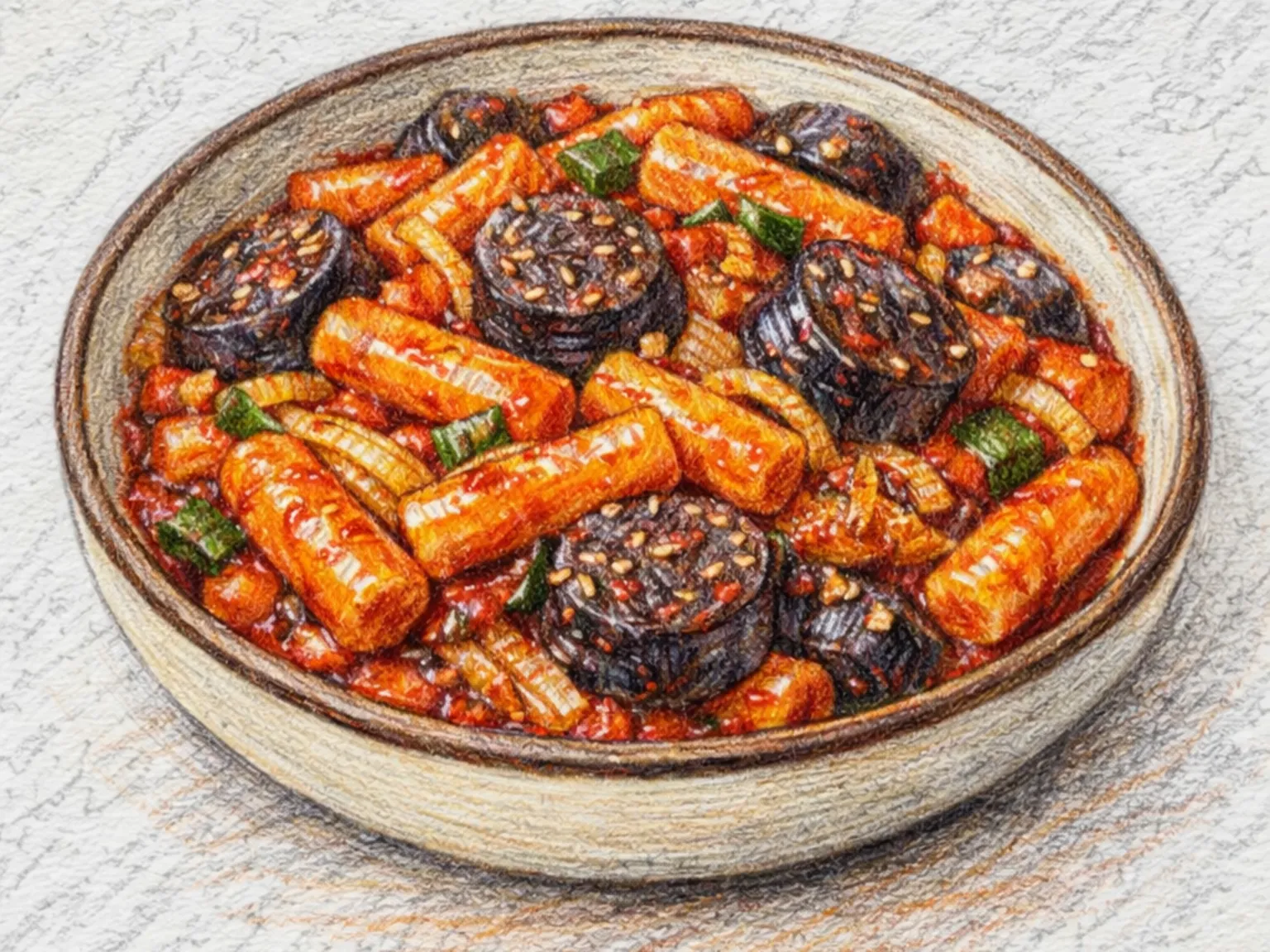
Tteokbokki-sundae-bokkeum combines chewy rice cakes and Korean blood sausage in a spicy-sweet gochujang, soy sauce, and sugar sauce. The rice cakes are soaked first and then simmered in the sauce so the seasoning penetrates their dense, glutinous interior. Sundae is added near the end and stirred briefly to prevent the casing from bursting. Each bite alternates between the elastic pull of the rice cakes coated in red sauce and the heavier, starchy chew of the sundae filling - a recreation of the classic Korean street food pairing of tteokbokki and sundae in a single pan.

Prep 10min Cook 15min 2 servings
Recipes by ingredient → gochujang soy sauce green onion

Instructions

Read the steps as a cooking flow: prep, heat, seasoning, doneness control, and finish.

6 steps
  1. 1
    Control

    Place 200 g rice cakes in cold water and rinse off the surface starch.

    If they feel firm, soak them for about 10 minutes so they soften evenly and do not crack when simmered.

  2. 2
    Finish

    Prepare 200 g sundae without pressing or squeezing it, since the casing can split easily.

    Cut the green onion into pieces suitable for finishing the pan and keep both ingredients ready near the stove.

  3. 3
    Season

    In the pan, stir together 2 tablespoons gochujang, 1 tablespoon soy sauce, 1 tablespoon sugar, and 100 ml water before adding the rice cakes. Mix until no thick lumps remain and the sauce looks even.

  4. 4
    Control

    Drain the rice cakes, add them to the sauce, and bring it to a simmer over medium heat.

    Once bubbling, stir for 4 to 5 minutes until the rice cakes look glossy and evenly coated red.

  5. 5
    Season

    When the sauce clings to the rice cakes and only a little loose sauce remains on the pan bottom, add the sundae.

    Lower the heat to low and stir gently for only 1 to 2 minutes to avoid bursting it.

  6. 6
    Finish

    Turn off the heat as soon as the sundae is coated with sauce.

    Scatter the green onion on top, let the residual heat soften it lightly, and serve while warm before the rice cakes firm up.

After the steps

Pick a recipe that fits this dish.

Continue with shared ingredients, meal pairings, or a similar method.

Recipes That Go Well With This

More Stir-fry →

Based on shared ingredients and meal pairing

Korean Stir-fried Sundae and Tripe
Shared ingredient: sundae (korean blood sausage) Stir-fry

Korean Stir-fried Sundae and Tripe

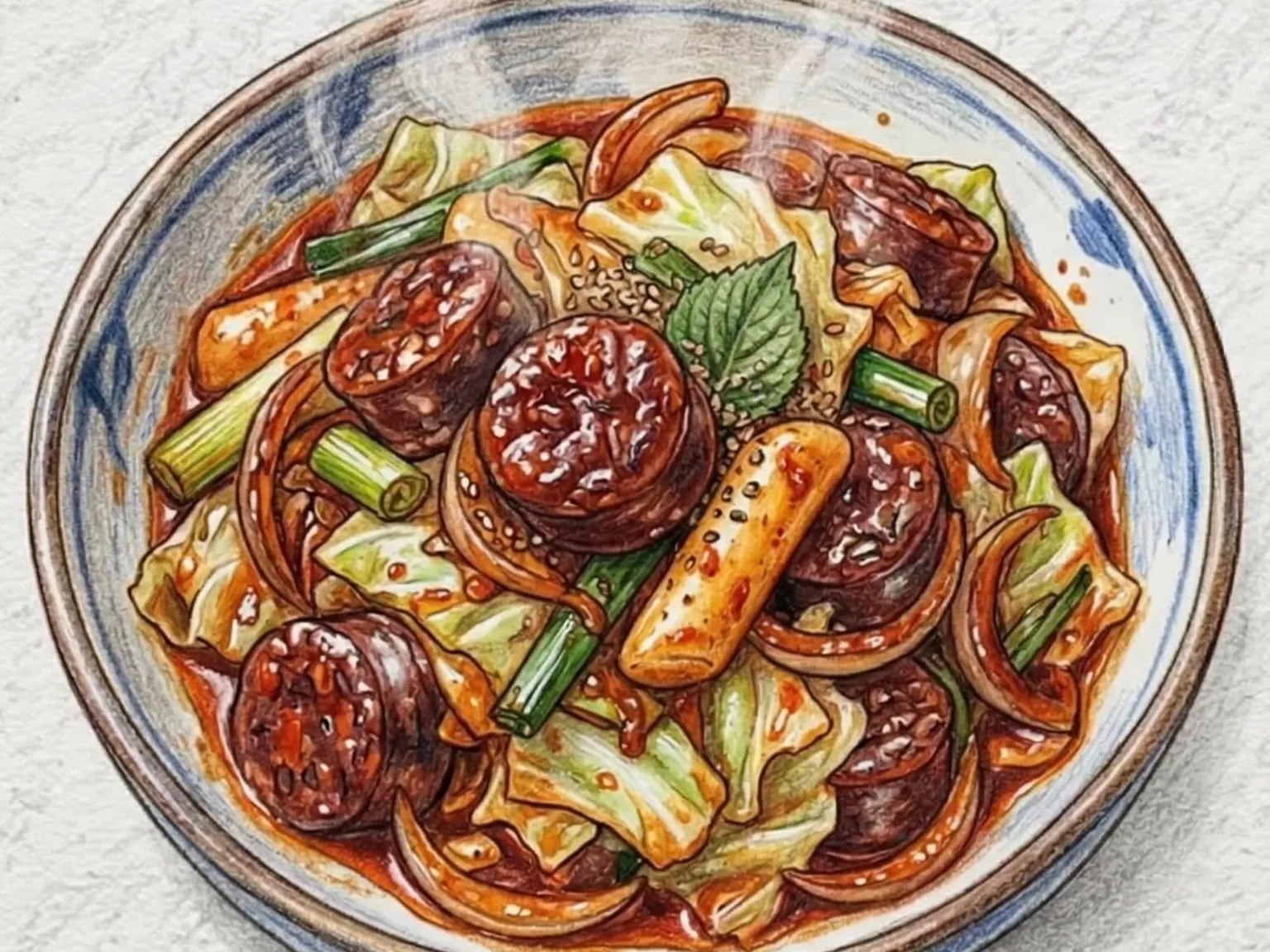
Sundae-gopchang-bokkeum is a bunsik-style stir-fry combining blanched beef tripe and Korean blood sausage (sundae) with cabbage, onion, and scallion in a gochujang-gochugaru sauce. The tripe is seared first for a lightly charred exterior, then the spicy sauce is built in the pan before vegetables are added. Sundae goes in last and cooks briefly to prevent the casing from splitting. Each component brings a distinct texture - springy tripe, dense chewy sundae, and sweet crunchy cabbage - unified by the bold, spicy coating.

Korean Stir-fried Sundae with Vegetables
Shared ingredient: sundae (korean blood sausage) Stir-fry

Korean Stir-fried Sundae with Vegetables

Sundae yachae bokkeum stir-fries Korean blood sausage with cabbage, onion, and scallion in a sauce of gochujang, soy sauce, and gochugaru. The vegetables go into the pan first to drive off excess water so the sauce clings better, while the sundae is added later to keep its casing intact and its filling dense and chewy. The combined seasoning creates a spicy-salty glaze that coats the sundae slices evenly. Compared to sundae-gopchang-bokkeum, this version skips the tripe and leans heavier on vegetables, making it a lighter take on the same street food flavor.

Handmade Scorched Rice
Serve together Rice

Handmade Scorched Rice

This recipe guides you to make handmade scorched rice, called nurungji, using leftover cooked rice. The process starts by warming cold rice in the microwave to soften the grains, allowing them to spread smoothly into a thin sheet. After placing the rice on a preheated pan, a small amount of water is sprinkled over the surface to act as an adhesive, ensuring the grains bind together firmly instead of crumbling. The rice is cooked over low heat for several minutes without disturbance until the edges dry and the bottom develops a golden color. After checking the color with a spatula, the sheet is flipped to toast the other side. Once both sides are crispy and toasted, the sheet is cooled and broken into bite-size pieces. It can be eaten as a snack with sugar or boiled in water to make a traditional sungnyung beverage.

Korean Spicy Beef Stir-Fry
Similar recipe Stir-fry

Korean Spicy Beef Stir-Fry

Sogogi gochujang-bokkeum marinates thin-sliced beef in a paste of gochujang, soy sauce, sugar, and minced garlic, then stir-fries it over high heat. The chili paste's spiciness and the sugar caramelize together on the meat's surface, building a dark, sticky glaze with layered heat. Onion cooked alongside the beef releases moisture that helps the seasoning distribute evenly across every slice. A finish of sesame oil adds a roasted nuttiness on top of the bold, spicy-sweet profile -- intensely flavored enough that a small portion carries a full bowl of rice.

Serve with this

Korean Kimchi Mandu Jjigae (Kimchi Dumpling Stew)
Stews Easy

Korean Kimchi Mandu Jjigae (Kimchi Dumpling Stew)

Kimchi mandu jjigae drops whole frozen kimchi dumplings straight into a simmering pot of aged kimchi, tofu, and anchovy stock. The dumpling wrappers absorb the broth as they cook, swelling plump and moist, while the kimchi filling inside echoes the stew's tangy base and doubles the fermented depth. Gochugaru and soup soy sauce add a clean chili heat, and firm tofu cubes absorb the spiced broth for a softer textural contrast. Because the dumplings themselves carry seasoning, it is better to start with less sauce and adjust after tasting the broth. This is a filling, no-fuss meal that needs nothing more than a bowl of steamed rice alongside it.

🏠 Everyday ⚡ Quick
Prep 8min Cook 15min 2 servings
Kongnamul-guk (Bean Sprout Anchovy Soup)
Soups Easy

Kongnamul-guk (Bean Sprout Anchovy Soup)

Kongnamul-guk is a clear Korean soup built on bean sprouts, water, soup soy sauce, and garlic, and its central technique is boiling the sprouts with the lid firmly closed for seven minutes. The reason behind the closed lid is a long-standing Korean kitchen belief: the compounds responsible for the raw, beany smell in soybean sprouts are volatile, and if the lid is left open, they do not escape with the steam but instead condense back into the pot. Whether the chemistry fully supports this, keeping the lid closed has been the standard method for generations and consistently produces a clean-tasting broth. Green onion goes in at the very end to keep its bright, mild bite without overcooking. Trimming the fine root tails from each sprout improves the texture and presentation, though it does not change the flavor and is often skipped on weekdays. Adding chili flakes and a cracked egg transforms the soup into a spicy, restorative hangover version, and a handful of clams deepens the broth with extra umami. From start to finish the soup takes about fifteen minutes, which makes it one of the fastest soups in the Korean repertoire, and the directness of its flavor -- clean, cool, and vegetal -- is exactly what makes it worth returning to.

🏠 Everyday ⚡ Quick
Prep 5min Cook 15min 2 servings
Korean Silken Tofu with Seasoned Soy Sauce
Side dishes Easy

Korean Silken Tofu with Seasoned Soy Sauce

Chilled silken tofu is placed in a bowl and topped with a soy-based seasoning sauce that provides all the flavor the bland tofu needs. Silken tofu is coagulated with less agent than regular tofu, resulting in a custard-like texture that yields to a spoon and dissolves on the tongue. The sauce mixes soy sauce with gochugaru, minced garlic, chopped green onion, sesame oil, and toasted sesame seeds, concentrating salty, spicy, and nutty notes into a single spoonful. Each bite pairs the tofu's neutral softness with the sauce's concentrated punch, creating a rhythm of gentle and sharp that keeps the palate engaged. Sesame oil in the sauce adds a glossy sheen across the tofu's white surface, and the red flecks of chili powder provide a visual contrast that signals the heat to come. The soybean fragrance of the tofu itself acts as a quiet backdrop, grounding the louder flavors of the dressing. Because no cooking is required beyond mixing the sauce, this banchan comes together in minutes and is especially practical on busy evenings.

🏠 Everyday 🍱 Lunchbox
Prep 5min Cook 2min 2 servings

Similar recipes

Korean Stir-fried Sundae (Sundae Bokkeum)
Street food Easy

Korean Stir-fried Sundae (Sundae Bokkeum)

Sundae-bokkeum is a spicy Korean stir-fry of blood sausage with cabbage, onion, and green onion in a sauce made from gochujang, gochugaru, soy sauce, sugar, and garlic. High heat and a short cooking time are essential because prolonged stir-frying causes the sundae casing to burst and the filling to toughen, while the cabbage and onion release just enough moisture as they wilt to help the sauce coat every piece evenly. The seasoning stacks direct heat from gochujang, a gentler radiant warmth from gochugaru flakes, and sweetness from sugar into a multidimensional spicy-sweet profile. Green onion is held until the very last moment so its fragrance survives the heat; added earlier, the aroma disappears before the dish reaches the table. Adding tteokbokki rice cakes transforms the dish into the popular combo known as tteoksuni, and a layer of melted cheese on top rounds out the spice.

🍺 Bar Snacks 🌙 Late Night
Prep 10min Cook 15min 2 servings
Korean Pork and Kimchi Stir-Fry
Stir-fry Easy

Korean Pork and Kimchi Stir-Fry

Dwaejigogi kimchi bokkeum is a stir-fry of pork and well-aged napa cabbage kimchi and one of the most common home-cooked dishes in Korean households. The sharp, deep acidity of the fermented kimchi meets the fat in the pork, and the longer the two cook together, the more they absorb each other and change in character. A handful of Korean chili flakes is added to intensify the color and build a second layer of heat on top of the kimchi. The dish asks for no special technique and appears on the set-meal menu of nearly every Korean restaurant as a result. The quality of the kimchi makes a noticeable difference: kimchi that has been aging in the refrigerator for several weeks produces a far richer stir-fry than freshly made kimchi.

🏠 Everyday 🌙 Late Night
Prep 10min Cook 15min 2 servings
Korean Tteok and Ramyeon (Instant Ramen with Chewy Rice Cakes)
Noodles Easy

Korean Tteok and Ramyeon (Instant Ramen with Chewy Rice Cakes)

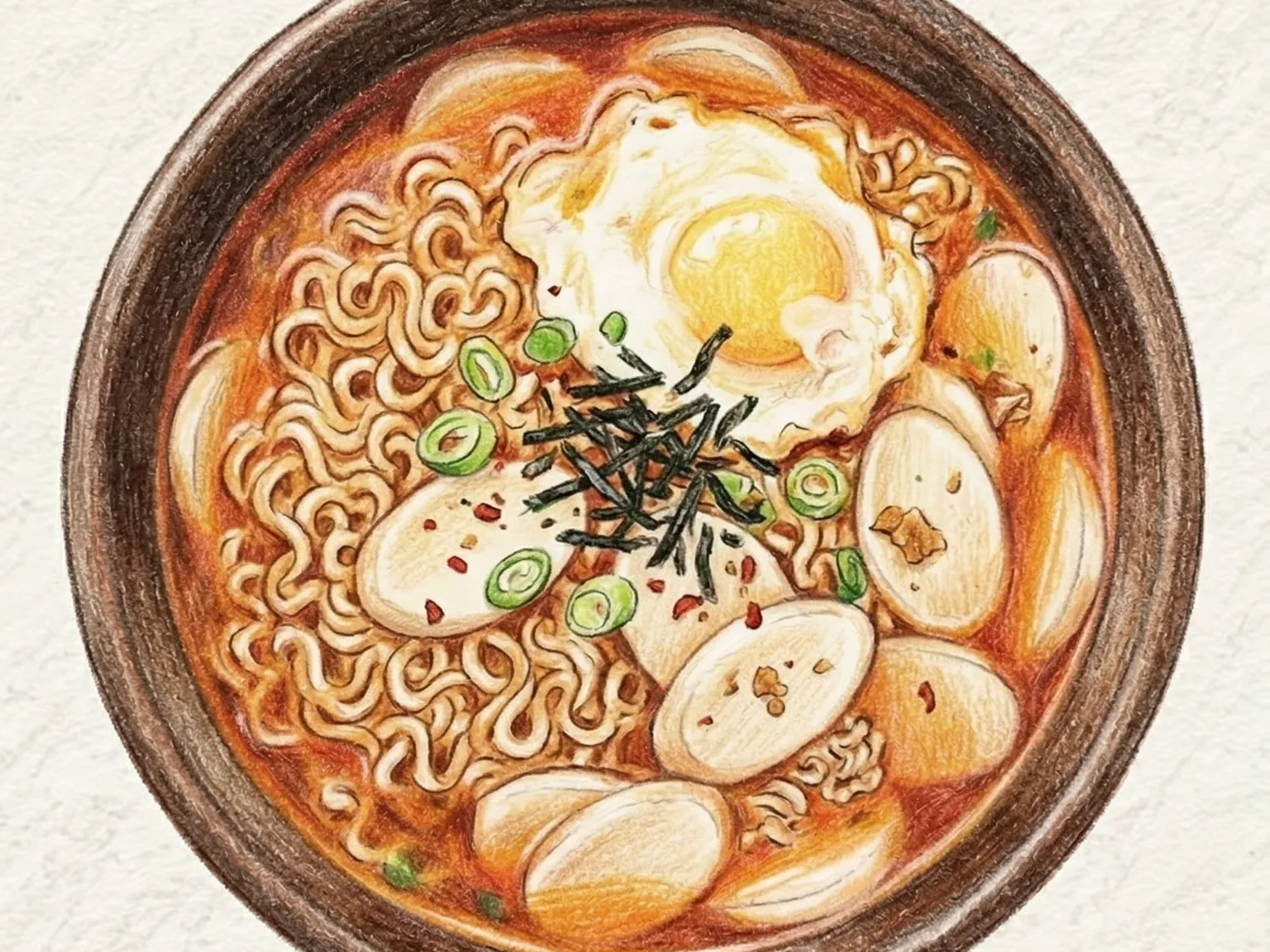
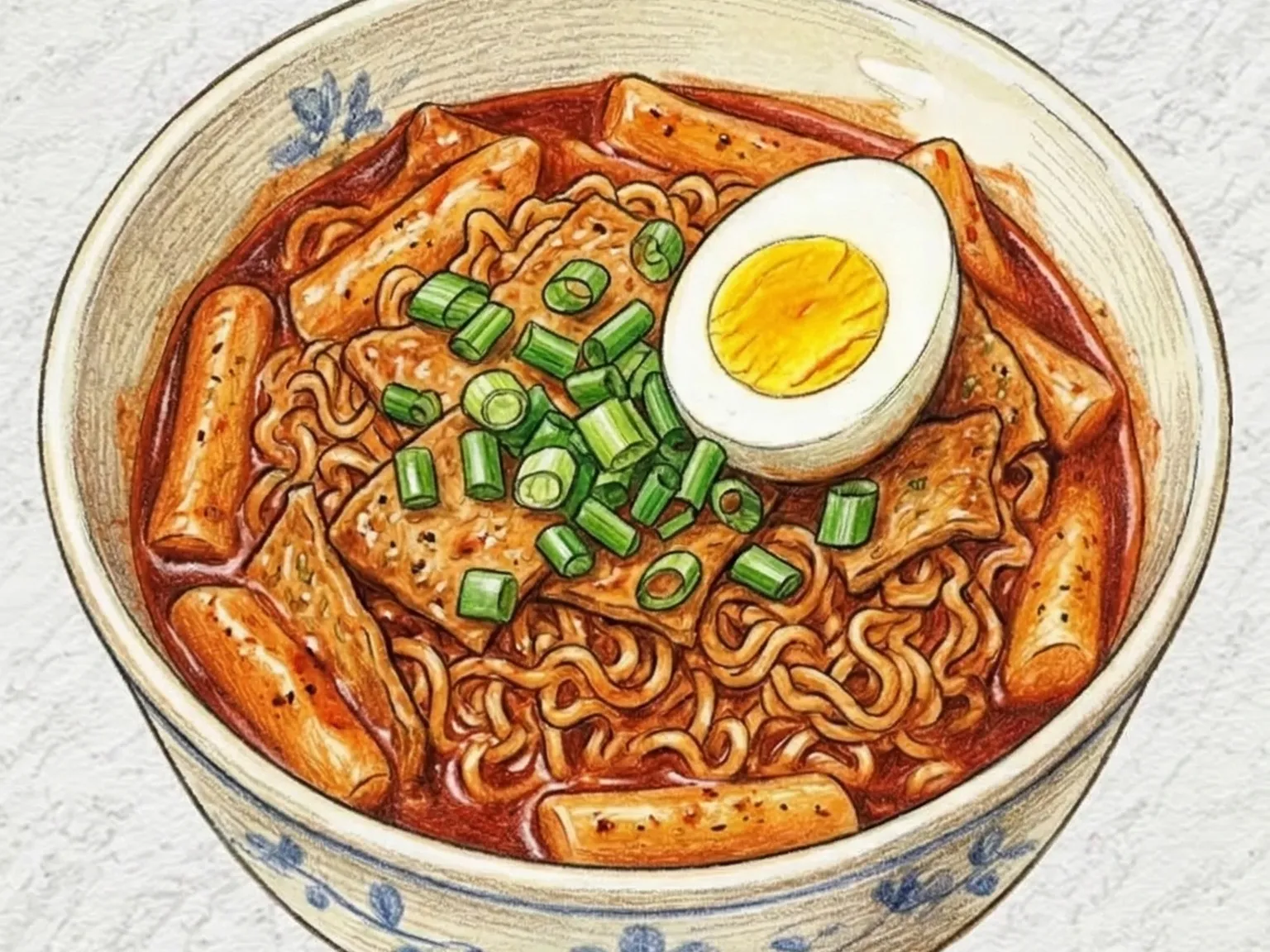
Tteok-ramyeon is a Korean shortcut dish that adds chewy rice cakes to a pot of instant ramen. The rice cakes absorb the spicy broth as they cook, intensifying the seasoning while providing a bouncy texture that instant noodles alone lack. An egg or a slice of cheese is often cracked in near the end for added richness. The entire dish is ready in about 13 minutes with no knife skills required - just boiling water and timing. It is one of the most common late-night snacks in Korea. Adding seasoning in stages makes it easier to adjust saltiness, sweetness, and heat without covering the base ingredients.

🌙 Late Night ⚡ Quick
Prep 5min Cook 8min 1 servings

Tips

Add sundae near the end and stir briefly to prevent the casing from bursting.

Nutrition (per serving)

Calories
420
kcal
Protein
16
g
Carbs
64
g
Fat
12
g