Korean Grilled Patty Skewers
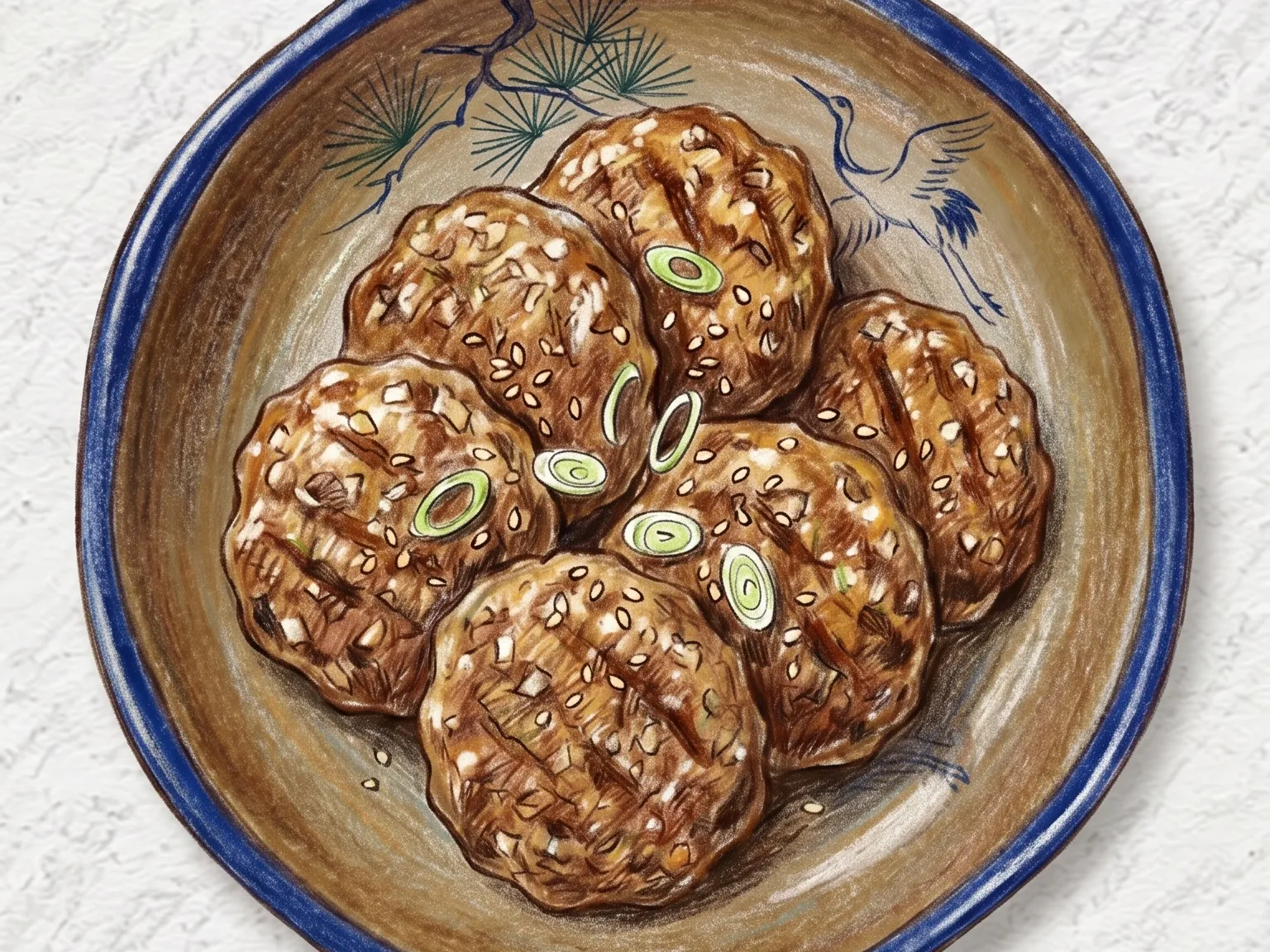
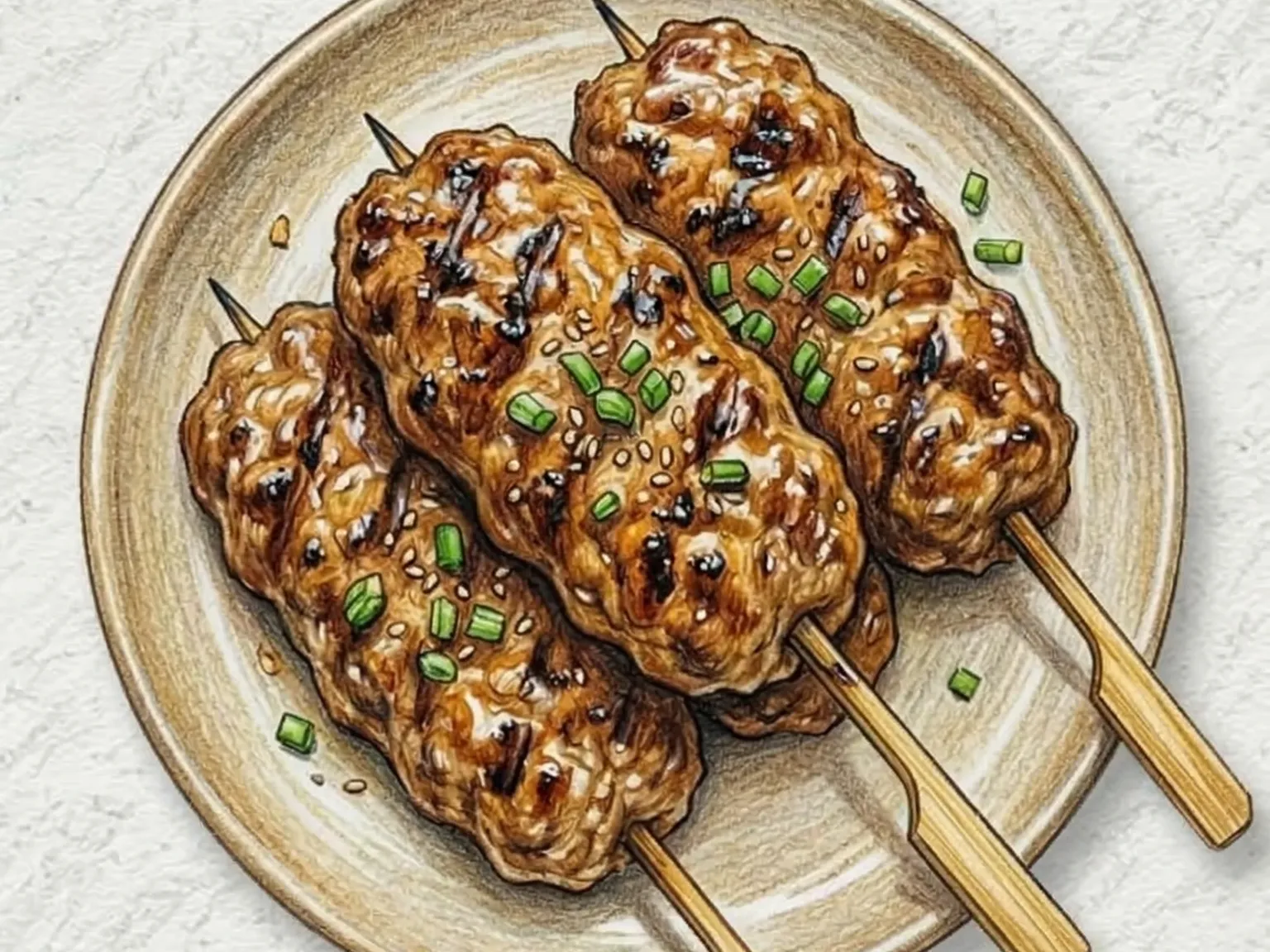
Tteokgalbi-kkochi are skewered oval patties made from a kneaded mix of ground beef, ground pork, soy sauce, sugar, garlic, sesame oil, and a spoonful of starch for binding. Kneading the mixture for at least three minutes develops enough tackiness to keep the patties firmly attached to wooden skewers during grilling. Searing over medium heat triggers a golden Maillard crust on each side, and a final few minutes on lower heat ensures the centers cook through without drying out. A quick brush of soy-and-corn-syrup glaze right before serving gives each skewer a glossy, sweet-salty finish.
Adjust Servings
Instructions
- 1
Finely mince onion and green onion, then lightly press out excess moisture.
- 2
Combine beef, pork, vegetables, soy sauce, sugar, garlic, sesame oil, pepper, and starch in a bowl.
- 3
Knead for at least 3 minutes until sticky, then divide into 8 oval patties.
- 4
Skewer each patty and grill over medium heat for 3-4 minutes per side.
- 5
Lower heat and cook 2 more minutes so the center is fully cooked.
- 6
Optionally brush with a quick glaze of soy sauce and corn syrup before serving.
As an Amazon Associate, we may earn from qualifying purchases.
Tips
Nutrition (per serving)
More Recipes

Korean Grilled Chicken Skewers
Dak-kkochi-gui is a Korean grilled chicken skewer inspired by street-stall cooking, made by threading bite-sized pieces of chicken breast or thigh onto bamboo sticks and brushing them with a sauce of gochujang, soy sauce, honey, and minced garlic. Thigh meat works best because its higher fat content resists drying out over direct heat, and applying the glaze in two or three separate coats builds up a thick, sticky, caramelized layer. Cutting the chicken into uniform cubes ensures every piece finishes cooking at the same time, and alternating with slices of green onion or bell pepper between the meat adds moisture and color. The interplay of gochujang's fermented heat and honey's sweetness against charcoal smoke captures the unmistakable flavor of Korean street food.

Korean Spicy Octopus Skewers
Blanched octopus is cut into pieces, threaded onto skewers, and grilled on a pan or open flame while being brushed repeatedly with a spicy sauce of gochujang, soy sauce, sugar, minced garlic, and sesame oil. Octopus toughens rapidly with prolonged heat, so high-temperature, quick grilling is essential to maintain a springy chew. The layered sauce builds a coating of chili heat and nutty sesame over the octopus's clean, briny base flavor.

Korean Sausage Skewers
Sosiji-kkochi are Korean sausage skewers made by scoring Vienna sausages and threading two or three onto wooden sticks, then pan-frying until golden brown on all sides. The score marks open up during cooking, allowing heat to penetrate evenly and creating slightly caramelized, crispy edges. Ketchup and mustard are served alongside, with the tomato sweetness and sharp mustard bite complementing the salty sausage. The dish takes under 15 minutes from start to finish, and threading rice cakes between the sausages turns it into a sotteok-sotteok variation.

Korean Dubu Kimchi Kkochi (Tofu Kimchi Skewers)
Dubu-kimchi-kkochi pan-sears firm tofu until the surface turns crisp and golden, then skewers it alongside stir-fried sour kimchi and ground pork. The tofu is fried to drive off surface moisture and build a crust, while the kimchi and pork are cooked together so fermented tang and meat savoriness merge into one. Threaded onto a skewer, each bite delivers the tofu's nutty seared exterior, the kimchi's sharp acidity, and the pork's salt-rich depth simultaneously. The soft interior of the tofu contrasts with its crisp shell, and juices from the stir-fried kimchi seep into the tofu to add another flavor layer.

Korean Blood Sausage Skewers
Soondae-kkochi are Korean blood sausage skewers threaded alternately with onion and green onion pieces, then pan-grilled and glazed with a gochujang-ketchup sauce. The glaze gains depth from oligosaccharide syrup and soy sauce, and is brushed on in two rounds to build a glossy, caramelized coating without burning. The sundae must be cooked slowly over low heat, rolling it gently to prevent the casing from bursting while keeping the interior chewy. The onion and scallion segments soften and sweeten as they grill, providing contrast between the bites of sundae.

Korean Grilled Fish Cake Skewers
Sticky, sweet-spicy, and irresistibly snackable - these Korean grilled fish cake skewers are the street food you will not stop eating. Flat fish cake sheets are folded in zigzag layers onto wooden sticks, grilled, then brushed with a glossy soy-gochujang glaze. Folding the sheets before skewering increases the surface area for glaze and creates layered thickness that gives each bite a bouncy, concentrated chew. Dry-grilling the skewers first without oil drives off surface moisture so the sauce clings tightly when brushed on, and a final brief sear after glazing caramelizes the sugars into a glossy sheen. Threading pieces of green onion between the folds lets their moisture steam away during grilling, infusing the fish cake with a sweet, mellow onion fragrance.