Korean Grilled Rice Cake Skewers
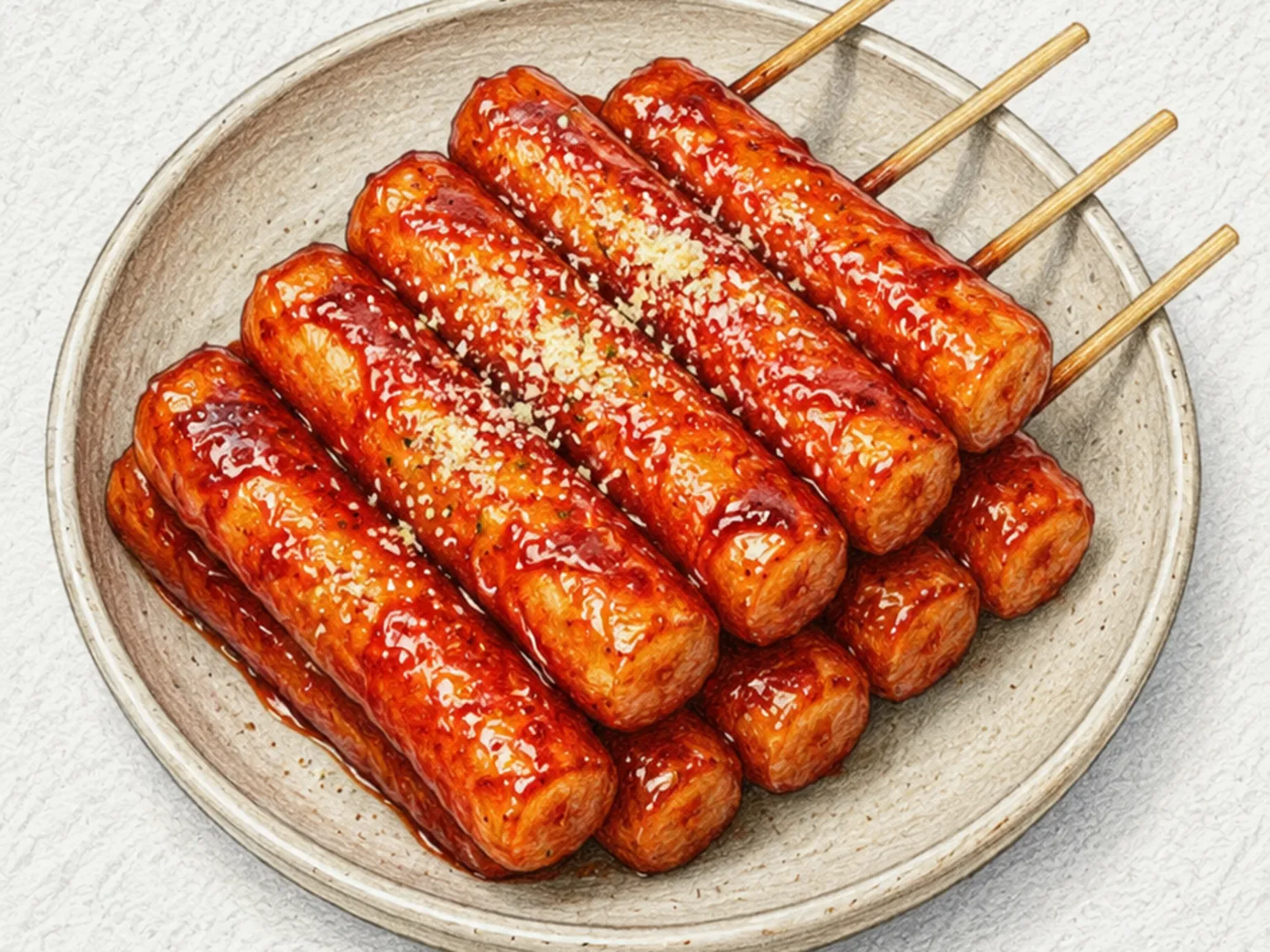
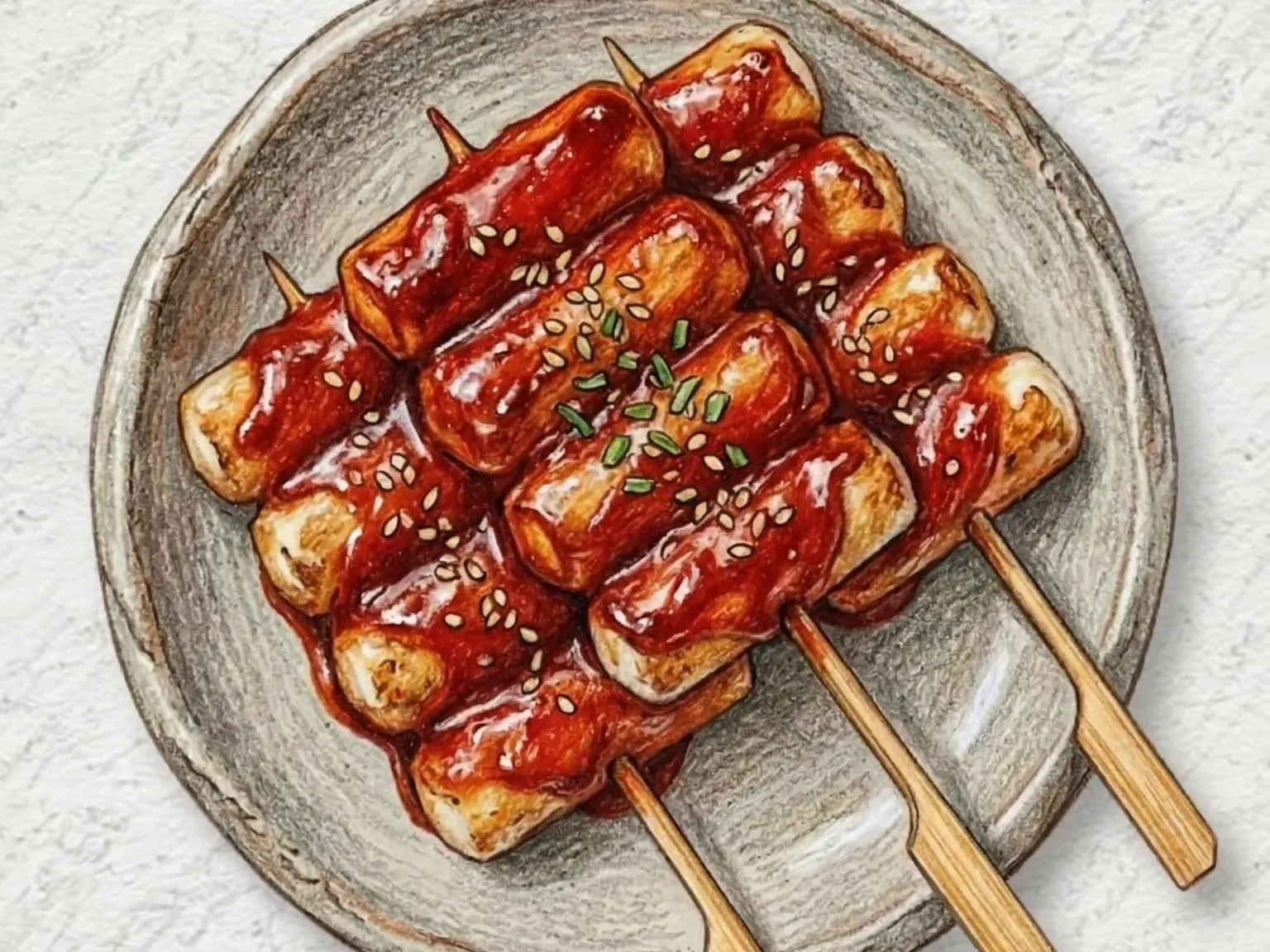
Tteokkochi are grilled rice cake skewers coated in a thick gochujang-based sauce built from ketchup, oligosaccharide syrup, soy sauce, and minced garlic simmered until reduced. The rice cakes are first pan-seared in a thin layer of oil to create a lightly crisp shell before the sauce is brushed on, so each bite cracks through a toasted surface into the chewy center. The ketchup lends a mild acidity that tempers the gochujang heat, while the syrup adds a rounded sweetness without graininess. Rolling the glazed skewers over low heat for one final minute fuses the sauce onto the rice cake surface so it holds even as the snack cools.
Adjust Servings
Instructions
- 1
Cut rice cakes and thread them onto skewers.
- 2
Heat oil in a pan and sear the skewers for about 4 minutes until lightly golden.
- 3
In a small saucepan, simmer gochujang, ketchup, syrup, soy sauce, and garlic on low heat.
- 4
When the sauce thickens, brush it evenly over both sides of the skewers.
- 5
Cook for 1 more minute on low heat to set the glaze and serve immediately.
As an Amazon Associate, we may earn from qualifying purchases.
Tips
Nutrition (per serving)
More Recipes

Korean Tteok Kkochi Yangnyeom Gui (Grilled Rice Cake Skewers)
Cylinder rice cakes are threaded onto skewers, lightly brushed with oil, and rolled on a grill pan over medium heat for six to seven minutes until the exterior turns golden. A sauce of gochujang, ketchup, oligosaccharide syrup, soy sauce, and minced garlic is applied in two rounds, building a glossy red glaze that clings to the surface. The outer layer develops a slight crispness while the inside remains stretchy and dense - that textural duality is the hallmark of this dish. A light dusting of cheese powder turns it into a kid-friendly snack, and it stands as one of the most iconic items in Korean street-food culture.

Korean Sotteok Sotteok Skewers
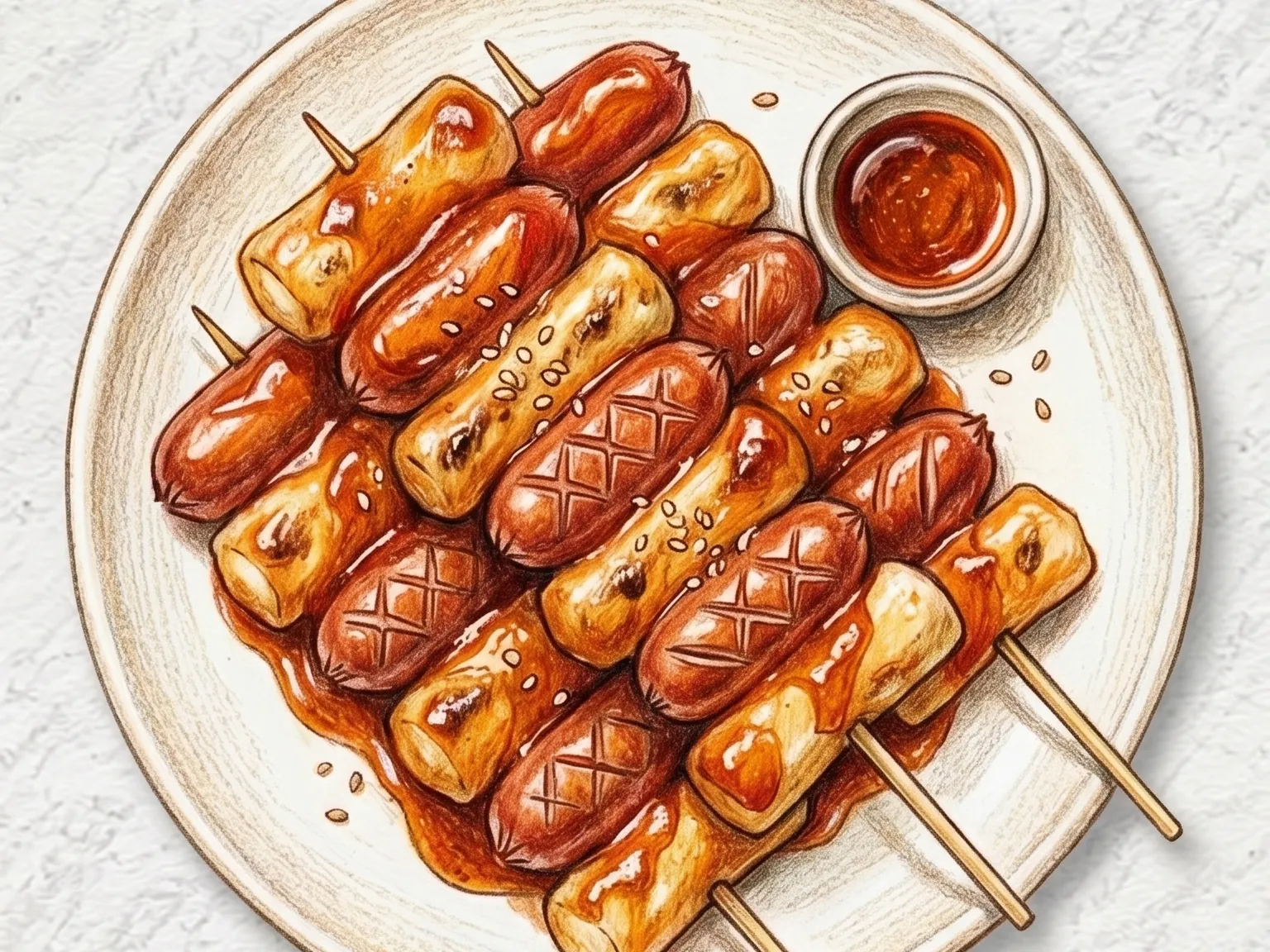
Sotteok-sotteok is a Korean street snack of alternating mini sausages and cylinder rice cakes on a skewer, pan-grilled and coated in a sweet-spicy glaze of gochujang, ketchup, and oligosaccharide syrup. The rice cakes are soaked in warm water beforehand to soften them, ensuring they cook through on the pan and achieve maximum chewiness. Sausages are lightly scored to prevent splitting, and the skewers are rolled over medium heat until evenly browned. The glaze is tossed on quickly over low heat so it clings in a glossy layer, and the sauce gradually seeps into the rice cakes with each bite.

Korean Oil Tteokbokki (Dry-Stir-Fried Rice Cakes in Chili Soy Glaze)
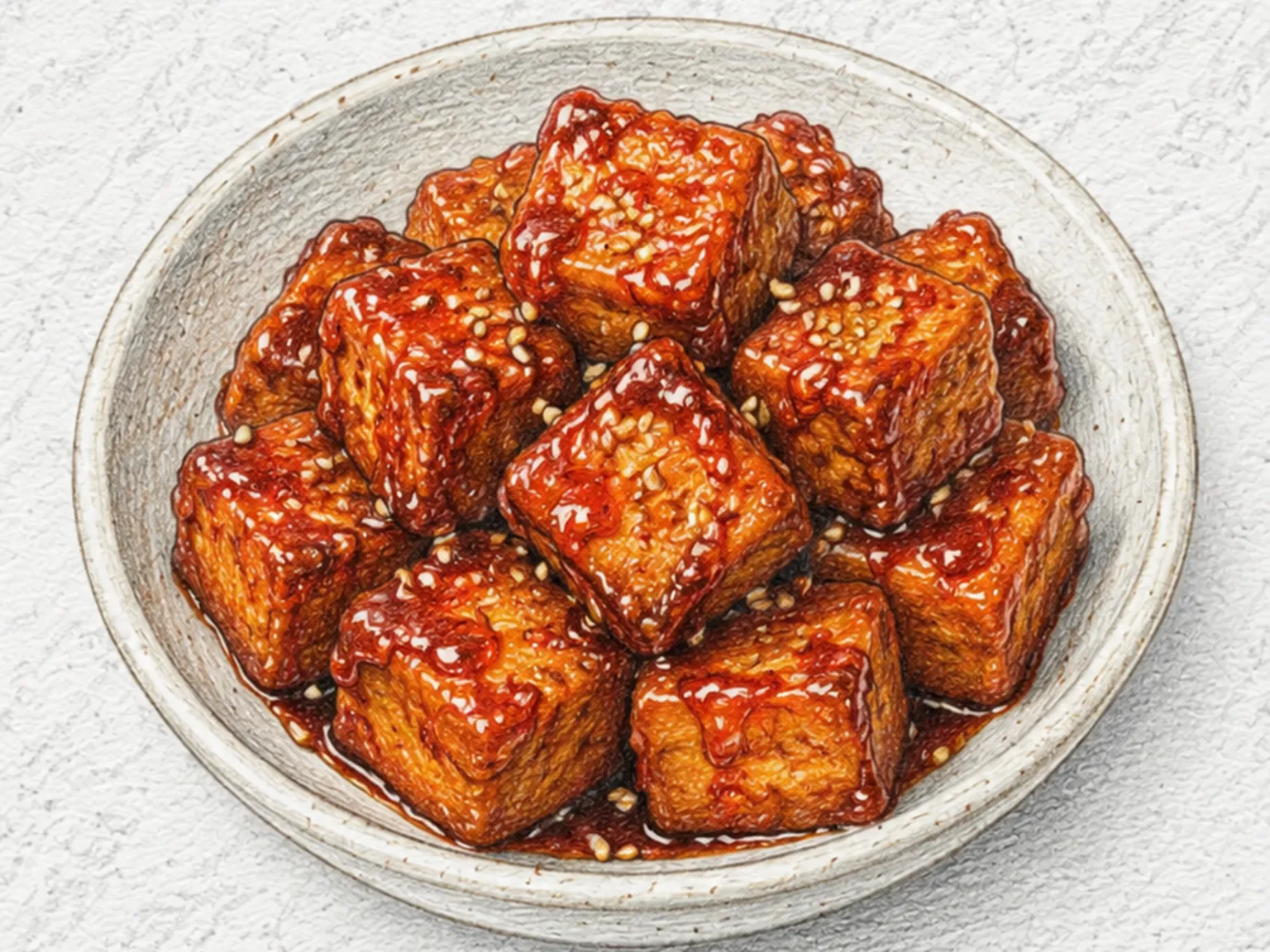
Gireum-tteokbokki is a dry-style tteokbokki where rice cakes are stir-fried in oil and coated with a concentrated paste of gochugaru, soy sauce, sugar, and garlic - no broth involved. Blooming the chili flakes briefly in oil draws out their nutty aroma rather than raw heat, and the soy sauce and sugar build layered sweetness and umami on top. Without liquid, the seasoning clings tightly to each rice cake's surface, creating an intense glaze. Green onion and sesame seeds added at the end provide a fresh bite and fragrance to balance the rich coating.

Korean Grilled Jjondeugi (Sweet Spicy Glazed Wheat Cracker Snack)
Jjondeugi-gui is a nostalgic Korean snack made by lightly grilling thin pressed-wheat sheets (jjondeugi) over low heat until pliable, then brushing them with a sauce of gochujang, soy sauce, sugar, oligosaccharide syrup, garlic, and sesame oil and grilling again. Heating transforms the rigid sheets into a chewy texture, while the sauce caramelizes on the surface to create a sweet-spicy glaze. The sauce must be applied in thin layers across multiple passes to avoid burning. The finished sheets are cut into bite-size pieces with scissors and served immediately.

Korean Skewered Fish Cake Soup
Eomuk-kkochi folds flat fish cake sheets into zigzag shapes on skewers and simmers them in a clear broth made from Korean radish, kelp, and green onion. The broth draws umami from the radish and kelp, which soaks into the fish cakes as they cook, giving them a clean but layered depth. As the fish cakes absorb broth, they soften from their original firm bounce, while the broth thickens slightly from the starch released by the eomuk. This is one of Korea's most iconic winter street foods, traditionally served at pojangmacha stalls where the hot broth is ladled into paper cups for sipping.

Korean Sotteok-Sotteok Skewers
Cylinder-shaped rice cakes and mini sausages are skewered in alternating order, then pan-grilled for six to seven minutes until the surfaces turn golden. A glaze made from gochujang, ketchup, soy sauce, oligosaccharide syrup, and minced garlic is brushed on and cooked for two to three more minutes until glossy and sticky. Each skewer delivers a contrast between the dense chew of rice cake and the snappy bite of sausage, unified by the sweet-spicy coating. Originally a Korean street-food staple, sotteok-sotteok is also popular for camping trips and can be made quickly in an air fryer.