Korean Tuna Kimchi Gimbap
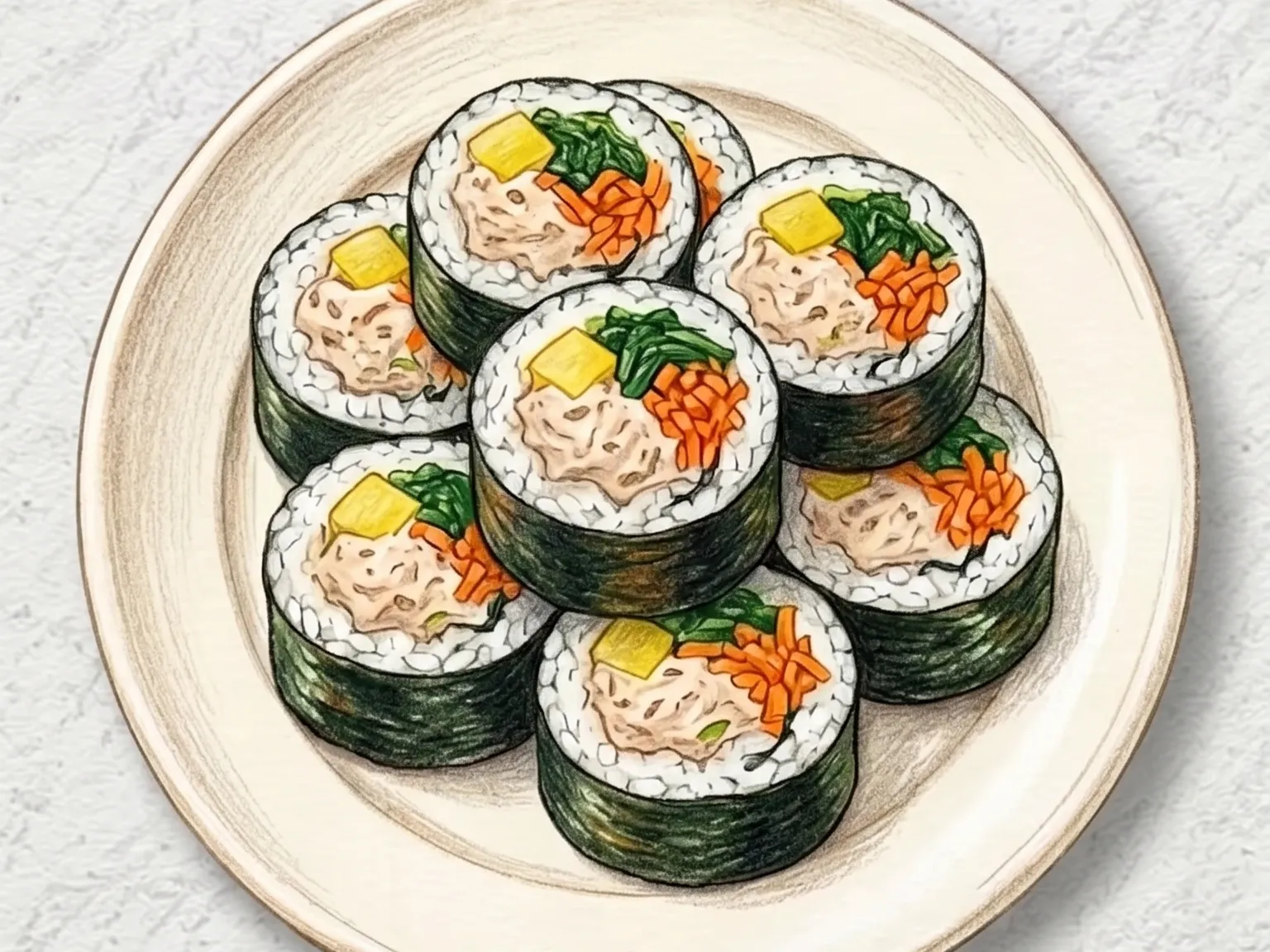
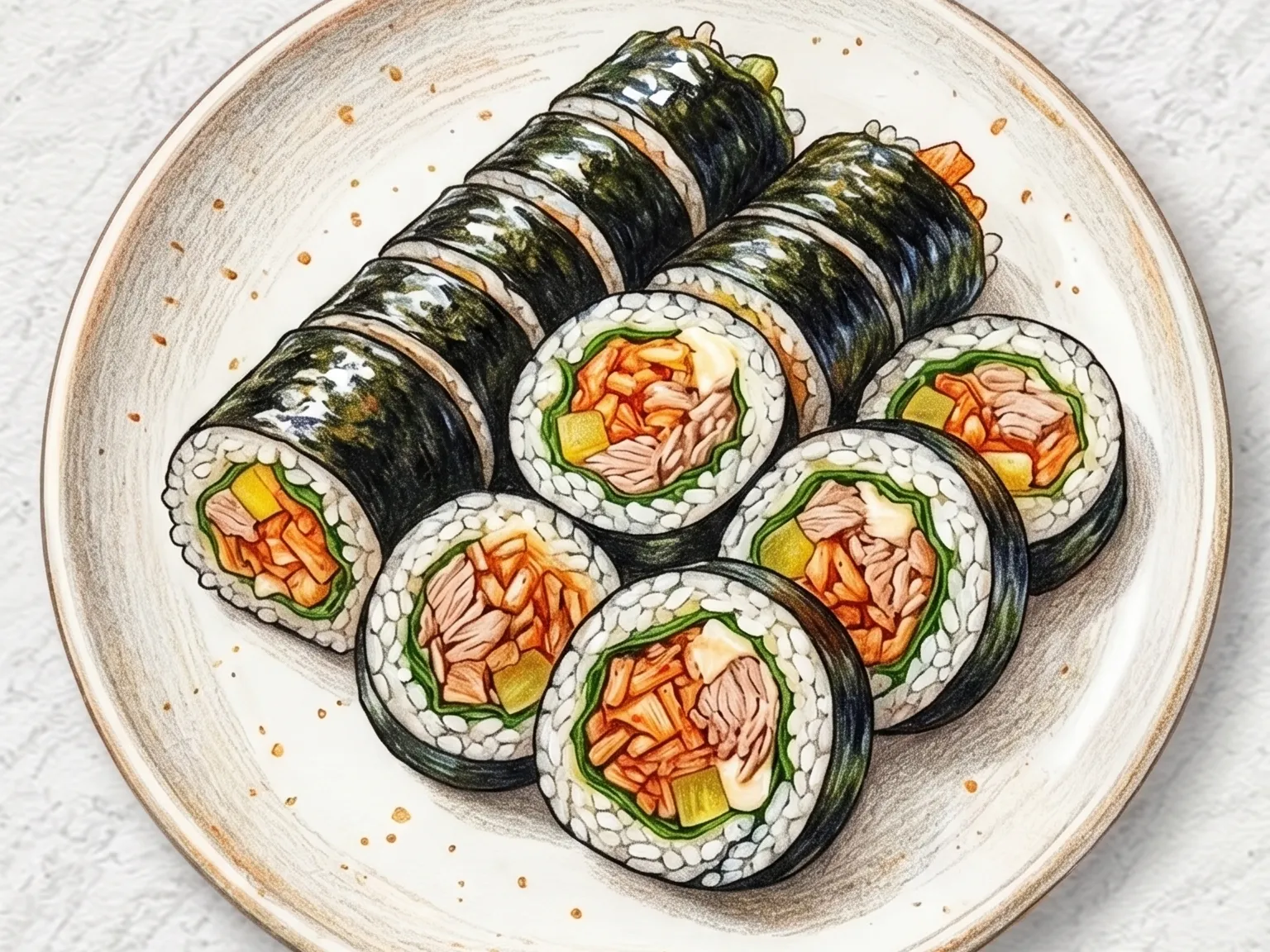
Tuna-kimchi gimbap rolls together drained canned tuna, stir-fried kimchi, and mayonnaise inside seasoned rice and roasted seaweed sheets. Stir-frying the kimchi for two minutes drives off excess liquid and concentrates its fermented tang into a deeper, more savory flavor. Perilla leaves layered directly on the rice add an herbal, slightly minty fragrance that offsets the richness of the tuna-mayo filling. A light brush of sesame oil on the finished roll preserves the seaweed's crispness while adding a final nutty aroma to every slice.
Adjust Servings
Instructions
- 1
Squeeze kimchi lightly, chop finely, and stir-fry for 2 minutes to remove excess moisture.
- 2
Drain tuna and mix with mayonnaise and cooked kimchi to make the filling.
- 3
Season warm rice with salt and sesame oil, mixing evenly.
- 4
Spread rice thinly on seaweed, add perilla leaves, radish, and tuna-kimchi filling, then roll tightly.
- 5
Brush rolls lightly with sesame oil and slice into bite-size pieces.
As an Amazon Associate, we may earn from qualifying purchases.
Tips
Nutrition (per serving)
More Recipes

Korean Tuna Mini Gimbap (Addictive Bite-Sized Tuna Mayo Seaweed Rolls)
Tuna mayak gimbap are bite-sized rolls made by cutting seaweed sheets in half, spreading a thin layer of sesame-oil-seasoned rice, and filling with tuna-mayo, pickled radish, sauteed carrot, and blanched spinach. Draining the canned tuna thoroughly before mixing with mayonnaise prevents sogginess while keeping the filling creamy. The pickled radish provides a sharp crunch that cleanses the palate between each piece, and the lightly sauteed carrot brings a touch of natural sweetness. Their miniature size ensures every ingredient registers in a single bite, delivering a compact burst of balanced flavor.

Korean Seaweed Rice Roll
Gimbap is a Korean seaweed rice roll made by spreading sesame-oil-and-salt-seasoned rice thinly over a sheet of gim, then lining up individually prepared fillings - spinach namul, sauteed carrot, egg strip, ham, pickled radish, and braised burdock - and rolling tightly. Each filling is cooked separately so distinct flavors and textures meet in a single bite. The rice must cool slightly before spreading to keep the seaweed from going limp. When sliced, the cross-section reveals concentric rings of color, and a brush of sesame oil on the finished roll deepens the nuttiness of the seaweed.

Korean Bunsik Kimchi Bokkeumbap (Kimchi Fried Rice)
Bunsik-style kimchi fried rice starts by making scallion oil from green onions, then stir-frying well-fermented kimchi to drive off moisture before seasoning with gochujang and soy sauce and tossing in day-old rice. The scallion oil lays a nutty base across the rice, and the aged kimchi's sharp acidity layers with the gochujang's heat to build depth. Cold leftover rice fries without turning mushy, keeping individual grains distinct, and the dish is topped with seaweed flakes and a runny fried egg. A small amount of sugar can be added if the kimchi's sourness is overpowering.

Korean Kimchi Cheese Gimbap
Kimchi cheese gimbap rolls seasoned rice, stir-fried kimchi, mozzarella cheese, and pickled radish in seaweed sheets. Stir-frying the kimchi concentrates its tangy flavor and removes excess moisture that would otherwise make the roll soggy and prone to tearing. The cheese's mild fat wraps around the kimchi's spice, and the pickled radish adds a sweet-tart crunch that breaks up the richness. Keeping the cheese in a single line along the center is key to rolling the gimbap tightly without splitting.

Korean Kimchi Fried Rice (Kimchi Bokkeumbap)
Finely chopped aged kimchi is stir-fried with ground pork, and the fermentation tang meets rendered pork fat to build a deep, layered umami. Kimchi juice goes into the pan along with gochujang and a touch of sugar, coating the rice in a spicy-sweet glaze. High heat is critical - quick tossing keeps each grain separate and slightly crisp rather than mushy. A soft-fried egg on top lets the runny yolk temper the heat, and using well-fermented kimchi dramatically deepens the flavor profile. Variations with spam or canned tuna are equally popular across Korean home kitchens.

Tuna Potato Salad (Japanese Creamy Tuna and Potato Mix)
Tuna potato salad mashes boiled potatoes while still hot, then folds in drained canned tuna, salt-pressed cucumber, carrot, and onion with mayonnaise and whole grain mustard. Mashing the potatoes warm keeps the starch active, which bonds more effectively with the mayonnaise for a creamier result - but over-mashing turns the texture gluey, so leaving some chunks is ideal. Salting the chopped vegetables for five minutes and squeezing out the released moisture is essential to prevent a watery salad. The tuna must also be drained thoroughly in a strainer to keep the flavor clean. Whole grain mustard adds a peppery sharpness that cuts through the richness of the mayonnaise, and a twenty-minute chill in the refrigerator lets all the flavors meld evenly.