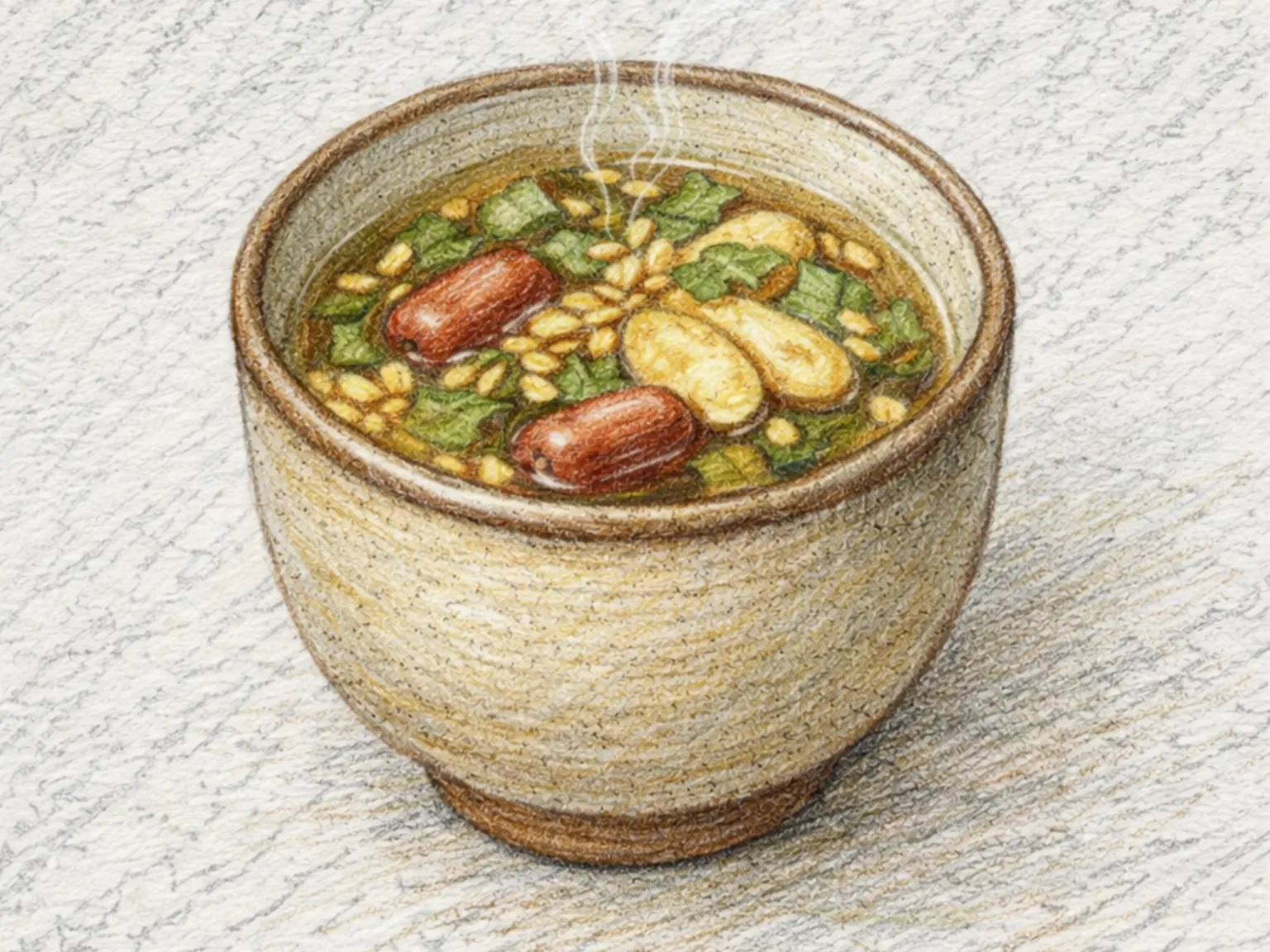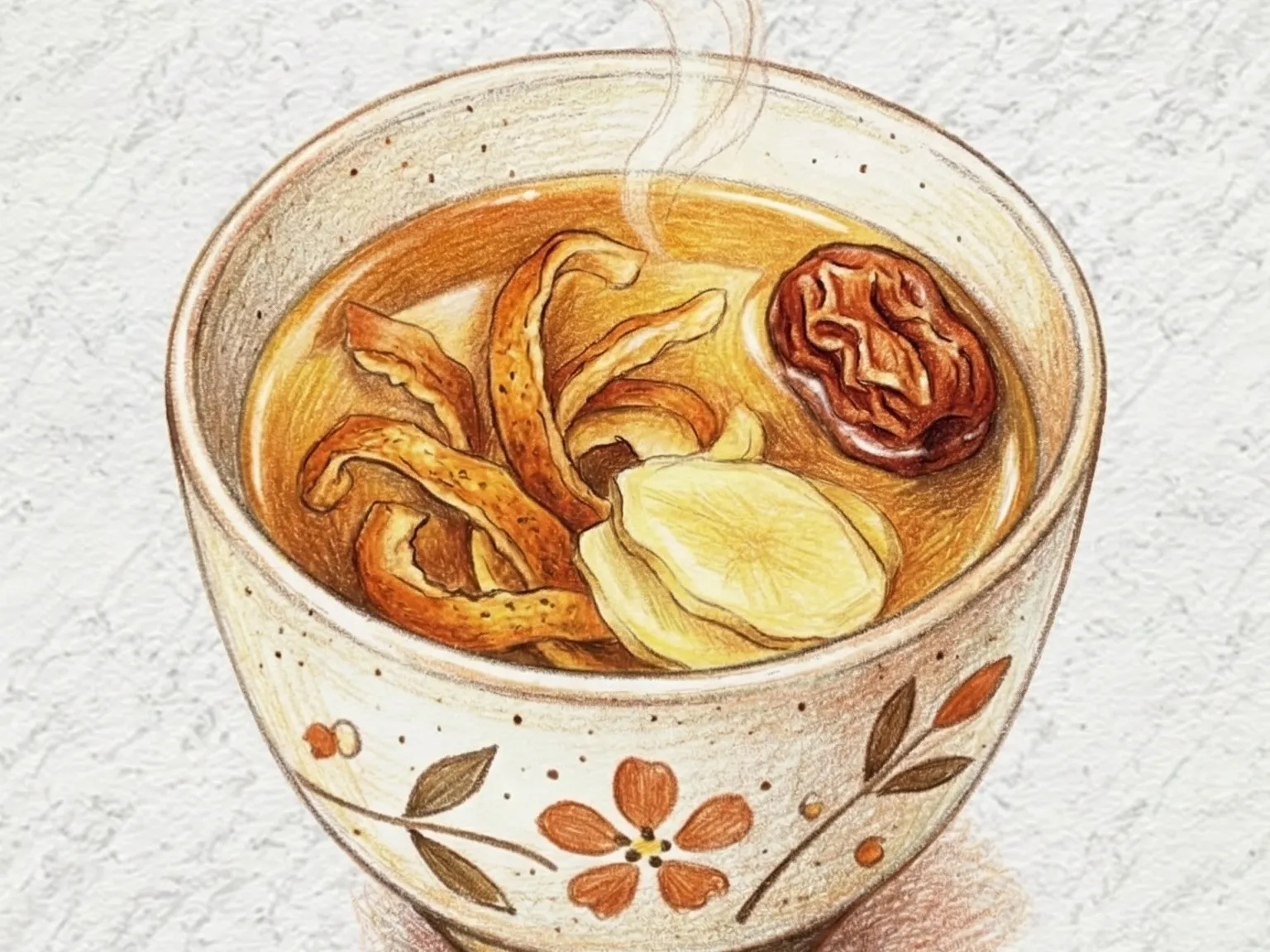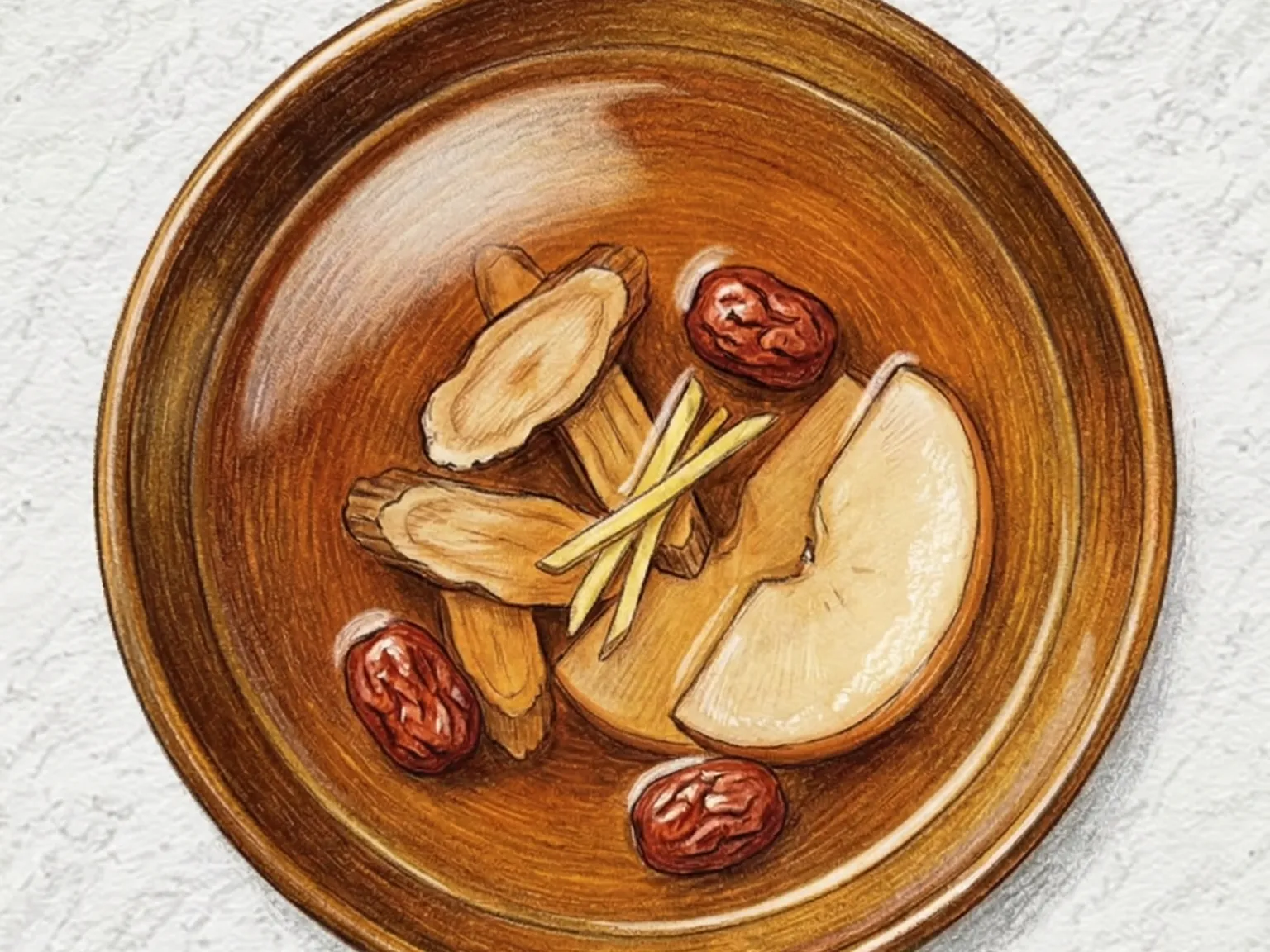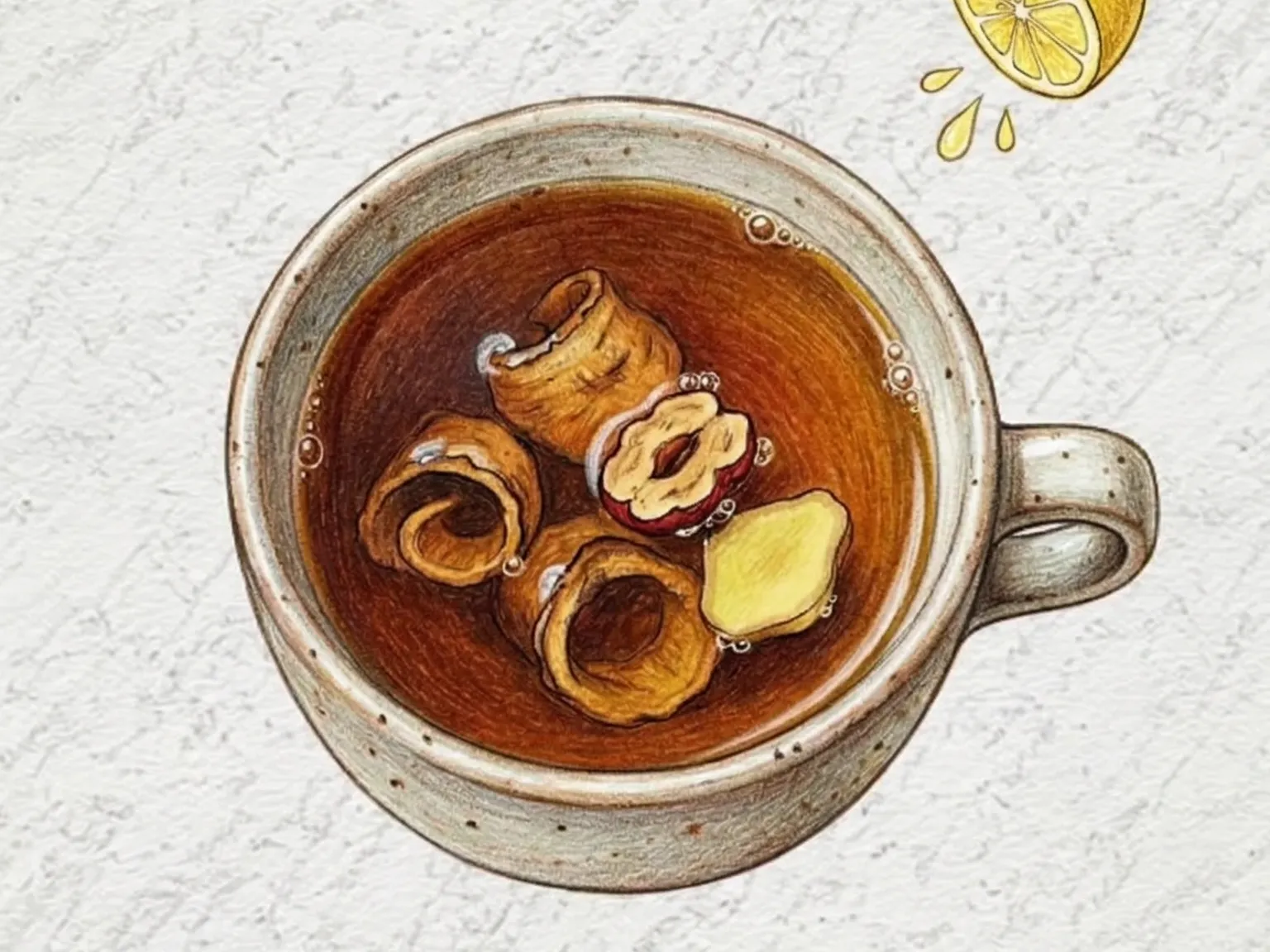
Korean Burdock Root Tea
Ueong-cha is a Korean burdock root tea made by dry-roasting thinly sliced unpeeled burdock in a pan for six minutes, then steeping it with ginger and jujube in boiling water for 15 minutes. The roasting caramelizes the root's starches, creating a deep, nutty aroma without any raw earthiness. Ginger contributes a subtle heat to the finish, while jujubes provide natural sweetness that softens the drink. A spoonful of rice syrup thickens the body, and a few drops of lemon juice at the end clean up the palate, making this caffeine-free tea suitable for any time of day.
Adjust Servings
Instructions
- 1
Thinly slice burdock with skin on, then soak for 3 minutes and drain.
- 2
Dry-roast the burdock for 6 minutes to remove moisture and deepen aroma.
- 3
Add water, roasted burdock, ginger, and jujube to a pot and boil.
- 4
Reduce to medium-low and steep for 15 minutes.
- 5
Strain the tea and dissolve rice syrup.
- 6
Finish with a few drops of lemon juice before serving.
As an Amazon Associate, we may earn from qualifying purchases.
Tips
Nutrition (per serving)
More Recipes

Korean Persimmon Leaf Tea
Gamnip-cha is a Korean caffeine-free tea brewed from dried persimmon leaves and dried tangerine peel, yielding a gentle green-herbal note layered with light citrus. Steeping on low heat for twelve minutes after bringing the water to a boil extracts the soft, grassy flavor of the leaves while minimizing any astringency. Thinly sliced Korean pear with its skin adds natural sweetness and a fresh quality to the infusion, and the tangerine peel is kept to a small amount so it accents rather than overwhelms the leaf aroma. The tea is strained, sweetened with honey, and finished with a trace of cinnamon.

Korean Lotus Root Tea (Warm Herbal Root Brew)
Yeongeun-cha is a Korean lotus root tea made by simmering peeled, sliced lotus root with jujube, ginger, and a cinnamon stick on low heat for 25 minutes. The root's natural starch dissolves into the water, giving the tea a clear yet slightly viscous body, while cinnamon and ginger leave a warm undertone in the finish. Jujubes supply the primary sweetness, supplemented by honey and a tiny pinch of salt to deepen the flavor. A brief soak of the lotus root slices in vinegar water before cooking prevents browning and keeps the tea's color pale and clean. It tastes equally smooth served hot or chilled.

Korean Lotus Leaf Tea (Roasted Rice and Lotus Brew)
Yeonnip-cha is a Korean lotus leaf tea brewed by simmering dried lotus leaf with roasted brown rice, jujube, and ginger for 15 minutes, then steeping covered for three additional minutes to concentrate the aroma. The lotus leaf contributes a clean, grassy fragrance that pairs with the toasty, nutty character of the roasted rice, creating a light but layered flavor. Jujube and ginger smooth out any sharp vegetal edges, making the tea approachable even for first-time drinkers, and rice syrup is stirred in for gentle sweetness. Brewing time should not exceed 20 minutes to avoid astringency, and the tea is naturally caffeine-free.

Korean Solomon's Seal Tea
Dunggeulle-cha is a Korean caffeine-free tea brewed by simmering dried Solomon's seal root in water to release a toasty, mellow sweetness. Adding a small amount of licorice root infuses a natural sweetness that rounds out the flavor without any added sugar. Sliced Korean pear goes into the pot once the water boils, and as its juice dissolves into the broth, it contributes a light fruity layer to the tea. The liquid is strained clear, finished with a pinch of salt to sharpen the taste, then sweetened with honey and served warm or chilled.

Sweet Rice Punch (Traditional Korean Malted Barley Grain Drink)
Sikhye is a traditional Korean sweet rice punch made by steeping malted barley powder in lukewarm water, straining the milky liquid, adding cooked rice, and holding the mixture at around 60 degrees Celsius for one hour until the rice grains float. The amylase enzymes in the malt break down the rice starch, producing a distinctly malty, clear sweetness with grain depth. Only the clear top liquid is used after settling to keep the punch from turning cloudy, and simmering it with sugar and sliced ginger for 20 minutes rounds the sweetness while adding a gentle spiced warmth to the finish. Served well chilled with the reserved floating rice grains and pine nuts on top, the cold temperature sharpens the malty aroma and makes each sip crisp and refreshing.

Korean Burdock Perilla Seed Stew
A hearty stew built on burdock root, potatoes, and oyster mushrooms in a perilla seed broth. The burdock root retains a firm, earthy crunch while the potatoes soften and break down slightly to thicken the stew. Anchovy-kelp broth provides the savory base, and generous perilla seed powder creates a creamy, nutty consistency throughout. This meat-free stew is substantial enough to serve as a satisfying main dish.