Korean Braised Chicken with Burdock
Steamed Medium

Korean Braised Chicken with Burdock

Quick answer

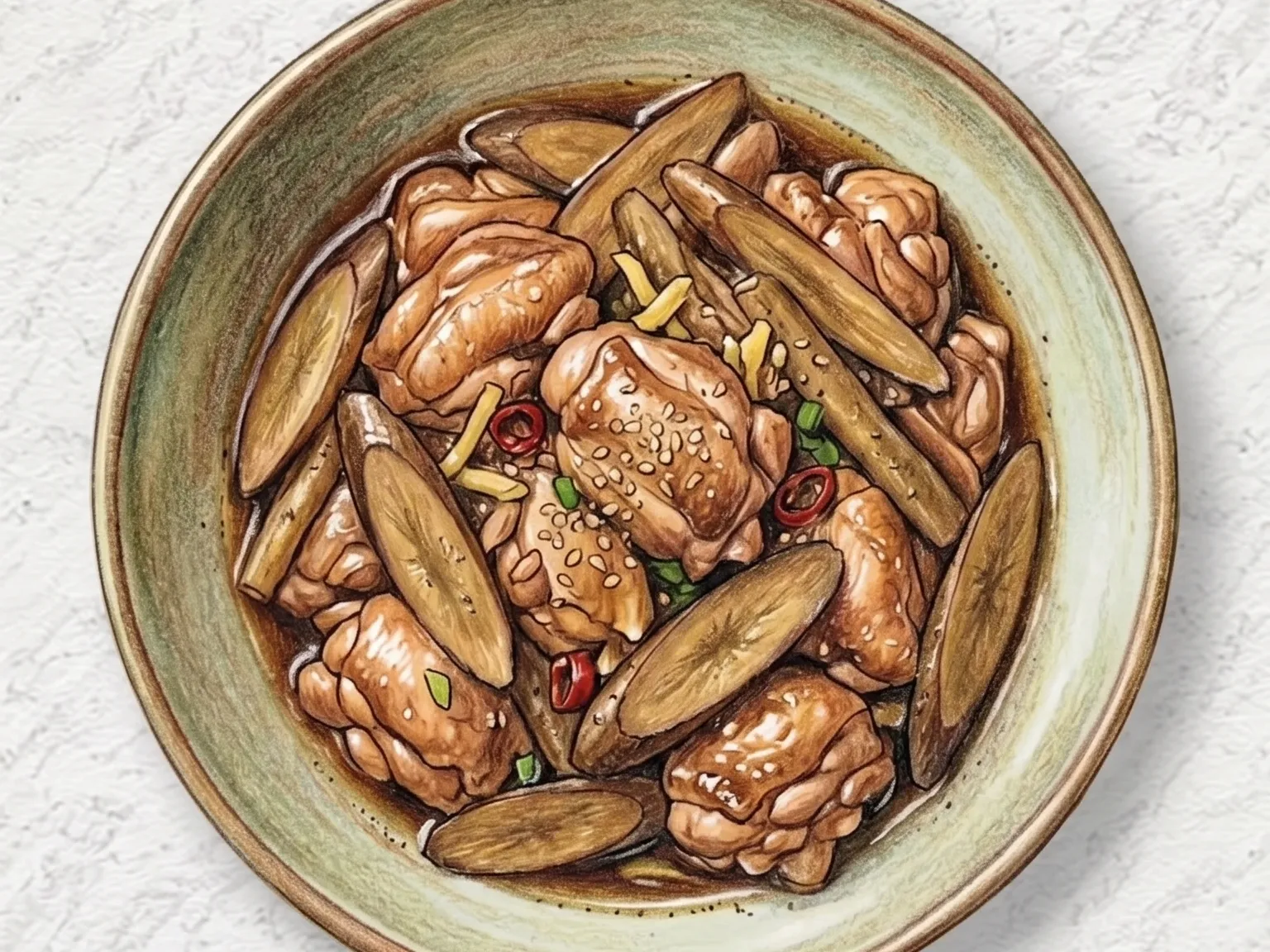
Ueong dak jorim is a Korean braised dish that simmers boneless chicken thigh and burdock root together in soy sauce, sugar, and ginger juice until the liquid reduces and...

What makes this special

  • Ueong dak jorim pairs vinegar-soaked burdock root with boneless chicken in a concentrated ginger-soy reduction.
  • Vinegar-soaked burdock sheds bitterness to pair cleanly with chicken
  • 18-minute low simmer reduces broth by half, coating each piece
Total time
55 min
Level
Medium
Servings
4 servings
Ingredients
10
Calories
390 kcal
Protein
35 g

Key ingredients

boneless chicken thighburdock rootsoy saucewatersugar

Core cooking flow

  1. 1 Rinse 180 g burdock root well, then slice it on a bias without making the pieces too thick.
  2. 2 Cut 600 g boneless chicken thigh into large pieces and trim away some fatty...
  3. 3 Heat a pot over medium heat and add the chicken first.

Ueong dak jorim is a Korean braised dish that simmers boneless chicken thigh and burdock root together in soy sauce, sugar, and ginger juice until the liquid reduces and the glaze thickens around each piece. Soaking the burdock in vinegar water draws out the astringent bitterness that raw burdock carries, and marinating the chicken in cooking wine and ginger beforehand removes any lingering gamey odor. Once both are added to the pot, low heat does the work over at least eighteen minutes, bringing the braising liquid down by half and building a glossy, clinging sauce. A final drizzle of sesame oil at the end ties the aroma together and rounds out the flavor. The finished dish sets the crisp yet slightly chewy texture of burdock against the moist tenderness of chicken thigh, with a sweet-savory profile that makes it a reliable companion to steamed rice.

Prep 20min Cook 35min 4 servings

Instructions

Read the steps as a cooking flow: prep, heat, seasoning, doneness control, and finish.

6 steps
  1. 1
    Control

    Rinse 180 g burdock root well, then slice it on a bias without making the pieces too thick.

    Soak it in vinegar water for 5 minutes, then rinse to reduce bitterness and help it cook evenly.

  2. 2
    Season

    Cut 600 g boneless chicken thigh into large pieces and trim away some fatty skin if needed for a cleaner sauce.

    Marinate it with 1 tablespoon cooking wine and the ginger juice for 10 minutes.

  3. 3
    Control

    Heat a pot over medium heat and add the chicken first.

    Cook until the outside turns white, turning the pieces occasionally so they do not stick to the bottom before the braising liquid goes in.

  4. 4
    Season

    Add the burdock, 280 ml water, 4 tablespoons soy sauce, 1 tablespoon sugar, 1 tablespoon minced garlic, and the remaining cooking wine. Stir so the sugar dissolves, then bring the liquid to a boil.

  5. 5
    Control

    Once it starts boiling, lower the heat and braise for 18-20 minutes.

    Turn the ingredients midway so the liquid reduces by about half and the sauce becomes glossy instead of burning at the edges.

  6. 6
    Season

    Add 1 stalk green onion and cook for 3 more minutes to release its aroma.

    When the thickened sauce clings to the chicken and burdock, turn off the heat and drizzle in 1 teaspoon sesame oil.

After the steps

Pick a recipe that fits this dish.

Continue with shared ingredients, meal pairings, or a similar method.

Recipes That Go Well With This

More Steamed →

Based on shared ingredients and meal pairing

Korean Dak Ganjang Jorim (Soy Braised Chicken)
Shared ingredient: boneless chicken thigh Steamed

Korean Dak Ganjang Jorim (Soy Braised Chicken)

Dak ganjang-jorim is chicken thigh braised with potato in a soy sauce glaze enriched with oligosaccharide syrup, garlic, and ginger juice. As the thighs simmer, the soy base works its way between the muscle fibers, leaving the meat deeply seasoned with a glossy brown finish. Potato chunks break down slightly at the edges and soak up the braising liquid, turning starchy and satisfying. A single cheongyang chili added to the pot gives a mild, lingering kick that keeps the sweet-salty profile from becoming one-note. Patting the chicken thighs thoroughly dry before searing them in the pan builds a Maillard-browned surface that adds another layer of savory depth, and removing the lid for the final five minutes lets the sauce reduce into a thick, clingy glaze.

Korean Braised Chicken with Radish
Shared ingredient: green onion Steamed

Korean Braised Chicken with Radish

This braise combines bone-in chicken pieces with Korean radish and potato in a soy-and-gochugaru sauce. The radish absorbs both the chicken stock and the spiced seasoning, turning amber on the outside while going translucent within. Potato edges break down during the long simmer, thickening the sauce into a sticky glaze. Gochugaru and black pepper build a layered heat that soy sauce and sugar round off, so the dish is assertively spicy without being harsh. Reducing the liquid until it barely coats the bottom concentrates all the flavors onto the surface of each piece.

Korean Mushroom Japchae (Shiitake Glass Noodle Stir-Fry)
Serve together Side dishes

Korean Mushroom Japchae (Shiitake Glass Noodle Stir-Fry)

Beoseot japchae replaces beef with shiitake mushrooms as the primary source of savory depth, making it a staple of Buddhist temple cuisine and vegetarian tables alike. Sweet potato noodles are soaked and boiled, then rinsed in cold water immediately to lock in a firm, springy texture. Shiitake, spinach, carrot, and onion are each cooked separately - their moisture levels and heat tolerances differ enough that combining them prematurely flattens every component. Soy sauce, sugar, minced garlic, and sesame oil bring the noodles and vegetables together, and the finished dish rests for ten minutes so the seasoning penetrates the noodles evenly. The result is a japchae where the mushroom carries genuine umami weight without any meat.

Korean Soy Braised Chicken Wings
Similar recipe Stir-fry

Korean Soy Braised Chicken Wings

Dak-nalgae-ganjang-jorim is a Korean braised chicken wings dish slow-cooked in a seasoning mixture of soy sauce, sugar, garlic, and ginger over medium-low heat until the sauce reduces to a thick, sticky glaze. The thin skin on the wings absorbs the braising liquid as it reduces, developing a glossy brown coating that clings to each piece. Cartilage near the joints softens progressively the longer the wings cook, shifting from a firm snap to a yielding, almost gelatinous texture. Green onion is added early to neutralize any off-flavors from the chicken, while ginger contributes a subtle warmth that rounds out the overall aroma. The braising liquid is allowed to reduce almost completely so the last traces of sauce concentrate into a dense, caramelized coating rather than a loose broth. Eating the wings by hand, pulling the meat from the bone, is part of the appeal, and this hands-on quality makes the dish a regular presence on Korean drinking tables alongside beer or soju.

Serve with this

Korean Ssamjang Hwe Deopbap
Rice Medium

Korean Ssamjang Hwe Deopbap

This variation on hoe-deopbap replaces the standard cho-gochujang with a dressing of ssamjang mixed with vinegar and sesame oil, shifting the dominant flavor away from sweet heat and toward fermented bean depth. The doenjang component in ssamjang works against the rawness of the fish rather than masking it with chili, producing a rounded, earthy complexity that deepens with each bite. Vinegar cuts through ssamjang's thick, pungent weight and introduces a clean acidity that keeps the overall flavor from feeling heavy. Flounder sashimi is cut into bite-sized pieces and kept refrigerated, while the rice is served at room temperature so the two elements neither clash nor blend into an indistinct warmth. Julienned carrot and perilla leaves provide a crisp, juicy resistance that contrasts directly with the chewy elasticity of the fish. Dressing the vegetables in advance draws out moisture that would soften the rice, so all the components are placed in the bowl separately and tossed together only at the moment of eating to preserve every texture.

🎉 Special Occasion 🏠 Everyday
Prep 20min Cook 5min 2 servings
Korean Salted Pollock Roe Jeotgal
Kimchi Hard

Korean Salted Pollock Roe Jeotgal

Myeongran jeotgal is a Korean salted and fermented pollock roe where fresh roe sacs are meticulously cleaned of blood spots and membranes, brushed with rice wine to suppress fishiness, then packed in a curing blend of coarse sea salt, gochugaru, and minced garlic alongside a piece of kelp. Over three to five days in cold storage, salt draws moisture out of each tiny egg, concentrating their pop-and-burst texture while enzymatic breakdown generates a deep, layered umami that raw roe cannot produce on its own. The chili flakes introduce a gentle warmth that sits behind rather than over the roe's natural salinity. Sliced thin and arranged over hot steamed rice, each piece releases a salty, oceanic intensity with every bite - a condiment that disappears faster than any dish it accompanies.

🎉 Special Occasion 🍱 Lunchbox
Prep 30min 4 servings
Korean Oxtail Soup
Soups Hard

Korean Oxtail Soup

Sokori-guk demands patience - oxtail pieces are soaked in cold water to draw out blood, then placed in a heavy pot with enough water to cover and simmered for at least three to four hours. During that long, slow cook, collagen buried in the joints and connective tissue dissolves into the liquid, producing a broth so rich in gelatin that it sets into a solid block when refrigerated. Skimming fat and foam at regular intervals keeps the final broth a clean, milky white with no greasy residue. The meat, once it slides easily off the bone, is torn along the grain into shreds that are impossibly soft, while the tendon segments offer a pleasantly bouncy chew. Seasoning is deliberately minimal - coarse salt, black pepper, and sliced scallion - because the bones themselves have already contributed all the depth the soup needs. Served with a bowl of steamed rice and a side of kkakdugi, the cubed radish kimchi's sharp tang provides the only counterpoint this quietly powerful broth requires.

🏠 Everyday 🎉 Special Occasion
Prep 25min Cook 210min 4 servings

Similar recipes

Korean Soy Braised Chicken
Steamed Medium

Korean Soy Braised Chicken

Dak-jjim is bone-in chicken braised with potato, carrot, and onion in a sauce of soy sauce, sugar, and garlic. Juices released from the bones meld with the soy seasoning to form a glossy, concentrated gravy, and the vegetables absorb this liquid so they are seasoned all the way through. Sugar tempers the saltiness of the soy into a clear sweet-salty balance that coats every piece. Cooking with the lid on over medium heat first, then removing the lid to reduce the sauce, is what creates the glossy coating that defines a well-made dak-jjim. Served in a hot stone pot at the center of the table, it is one of the most familiar home-cooked dishes in Korean cuisine, well-suited for a shared family meal.

🎉 Special Occasion
Prep 20min Cook 40min 4 servings
Braised Korean Radish (Soy Garlic Slow-Cooked Side)
Steamed Easy

Braised Korean Radish (Soy Garlic Slow-Cooked Side)

Mu-jjim is a Korean braised radish dish where thick-cut Korean radish is simmered slowly in a covered pot with soy sauce, sugar, and garlic. The radish absorbs the seasoned liquid as it cooks, turning translucent from edge to center and developing a natural sweetness that balances the saltiness of the soy base. A drizzle of sesame oil at the end adds a nutty fragrance, and a single sliced green chili contributes a mild kick to the finish. Despite the short ingredient list, this banchan pairs naturally with rice at any meal and holds up well as a make-ahead side throughout all seasons. Keeping the heat at medium or below for at least twenty minutes allows the radish to soften fully and take in the seasoning without becoming mushy.

🏠 Everyday 🍱 Lunchbox
Prep 12min Cook 30min 2 servings
Korean Soy Braised Chicken Wings
Stir-fry Medium

Korean Soy Braised Chicken Wings

Dak-bong jorim is a Korean braised chicken wingette dish where pieces are slowly reduced in a sweet soy glaze over medium-low heat until the sauce thickens into a glossy coating around each piece. As the liquid reduces, the seasoning concentrates and adheres to the surface, leaving the skin sticky and lacquered from absorbing the sauce while the meat inside turns soft enough to pull cleanly from the bone. Adding ginger and green onion from the start neutralizes the poultry's gaminess and keeps the braising liquid clean. Starting with the lid off at higher heat to bring the sauce to a boil, then reducing the heat and covering the pot, prevents the meat from drying out during the long braise. A large batch keeps well in the refrigerator and reheats without any loss of seasoning, making it a practical banchan to prepare in advance and portion out over several days or pack into a lunch box.

🏠 Everyday 🍱 Lunchbox
Prep 12min Cook 22min 2 servings

Tips

If burdock slices are too thick, cooking time increases significantly.
Removing some chicken skin gives a cleaner braising sauce.

Nutrition (per serving)

Calories
390
kcal
Protein
35
g
Carbs
14
g
Fat
21
g