Korean Burdock Perilla Seed Stew
Stews Medium

Korean Burdock Perilla Seed Stew

Quick answer

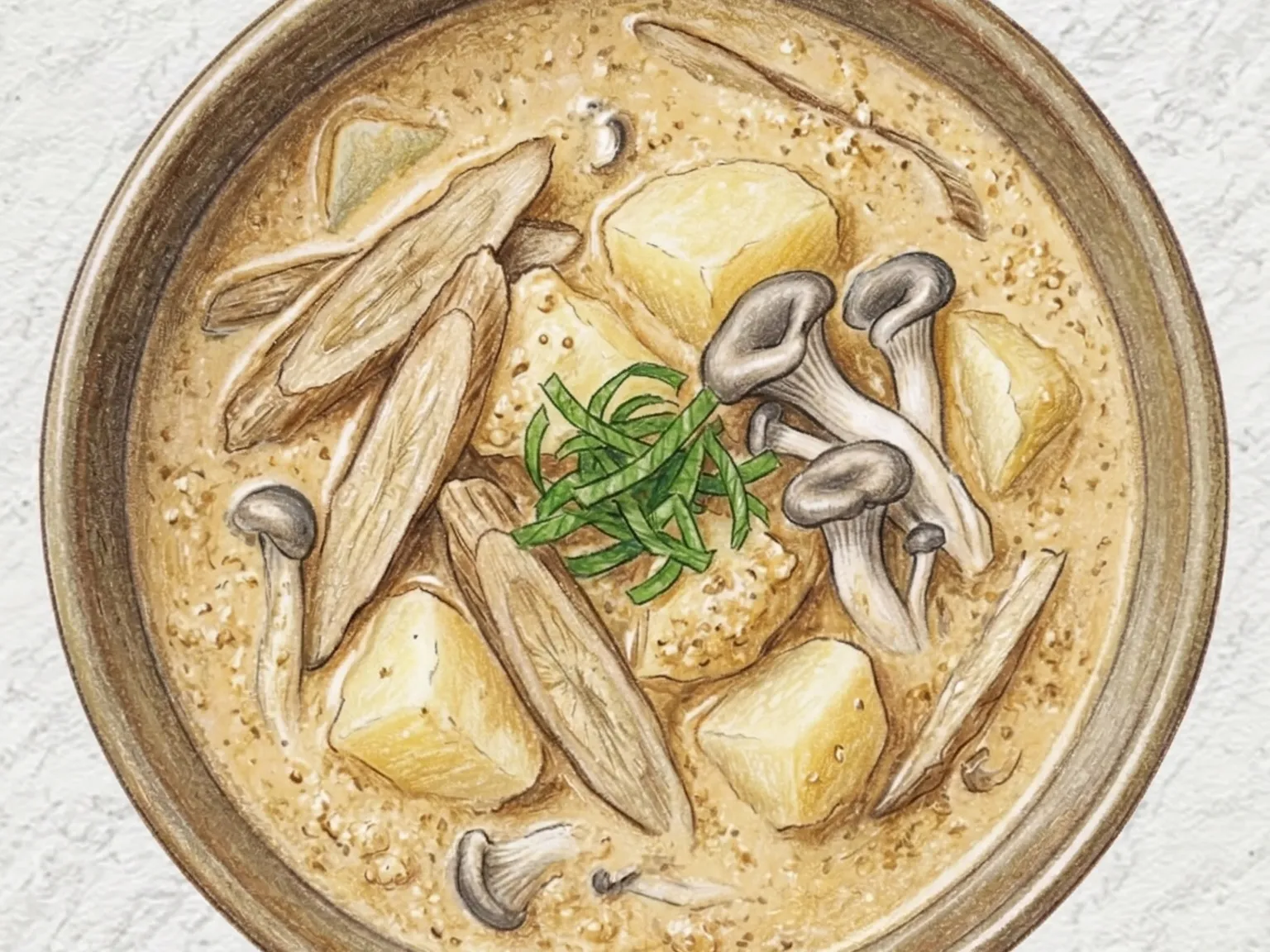
Ueong-deulkkae-jjigae is a Korean stew built on burdock root, potatoes, and oyster mushrooms simmered in an anchovy-kelp broth and thickened with perilla seed powder.

What makes this special

  • Ueong-deulkkae-jjigae presents firm, earthy burdock root slices and starchy potatoes in a velvety broth enriched with aromatic perilla seed powder at the very end.
  • Burdock cut 3mm-thick diagonally and soaked in vinegar water before 15 minutes simmering
  • Potatoes added only after burdock is half-cooked to preserve their floury texture
Total time
48 min
Level
Medium
Servings
4 servings
Ingredients
8
Calories
210 kcal
Protein
6 g

Key ingredients

burdock rootpotatooyster mushroomsperilla seed powdersoup soy sauce

Core cooking flow

  1. 1 Slice 220 g burdock root on a diagonal, following the grain, about 0.5 cm thick.
  2. 2 Cut 220 g potato into large 2 cm pieces so the edges do not become too thin.
  3. 3 Put 950 ml anchovy-kelp broth and the burdock in a pot and bring it to a boil over high heat.

Ueong-deulkkae-jjigae is a Korean stew built on burdock root, potatoes, and oyster mushrooms simmered in an anchovy-kelp broth and thickened with perilla seed powder. The burdock root holds a firm, earthy crunch through the cooking while the potatoes soften and begin to break at the edges, and the oyster mushrooms add a pulling, fibrous chew that makes the stew feel substantial without any meat. Anchovy-kelp broth forms a clean, savory base, and a generous measure of perilla seed powder stirred in at the end creates a creamy, nutty consistency that coats every piece of vegetable and makes each spoonful feel round and warming. Soaking the burdock in cold water before cooking draws out bitterness and prevents the cut surfaces from darkening, which keeps the broth clear. Adding the potatoes after the burdock has partly cooked prevents them from collapsing entirely. Perilla seed powder should go in just before the heat is turned off so the toasted, nutty fragrance stays sharp rather than cooking away.

Prep 18min Cook 30min 4 servings

Instructions

Read the steps as a cooking flow: prep, heat, seasoning, doneness control, and finish.

6 steps
  1. 1
    Prep

    Slice 220 g burdock root on a diagonal, following the grain, about 0.5 cm thick.

    Soak it in 500 ml water mixed with 1 tablespoon vinegar for 5 minutes, then rinse and drain well.

  2. 2
    Heat

    Cut 220 g potato into large 2 cm pieces so the edges do not become too thin.

    Tear 120 g oyster mushrooms by hand along the fibers, keeping the pieces similar in thickness for even cooking.

  3. 3
    Control

    Put 950 ml anchovy-kelp broth and the burdock in a pot and bring it to a boil over high heat.

    Once bubbling, lower to medium heat and cook for about 7 minutes to start softening the burdock.

  4. 4
    Control

    Add the potato and continue simmering over medium heat for about 8 minutes.

    The base is ready when the potato edges begin to loosen slightly and the burdock is partly tender but still firm.

  5. 5
    Control

    Add the oyster mushrooms, 1 tablespoon minced garlic, and 1.5 tablespoons soup soy sauce.

    Simmer over medium-low heat for about 7 minutes, until the mushrooms shrink slightly and season the broth.

  6. 6
    Control

    Loosen 4 tablespoons perilla seed powder with a little hot broth, then stir it into the pot over low heat so it does not clump.

    Add 1 sliced green onion, cook 1 minute, and turn off the heat.

After the steps

Pick a recipe that fits this dish.

Continue with shared ingredients, meal pairings, or a similar method.

Recipes That Go Well With This

More Stews →

Based on shared ingredients and meal pairing

Korean Perilla Radish Greens Shrimp Stew
Shared ingredient: ground perilla seed Stews

Korean Perilla Radish Greens Shrimp Stew

Deulkkae mucheong saeu jjigae is a hearty stew made with radish greens, medium shrimp, and four tablespoons of perilla seed powder stirred into an anchovy-kelp stock base. Radish greens rather than dried sigeumchi give the stew a tender but substantive chew, and they absorb the savory broth well during cooking. Doenjang and soup soy sauce season the stock without overpowering the perilla, which contributes a deep, earthy nuttiness that defines the broth's character. As the shrimp cook, they release a clean briny sweetness that adds another layer of savory depth. Blanching and rinsing the radish greens before adding them removes any bitter edge and keeps the broth clear. The result is a sturdy, old-fashioned home-style stew with a well-rounded, deeply satisfying flavor.

Siraegi Guk (Korean Perilla Radish Greens Soup)
Shared ingredient: ground perilla seed Soups

Siraegi Guk (Korean Perilla Radish Greens Soup)

Deulkkae siraegi guk is a rich, nutty Korean soup made by simmering dried radish greens that have been pre-seasoned with doenjang and soup soy sauce in an anchovy broth for at least twenty minutes. Siraegi, which refers to radish leaves that have been dried and then rehydrated before cooking, carries a concentrated earthiness and a fibrous, chewy texture that fresh greens cannot replicate. Massaging the greens with doenjang and garlic before they go into the pot allows the fermented seasoning to penetrate into the fibers over the extended cooking time rather than merely coating the surface. The anchovy broth beneath provides a clean, saline umami that supports the deeper, fermented notes of the doenjang without competing. Perilla powder added in two separate additions dissolves evenly through the broth without clumping, turning the liquid an opaque, milky white and thickening it to a consistency that clings to each spoonful and gives the soup its characteristic weight. Green onion added during the final three minutes of cooking contributes a fresh, sharp aroma that sits lightly on top of the perilla fragrance, completing the layered, hearty character of the soup.

Korean Ginger Pumpkin Porridge
Serve together Rice

Korean Ginger Pumpkin Porridge

Kabocha pumpkin is steamed for 15 minutes and pureed until velvety, then thickened with sweet rice flour dissolved in cold water to prevent lumps. A teaspoon of fresh ginger juice adds a warm, peppery undercurrent beneath the pumpkin's natural sweetness, sharpening the finish without overpowering the squash. The porridge is stirred continuously over medium-low heat as the rice flour gradually builds body, and pine nuts scattered on top contribute an oily, resinous richness that complements the sweetness. This recipe yields four servings, making it well suited for sharing.

Korean Lotus Root Perilla Seed Stew
Similar recipe Stews

Korean Lotus Root Perilla Seed Stew

Lotus root and oyster mushrooms are simmered in a thick perilla seed broth made with vegetable stock. The lotus root maintains its signature crisp, starchy bite, contrasting with the soft tofu and springy mushrooms. Four tablespoons of perilla seed powder create a naturally creamy, nutty broth, finished with a touch of sesame oil. Built entirely on vegetable stock without any meat or fish, this is a plant-based stew with substantial body and flavor.

Serve with this

Korean Soy-Marinated Soybean Leaves
Side dishes Medium

Korean Soy-Marinated Soybean Leaves

Kongnip-jangajji is soybean leaves preserved in a seasoned soy brine - one of the two major leaf jangajji traditions alongside perilla leaf (kkaennip) jangajji. Soybean leaves are larger and thicker than perilla leaves, taking longer to absorb the pickling liquid but offering a more substantial chew, with each leaf large enough to wrap around a spoonful of rice. The brine - soy sauce, water, vinegar, and sugar boiled together - must cool completely before pouring over the leaves; hot liquid softens them into a limp state, destroying the desired texture. Garlic cloves, cheongyang chili, and onion slices added to the jar infuse the brine with aromatic complexity during the curing process, producing a more layered flavor than plain soy. A minimum of two days of refrigerated aging is needed for the seasoning to reach the leaf interior, and flipping the layers once daily ensures even penetration. The most common way to eat it is draped over hot steamed rice, ssam-style.

🏠 Everyday 🍱 Lunchbox
Prep 15min Cook 10min 4 servings
Korean Crown Daisy Kimchi
Kimchi Easy

Korean Crown Daisy Kimchi

Ssukgat kimchi is a fragrant seasonal kimchi that highlights crown daisy's herbal bitterness alongside chili flakes and sand lance fish sauce. The greens are salted for only seven minutes to preserve their delicate, tender texture, then dressed with a paste enriched by sweet rice flour for better adhesion. Plum extract balances the bitterness with gentle sweetness and acidity during fermentation. After two hours at room temperature followed by overnight refrigeration, the kimchi reaches its aromatic peak within a single day. Because the leaves bruise easily, gentle tossing during seasoning is essential to maintain their shape.

🍱 Lunchbox 🏠 Everyday
Prep 20min Cook 5min 2 servings
Korean Dried Radish Greens Pancake
Pancakes Easy

Korean Dried Radish Greens Pancake

Boiled dried radish greens are combined with doenjang and pan-fried into a dense, rustic jeon with deep fermented character. The fibrous texture of the radish greens gives the pancake a satisfying chew, and the soybean paste saturates the batter so thoroughly that no dipping sauce is necessary. Buckwheat flour adds an earthy coarseness that suits the greens well. Cheongyang chili provides a spicy accent throughout. Minced garlic benefits from a brief saute in oil before being mixed into the batter-the raw edge cooks off and the garlic's savory depth integrates fully into the finished pancake. Cooking over low heat lets the inside set without burning the outside, producing a crisp surface and a tender, flavorful center.

🍺 Bar Snacks ⚡ Quick
Prep 18min Cook 10min 2 servings

Similar recipes

Korean Dried Radish Greens Perilla Stew
Stews Medium

Korean Dried Radish Greens Perilla Stew

This stew simmers rehydrated dried radish greens in rice-rinse water thickened with a generous four tablespoons of perilla seed powder. A small amount of doenjang and gochujang provides savory depth, and using rice-rinse water instead of plain water adds a natural starchiness that helps the perilla powder integrate into the broth more smoothly. The perilla powder creates a creamy, nutty soup with a pale beige hue, and the chewy, fibrous texture of the radish greens contrasts with the richness of the liquid. The radish greens need to be fully rehydrated and pre-boiled so they absorb the broth evenly during cooking rather than remaining tough. Onion and green onion add layers of sweetness and fragrance, and seasoning gradually while the stew cooks produces a more balanced result than adding everything upfront. Served bubbling in an earthenware pot on cold days, this is one of the most comforting staples in Korean winter home cooking.

🏠 Everyday
Prep 25min Cook 30min 4 servings
Korean Sigeumchi Dubu Jjigae (Spinach Tofu Stew)
Stews Easy

Korean Sigeumchi Dubu Jjigae (Spinach Tofu Stew)

Sigeumchi-dubu-jjigae is a Korean stew built from fresh spinach and soft tofu simmered in anchovy-kelp stock, seasoned with soup soy sauce and perilla oil. The process starts by warming perilla oil in the pot and softening minced garlic until its sharpness mellows into a rounded fragrance that transfers into the oil, giving the broth a subtle depth that would be absent if the garlic were added raw. Zucchini and onion release their natural sweetness as they cook, rounding out the broth and preventing it from tasting flat or austere. Soft tofu, added mid-way, absorbs the seasoned liquid gradually as it heats through, holding its shape while taking on the flavor of the broth around it. Spinach goes in last, only long enough to wilt, because extended cooking destroys the color and reduces the leaves to a limp, dull mass that works against the dish. The iron-forward earthiness of spinach pairs naturally with the mild creaminess of tofu and the nutty undercurrent of perilla oil, producing a stew that reads as simple but carries enough layered flavor to satisfy. This is a standard of Korean home cooking that earns its place at the table for being genuinely easy on the stomach, particularly welcome when appetite is low or the body calls for something clean.

🥗 Light & Healthy 🏠 Everyday
Prep 12min Cook 18min 2 servings
Korean Perilla Radish Soup
Soups Easy

Korean Perilla Radish Soup

Deulkkae mu-guk is a Korean radish and perilla seed soup that belongs firmly to the cool-weather calendar. Sliced daikon simmers in anchovy stock for ten minutes first, releasing its clean sweetness into the broth before anything else goes in. Perilla seed powder, stirred in toward the end, thickens the liquid noticeably - its heavier, earthier fat behaves differently from sesame and coats the palate in a way plain radish broth cannot. Garlic simmers alongside the radish to build the underlying savory base. The powder must go in just before the heat is cut; leave it in too long and the toasted fragrance dissolves into the broth and disappears.

🏠 Everyday 🥗 Light & Healthy
Prep 10min Cook 20min 4 servings

Tips

Add perilla powder near the end for cleaner nutty flavor.
Keep burdock at least 3 mm thick so it retains texture.

Nutrition (per serving)

Calories
210
kcal
Protein
6
g
Carbs
27
g
Fat
10
g