Korean Braised Burdock and Konjac

Korean Braised Burdock and Konjac

Quick answer

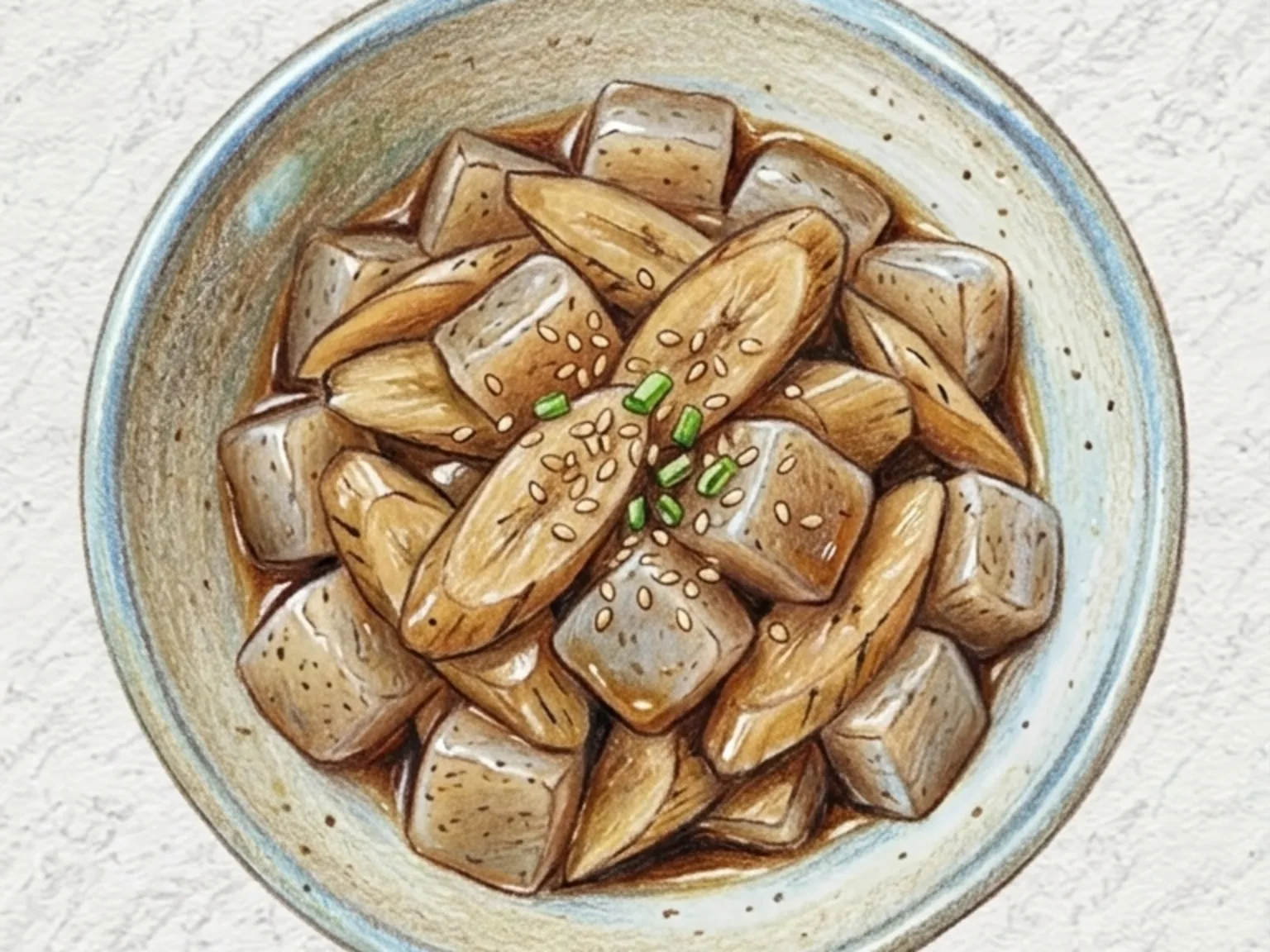
Ueong gonyak jorim is a low-calorie Korean braised side dish of diagonally sliced burdock root and bite-size konjac in soy sauce with oligosaccharide syrup.

What makes this special

  • Ueong gonyak jorim creates a light, chewy side dish by braising earthy burdock and odor-free, toasted konjac in soy sauce.
  • Dry-pan toasting konjac before braising removes its distinctive odor
  • Oligosaccharide added when broth halves creates a natural glossy coat
Total time
40 min
Level
Easy
Servings
2 servings
Ingredients
8
Calories
185 kcal
Protein
4 g

Key ingredients

burdock rootkonjacsoy saucecooking wineoligosaccharide syrup

Core cooking flow

  1. 1 Slice 200 g burdock root thinly on a bias and soak it in vinegar water for 5 minutes.
  2. 2 Cut 180 g konjac into bite-size pieces and blanch it in boiling water for 2 minutes.
  3. 3 Put the burdock and konjac in the pan with 2.5 tablespoons soy sauce, 1 tabl...

Ueong gonyak jorim is a low-calorie Korean braised side dish of diagonally sliced burdock root and bite-size konjac in soy sauce with oligosaccharide syrup. The burdock is soaked in vinegar water to remove astringency, and the konjac is blanched then dry-toasted briefly to minimize its neutral odor. Adding the syrup once the liquid has reduced by half creates a gentle gloss and softens the salt. Sesame oil and sesame seeds finish the dish with a toasted note. Despite using just a handful of inexpensive ingredients, the contrasting textures of crunchy burdock and bouncy konjac make this banchan more interesting than the short ingredient list suggests.

Prep 15min Cook 25min 2 servings

Instructions

Read the steps as a cooking flow: prep, heat, seasoning, doneness control, and finish.

6 steps
  1. 1
    Prep

    Slice 200 g burdock root thinly on a bias and soak it in vinegar water for 5 minutes.

    Rinse well and drain thoroughly so the braising liquid does not become diluted.

  2. 2
    Control

    Cut 180 g konjac into bite-size pieces and blanch it in boiling water for 2 minutes.

    Drain, then dry-toast it in a clean pan over medium heat for 1 minute to reduce its odor.

  3. 3
    Control

    Put the burdock and konjac in the pan with 2.5 tablespoons soy sauce, 1 tablespoon cooking wine, 1 teaspoon minced garlic, and 150 ml water. Bring it to a steady simmer over medium heat.

  4. 4
    Control

    Once it starts bubbling, lower the heat to medium-low and turn the pieces occasionally.

    Simmer until the burdock edges darken with seasoning and the liquid has reduced by about half.

  5. 5
    Prep

    Add 1.5 tablespoons oligosaccharide syrup and mix to coat evenly, then braise for 8 more minutes.

    Do not raise the heat too high, and stop when the pieces look glossy.

  6. 6
    Season

    Turn off the heat and mix in 1 teaspoon sesame oil and 1 teaspoon sesame seeds.

    Let it sit for about 2 minutes so the seasoning settles, then check the saltiness before serving.

After the steps

Pick a recipe that fits this dish.

Continue with shared ingredients, meal pairings, or a similar method.

Recipes That Go Well With This

More Steamed →

Based on shared ingredients and meal pairing

Korean Braised Burdock Root
Shared ingredient: burdock root Side dishes

Korean Braised Burdock Root

Julienned burdock root is simmered in soy sauce, sugar, and corn syrup with enough water to submerge the strips, then reduced slowly until the liquid thickens into a concentrated glaze. Unlike stir-fried burdock, this braised version cooks under a lid at moderate heat, giving the tough fibers time to soften while retaining a pleasantly chewy core. Soy sauce penetrates deep into the root during the extended simmer, establishing a salty foundation that the corn syrup then balances with a mellow sweetness. As the braising liquid reduces, the sugars begin to caramelize, darkening the color and adding a layer of complexity to burdock's naturally earthy, woody flavor. The dish is done when nearly all the liquid has evaporated and each strip glistens with a thick, lacquered coating. Vinegar added at the start prevents the burdock from discoloring and contributes a faint tartness that keeps the sweetness in check. Stored in a sealed container, the jorim remains good in the refrigerator for close to ten days.

Korean Garlic Scape Anchovy Braise
Shared ingredient: toasted sesame seeds Steamed

Korean Garlic Scape Anchovy Braise

Maneuljjong-myeolchi-jorim is a Korean pantry side dish of garlic scapes and small dried anchovies glazed in soy sauce, oligosaccharide syrup, and sesame oil. The anchovies are coated evenly as the seasoning heats around them, building a sweet-salty shell that deepens into nuttiness with each bite. Garlic scapes are cut into short pieces and stir-fried directly in the sauce without blanching, which keeps them snappy rather than soft. Oligosaccharide syrup holds its shine and moisture longer than plain sugar, and sesame oil is added only at the very end to preserve its aroma. The finished dish keeps for well over a week under refrigeration, making it a reliable weekly batch cook. It travels well in lunchboxes, and spooned over hot white rice the glaze soaks into the grains and brings the whole bowl together.

Korean Seasoned Radish Greens
Serve together Side dishes

Korean Seasoned Radish Greens

Mucheong-namul is a Korean banchan made from the leafy stems attached to daikon radish, blanched and dressed with doenjang and perilla oil. Unlike fully dried siraegi, fresh or semi-dried mucheong retains a grassy vitality that carries through to the finished dish. Radish greens emerge as a byproduct of the autumn kimjang harvest, when whole radishes are pulled from the ground, and rural Korean kitchens have long turned these tops into namul or hung them to dry for winter. Fresh mucheong requires at least five minutes of boiling to break down its tough stem fibers so they soften properly. A thorough rinse in cold water follows, washing away the bitter, astringent edge that develops during cooking. Seasoning with doenjang and soup soy sauce layers the fermented paste's earthy depth over the greens' faintly bitter, grassy character, creating a contrast that makes each bite more interesting than either ingredient alone. Perilla oil is preferred over sesame because its lighter, quieter fragrance complements the greens' natural flavor rather than overpowering it. Stirring in ground perilla seeds at the end thickens the dressing and wraps each strand of mucheong in a nutty coating, producing a noticeably deeper-flavored version than mucheong-namul made without them. A hearty, clean-tasting winter banchan tied to the rhythm of the radish harvest.

Korean Braised Burdock and Beef
Similar recipe Stir-fry

Korean Braised Burdock and Beef

Ueong-soegogi-jorim is a Korean braised side dish of julienned burdock root and beef simmered in soy sauce, sugar, cooking wine, and garlic until the liquid nearly evaporates. The burdock is soaked in vinegar water beforehand to prevent browning, then cooked with beef and water before the braising seasonings are added. As the dish reduces, the burdock absorbs the soy sauce and develops its characteristic earthy sweetness, while thin beef strips distribute meaty flavor throughout. Finished with sesame oil and stored well under refrigeration, it serves as a make-ahead banchan that lasts several days.

Serve with this

Korean Seasoned Tofu Pouch Sushi (Yubu Chobap)
Rice Easy

Korean Seasoned Tofu Pouch Sushi (Yubu Chobap)

Yubu chobap consists of seasoned tofu pouches filled with sushi rice. The preparation begins by mixing rice vinegar, sugar, and salt into hot rice, using a cutting motion to preserve the grains. Sesame oil and toasted sesame seeds are added for aroma, along with finely diced carrot and cucumber to bring color and a crisp texture. The tofu pouches are lightly pressed and filled to about 80 percent of their capacity, preventing the skin from tearing during shaping. With each bite, the pouch releases a sweet and savory sauce absorbed by the tofu, which goes well with the seasoned rice. Since they are convenient to carry and eat by hand, they are popular for lunchboxes, quick snacks, and picnics.

🍱 Lunchbox 🏠 Everyday
Prep 20min Cook 15min 4 servings
Korean Soy Pickled Onions
Kimchi Easy

Korean Soy Pickled Onions

Yangpa jangajji is a soy-pickled onion made by immersing large-cut onion chunks in a boiled brine of soy sauce, vinegar, and sugar. The hot brine tempers the raw onion's sharp, pungent bite on contact, and as the pickle matures in the refrigerator the sweet-salty seasoning penetrates evenly through each piece. Cutting the onion along its fiber rather than against it keeps the texture firm and crisp after pickling, whereas thin cross-cut slices tend to soften quickly in the acidic brine. Sliced cheongyang chili peppers added to the jar gradually release their heat into the liquid, lending a gentle, lingering spiciness that offsets the sweetness and keeps the flavors from becoming one-dimensional. The pickle is ready after one day of refrigeration but improves noticeably at three days or more as the seasoning continues to deepen. It is a staple accompaniment to grilled meats like samgyeopsal, where its acidity and crunch cut through richness and refresh the palate between bites. It also works well over bibimbap or cold noodles. The brine can be brought back to a boil and reused for a second batch of onions, making this an economical pantry item.

🏠 Everyday 🍱 Lunchbox
Prep 15min Cook 12min 4 servings
Korean Shepherd's Purse Beef Soup
Soups Easy

Korean Shepherd's Purse Beef Soup

Naengi-soegogi-guk brings together sesame-oil-seared beef and shepherd's purse in a clear, deeply flavored broth. Thinly sliced brisket is stir-fried in sesame oil first, building a savory, aromatic base before water and a small amount of doenjang are added. The soup simmers until the beef releases its full flavor into the broth, then soup soy sauce and garlic round out the seasoning. Shepherd's purse goes in near the end and cooks for just five minutes so its characteristic earthy bitterness and wild green scent stay vivid rather than cooking out. The result is a bowl that feels both substantial and distinctly seasonal, with rich beef broth anchoring the delicate, slightly bitter quality of the spring herb. Adding the herb too early dulls its aroma, so timing is the most critical step in the preparation.

🏠 Everyday 🥗 Light & Healthy
Prep 18min Cook 25min 4 servings

Similar recipes

Korean Soy-Braised Baby Potatoes
Steamed Easy

Korean Soy-Braised Baby Potatoes

Algamja ganjang-jorim is a Korean banchan of baby potatoes braised in a soy-sugar glaze, a dish so simple in its ingredients - soy sauce, sugar, corn syrup, garlic, and a handful of small potatoes - that it has persisted in home cooking across generations. The potatoes are parboiled whole first to partially cook the starchy exterior, then transferred into the seasoning liquid and simmered over low heat as the sauce reduces. As the liquid evaporates, a dark amber lacquer forms around each potato while the interior stays dense and floury. Keeping the lid off and gently shaking the pan rather than stirring with a utensil allows the coating to build evenly without breaking the potatoes apart. Sesame oil and sesame seeds go in at the end when the sauce has thickened to a glaze, adding a roasted fragrance to the finish. Refrigerating overnight deepens the penetration of the soy seasoning into the center, and the dish keeps for close to a week - practical enough to make in a single batch for the whole week.

🏠 Everyday 🎉 Special Occasion
Prep 15min Cook 30min 4 servings
Korean Soy-Braised Deodeok Root
Steamed Medium

Korean Soy-Braised Deodeok Root

Deodeok-jorim is a Korean braised banchan made from deodeok root simmered in soy sauce, rice syrup, garlic, and sesame oil until each piece takes on a glossy, lacquered coating. The root's pronounced bitter-herbal aroma softens considerably as the sweet-salty glaze penetrates during cooking, while the interior stays dense and pleasantly chewy throughout. A single green chili stirred in near the end contributes a restrained background heat, and toasted sesame seeds with a final drizzle of sesame oil add a nutty dimension on top. Deodeok is a foraged mountain root prized for its earthy, slightly resinous character, and this preparation tames that wild quality just enough to make it approachable as a daily side dish. Paired with other vegetable banchan, it anchors the kind of traditional Korean table that prioritizes vegetables over protein.

🏠 Everyday 🍱 Lunchbox
Prep 20min Cook 18min 2 servings
Korean Braised Quail Eggs and Shishito Peppers
Steamed Easy

Korean Braised Quail Eggs and Shishito Peppers

Kkwari-mechurial-jorim is a Korean banchan of boiled quail eggs and shishito peppers braised in soy sauce and oligosaccharide syrup until the glaze turns deeply glossy. The quail eggs absorb the soy-based liquid over the heat, gradually browning on the outside while the seasoning penetrates all the way to the yolk, giving every bite a uniform, savory depth. The peppers hold onto their crunch and mild grassy flavor even after cooking, providing a textural and aromatic contrast to the dense richness of the eggs. Oligosaccharide syrup keeps the glaze shiny and adds a gentle, rounded sweetness that does not overwhelm the soy, and sesame oil stirred in at the end along with whole sesame seeds finishes the dish with a clean, nutty aroma. The braising liquid should be cooked down until almost completely reduced -- that is when the glaze adheres firmly to each piece and stays shiny even as the dish cools. Piercing each shishito with a toothpick before cooking lets the seasoning penetrate the interior and prevents the peppers from bursting. Refrigerated, the flavors deepen overnight and the dish stays good for three to four days, which makes it a practical choice for weekly meal prep and packed lunches alike.

🏠 Everyday 🎉 Special Occasion
Prep 12min Cook 20min 4 servings

Tips

Thin burdock slices absorb seasoning better and cook faster.
Dry-toasting blanched konjac for 1 minute helps remove its odor.

Nutrition (per serving)

Calories
185
kcal
Protein
4
g
Carbs
31
g
Fat
5
g