Korean Braised Beef and Burdock Steam
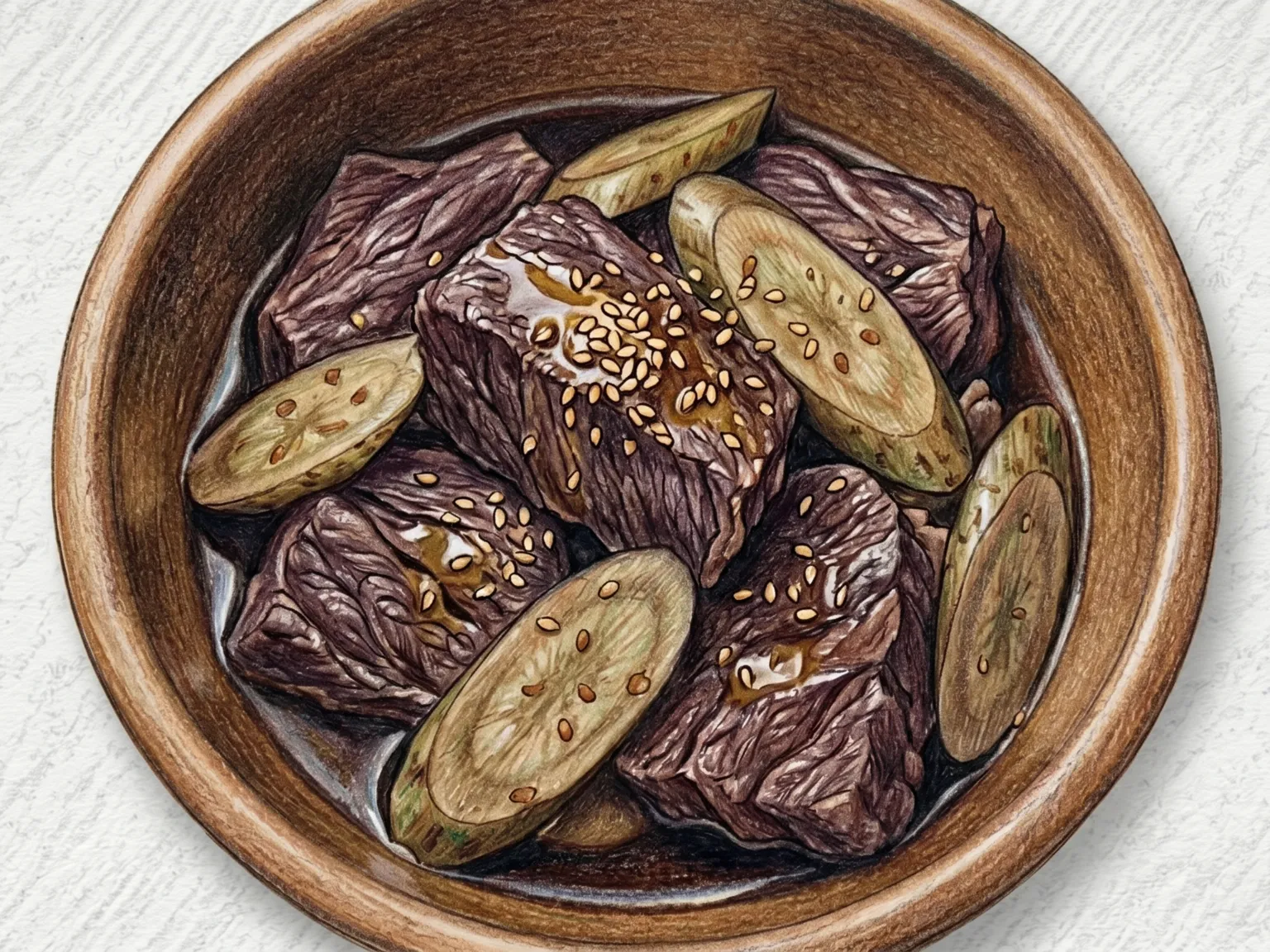
Ueong sogogi jjim is a Korean braised-steamed dish of beef shank and burdock root in a soy-based sauce with garlic and sugar. The shank is boiled first and skimmed to yield a clean broth, which then becomes the braising base after soy sauce and seasonings are added. After twenty minutes of simmering, burdock slices go in and the pot is covered for another fifteen minutes of gentle steaming, allowing the root vegetable to absorb the beef-enriched liquid. Slicing the burdock about 0.5 cm thick keeps its texture while ensuring it cooks through in time. Sesame oil and seeds finish the dish, and the result balances the heavy richness of slow-cooked beef against the fragrant, earthy character of burdock.
Adjust Servings
Instructions
- 1
Cut beef shank into chunks and soak in cold water for 20 minutes to remove blood.
- 2
Slice burdock diagonally and soak briefly in water to prevent discoloration.
- 3
Add beef, water, and onion to a pot; skim foam once it boils.
- 4
Add soy sauce, garlic, and sugar, then simmer for 20 minutes over medium-low heat.
- 5
Add burdock, cover, and steam-braise for another 15 minutes.
- 6
When sauce reduces by half, finish with sesame oil and sesame seeds.
As an Amazon Associate, we may earn from qualifying purchases.
Tips
Nutrition (per serving)
More Recipes

Korean Braised Burdock and Beef
Ueong-soegogi-jorim is a Korean braised side dish of julienned burdock root and beef simmered in soy sauce, sugar, cooking wine, and garlic until the liquid nearly evaporates. The burdock is soaked in vinegar water beforehand to prevent browning, then cooked with beef and water before the braising seasonings are added. As the dish reduces, the burdock absorbs the soy sauce and develops its characteristic earthy sweetness, while thin beef strips distribute meaty flavor throughout. Finished with sesame oil and stored well under refrigeration, it serves as a make-ahead banchan that lasts several days.

Korean Steamed Beef with Radish Greens
Mucheong sogogi jjim is a Korean braised beef dish where short rib meat is marinated in Korean pear juice and soy sauce, then slow-cooked with blanched radish greens and onion. The pear juice tenderizes the beef and lends a subtle fruit sweetness that deepens over the long braise. Radish greens are added near the end to preserve their earthy aroma and slight chew, bringing a rustic contrast to the soft meat. Ginger juice keeps the flavor clean, and sesame oil ties everything together with a toasted finish. The sauce reduces to a concentrated glaze meant to be spooned over rice.

Korean Braised Beef Trotter
Ujok-jjim is Korean braised beef trotter simmered for over two hours with soy sauce, garlic, ginger, and green onion until the collagen-rich joints turn soft and gelatinous. The long, low braise dissolves the connective tissue into the cooking liquid, making it so concentrated that it sets into a firm jelly when cooled. Sugar and soy sauce create a sweet-savory seasoning that penetrates deep into the layered skin and tendons. Traditionally regarded as a nourishing food for joint health, this is a slow-cooked comfort dish especially popular among older generations in Korea.

Korean Braised Beef Shank
Satae jjim is a Korean braised beef shank dish that requires soaking the meat in cold water to draw out blood, then simmering it with aromatics for over two hours. The extended cook breaks down the shank's tough connective tissue until the beef can be pulled apart along its grain, yielding a satisfying, fork-tender texture. Soy sauce and sugar establish a deeply savory-sweet base, and radish added midway through absorbs the concentrated broth while contributing its own refreshing sweetness as a counterpoint. Chilling the finished braise overnight and reheating it the next day lets the seasoning permeate the meat even further.

Korean Braised Burdock and Konjac
Ueong gonyak jorim is a low-calorie Korean braised side dish of diagonally sliced burdock root and bite-size konjac in soy sauce with oligosaccharide syrup. The burdock is soaked in vinegar water to remove astringency, and the konjac is blanched then dry-toasted briefly to minimize its neutral odor. Adding the syrup once the liquid has reduced by half creates a gentle gloss and softens the salt. Sesame oil and sesame seeds finish the dish with a toasted note. Despite using just a handful of inexpensive ingredients, the contrasting textures of crunchy burdock and bouncy konjac make this banchan more interesting than the short ingredient list suggests.

Korean Braised Burdock Root
Julienned burdock root is simmered in soy sauce, sugar, and corn syrup with enough water to submerge the strips, then reduced slowly until the liquid thickens into a concentrated glaze. Unlike stir-fried burdock, this braised version cooks under a lid at moderate heat, giving the tough fibers time to soften while retaining a pleasantly chewy core. Soy sauce penetrates deep into the root during the extended simmer, establishing a salty foundation that the corn syrup then balances with a mellow sweetness. As the braising liquid reduces, the sugars begin to caramelize, darkening the color and adding a layer of complexity to burdock's naturally earthy, woody flavor. The dish is done when nearly all the liquid has evaporated and each strip glistens with a thick, lacquered coating. Vinegar added at the start prevents the burdock from discoloring and contributes a faint tartness that keeps the sweetness in check. Stored in a sealed container, the jorim remains good in the refrigerator for close to ten days.