Korean Napa Outer Leaf Soybean Soup
Soups Easy

Korean Napa Outer Leaf Soybean Soup

Quick answer

Ugeoji doenjang-guk is a deeply comforting soybean paste soup made with the tough outer leaves of napa cabbage that might otherwise be discarded.

What makes this special

  • Napa cabbage outer leaves massaged with doenjang create a deep, fermented broth in ugeoji.
  • Pre-mixing napa leaves with doenjang lets fermented umami seep between each leaf
  • Rice-washing water base adds mild starch that softens doenjang's saltiness
Total time
40 min
Level
Easy
Servings
4 servings
Ingredients
8
Calories
112 kcal
Protein
6 g

Key ingredients

blanched napa outer leavesdoenjang soybean pasterice-rinse waterminced garlicgreen onion

Core cooking flow

  1. 1 Squeeze the blanched napa outer leaves lightly so they stay moist but not dripping.
  2. 2 Pour 1300 ml rice-rinse water into a pot and rub the remaining 1.5 tbsp doenjang through a strainer.
  3. 3 When the broth boils, loosen the seasoned ugeoji with your fingers or tongs and add it to the pot.

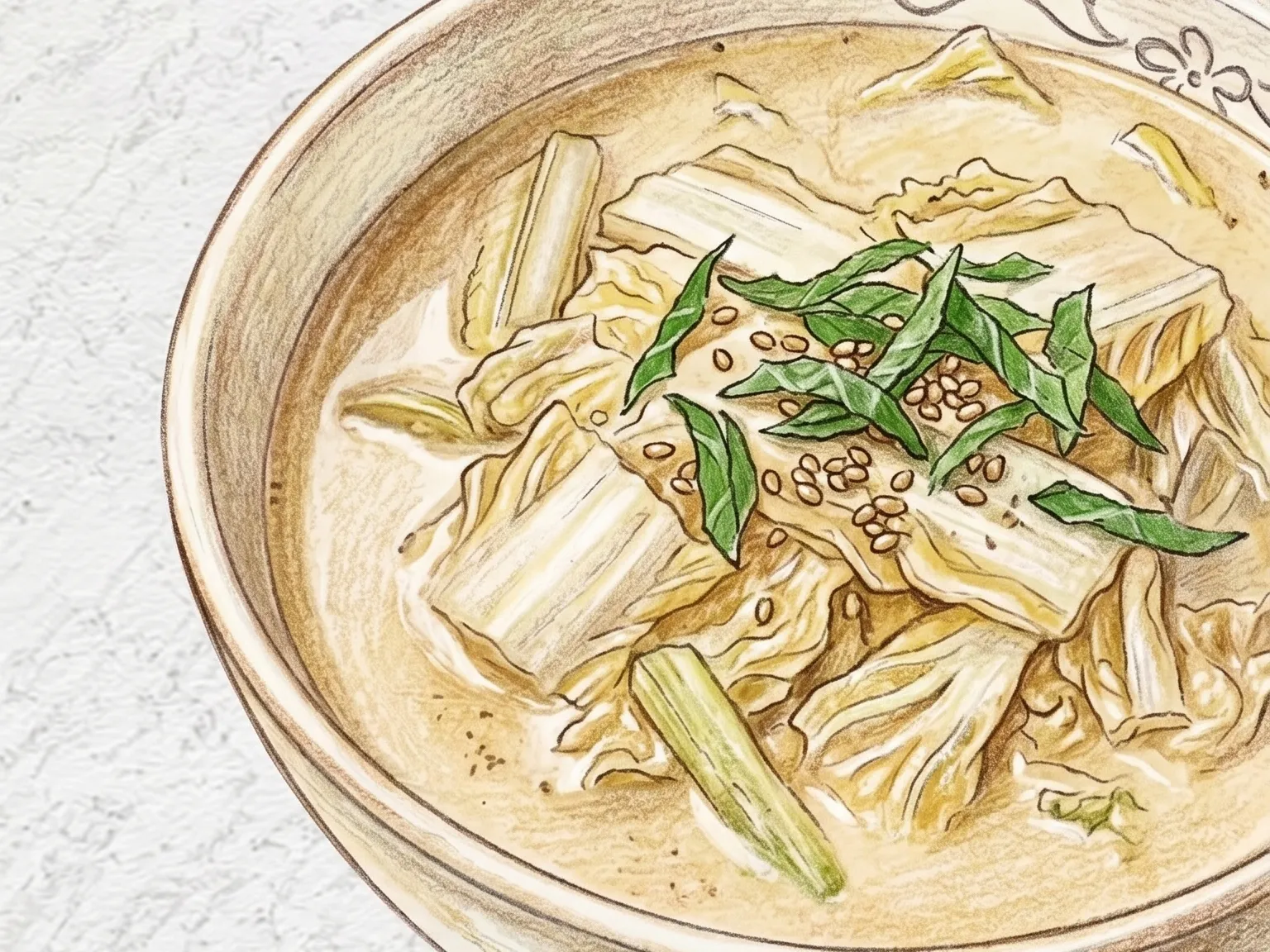
Ugeoji doenjang-guk is a deeply comforting soybean paste soup made with the tough outer leaves of napa cabbage that might otherwise be discarded. The leaves are first massaged with doenjang, perilla oil, and garlic, a step that drives the fermented paste deep into the cabbage's thick veins so that when the soup simmers, the flavor releases gradually into the broth. Rice-rinsing water replaces plain stock as the cooking liquid, adding a gentle starchiness that rounds the doenjang's salt into something softer and more enveloping. As the ugeoji cooks down, it turns from a leathery sheet into a silky, almost melting tangle that drapes over the spoon and floods the mouth with concentrated vegetable-and-miso flavor. The broth itself becomes a murky, golden-brown pool of umami, tasting of earth, fermentation, and the quiet bitterness that only well-cooked greens provide. Cubed tofu gives textural relief, and thin rings of cheongyang chili pepper, if added, introduce a sharp heat that cuts the richness. It is a soup that transforms humble ingredients into something far greater than their parts.

Prep 15min Cook 25min 4 servings

Instructions

Read the steps as a cooking flow: prep, heat, seasoning, doneness control, and finish.

6 steps
  1. 1
    Prep

    Squeeze the blanched napa outer leaves lightly so they stay moist but not dripping.

    Cut tough stems into bite-size lengths, then massage in 1 tbsp doenjang and 1 tsp perilla oil until the paste reaches between the leaves.

  2. 2
    Control

    Pour 1300 ml rice-rinse water into a pot and rub the remaining 1.5 tbsp doenjang through a strainer.

    Set over high heat and stir as it warms so no dense paste clumps sink and scorch.

  3. 3
    Control

    When the broth boils, loosen the seasoned ugeoji with your fingers or tongs and add it to the pot.

    Keep high heat until it returns to a boil, then skim foam from the surface for a cleaner taste.

  4. 4
    Control

    Lower to medium heat and simmer for 15 minutes, pressing the greens down so they stay under the broth.

    The leaves should darken, and the stems should feel soft enough to press with a spoon.

  5. 5
    Control

    Add 1 tbsp minced garlic and 1 tbsp soup soy sauce, then simmer 5 more minutes.

    Taste the broth before adding anything extra, and adjust only with a small amount of soup soy sauce if it is flat.

  6. 6
    Finish

    Slice 40 g green onion and 1 Cheongyang chili into thin rounds, add them, and simmer only 2 minutes.

    When the sharp onion and chili aroma rises, turn off the heat and serve with plenty of greens and broth.

After the steps

Pick a recipe that fits this dish.

Continue with shared ingredients, meal pairings, or a similar method.

Recipes That Go Well With This

More Soups →

Based on shared ingredients and meal pairing

Korean Young Napa Soybean Paste Soup
Shared ingredient: rice-rinse water Soups

Korean Young Napa Soybean Paste Soup

Eolgari-doenjang-guk is a traditional Korean soup made with young napa cabbage and fermented soybean paste. The recipe uses rice-rinse water as the soup base instead of plain water, which helps reduce the sharpness of the soybean paste and adds a mild, rounded starchiness. Straining the doenjang through a sieve before boiling is recommended to ensure a smooth, lump-free broth. Once the soup comes to a boil, anchovy powder and minced garlic are stirred in to establish a rich umami depth. The young napa cabbage is added next and cooked briefly so the leaves retain their fresh flavor and crisp bite. In the final stage, sliced green onions and cheongyang chilies are added, simmering for just two minutes to infuse the broth with a clean, spicy finish. This comforting soup pairs naturally with a hot bowl of steamed rice.

Korean Ugeoji Doenjang Stew
Shared ingredient: boiled napa outer leaves Stews

Korean Ugeoji Doenjang Stew

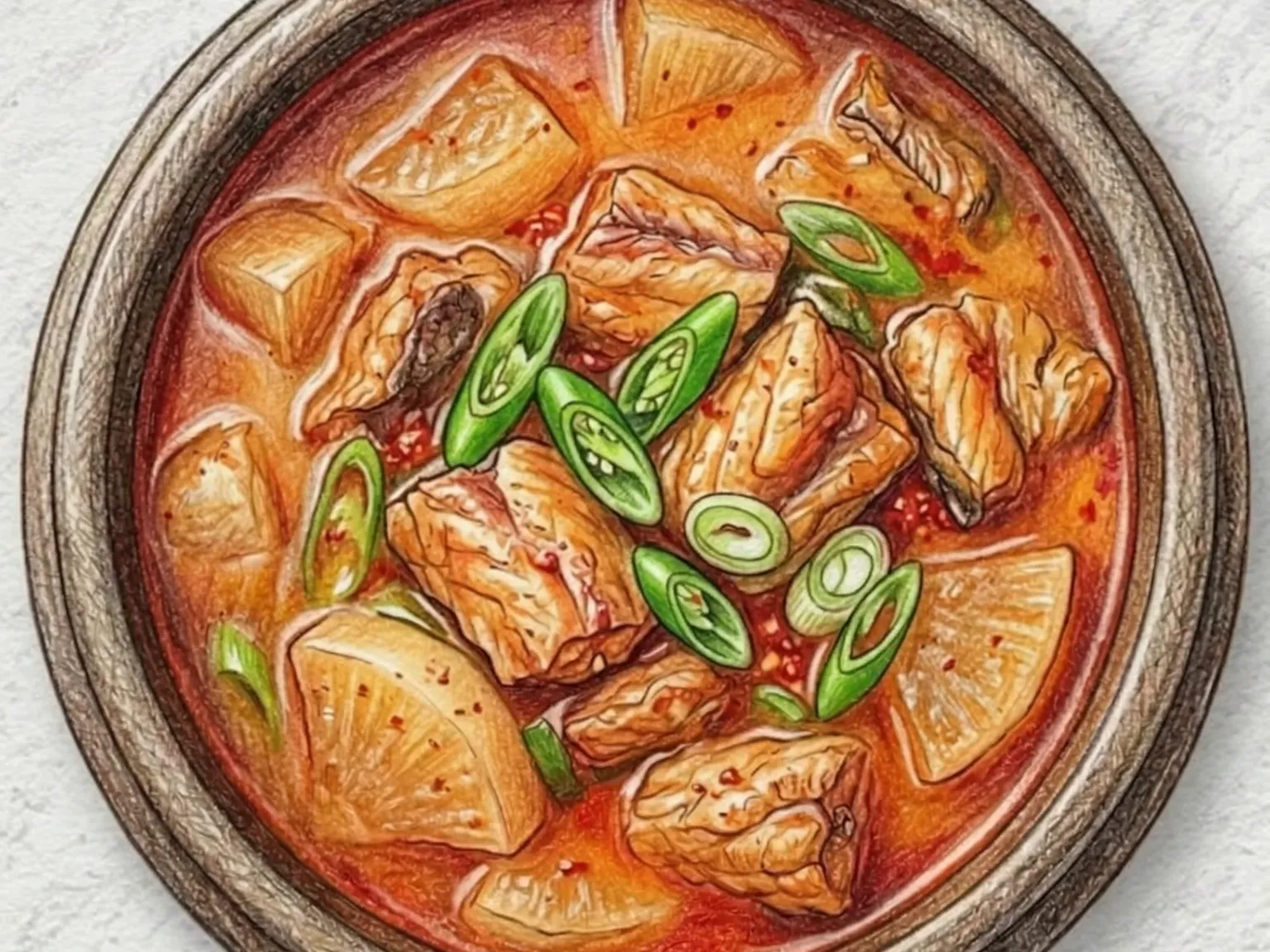
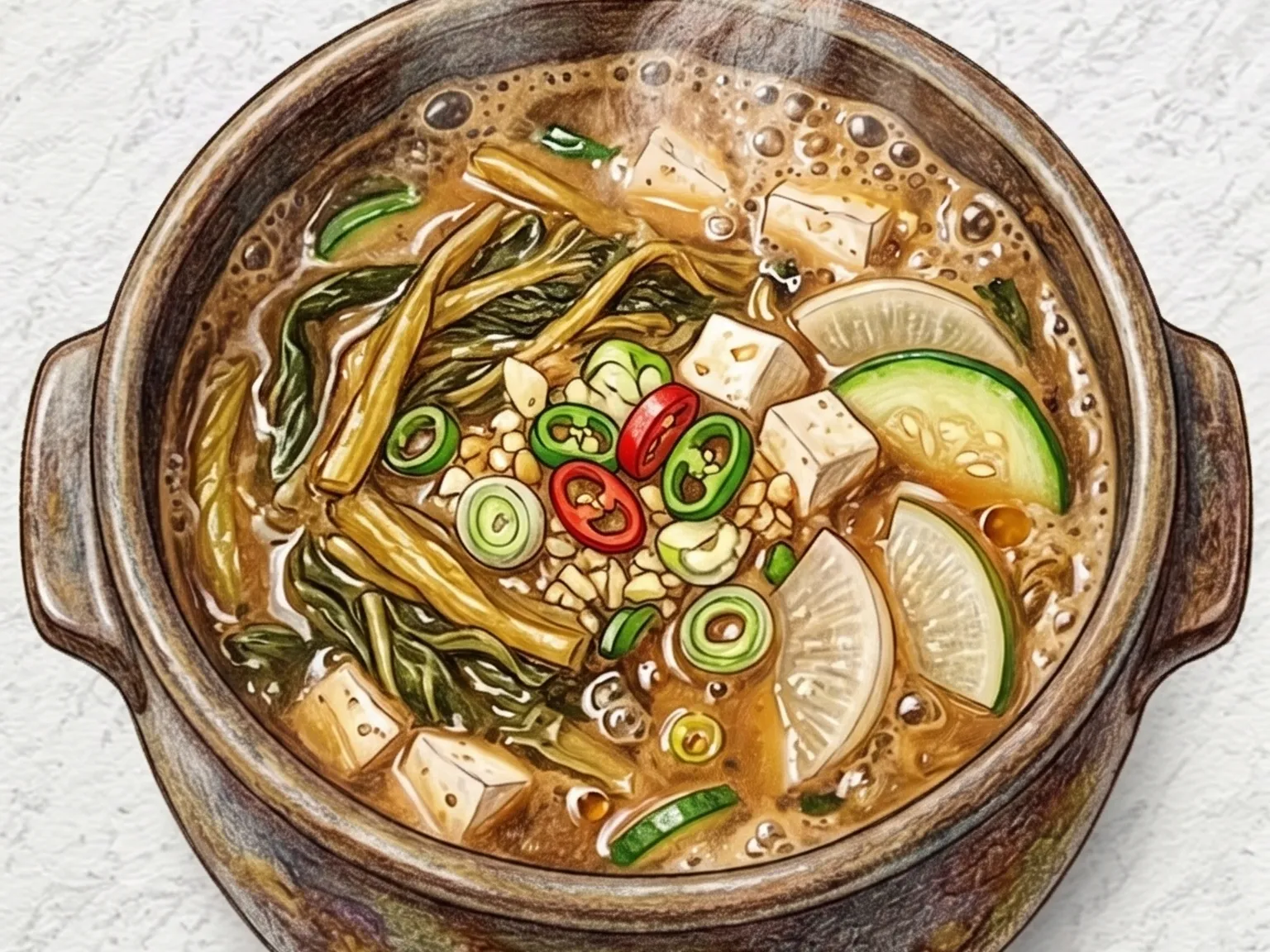
Ugeoji-doenjang-jjigae simmers the tough outer leaves of napa cabbage in rice-rinse water with doenjang and a spoonful of gochujang into a deeply savory, comforting stew. The outer leaves are blanched in salted water, rinsed in cold water, and squeezed out firmly before use, a step that removes bitterness and opens the fibrous leaves to absorb the seasoning. The starchy rice-rinse water gives the broth a naturally smooth and slightly thickened body without any added starch, and adjusting the amount of rice water controls the final consistency. Korean radish, zucchini, and tofu contribute natural sweetness that balances the saltiness of the fermented paste, while garlic and cheongyang green chili add heat and depth. A tablespoon of perilla oil added just before the pot comes off the heat releases a distinctive nutty fragrance that permeates the entire stew and deepens its character. Served in a dolsot earthenware pot that keeps the stew bubbling at the table, every spoonful stays hot to the last. The longer the ugeoji simmers, the more it softens and melds with the doenjang broth, producing the layered, slow-cooked depth that defines this classic Korean home-cooked stew.

Korean Bok Choy Crab Porridge
Serve together Rice

Korean Bok Choy Crab Porridge

Cheonggyeongchae gesal juk is a Korean porridge that begins by sauteing onion and ginger in sesame oil to build an aromatic base, then simmering soaked rice with crab meat until the grains soften into a smooth, flowing consistency. Bok choy goes in near the end to preserve its bright green color and gentle crunch. The crab brings a mild sweetness that spreads evenly through the porridge and adds a refined savoriness, while ginger keeps the flavor clean and free of any fishiness; sesame oil's fragrance lingers subtly throughout. Soaking the rice beforehand allows the grains to break down evenly within a shorter cook time, and stirring regularly prevents sticking at the bottom. Light on the stomach and gently warming, this porridge suits a morning meal, a day when the body needs something easy, or the shift between seasons.

Korean Soybean Paste Stew
Similar recipe Stews

Korean Soybean Paste Stew

Doenjang-jjigae is a standard Korean stew made by dissolving fermented soybean paste in water and simmering it with vegetables and tofu. To ensure a smooth broth without grits, the paste is strained through a fine sieve into the water. Harder vegetables like potatoes and onions are added first to soften and release their natural sweetness into the broth. Zucchini and minced garlic follow, balancing the soup's richness. In the final stage, tofu and chopped green chili are added, providing a clean kick that cuts through the deep, earthy taste of the fermented soybean paste. Simmering green onions at the very end adds a fresh aroma. The savory stew pairs naturally with steamed rice and various side dishes.

Serve with this

Korean Lotus Root Pancakes
Side dishes Medium

Korean Lotus Root Pancakes

Lotus root is sliced into rounds and coated in a light batter of buchim flour and egg before being pan-fried until golden on both sides. The root's characteristic perforations show through the thin batter, creating a lace-like appearance on each piece that makes this jeon visually distinctive. Biting through the crisp exterior reveals the lotus root's dual texture: an initial crunch from the starchy flesh followed by a slightly sticky chew that clings pleasantly to the teeth. Slicing to a thickness of five to six millimeters strikes the right balance between maintaining the crunch and ensuring the center cooks through. The egg-enriched batter adheres evenly to the root's smooth surface and sets immediately upon contact with hot oil, sealing in moisture. Minimal salt in the batter allows the lotus root's faint natural sweetness to emerge, and a dipping sauce of soy sauce and vinegar provides the acidity needed to cut through the fried exterior's richness. Commonly served during Korean holidays, this jeon is simple enough for everyday cooking as well.

🏠 Everyday 🍱 Lunchbox
Prep 15min Cook 12min 4 servings
Korean Bamboo Shoot Pickle
Kimchi Medium

Korean Bamboo Shoot Pickle

Juksun jangajji refers to a Korean side dish consisting of pickled bamboo shoots. The preparation begins by boiling the raw bamboo shoots in water, a necessary preliminary step that removes the naturally occurring astringency and the sharp, harsh qualities found in the fresh plant. Once the shoots are softened and neutralized, they are placed into a container and covered with a hot pickling liquid. This brine is a mixture of soy sauce, vinegar, and sugar, which is brought to a boil together with dried bay leaves and whole black peppercorns to provide a subtle aromatic complexity. Because bamboo possesses a particularly dense and tightly packed cellular structure, it does not absorb the flavors immediately. Instead, the shoots slowly take in the salty, sweet, and acidic properties of the brine over the course of at least twenty-four hours while resting in a refrigerator. This slow penetration allows the bamboo to retain its characteristic firm and crunchy texture even after it has been submerged in the liquid for several days. The inclusion of bay leaf and whole peppercorns introduces a quiet, layered spice profile that differentiates this version from simpler soy and vinegar preparations. It is important to perform the initial blanching, as skipping this step results in a persistent bitterness that the pickling brine is unable to mask. In terms of serving, the sharp acidity of these pickles functions effectively as a palate cleanser when eaten alongside fatty meats such as grilled pork belly or marinated galbi. The textured shoots can also be utilized as a crisp topping for rice bowls or integrated into sandwiches to add a structural element.

🏠 Everyday 🍱 Lunchbox
Prep 25min Cook 20min 4 servings
Korean Dried Radish Greens Pancake
Pancakes Easy

Korean Dried Radish Greens Pancake

Boiled dried radish greens are combined with doenjang and pan-fried into a dense, rustic jeon with deep fermented character. The fibrous texture of the radish greens gives the pancake a satisfying chew, and the soybean paste saturates the batter so thoroughly that no dipping sauce is necessary. Buckwheat flour adds an earthy coarseness that suits the greens well. Cheongyang chili provides a spicy accent throughout. Minced garlic benefits from a brief saute in oil before being mixed into the batter-the raw edge cooks off and the garlic's savory depth integrates fully into the finished pancake. Cooking over low heat lets the inside set without burning the outside, producing a crisp surface and a tender, flavorful center.

🍺 Bar Snacks ⚡ Quick
Prep 18min Cook 10min 2 servings

Similar recipes

Korean Spring Cabbage Soybean Paste Soup
Soups Easy

Korean Spring Cabbage Soybean Paste Soup

Bomdong doenjang-guk is a seasonal Korean home soup made by simmering spring cabbage and doenjang in rice-rinsing water, which adds a subtle starchy body to the broth and softens the saltiness of the paste. The thicker cabbage stems go in first to soften properly while retaining some bite, and the tender leaves are added at the end to hold their natural sweetness and color. Tofu, a pinch of red chili flakes, and green onion round out the bowl with depth and mild heat. A drop of sesame oil just before serving adds a nutty finishing aroma. Spring cabbage has a high water content and turns mushy quickly, so the leaves should be added less than two minutes before turning off the heat.

🏠 Everyday 🥗 Light & Healthy
Prep 15min Cook 20min 4 servings
Korean Spinach Soybean Paste Soup
Soups Easy

Korean Spinach Soybean Paste Soup

Sigeumchi-doenjang-guk is a foundational Korean soup that combines spinach with soybean paste in anchovy-kelp stock, producing a broth that is earthy, warm, and deeply familiar to anyone who grew up eating Korean home cooking. Doenjang is dissolved into the simmering stock first, establishing a savory, slightly funky baseline. Spinach is added near the end and wilts within seconds, contributing a soft green color and a faint bitterness that, rather than clashing with the fermented paste, amplifies its complexity. Tofu is a common addition that gives the soup more substance and a creamy counterpoint to the leafy greens. Garlic and green onion handle the aromatics, and no chili is used, keeping the soup on the gentle end of the Korean flavor spectrum. The key technical point is timing: spinach left in boiling liquid too long turns dull and mushy, so experienced cooks drop it in and turn off the heat almost immediately. This soup is one of the most frequently prepared versions of doenjang-guk in Korean kitchens precisely because spinach is available year-round, affordable, and cooks in moments. It pairs seamlessly with any banchan spread and never competes for attention on the table.

🏠 Everyday 🥗 Light & Healthy
Prep 10min Cook 15min 2 servings
Korean Wild Chive Soybean Paste Soup
Soups Easy

Korean Wild Chive Soybean Paste Soup

Dallae doenjang-guk is a springtime Korean soybean paste soup that showcases wild chives, a seasonal ingredient valued for its sharp, garlicky bite and short availability window. The anchovy-kelp stock is first simmered with potato and onion to build body and sweetness, then doenjang is dissolved in and tofu added for a soft, tender contrast against the broth. Wild chives go in only during the final minute of cooking, because their pungent aroma dissipates rapidly under sustained heat; cooking them too long makes them indistinguishable from ordinary green onion in both flavor and appearance. The bulb end of each chive stalk carries a stronger bite than the leaves, so mincing the bulbs finely distributes their flavor more evenly through the broth. A half teaspoon of gochugaru tints the soup a faint red that visually matches the chive's natural heat. Because dallae is in season for only a brief window, setting a few raw stalks aside to place at the table as a garnish amplifies the fresh spring character of the dish.

🏠 Everyday 🥗 Light & Healthy
Prep 12min Cook 15min 2 servings

Tips

Straining doenjang gives a cleaner broth.
Pre-seasoning ugeoji builds deeper savory flavor.

Nutrition (per serving)

Calories
112
kcal
Protein
6
g
Carbs
10
g
Fat
6
g