Korean Napa Leaf Hangover Soup
Soups Medium

Korean Napa Leaf Hangover Soup

Quick answer

Ugeoji haejang-guk is Korea's answer to the morning after - a hangover soup built on a foundation of long-simmered beef brisket broth with napa cabbage outer leaves and s...

What makes this special

  • Pre-marinating napa leaves pulls doenjang umami directly into the soup.
  • Brisket broth simmered 35 minutes layered with doenjang-marinated napa leaves
  • Bean sprouts cut through the heavy beef broth with a refreshing note
Total time
75 min
Level
Medium
Servings
4 servings
Ingredients
9
Calories
295 kcal
Protein
24 g

Key ingredients

boiled napa outer leavesbeef brisketsoybean sproutsgreen onionsoybean paste

Core cooking flow

  1. 1 Place 250 g beef brisket in 1.7 L cold water and bring it to a boil over medium heat.
  2. 2 Remove the cooked brisket and let it cool briefly so it shreds cleanly.
  3. 3 Squeeze 350 g boiled napa outer leaves firmly so the soup does not turn watery.

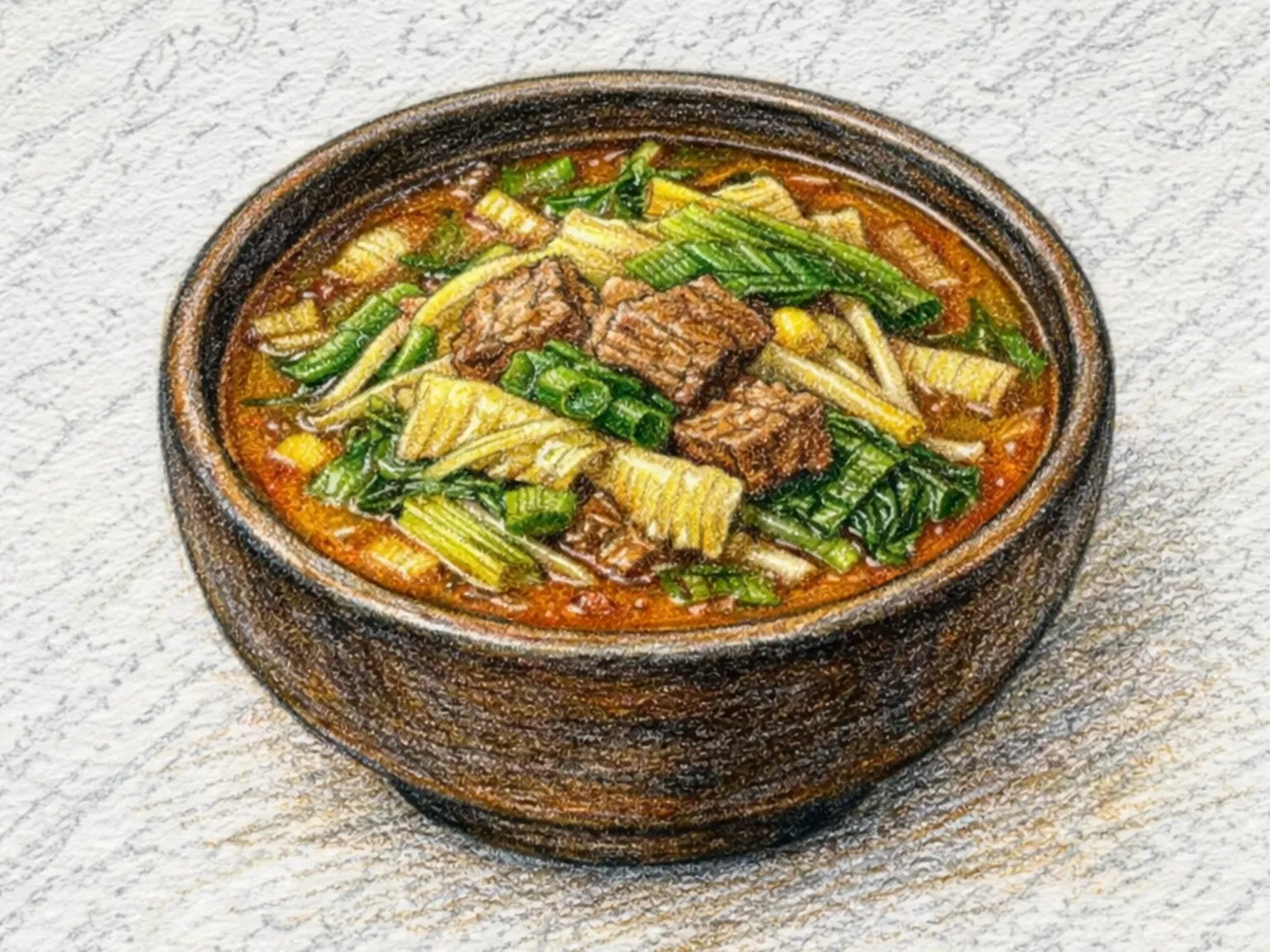
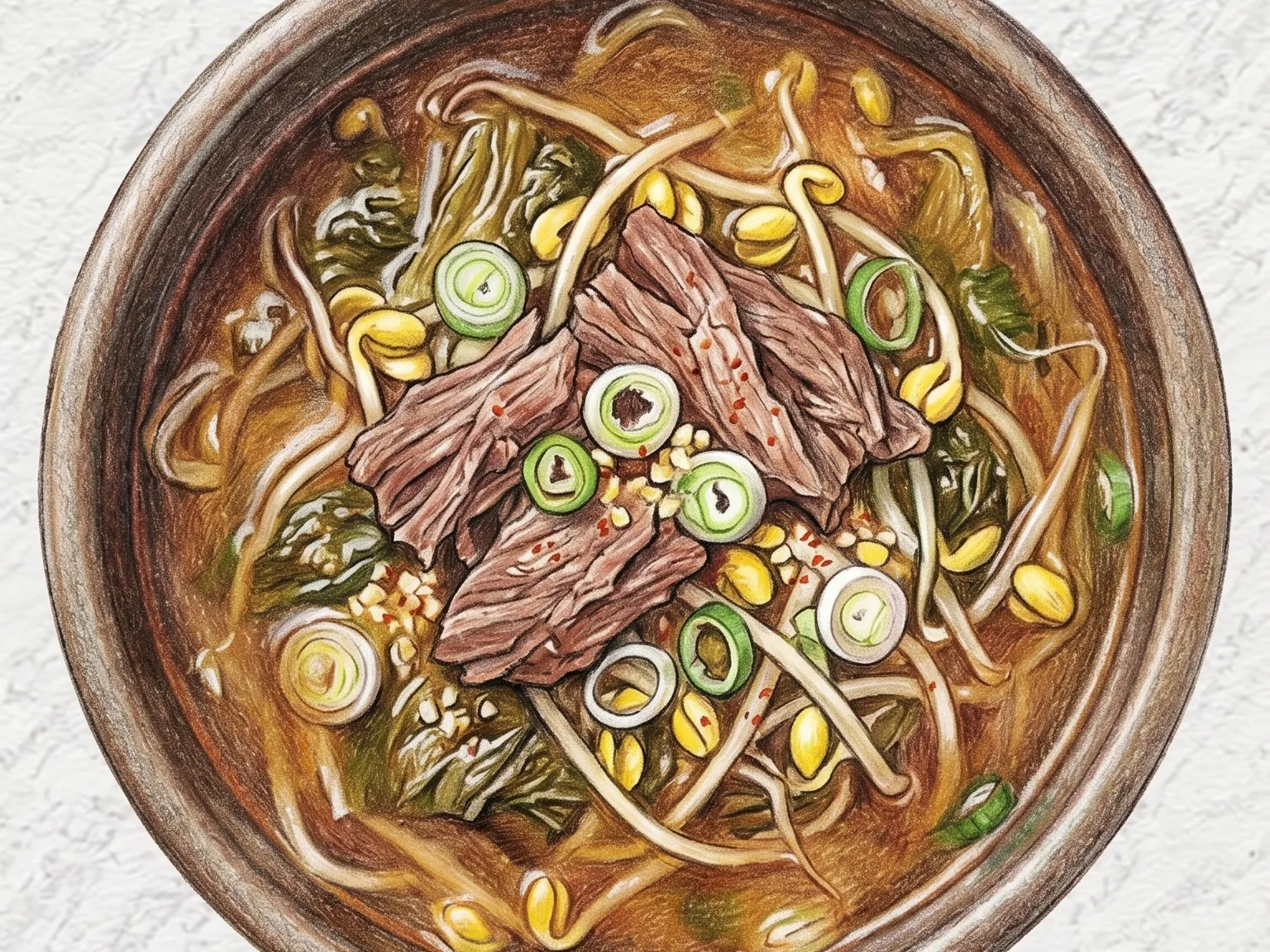
Ugeoji haejang-guk is Korea's answer to the morning after - a hangover soup built on a foundation of long-simmered beef brisket broth with napa cabbage outer leaves and soybean sprouts. The brisket provides a clean, meaty depth to the broth, while the ugeoji, pre-seasoned with doenjang, breaks down during the simmer and infuses the liquid with a savory, fermented richness. Soybean sprouts, added later so they keep their crunch, contribute a refreshing brightness that lightens what would otherwise be a heavy bowl. The seasoning balances doenjang and a touch of gochugaru, producing a broth that is spicy enough to wake the palate but not so aggressive that a sensitive stomach rebels. Minced garlic and sliced scallion layer in additional aromatics. Shredded brisket arranged on top provides protein and substance, making each bowl a complete meal. The combination of warm broth, fermented depth, and crunchy sprouts works on the body like a reset, which is exactly why haejang-guk shops across Korea fill up every morning with bleary-eyed customers seeking exactly this bowl.

Prep 25min Cook 50min 4 servings

Instructions

Read the steps as a cooking flow: prep, heat, seasoning, doneness control, and finish.

6 steps
  1. 1
    Control

    Place 250 g beef brisket in 1.7 L cold water and bring it to a boil over medium heat.

    Once it boils, skim off foam and cook for 35 minutes until the broth smells clean and meaty.

  2. 2
    Heat

    Remove the cooked brisket and let it cool briefly so it shreds cleanly.

    Tear it along the grain, then top up the cooking liquid with water so the broth measures 1.7 L again.

  3. 3
    Season

    Squeeze 350 g boiled napa outer leaves firmly so the soup does not turn watery.

    Rub in half the soybean paste and half the minced garlic, working the seasoning between the leaves.

  4. 4
    Control

    Bring the topped-up broth back to a steady boil, then add the seasoned leaves and shredded brisket.

    Simmer over medium heat for 10 minutes, letting the leaves soften and season the broth.

  5. 5
    Control

    Add 180 g soybean sprouts, the remaining soybean paste, Korean chili flakes, and soup soy sauce.

    Simmer for only 12 minutes so the sprouts cook through but still keep a crisp bite.

  6. 6
    Finish

    Add 90 g sliced green onion and simmer 2 minutes more, just until its aroma rises.

    Taste the broth, adjust only as needed with the existing seasoning, and serve while very hot.

After the steps

Pick a recipe that fits this dish.

Continue with shared ingredients, meal pairings, or a similar method.

Recipes That Go Well With This

More Soups →

Based on shared ingredients and meal pairing

Korean Beef Cabbage Leaf Stew
Shared ingredient: boiled napa outer leaves Stews

Korean Beef Cabbage Leaf Stew

This comforting Korean stew features tender beef brisket and blanched napa cabbage outer leaves simmered in doenjang stock. Thinly sliced brisket is first seared in perilla oil, then stir-fried with doenjang and gochugaru for a minute to bloom the aromas. Water and the cabbage leaves are added, and the pot is simmered over medium-low heat for twenty-five minutes. This slow cooking allows the rich meat broth to permeate the fibrous leaves, making them tender. The perilla oil adds a nutty finish that balances the salty notes of the fermented soybean paste. Slicing the beef against the grain ensures the meat remains soft and easy to chew. Blanching the greens beforehand reduces grassy flavors and yields a cleaner soup. The stew is seasoned with soup soy sauce and finished with sliced green onions before being served hot.

Korean Beef Cabbage Leaf Soup
Shared ingredient: boiled napa outer leaves Soups

Korean Beef Cabbage Leaf Soup

Ugeoji soegogi-guk is a spicy, savory Korean beef soup that draws its character from pre-seasoned napa cabbage outer leaves and a brisket-based broth. The ugeoji is rubbed with doenjang and gochugaru before it enters the pot, so when it meets the simmering beef stock, it releases both fermented soybean depth and a steady chili warmth that stains the broth a ruddy brown. The brisket, simmered until the fibers separate easily, is shredded and returned to the pot, adding lean, clean beef flavor throughout. As the ugeoji softens over extended cooking, it absorbs the surrounding liquid like a sponge, so each bite delivers a concentrated burst of the combined seasoning. Daikon radish, if included, tempers the heat with its natural sweetness, while generous amounts of sliced scallion perfume the entire bowl. The overall effect is a soup that is warming and substantial without being aggressive - the spice level is calibrated to soothe rather than overwhelm, which makes it a go-to choice on cold days when the body needs both heat and substance.

Korean Mushroom Perilla Seed Risotto
Serve together Rice

Korean Mushroom Perilla Seed Risotto

King oyster and button mushrooms are sauteed with onion and garlic, then Arborio rice is slowly cooked in warm vegetable stock, one ladle at a time, until the grains release their starch into a creamy consistency. Perilla seed powder and grated Parmesan are folded in at the very end, merging Italian creaminess with the distinctive roasted-nut flavor of Korean perilla. The key is keeping the stock warm throughout so the rice cooks evenly without seizing, and adding perilla powder last to preserve its volatile aroma. Even without meat, the mushrooms provide substantial umami depth and the perilla adds a rich, nutty finish.

Korean Ugeoji Doenjang Stew
Similar recipe Stews

Korean Ugeoji Doenjang Stew

Ugeoji-doenjang-jjigae simmers the tough outer leaves of napa cabbage in rice-rinse water with doenjang and a spoonful of gochujang into a deeply savory, comforting stew. The outer leaves are blanched in salted water, rinsed in cold water, and squeezed out firmly before use, a step that removes bitterness and opens the fibrous leaves to absorb the seasoning. The starchy rice-rinse water gives the broth a naturally smooth and slightly thickened body without any added starch, and adjusting the amount of rice water controls the final consistency. Korean radish, zucchini, and tofu contribute natural sweetness that balances the saltiness of the fermented paste, while garlic and cheongyang green chili add heat and depth. A tablespoon of perilla oil added just before the pot comes off the heat releases a distinctive nutty fragrance that permeates the entire stew and deepens its character. Served in a dolsot earthenware pot that keeps the stew bubbling at the table, every spoonful stays hot to the last. The longer the ugeoji simmers, the more it softens and melds with the doenjang broth, producing the layered, slow-cooked depth that defines this classic Korean home-cooked stew.

Serve with this

Korean Seasoned Fatsia Shoots
Side dishes Easy

Korean Seasoned Fatsia Shoots

Dureup, the young shoots of aralia elata, emerge for barely three weeks each April from thorny stalks, ranking among the most prized of Korea's spring mountain vegetables. Each shoot carries a distinctive piney, slightly resinous fragrance that cannot be found in any other Korean namul. Blanching the shoots in salted water for exactly 40 seconds softens the fibrous base of the stalk while preserving the volatile aromatic oils concentrated at the leaf tips. The traditional dressing is cho-gochujang, a vinegared chili paste whose acidity and sweetness provide a flavor framework without overwhelming the shoots' natural bitterness. In Korean folk medicine, dureup has long been associated with blood sugar regulation, which contributes to the premium it commands at spring markets. The fragrance fades rapidly after harvest, so the shoots are best eaten the same day they are picked, and even refrigerated storage should not extend beyond one day.

🏠 Everyday 🍱 Lunchbox
Prep 10min Cook 3min 4 servings
Korean Perilla Leaf Kimchi
Kimchi Easy

Korean Perilla Leaf Kimchi

Preparing kkaennip kimchi involves layering a seasoning mixture of soy sauce, Korean red chili flakes, minced garlic, and toasted sesame oil between individual perilla leaves. Unlike traditional cabbage kimchi, this version functions as an instant pickle that requires no fermentation period, making it ready to serve as soon as the assembly is finished. The sharp, herbal aroma of the raw perilla leaf softens when integrated with the toasted richness of sesame oil, while the chili flakes provide a controlled level of heat that complements rather than masks the natural characteristics of the leaves. Soy sauce establishes a savory and salty foundation, which is further elevated by the addition of finely chopped scallions. For a different visual result, using soup soy sauce produces a lighter color that allows the dark green hue of the perilla leaves to remain prominent. Small amounts of anchovy fish sauce can also be added to the marinade to introduce a complex layer of saltiness similar to fermented kimchi. This side dish maintains its quality well in the refrigerator throughout the week. While the seasonings are distinct and bright on the first day, the flavors fully penetrate the leaves after two or three days, resulting in a more integrated profile. The seasoned leaves are commonly draped over warm steamed rice or used as an aromatic alternative to lettuce when wrapping grilled meats. Because it requires few ingredients and minimal preparation time, it is a practical choice for home cooking.

🍱 Lunchbox 🏠 Everyday
Prep 25min Cook 5min 4 servings
Korean Chive Clam Jeon (Garlic Chive and Clam Seafood Pancake)
Pancakes Medium

Korean Chive Clam Jeon (Garlic Chive and Clam Seafood Pancake)

Buchu-bajirak-jeon is a seafood pancake of garlic chives and clam meat, pan-fried in a batter made with a mix of all-purpose pancake flour and rice flour. The rice flour addition increases the chew and gives the finished jeon a slightly more resilient texture than plain flour batters. Clam meat releases a briny, oceanic liquid as it cooks that seeps into the batter and flavors it throughout, while the chives add a sharp, grassy counterpoint. Minced garlic and diagonally sliced cheongyang chili worked into the batter suppress any fishiness and build a layered fragrance. A generous amount of oil in the pan over medium heat produces edges that crisp and brown like the outside of a fritter. Waiting until the bottom is fully set before flipping prevents the pancake from tearing. Served with soy dipping sauce or a seasoned soy mixture, the clean salinity of the clams comes through clearly.

🍺 Bar Snacks 🏠 Everyday
Prep 25min Cook 15min 4 servings

Similar recipes

Korean Beef Napa Cabbage Soup
Soups Easy

Korean Beef Napa Cabbage Soup

Soegogi baechu-guk begins with beef brisket seared in sesame oil until the edges brown and the pan fills with a toasty fragrance. Napa cabbage goes in next, wilting quickly against the hot fat before water or light stock is poured in to build the broth. As the soup simmers, the thick cabbage stems release a quiet sweetness that tempers the beef's richness, while the thinner leaf sections soften into something almost silky. A thin film of sesame-scented oil floats on the surface, delivering an aromatic note with every spoonful. Seasoned with soup soy sauce rather than salt, the broth stays clear with a light amber tint and tastes more of umami than sodium. Sliced scallion scattered on top just before serving adds a sharp, green brightness that cuts through the mellow base. The soup requires no elaborate stock preparation and comes together in under forty minutes, making it one of the most practical weeknight soups in the Korean home-cooking repertoire.

🏠 Everyday 🥗 Light & Healthy
Prep 15min Cook 25min 4 servings
Haejangguk (Korean Pork Bone Hangover Soup)
Soups Medium

Haejangguk (Korean Pork Bone Hangover Soup)

Haejangguk is Korea's iconic hangover soup, a thick and fiery bowl built to restore the body after a long night of drinking. The base is a pork spine broth simmered for several hours until it turns milky, opaque, and deeply savory, carrying a weight that sits in the stomach rather than passing through it. Outer napa cabbage leaves called ugeoji are seasoned with doenjang and garlic before being added to the broth, contributing fibrous, chewy texture alongside the soup's fermented depth. Congealed blood, known as seonji, is a traditional inclusion cut into thick blocks: iron-dense and high in protein, it provides serious nutritional restoration and a visually striking dark contrast in the stone pot. Gochugaru delivers heat strong enough to draw sweat to the forehead, and Koreans have long held that this intensity helps flush toxins from the body and clear the mind after a night of drinking. The finished soup arrives still bubbling in its dolsot, and the first few spoonfuls tend to produce an involuntary exhale of relief. Dedicated haejangguk restaurants open before dawn to serve construction workers and late-night revelers, and the dish has occupied a fixed position in Korean culinary and drinking culture for centuries.

🏠 Everyday 🥗 Light & Healthy
Prep 20min Cook 120min 4 servings
Korean Pork Bone Hangover Soup
Soups Hard

Korean Pork Bone Hangover Soup

Ppyeo-haejang-guk is a Korean hangover soup built on a foundation of pork neck bones simmered for well over an hour until their collagen dissolves into a heavy, full-bodied stock. The bones are soaked and blanched beforehand to eliminate any off-flavors, and the resulting broth is clean despite its richness. Blanched napa cabbage outer leaves are pre-seasoned with doenjang, gochugaru, garlic, and soup soy sauce before being added to the pot, where they absorb the meaty broth and release their own earthy flavors in return. Perilla seed powder is stirred in at the end, thickening the liquid to a creamy consistency and adding a nutty finish. The completed soup is spicy, deeply savory, and thick enough to feel restorative after a long night. In Korea, this style of haejang-guk is a morning-after institution, served steaming in dedicated restaurants that open before dawn.

🏠 Everyday 🎉 Special Occasion
Prep 30min Cook 120min 4 servings

Tips

Pre-seasoning the leaves helps deepen the savory flavor in the broth.
Do not overcook sprouts; they turn tough if simmered too long.

Nutrition (per serving)

Calories
295
kcal
Protein
24
g
Carbs
12
g
Fat
16
g