Korean Beef Cabbage Leaf Stew
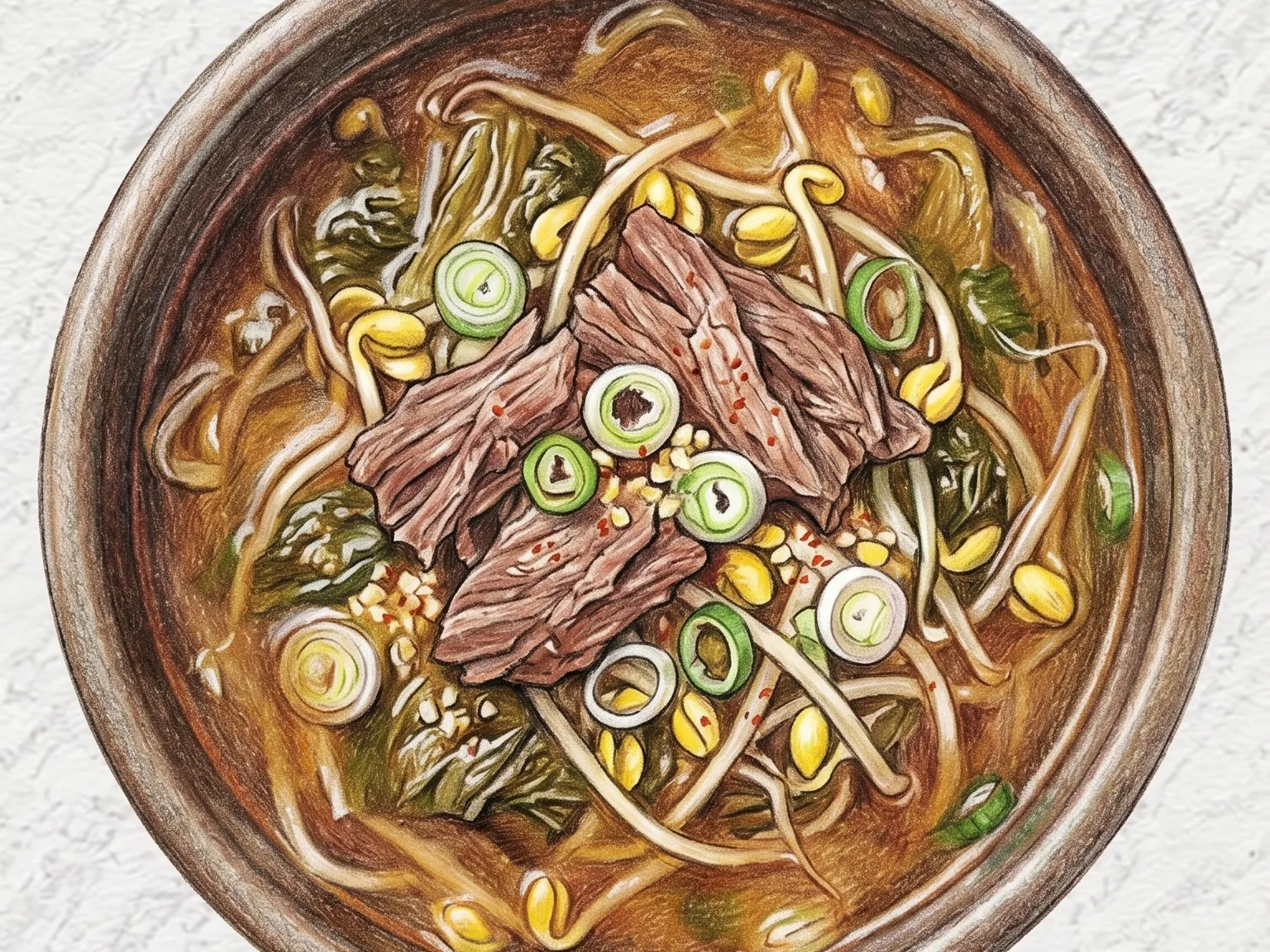
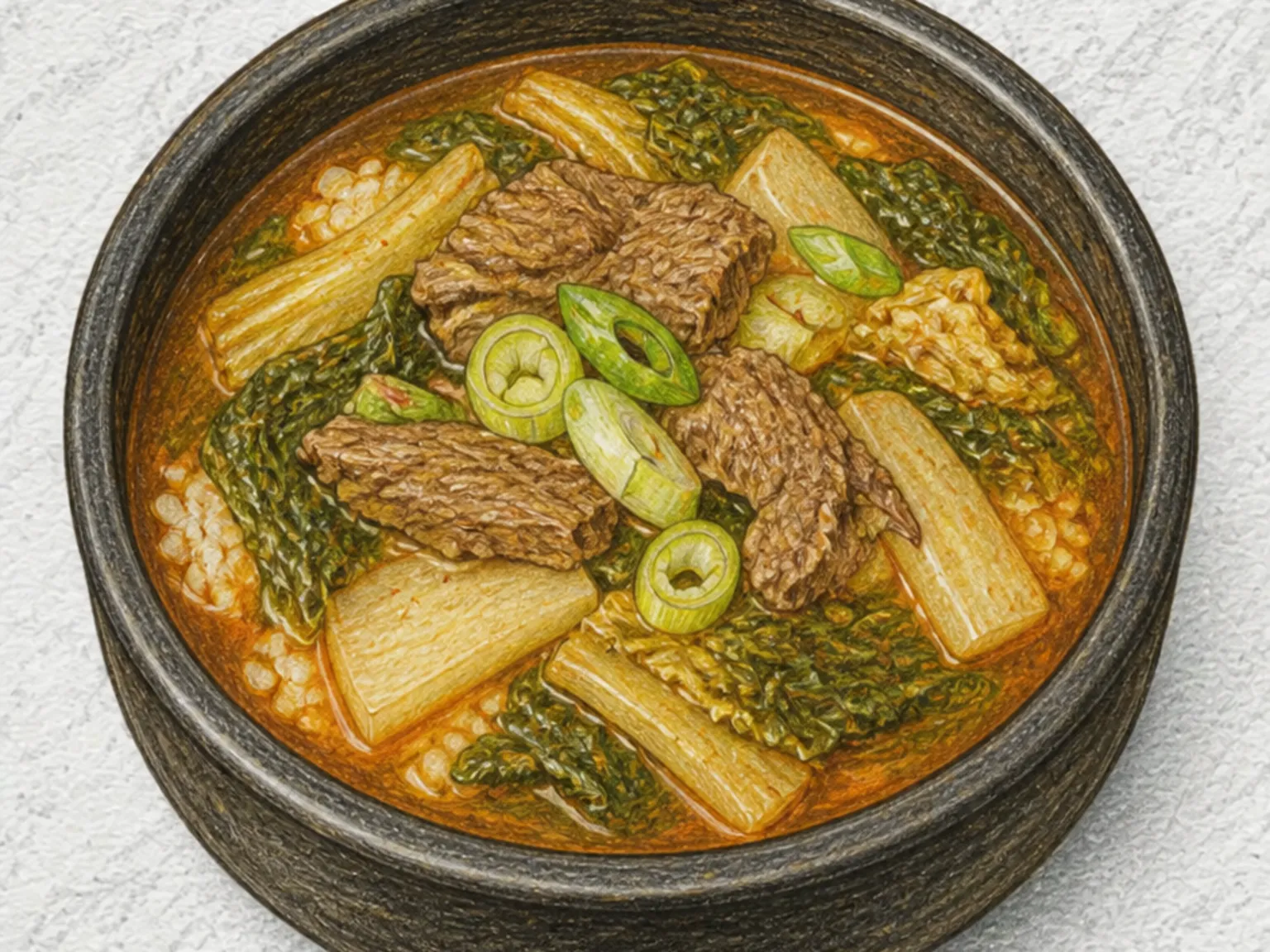
Beef brisket and blanched napa outer leaves are slow-simmered with doenjang in this robust Korean stew. The brisket renders a rich, meaty broth that permeates every strand of the fibrous ugeoji leaves. Gochugaru and perilla oil contribute mild heat and nutty undertones, while soup soy sauce refines the seasoning. Green onion and garlic brighten the deep, long-cooked flavors, making this a nourishing stew built on a foundation of quality beef stock.
Adjust Servings
Instructions
- 1
Cut boiled ugeoji into 5 cm lengths and squeeze lightly.
- 2
Heat perilla oil, stir-fry brisket, then add garlic once the surface browns.
- 3
Add doenjang and gochugaru, stirring 1 minute to bloom flavors.
- 4
Add ugeoji and water, then simmer 25 minutes over medium-low heat.
- 5
Season with soup soy sauce, add green onion, and simmer 3 more minutes.
As an Amazon Associate, we may earn from qualifying purchases.
Tips
Nutrition (per serving)
More Recipes

Korean Napa Leaf & Tuna Stew
Blanched napa cabbage outer leaves and canned tuna come together in this doenjang-based stew. The ugeoji leaves have a rough, hearty texture that soaks up the salty richness of the tuna and fermented soybean paste. Tofu and onion round out the stew with mild sweetness, while gochugaru adds a gentle kick. Built on anchovy stock with garlic and green onion, this is a quick, home-style stew meant to be eaten over a bowl of steamed rice.

Korean Beef Doenjang Jjigae
This is the classic Korean soybean paste stew made with beef brisket, featuring potato, zucchini, tofu, and onion simmered in rice-rinse water. The brisket lends a deep, beefy backbone to the broth, which the doenjang transforms into a rich, fermented complexity. Potato melts slightly into the soup, adding body, while green onion and garlic anchor the aroma. It is the kind of everyday stew that pairs with a fresh bowl of rice and never gets old.

Korean Perilla Leaf Beef Stew
This stew features thinly sliced beef and a generous handful of perilla leaves simmered in anchovy stock. Twelve perilla leaves infuse the entire broth with their distinctive herbaceous, slightly minty aroma, while the beef releases its umami into the liquid. Firm tofu cubes absorb the gochugaru-seasoned broth, and onion adds a sweet undertone. Seasoned primarily with soup soy sauce, the stew lets the perilla and beef flavors stay in the foreground.

Korean Jjageuli Pork Stew
Jjageuli jjigae is a thick, reduced-broth stew of pork and potato simmered in a gochujang and gochugaru sauce. As the potato pieces break down, they naturally thicken the stew into a hearty, almost gravy-like consistency. The pork fat renders into the spicy-sweet seasoning, creating a deeply coating sauce meant to be spooned over rice. Onion and green onion add sweetness and fragrance, making this a satisfying one-pot meal that needs little else on the side.

Korean Beef Napa Cabbage Soup
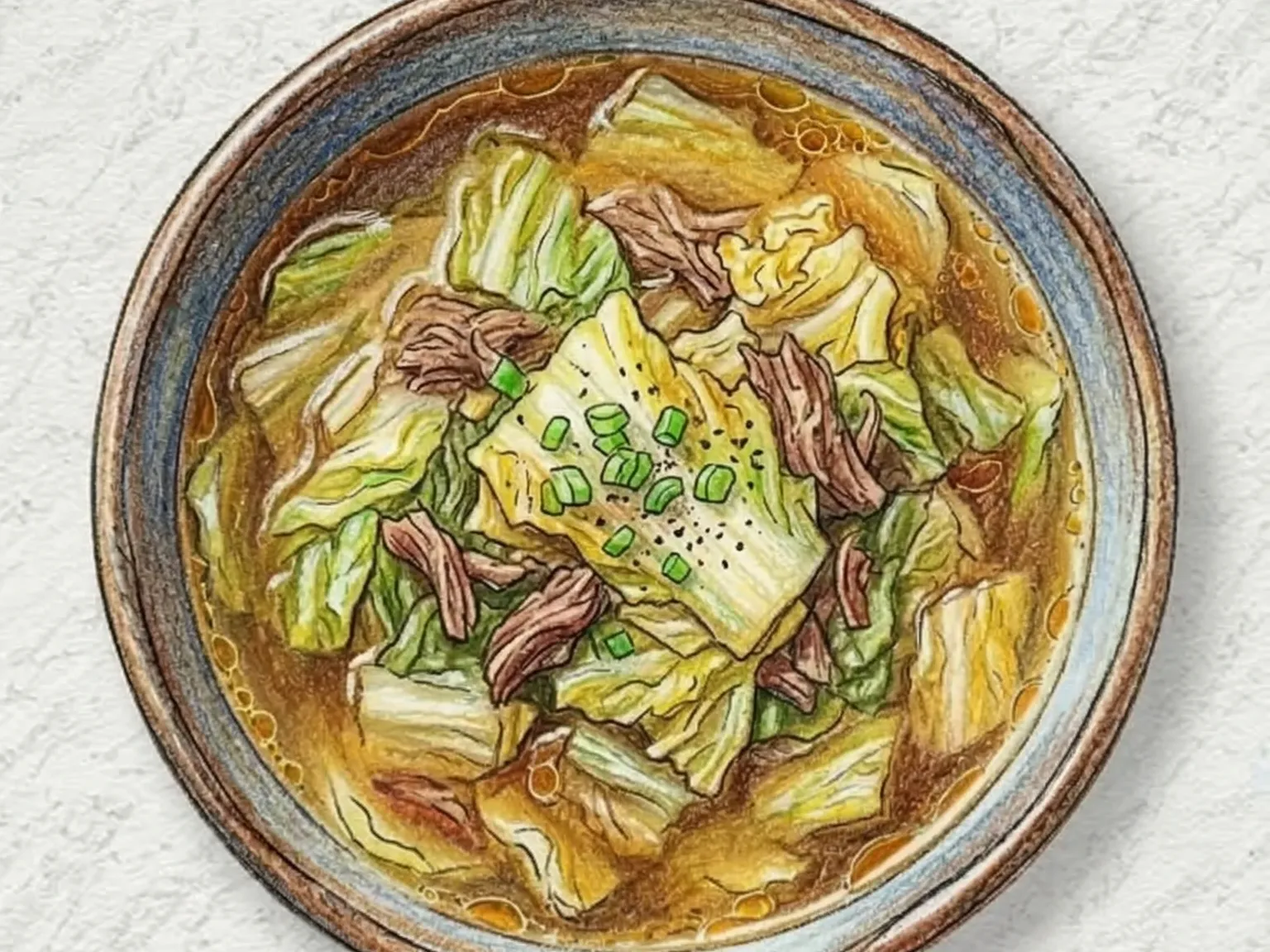
Soegogi baechu-guk begins with beef brisket seared in sesame oil until the edges brown and the pan fills with a toasty fragrance. Napa cabbage goes in next, wilting quickly against the hot fat before water or light stock is poured in to build the broth. As the soup simmers, the thick cabbage stems release a quiet sweetness that tempers the beef's richness, while the thinner leaf sections soften into something almost silky. A thin film of sesame-scented oil floats on the surface, delivering an aromatic note with every spoonful. Seasoned with soup soy sauce rather than salt, the broth stays clear with a light amber tint and tastes more of umami than sodium. Sliced scallion scattered on top just before serving adds a sharp, green brightness that cuts through the mellow base. The soup requires no elaborate stock preparation and comes together in under forty minutes, making it one of the most practical weeknight soups in the Korean home-cooking repertoire.

Korean Beef Cabbage Leaf Soup
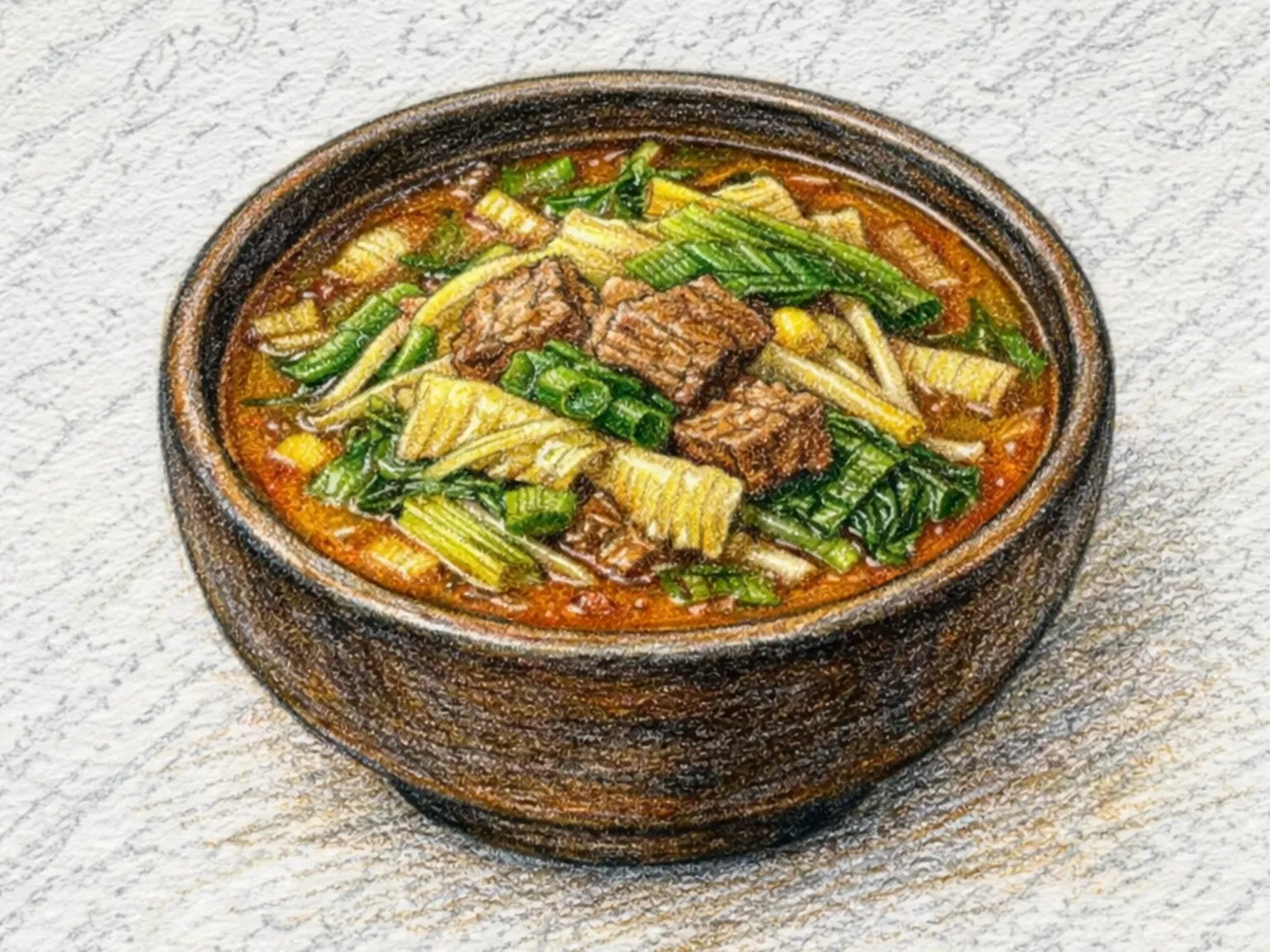
Ugeoji soegogi-guk is a spicy, savory Korean beef soup that draws its character from pre-seasoned napa cabbage outer leaves and a brisket-based broth. The ugeoji is rubbed with doenjang and gochugaru before it enters the pot, so when it meets the simmering beef stock, it releases both fermented soybean depth and a steady chili warmth that stains the broth a ruddy brown. The brisket, simmered until the fibers separate easily, is shredded and returned to the pot, adding lean, clean beef flavor throughout. As the ugeoji softens over extended cooking, it absorbs the surrounding liquid like a sponge, so each bite delivers a concentrated burst of the combined seasoning. Daikon radish, if included, tempers the heat with its natural sweetness, while generous amounts of sliced scallion perfume the entire bowl. The overall effect is a soup that is warming and robust without being aggressive - the spice level is calibrated to soothe rather than overwhelm, which makes it a go-to choice on cold days when the body needs both heat and substance.