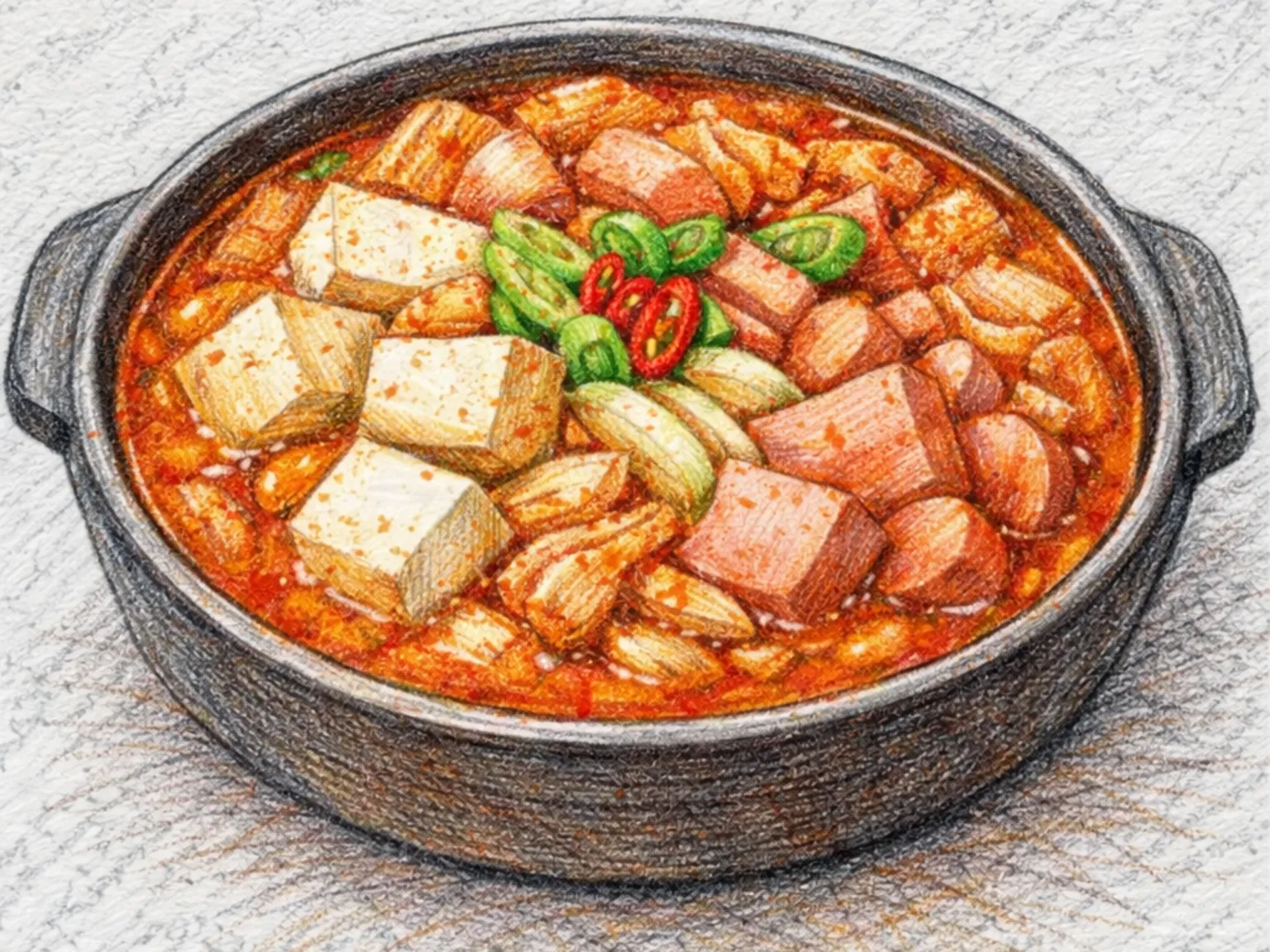
Korean Uijeongbu-Style Budae Jjigae
Stir-fry 180 g kimchi and the onion with 1 tbsp each of gochujang and chili flakes over low heat for 2 minutes, then pour in 700 ml anchovy stock. Once it starts boiling, arrange the luncheon meat, sausages, and tofu in the pot and simmer over medium heat for 8 minutes so their saltiness spreads through the broth, then add 4 tbsp baked beans and the green onion for 3 more minutes. Add the instant noodles right before serving and cook them 2 to 3 minutes until loosened, because they turn soggy quickly.
Quick answer
- Total time
- 45 min
- Level
- Medium
- Servings
- 2 servings
- Ingredients
- 11
About this dish
Uijeongbu is the city where this stew took hold near US Army bases after the Korean War, and that is where the name comes from.
Read more
The salt of Spam and cocktail sausages, the sourness of ripe kimchi and the sweetness of melted baked beans all end up in the same pot.
Ingredients
Instructions
- 1
Cut 150g of Spam and 120g of Vienna sausage into bite-size pieces, cube 200g of tofu into 2cm squares, coarsely chop 120g of onion, and diagonally slice 1 green onion.
- 2
Spread 180g of kimchi and onion on the bottom of the pot, sprinkle 1 tablespoon each of gochujang and gochugaru over them, and stir-fry over low heat for 2 minutes to develop the seasoning aroma.
- 3
Pour in 700ml of anchovy broth and once it begins to boil, arrange the Spam, sausage, and tofu neatly from the edge inward.
- 4
Simmer over medium heat for 8 minutes, then add 4 tablespoons of baked beans and the green onion and cook for 3 more minutes.
The beans melt into the broth and add sweetness and body.
- 5
Taste after the saltiness from the Spam and kimchi has dispersed through the broth.
Lower the heat if it reduces too quickly so it does not become overly salty.
- 6
Add 1 portion of ramen noodles and cook for 2 to 3 minutes until fully loosened, then turn off the heat and serve immediately.
Timing is critical because noodles quickly become soggy.
Use-up ingredient planner
Turn these ingredients into two more meals
The overlap excludes basic seasonings. Open the next recipe and your selected dishes will stay with you.
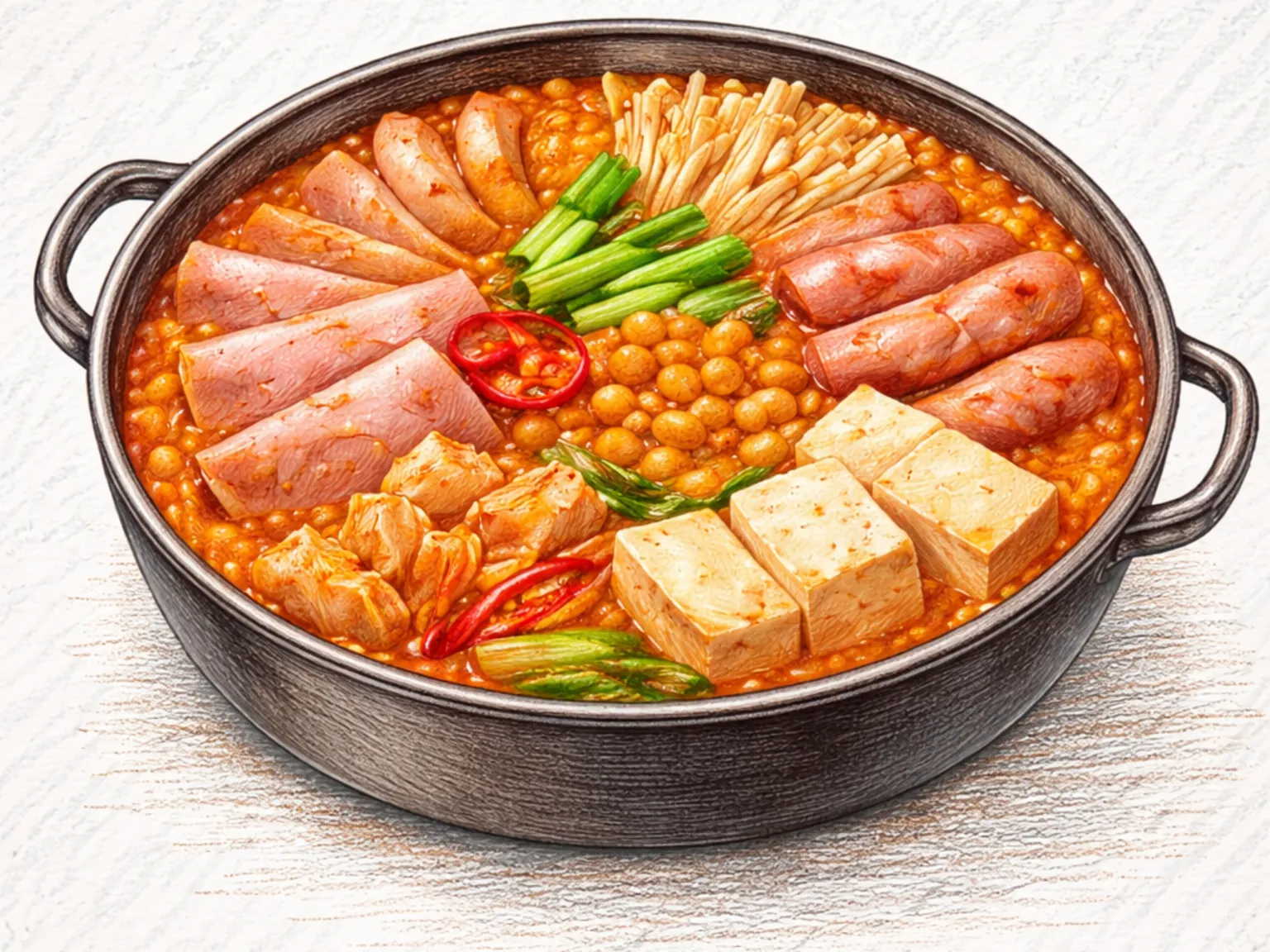
Korean Seoul-Style Army Stew
Luncheon meat, Cocktail sausages
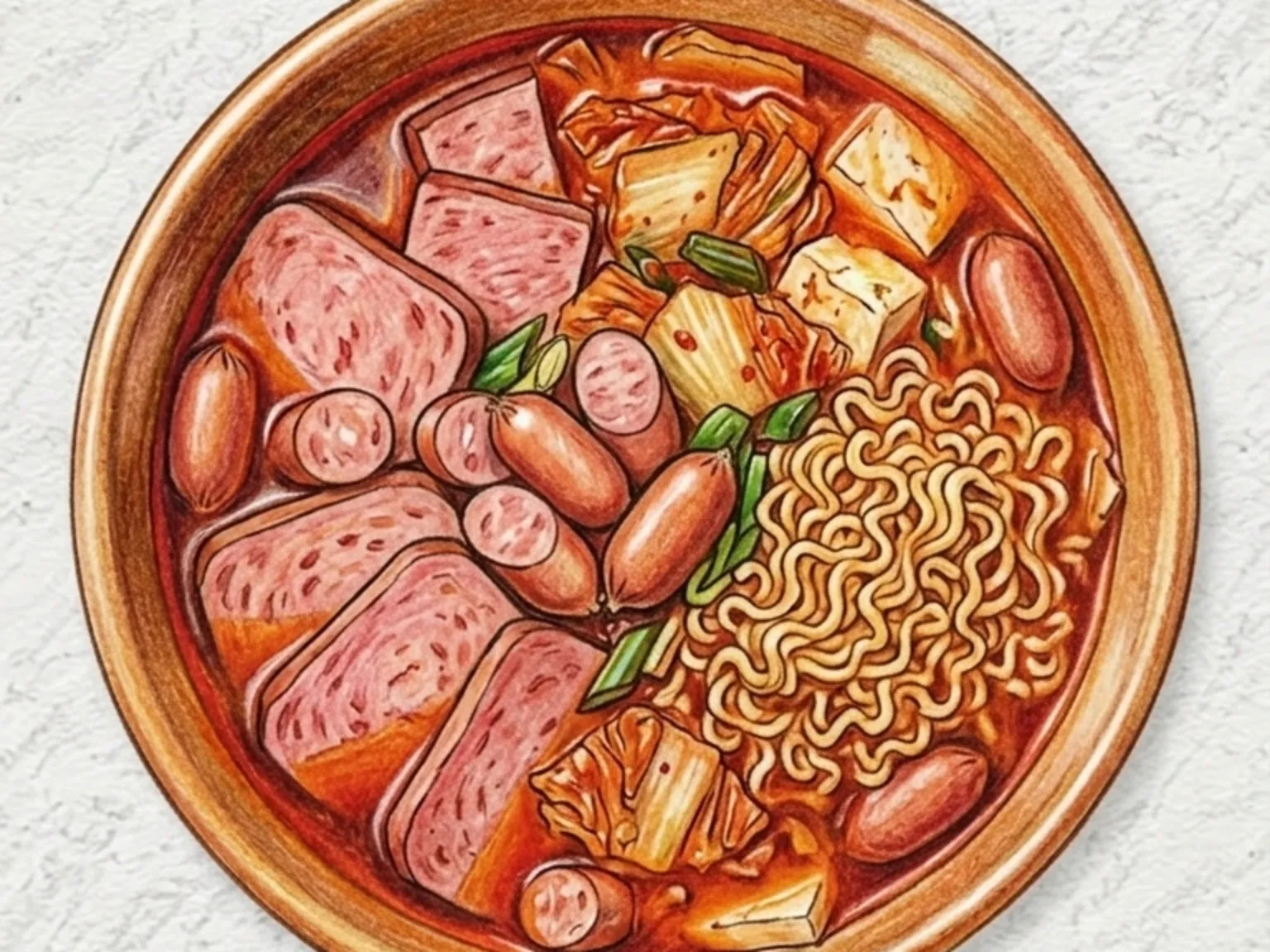
Korean Ham-Packed Budae Jjigae
Luncheon meat, Cocktail sausages
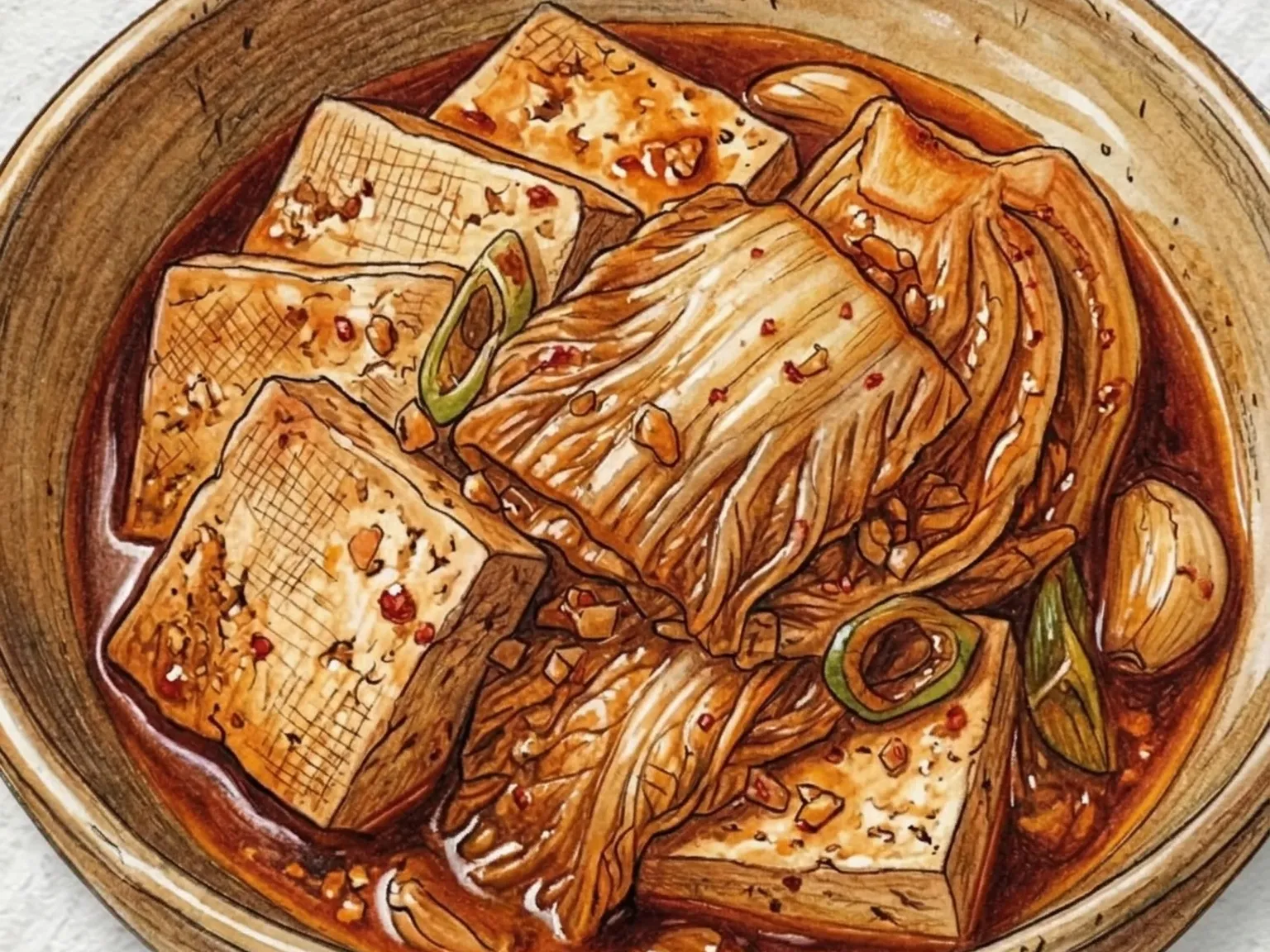
Korean Braised Tofu with Kimchi
Well-fermented kimchi, Firm tofu