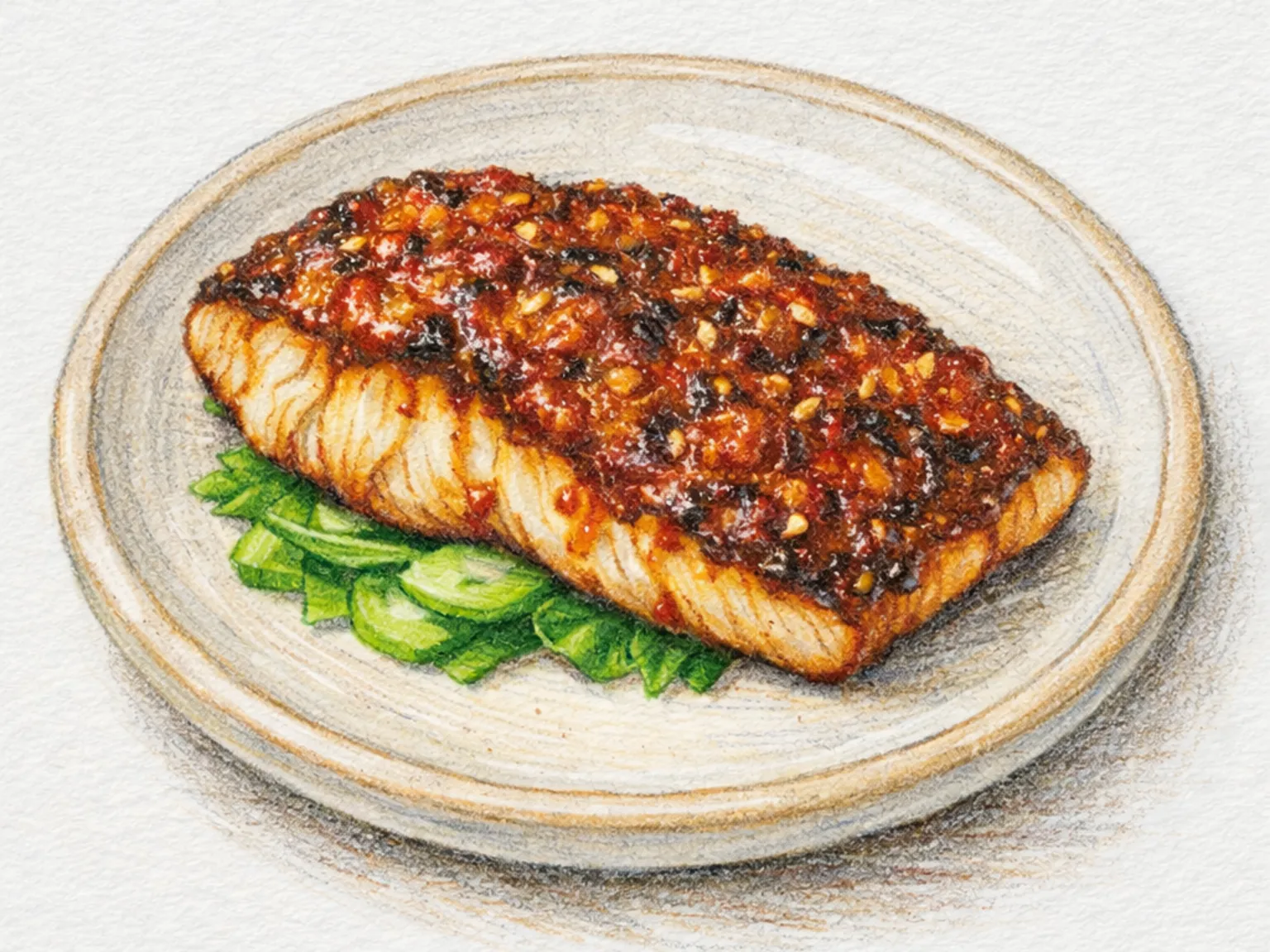
Korean Ureok Doenjang Gui (Doenjang Grilled Rockfish)
Rockfish fillets are patted dry, pin-boned, and brushed thinly with a paste of doenjang, gochujang, minced garlic, cooking wine, honey, and sesame oil before resting in the refrigerator for fifteen minutes. Cooking begins skin-side down for four minutes, then the fillet is flipped for three minutes, and a second thin coat of paste is applied for two final minutes. The key is thin, repeated applications - a thick layer burns before the fish is done. Rockfish's mild white flesh absorbs the complex, fermented savoriness of the doenjang-gochujang blend, producing a depth of flavor that plain grilled fish cannot match.
Adjust Servings
Instructions
- 1
Pat rockfish fillets dry and remove pin bones with tweezers.
- 2
Combine doenjang, gochujang, garlic, cooking wine, honey, and sesame oil.
- 3
Brush fillets lightly with marinade and chill for 15 minutes.
- 4
Heat oil in a pan over medium heat and cook skin-side first for 4 minutes.
- 5
Flip, cook 3 more minutes, then brush remaining marinade and cook 2 more minutes.
- 6
Top with chopped green onion and sesame seeds, then serve hot.
As an Amazon Associate, we may earn from qualifying purchases.
Tips
Nutrition (per serving)
More Recipes

Korean Daegu Doenjang Gui (Doenjang-Grilled Cod)
Daegu-doenjang-gui is a Korean grilled cod dish where fillets are coated with a mixture of doenjang, minced garlic, and sesame oil, then cooked until the paste forms a thin, savory crust over the fish. Cod's mild, white flesh is an ideal canvas for doenjang's deep, fermented soybean flavor-the seasoning does not compete with the fish but rather defines it. As the paste dries slightly on the surface under heat, it creates a concentrated savory shell while the flesh underneath stays moist and flaky. Adjusting the amount of doenjang is key since it can easily oversalt the delicate fish, and serving with sliced green onion or perilla leaves provides an herbal counterpoint to the earthy paste.

Korean Bollak Ganjang Gui (Soy-Glazed Rockfish Grill)
Bolak-ganjang-gui is a Korean soy-glazed rockfish dish where fillets are brushed with a sauce of soy sauce, cooking wine, minced garlic, ginger juice, and honey, then grilled over medium-high heat. Half the glaze is applied first and left for just ten minutes-long enough for the salt and sweetness to penetrate the surface without overwhelming the fish's own mild flavor. Starting skin-side down for four minutes builds a crisp base, and brushing on the remaining glaze during the final minutes of cooking lets the honey caramelize into a glossy, dark-brown coating. A finish of sesame oil and sliced green onion adds a nutty, aromatic layer on top of the savory-sweet glaze.

Korean Grilled Eel (Soy Glazed Freshwater Eel BBQ)
Fresh eel is grilled over medium heat while being brushed with a soy sauce, sugar, cooking wine, and garlic marinade in two or three stages. Layering the glaze rather than applying it all at once allows each coat to caramelize, creating a glossy crust with concentrated flavor. Using a charcoal grill instead of a pan introduces an additional smoky dimension that pairs naturally with the rich eel meat.

Korean Grilled Salmon with Doenjang
Salmon fillets are coated with a glaze of doenjang, gochujang, honey, minced garlic, sesame oil, and lemon juice, then grilled skin-side down over medium-low heat. The fermented soybean paste gives a deep, earthy savoriness while honey and lemon provide contrasting sweetness and brightness. A second brushing of glaze near the end builds a glossy crust without burning, leaving the flesh moist inside.

Korean Grilled Mackerel Rice Bowl
Mackerel fillet is pan-seared skin-side down until the skin turns crisp and golden, then served over rice with a quick sauce of soy sauce, cooking wine, oligosaccharide syrup, minced ginger, and softened onion. The oily flesh of the mackerel absorbs the soy-ginger glaze, producing a clean, salty-sweet finish without fishiness. Keeping the pan still for the first minute of searing is critical for achieving crisp skin, and brushing the fillet with a little cooking wine before cooking further neutralizes any unwanted odor. Chopped chives scattered on top complete the bowl with color and a mild onion bite.

Charred Broccolini Doenjang Lentil Salad
Charred broccolini doenjang lentil salad halves broccolini lengthwise, coats it in olive oil, and chars it in a hot pan for 4-5 minutes until the edges darken and turn slightly bitter-sweet. Cooked lentils bring a starchy, filling texture, and a thick dressing of doenjang, Dijon mustard, apple cider vinegar, and minced garlic layers fermented depth with sharp acidity. Roughly chopped walnuts release oily richness when bitten, and the apple cider vinegar tempers the salt of the doenjang. Draining the lentils thoroughly prevents the dressing from thinning, and resting the assembled salad five minutes before serving lets the grains absorb the seasoning more fully.