Korean Steamed Rockfish (Spicy Gochugaru Radish Braise)
Steamed Medium

Korean Steamed Rockfish (Spicy Gochugaru Radish Braise)

Quick answer

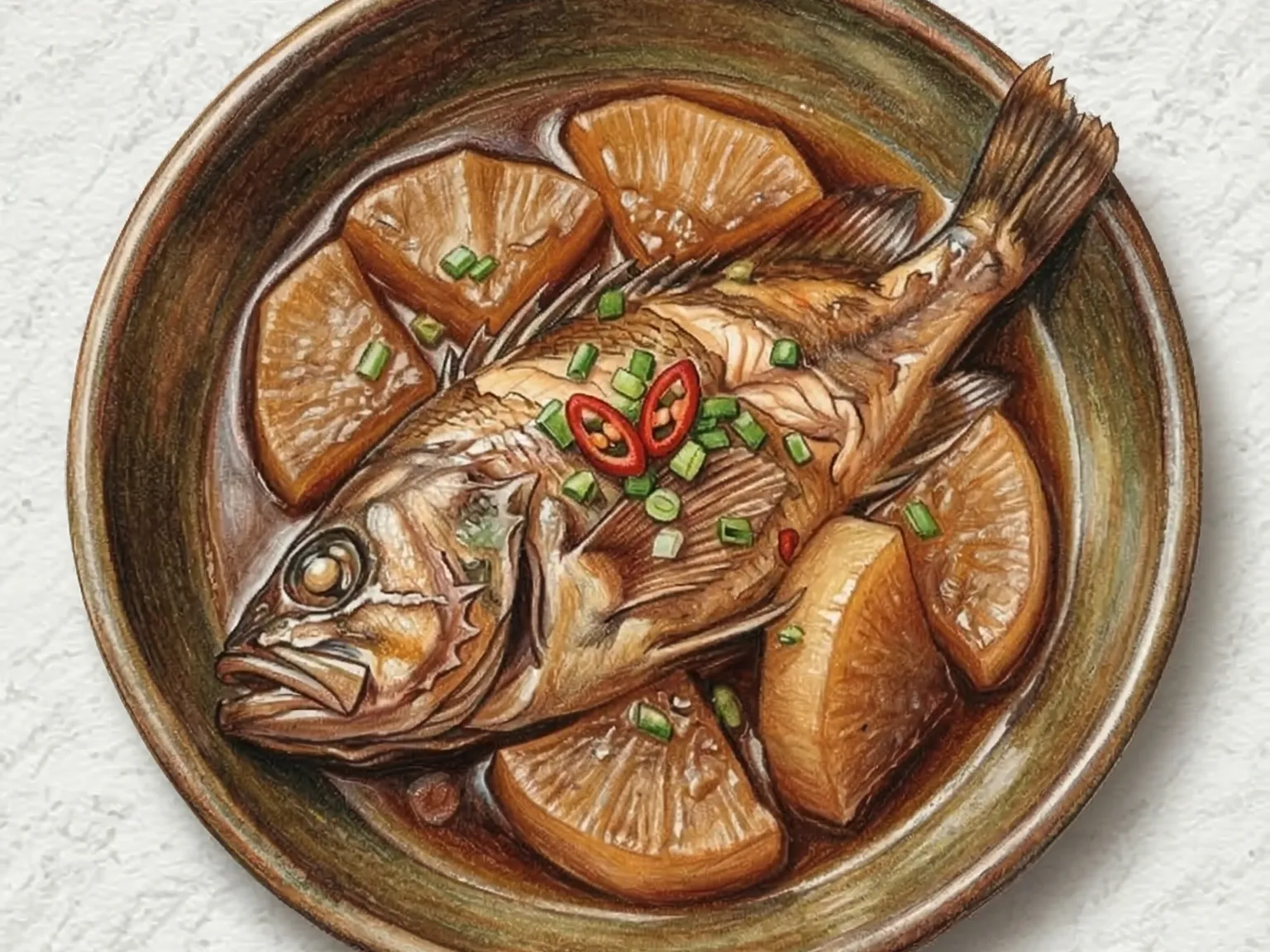
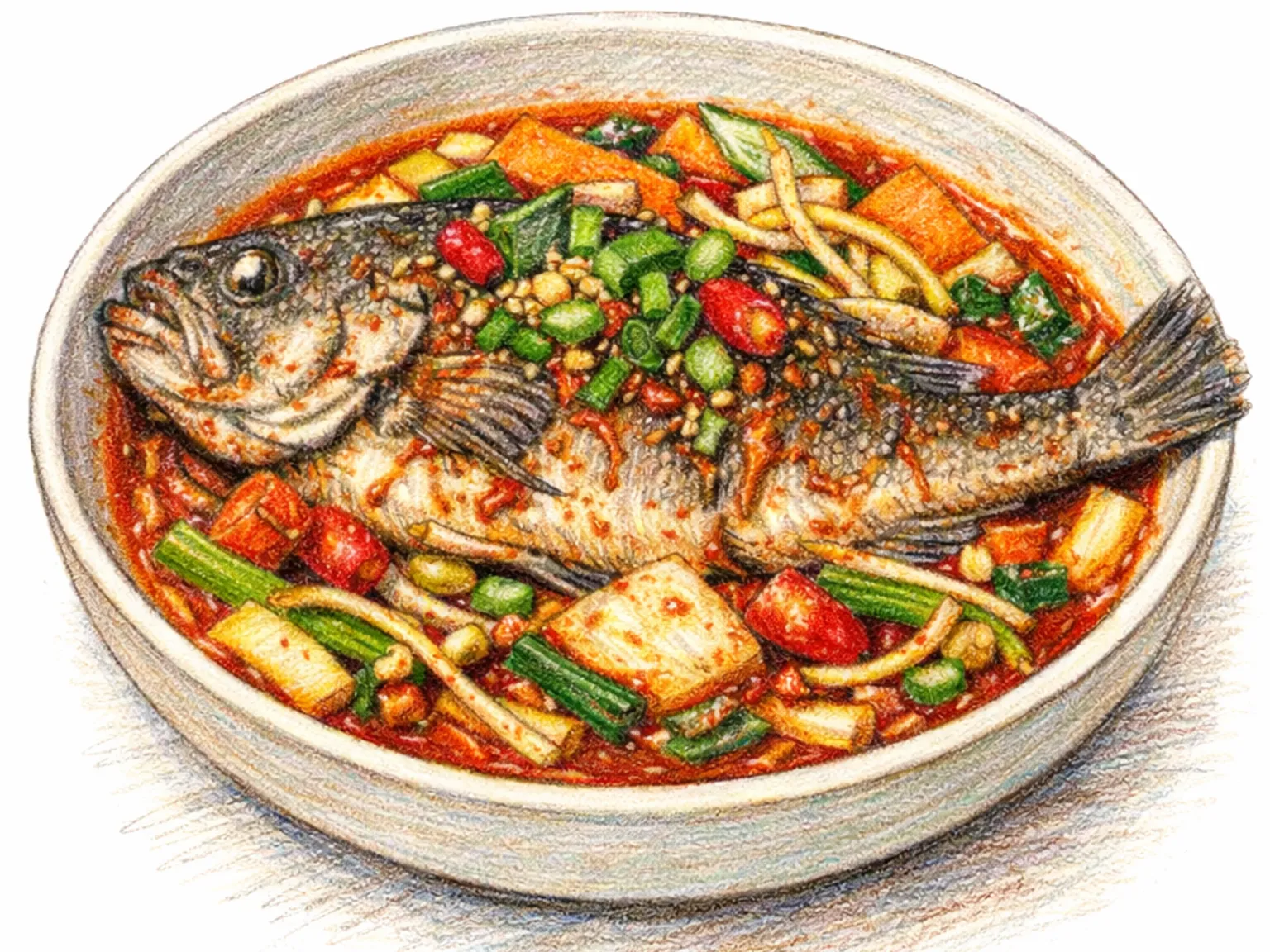
Ureok-jjim is a Korean spicy steamed rockfish cooked with Korean radish, onion, and green onion in a gochugaru and soy sauce broth.

What makes this special

  • Ureok-jjim uses scored rockfish to ensure a spicy gochugaru and soy seasoning penetrates the firm, white fish completely.
  • Scored rockfish flesh lets gochugaru-soy seasoning penetrate evenly
  • Radish lining the pot base absorbs spicy broth and turns sweet-spicy
Total time
48 min
Level
Medium
Servings
4 servings
Ingredients
8
Calories
300 kcal
Protein
35 g

Key ingredients

rockfishkorean radishgreen onionminced garlicgochugaru

Core cooking flow

  1. 1 Clean 900 g rockfish, removing scales and innards, then score each side in 2 to 3 places.
  2. 2 Cut 250 g Korean radish into thick slices about 1.5 cm wide and spread them...
  3. 3 When the radish edges start turning translucent, place the rockfish on top.

Ureok-jjim is a Korean spicy steamed rockfish cooked with Korean radish, onion, and green onion in a gochugaru and soy sauce broth. Rockfish has firm, well-defined flesh that holds its shape through the cooking process, and scoring the skin lets the bold seasoning reach deep into the meat. Radish softens in the braising liquid and absorbs the chili heat while contributing natural sweetness, and ginger keeps the fish tasting clean. The remaining sauce is concentrated enough to spoon over rice, delivering a hit of spicy, salty flavor with every bite.

Prep 20min Cook 28min 4 servings

Instructions

Read the steps as a cooking flow: prep, heat, seasoning, doneness control, and finish.

6 steps
  1. 1
    Season

    Clean 900 g rockfish, removing scales and innards, then score each side in 2 to 3 places.

    Sprinkle with 1 tbsp rice wine, rest for 5 minutes, and lightly blot surface moisture so the seasoning clings better.

  2. 2
    Control

    Cut 250 g Korean radish into thick slices about 1.5 cm wide and spread them across the pot bottom without stacking too much.

    Add part of the 400 ml water and start over medium heat to draw out sweetness.

  3. 3
    Season

    When the radish edges start turning translucent, place the rockfish on top.

    Add 2 tbsp soy sauce, 1 tbsp minced garlic, 1.5 tbsp gochugaru, and the remaining water evenly around the fish instead of pouring everything on one spot.

  4. 4
    Control

    Once the liquid begins bubbling, cover and cook over medium heat for about 15 minutes.

    Spoon the broth over the fish once or twice so the chili soy seasoning reaches into the scored cuts without breaking the flesh.

  5. 5
    Heat

    When the fish flesh turns opaque and a chopstick slides into the radish with little resistance, add 70 g green onion.

    Leave the lid slightly ajar and cook 5 more minutes to keep the onion aroma fresh.

  6. 6
    Finish

    Turn off the heat when the sauce has reduced to a shallow, spicy-salty broth.

    Do not flip the fish at the end, because the firm flesh can still break. Serve pieces with radish and spoon the sauce over rice.

After the steps

Pick a recipe that fits this dish.

Continue with shared ingredients, meal pairings, or a similar method.

Recipes That Go Well With This

More Steamed →

Based on shared ingredients and meal pairing

Korean Soy-Braised Rockfish
Shared ingredient: rockfish Stir-fry

Korean Soy-Braised Rockfish

Ureok-jorim is a Korean soy-braised rockfish simmered with Korean radish, gochugaru, garlic, and rice wine. The radish goes in first and softens in the braising liquid before the cleaned whole fish is placed on top and basted with sauce over medium heat for ten minutes. Rice wine neutralizes any fishiness, while the radish absorbs the salty braising liquid and releases its own sweetness to balance the seasoning naturally. The rockfish flesh stays mild and flakes in soft layers, with gochugaru lending a gentle warmth to the overall dish.

Korean Spicy Fish Roe Braise
Shared ingredient: korean radish Steamed

Korean Spicy Fish Roe Braise

Al-jjim is a Korean braised dish built around pollock roe sacs and milt - the parts of the fish that most home cooks discard or that are sold separately at markets near fishing ports. The two components come from the same fish but behave completely differently when cooked. The roe sacs firm up into a dense, granular texture as they heat, each individual egg becoming distinct and slightly resistant to the bite. The milt, by contrast, softens to a custard-like consistency, breaking apart in soft curds that dissolve into the braising sauce. Radish slices line the pot bottom, providing a sweet buffer against the aggressive saltiness of the gochugaru-soy braising liquid and preventing the more delicate milt from burning. The dish cooks at low heat for about fifteen minutes, during which the roe and milt release their marine oils into the sauce, adding an oceanic richness to the spicy, salty base. Green onions or scallions added at the end contribute a fresh, sharp counterpoint that keeps the heavy sauce from becoming monotonous. Al-jjim is a winter specialty in Korea's east coast fishing ports - Pohang, Gangneung, Sokcho - where fresh pollock roe is available during the winter spawning season. Frozen roe can be substituted year-round, but it releases fewer marine oils into the sauce, producing a noticeably less rich broth than the fresh version.

Korean Spicy Blue Crab Soup
Serve together Soups

Korean Spicy Blue Crab Soup

Ggotge-tang is a spicy Korean crab soup built around whole blue crabs that infuse the broth with a concentrated, briny seafood depth. The shells release their marine richness as they crack apart during simmering, forming the structural foundation of the pot. Doenjang dissolved into the broth adds fermented complexity, while gochugaru delivers a persistent heat that compounds with each spoonful. Radish chunks sweeten and clarify the liquid, and zucchini with green onion fill the bowl with color and contrasting texture. Before cooking, the crabs should be scrubbed clean under cold water and cleaned of their sand pouches and gills, which eliminates any off-flavors. Scoring the claws lightly with the back of a knife before the pot goes on the heat makes extracting the claw meat easier at the table. Female crabs in season carry bright orange roe inside the top shell that dissolves into the broth and intensifies its richness. The real reward at the end of the meal is mixing leftover rice directly into the crab's top shell with the residual roe and braising juices, a practice Korean diners regard as the true finish of the meal. Blue crab season peaks in spring and autumn.

Korean Steamed Pacific Saury
Similar recipe Steamed

Korean Steamed Pacific Saury

Kkongchi-jjim braises Pacific saury with Korean radish, onion, and green onion in a gochugaru and soy sauce broth until the liquid reduces to a concentrated, deeply spiced glaze. The saury's naturally oily flesh absorbs the bold seasoning without drying out, while the radish softens in the braising liquid and draws out any fishiness that would otherwise distract from the sauce. Garlic and ginger scrub the broth clean, and the chili's penetrating heat opens the appetite in a way that milder seasonings cannot. The remaining sauce, ladled over rice, is what most people eat last and remember longest - a humble fish dish that punches well above its price.

Serve with this

Korean Mushroom Japchae (Shiitake Glass Noodle Stir-Fry)
Side dishes Medium

Korean Mushroom Japchae (Shiitake Glass Noodle Stir-Fry)

Beoseot japchae replaces beef with shiitake mushrooms as the primary source of savory depth, making it a staple of Buddhist temple cuisine and vegetarian tables alike. Sweet potato noodles are soaked and boiled, then rinsed in cold water immediately to lock in a firm, springy texture. Shiitake, spinach, carrot, and onion are each cooked separately - their moisture levels and heat tolerances differ enough that combining them prematurely flattens every component. Soy sauce, sugar, minced garlic, and sesame oil bring the noodles and vegetables together, and the finished dish rests for ten minutes so the seasoning penetrates the noodles evenly. The result is a japchae where the mushroom carries genuine umami weight without any meat.

🏠 Everyday 🎉 Special Occasion
Prep 20min Cook 15min 4 servings
Korean Sea Squirt Mixed Rice
Rice Medium

Korean Sea Squirt Mixed Rice

Fresh sea squirt is tossed with vinegared gochujang and sesame oil over warm rice for a bold seafood bibimbap. The sea squirt carries an intense, distinctive ocean flavor that fills the palate, tempered by the tangy sweetness of the sauce. Julienned cucumber and torn lettuce provide crisp contrast, while roasted seaweed flakes and sesame seeds add a nutty undertone. Mixing should happen right before eating to preserve the sea squirt's volatile aroma. Serving it soon after cooking keeps the intended texture clearer, while brief resting lets the sauce or broth settle into the dish.

🎉 Special Occasion 🏠 Everyday
Prep 20min Cook 8min 2 servings
Korean Cheongyang Gochu Doenjang Jangajji (Doenjang Pickled Cheongyang Peppers)
Kimchi Easy

Korean Cheongyang Gochu Doenjang Jangajji (Doenjang Pickled Cheongyang Peppers)

Cheongyang chili peppers are pricked all over with a fork so the brine can reach the interior of each pod rather than sitting on the surface. Kelp is simmered with soy sauce to establish a concentrated umami base, then the heat is cut and doenjang is dissolved into the hot liquid, which layers the nutty, fermented depth of fermented soybean paste over the saltiness of the soy. Rice syrup softens the sharp, raw heat of the chilies so it does not dominate the other flavors, and vinegar sharpens and clarifies the overall profile. The chilies are pressed fully under the brine and left in the refrigerator to mature. After one day the seasoning begins to penetrate toward the core, and by day three the doenjang flavor has fully saturated each pepper. At that point, a single pepper placed on a mouthful of hot rice delivers a compact burst of salty, funky depth and the lingering heat that makes this pickle a classic Korean table condiment.

🏠 Everyday 🍱 Lunchbox
Prep 18min Cook 8min 4 servings

Similar recipes

Korean Steamed Croaker (White Fish Radish Soy)
Steamed Medium

Korean Steamed Croaker (White Fish Radish Soy)

Mineo-jjim is a Korean steamed croaker prepared with Korean radish, green onion, ginger, and rice wine. Croaker is prized among white fish for its fine-grained flesh and mild aroma, and steaming preserves its delicate, moist texture without drying it out. Ginger and rice wine work together to eliminate any trace of fishiness, while the radish releases a gentle sweetness into the broth as it cooks. Seasoned with just a touch of soy sauce at the end, this dish lets the natural flavor of the fish take center stage and is well suited for formal meals.

🎉 Special Occasion
Prep 20min Cook 30min 4 servings
Korean Steamed Pomfret (Whole Fish with Soy Ginger Sauce)
Steamed Medium

Korean Steamed Pomfret (Whole Fish with Soy Ginger Sauce)

Korean steamed pomfret is a mild fish dish made by steaming a whole scored pomfret with ginger and green onions, then seasoning it with a warm soy sauce mixture. The thin, delicate flesh of the pomfret becomes tender after steaming, allowing the meat to separate easily from the bone. To manage the fish odor and build layers of aroma, sliced ginger and cut green onions are added in two separate stages: first during the main steaming process and again at the end. A heated sauce of soy sauce, rice wine, and water is poured over the cooked fish to ensure the seasoning penetrates evenly. A final touch of sesame oil adds a toasted scent to the non-spicy, low-fat preparation. This clean and mild dish is suitable for various diners.

🎉 Special Occasion 🍱 Lunchbox
Prep 15min Cook 18min 2 servings
Korean Rockfish Soup (Whole Rockfish in Spicy Radish Broth)
Soups Medium

Korean Rockfish Soup (Whole Rockfish in Spicy Radish Broth)

Starting with a base of boiled radish to sweeten the water, this rockfish soup relies on using the entire fish to build a complex broth. Red pepper flakes, garlic, and soup soy sauce provide the seasoning before the fish and tofu go into the pot for a fifteen-minute simmer. The collagen and juices released from the rockfish bones create a physical thickness in the liquid that cannot be replicated with fillets alone. Just before the heat is turned off, a handful of water parsley adds a fresh contrast to the spicy, ocean-heavy profile of the soup. While the small bones of the rockfish require slow and careful eating, they are exactly what gives this dish its characteristic intensity. A slice of ginger added early in the process works to neutralize fishy scents. For extra heat, some sliced cheongyang chilies can be added, or a spoonful of ground perilla seeds can be stirred in at the end to introduce a nutty, creamy layer to the texture. This soup pairs naturally with a bowl of steamed rice, where the process of picking meat from the bones becomes a central part of the eating experience.

🏠 Everyday 🥗 Light & Healthy
Prep 20min Cook 25min 4 servings

Tips

Pre-cooked radish adds sweetness and depth to the broth.
Adjust spice level by changing gochugaru amount.

Nutrition (per serving)

Calories
300
kcal
Protein
35
g
Carbs
8
g
Fat
14
g