Charim

2686 Korean & World Recipes

2686+ Korean recipes, clean and organized. Ingredients to instructions, all at a glance.

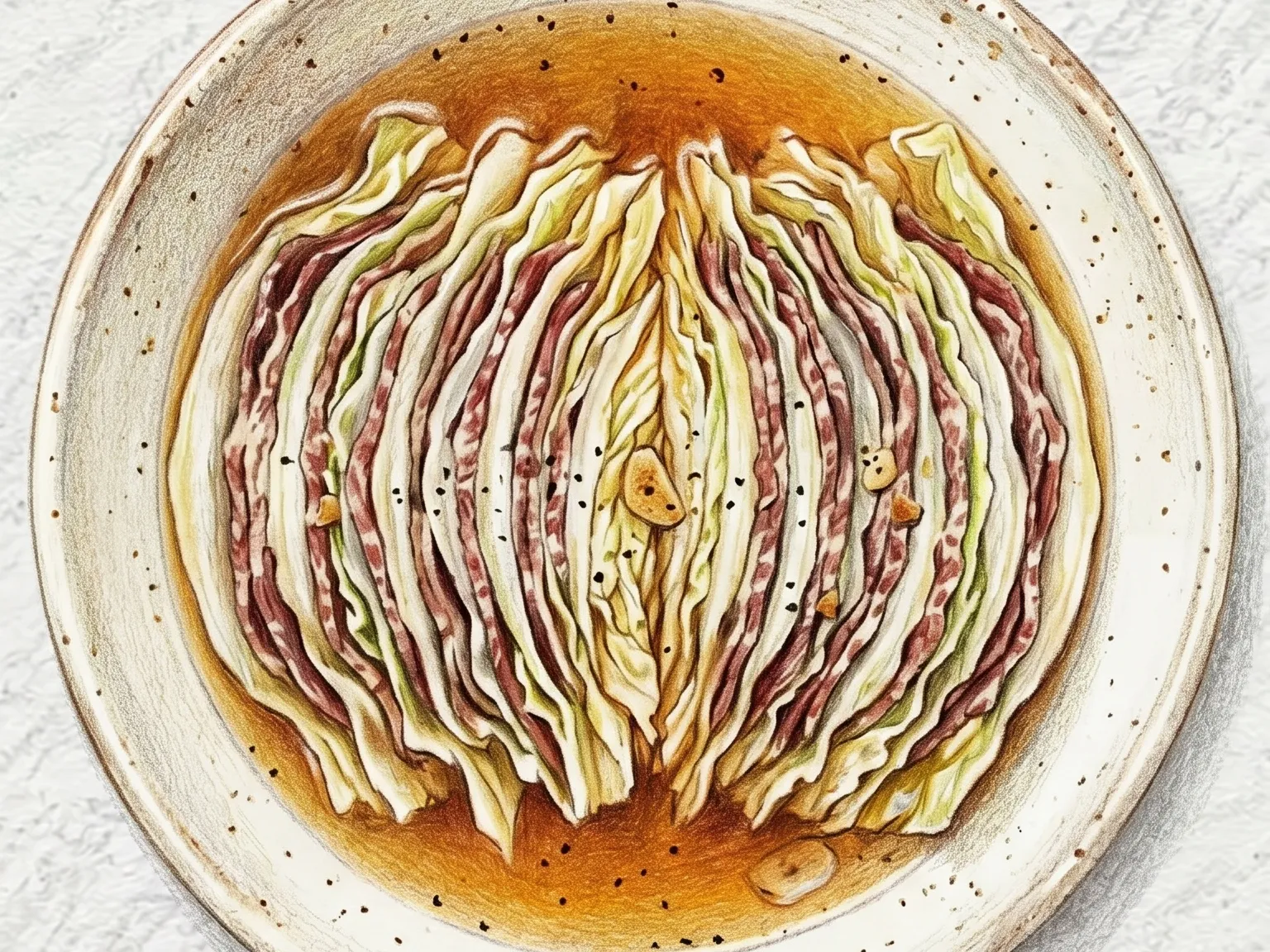
Korean Steamed Beef Mille-Feuille Cabbage
Steamed Medium

Korean Steamed Beef Mille-Feuille Cabbage

Usamgyeop millefeuille jjim is a Korean steamed dish where thin-sliced beef belly and napa cabbage leaves are stacked in alternating layers, then braised in a soy sauce, cooking wine, and garlic seasoning. Moisture from the cabbage mingles with the rendered beef fat to create a clean yet rich broth, and each layer delivers an alternating hit of meat and vegetable flavor. Soy sauce adds subtle salinity, and black pepper sharpens the finish. The layered cross-section revealed when the lid comes off makes this an visually striking main course suited for entertaining.

Prep 25min Cook 25min 4 servings

Adjust Servings

2servings
servings

Instructions

  1. 1

    Alternate napa cabbage and beef slices to build layered stacks.

  2. 2

    Arrange stacks upright in a pot and place enoki in the center.

  3. 3

    Add water and green onion, cover, and steam-simmer over medium heat for 20 minutes.

  4. 4

    Mix soy sauce, vinegar, and garlic for a dipping sauce.

  5. 5

    Serve hot with the dipping sauce.

🛒Shop Ingredients on Amazon

As an Amazon Associate, we may earn from qualifying purchases.

Tips

Use thicker white napa sections for better structure.

Nutrition (per serving)

Calories
450
kcal
Protein
27
g
Carbs
12
g
Fat
31
g

Goes Well With

Korean Gangwon-Style Loach Soup
SoupsHard

Korean Gangwon-Style Loach Soup

Gangwon-style chueotang is a thick, hearty loach soup in which the entire fish is boiled, blended smooth, and returned to the pot with ground perilla seeds and dried radish greens. Pulverizing the loach whole dissolves its small bones into the broth, creating a calcium-rich liquid with a distinctive earthy depth. Perilla seed powder transforms the soup into something creamy and nutty, far removed from a typical clear broth. Dried radish greens, rehydrated and chopped, provide a pleasantly chewy counterpoint to the thick liquid. Doenjang and gochugaru add fermented savoriness and gentle heat that deepen the overall flavor. Before blending, the loach should be soaked in salted water to purge any muddy taste, and the perilla powder is best stirred in after the soup reaches a boil so the nutty aroma does not cook off too quickly. The finished soup is dense and substantial, closer to a stew than a broth, and is traditionally eaten in autumn and winter as a stamina food. In the mountainous Gangwon province, chueotang holds a near-legendary status as a warming, restorative meal on the coldest days.

🏠 Everyday🎉 Special Occasion
Prep 30minCook 50min4 servings
Korean Stuffed Eggplant Seon
Side dishesMedium

Korean Stuffed Eggplant Seon

Gaji-seon is a Joseon-era royal court banchan belonging to the seon category, a class of preparations in which vegetables are stuffed with a seasoned filling and steamed. The eggplant is scored at regular intervals with deep cuts that stop short of the bottom, creating accordion-like pockets along the length of the vegetable. A filling of minced pork or beef combined with crumbled tofu, scallion, and sesame oil is pressed firmly into each slit, then the stuffed eggplant is steamed for fifteen minutes. During steaming, the juices from the filling soak into the softening eggplant flesh, and the two components merge into a single flavor. The labor of stuffing each eggplant individually made this a dish historically reserved for guests and formal occasions rather than everyday meals. After steaming, a light soy-based sauce is spooned over the top. The sharp textural contrast between the near-dissolving eggplant skin and the firm, savory filling produces a refinement that clearly separates seon from ordinary stir-fried or braised eggplant preparations.

🏠 Everyday🎉 Special Occasion
Prep 25minCook 20min4 servings
Korean Cutlassfish Pot Rice
RiceMedium

Korean Cutlassfish Pot Rice

Galchi sotbap is a Korean one-pot rice dish in which cutlassfish seasoned with soy sauce and ginger is arranged on top of soaked rice along with sliced radish and shiitake mushroom, then cooked together in a heavy pot over direct heat. As the rice steams, the oils from the fish seep down through the grains, carrying a clean, rich marine savoriness into every layer of the pot. Radish softens slowly alongside the rice and releases a gentle sweetness that supports the fish without competing with it. Ginger handles any potential fishiness, keeping the overall flavor bright and unclouded. Shiitake mushroom contributes earthiness, added umami, and a chewy counterpoint to the tender fish and rice. The aroma released when the lid is lifted - soy-seasoned fish, steamed grain, and caramelized crust - is a considerable part of the eating experience. A soy-sesame dipping sauce is provided for mixing through the rice, layering in salt and nuttiness. The rice crust that forms at the base of the pot, called nurungji, adds a toasted crunch. The dish is finest in autumn when cutlassfish from the waters around Jeju Island and Korea's southern coast carry their peak fat content.

🎉 Special Occasion
Prep 25minCook 30min4 servings
Korean Salted Yellow Croaker Jeotgal
KimchiHard

Korean Salted Yellow Croaker Jeotgal

Jogi jeotgal is a Korean salted and fermented yellow croaker made by gutting the fish, layering it in coarse sea salt for an initial multi-day cure in the refrigerator, then folding in gochugaru, garlic, ginger, and rice wine for a second stage of aging. Over the extended fermentation, fish protein breaks down into a concentrated savory depth that bears no resemblance to the raw ingredient, while the sea salt continuously draws out moisture and causes the flesh to contract and firm. Gochugaru and ginger suppress the fermentation smell and add a mild heat and aromatic warmth, while rice wine smooths out the sharp, rough edges that develop early in the process. The finished jeotgal is used in small amounts, placed over rice or added to kimchi jjigae as a flavor amplifier, a condiment that delivers significant depth from a very small quantity.

🎉 Special Occasion🍱 Lunchbox
Prep 35min4 servings

More Recipes

Korean Steamed Bulgogi with Cabbage
SteamedMedium

Korean Steamed Bulgogi with Cabbage

Yangbaechu bulgogi jjim is Korean steamed bulgogi with cabbage, where thin-sliced beef marinated in pear juice and soy sauce is layered with cabbage and onion, then steamed covered. The pear juice tenderizes the beef and adds a subtle fruit sweetness, while the cabbage absorbs the meat juices and turns soft and sweet. Soy sauce and sesame oil build a deep savory backbone, and green onion stirred in at the end provides an aromatic lift. The reduced braising liquid at the bottom is meant to be mixed with rice, pulling together the flavors of beef and vegetables into one cohesive bite.

🎉 Special Occasion
Prep 20minCook 30min4 servings
Korean Steamed Napa Cabbage Rolls
SteamedMedium

Korean Steamed Napa Cabbage Rolls

Baechu jjim consists of blanched napa cabbage leaves wrapped tightly around a filling of minced pork and mashed tofu, then steamed until fully cooked through. The filling uses pork and tofu at a 2:1 ratio, seasoned with soy sauce, sesame oil, and minced garlic, then kneaded until the mixture develops enough cohesion to stay intact during steaming. Tofu serves a functional purpose here beyond flavor - its moisture content prevents the pork from drying out over the extended steaming time, while the pork fat renders slowly into the surrounding cabbage leaf, adding richness to every bite. The cabbage leaves are blanched for thirty seconds to soften the stems, then squeezed dry and rolled from the stem end toward the tip with the filling placed at the base. In the steamer, rolls are arranged seam-side down so they hold their shape without any fastening, and cooked over vigorous steam for twelve to fifteen minutes. During this time, the meat juices work their way outward into the cabbage. The natural sweetness of napa cabbage - more pronounced after blanching - envelops the savory filling without sharpness, producing a mellow, layered result. A soy-based dipping sauce adds the saltiness needed to anchor the dish as a proper rice accompaniment, and leftovers reheat well without significant textural loss.

🏠 Everyday🎉 Special Occasion
Prep 30minCook 22min4 servings
Korean Tofu Hot Pot (Tofu & Beef Kelp Broth Pot)
StewsMedium

Korean Tofu Hot Pot (Tofu & Beef Kelp Broth Pot)

Dubu jeongol is a Korean hot pot centered on tofu and beef simmered in kelp broth at the table. Shiitake mushrooms contribute a deep savory note, while napa cabbage and green onion add freshness and textural variety. The broth is seasoned with soup soy sauce, keeping it light and clear enough to let each ingredient's flavor come through without becoming heavy. Thin-sliced or ground beef works equally well; marinating it briefly in soy sauce and minced garlic before adding it to the pot layers the broth with additional depth. Pan-frying the tofu slices lightly in oil before placing them in the jeongol prevents them from breaking apart during the long simmer and gives each piece a slightly firmer exterior. Traditionally served bubbling directly on the table, this is a communal dish meant to be eaten at a relaxed pace, with diners adding broth and pieces to their own bowls throughout the meal.

🎉 Special Occasion
Prep 25minCook 20min4 servings
Korean Stuffed Tofu Steam
SteamedMedium

Korean Stuffed Tofu Steam

Dubu-seon is a traditional Korean court dish in which pressed and crumbled firm tofu is shaped around a seasoned filling of ground beef, rehydrated shiitake mushrooms, and carrot, then steamed until the filling sets. Squeezing out excess moisture from the tofu before shaping is essential - too much water causes the exterior to collapse during steaming and prevents the filling from binding properly. The filling is seasoned with soy sauce, sesame oil, minced scallion, and garlic so that the aromatics infuse into the surrounding tofu while it cooks. A garnish of julienned egg jidan, thin shreds of red chili, and water parsley is placed on top before serving, giving the otherwise pale dish a carefully composed color contrast that reflects its palace-cuisine origins. A dipping sauce of soy sauce, sesame oil, and a touch of vinegar accompanies the dish and complements its mild, clean flavor. Dubu-seon provides a high-protein, vegetable-rich bite in a single piece, making it suitable as a banchan or as a light accompaniment to drinks.

🏠 Everyday🍱 Lunchbox
Prep 25minCook 20min2 servings
Korean Steamed Whole Garlic
SteamedEasy

Korean Steamed Whole Garlic

Maneul-jjim is a Korean steamed whole garlic dish where cloves are slowly braised in soy sauce, oligosaccharide syrup, and sesame oil until completely tender. The raw garlic's sharp bite disappears entirely with heat, transforming into a mellow sweetness with a creamy, almost buttery texture. The syrup creates a glossy coating on each clove, and the sesame oil wraps everything in a nutty fragrance. This banchan works as a side to grilled meats or as a drinking snack, offering all of garlic's depth without any of its usual pungency. Placing a softened clove on a spoonful of rice is the simplest and most satisfying way to enjoy it.

🍱 Lunchbox
Prep 10minCook 20min2 servings
Korean Beef and Octopus Hot Pot
StewsHard

Korean Beef and Octopus Hot Pot

Bulnak jeongol is a hot pot made by simmering sliced beef chadolbaegi and fresh octopus together in an anchovy-kelp broth. The beef enriches the stock with a meaty depth while the fat renders out and emulsifies into the broth, and the octopus adds a firm, springy chew that holds up through the heat. Napa cabbage and water dropwort lighten the pot with fresh, slightly bitter vegetal notes, keeping the heavily flavored broth from becoming too rich. The seasoning stays restrained with soy sauce and garlic so the natural taste of each ingredient carries. Octopus should be added last so it does not toughen; the legs curling and turning a vivid red-orange is the sign that it is properly cooked. Cracking a raw egg into the simmering broth near the end adds a mild, creamy element that rounds out the intense savory notes.

🏠 Everyday🎉 Special Occasion
Prep 30minCook 20min4 servings
More Steamed →