Veal Saltimbocca (Italian Veal Cutlets Dish)
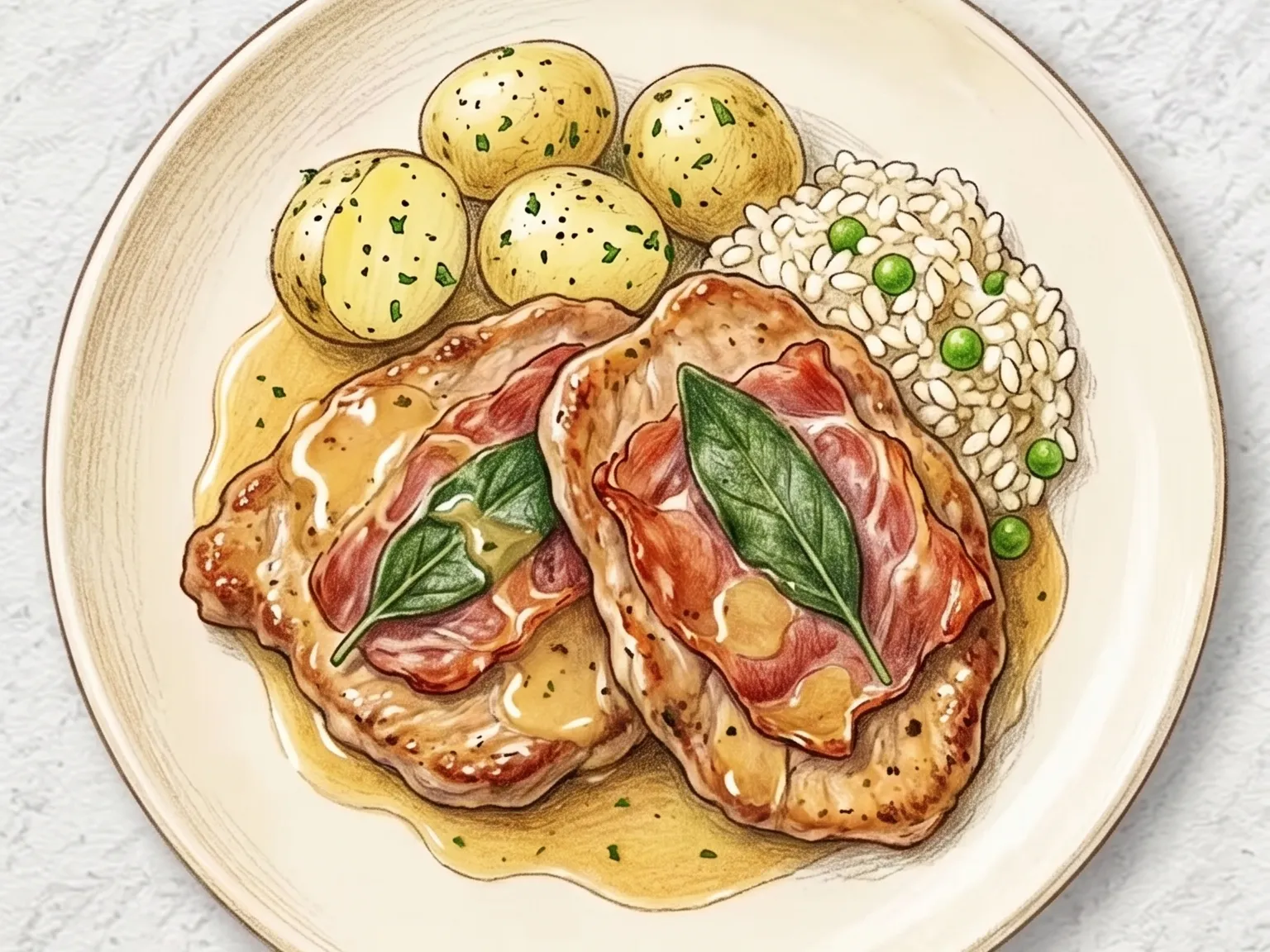
Veal saltimbocca pounds veal cutlets thin, tops each with a sage leaf and a slice of prosciutto pressed firmly by hand, dusts them lightly in flour, and sears them quickly in a hot pan before building a sauce with white wine and butter. Thin cutlets are essential because veal toughens rapidly with prolonged heat - the total cooking time should stay under two to three minutes per piece to keep the meat tender. Starting with the prosciutto side down lets the heat fuse it to the meat without needing toothpicks to hold it in place. When white wine hits the hot pan after the meat is removed, it lifts the caramelized fond from the bottom and forms the base of the sauce, which butter then emulsifies into a glossy, light finish. The sage leaf caught between the prosciutto and veal perfumes the meat with a subtle herbal note that pairs naturally with the prosciutto's cured saltiness.
Adjust Servings
Instructions
- 1
Pound veal thin and top each piece with sage and prosciutto.
- 2
Press lightly to secure and dust the veal lightly with flour.
- 3
Heat oil and quickly sear the veal, starting on the prosciutto side.
- 4
Flip, cook briefly, then transfer to a plate.
- 5
Add wine and butter to reduce into a sauce, then return veal to coat.
As an Amazon Associate, we may earn from qualifying purchases.
Tips
Nutrition (per serving)
More Recipes

Chicken Saltimbocca (Prosciutto and Sage Italian Chicken Sauté)
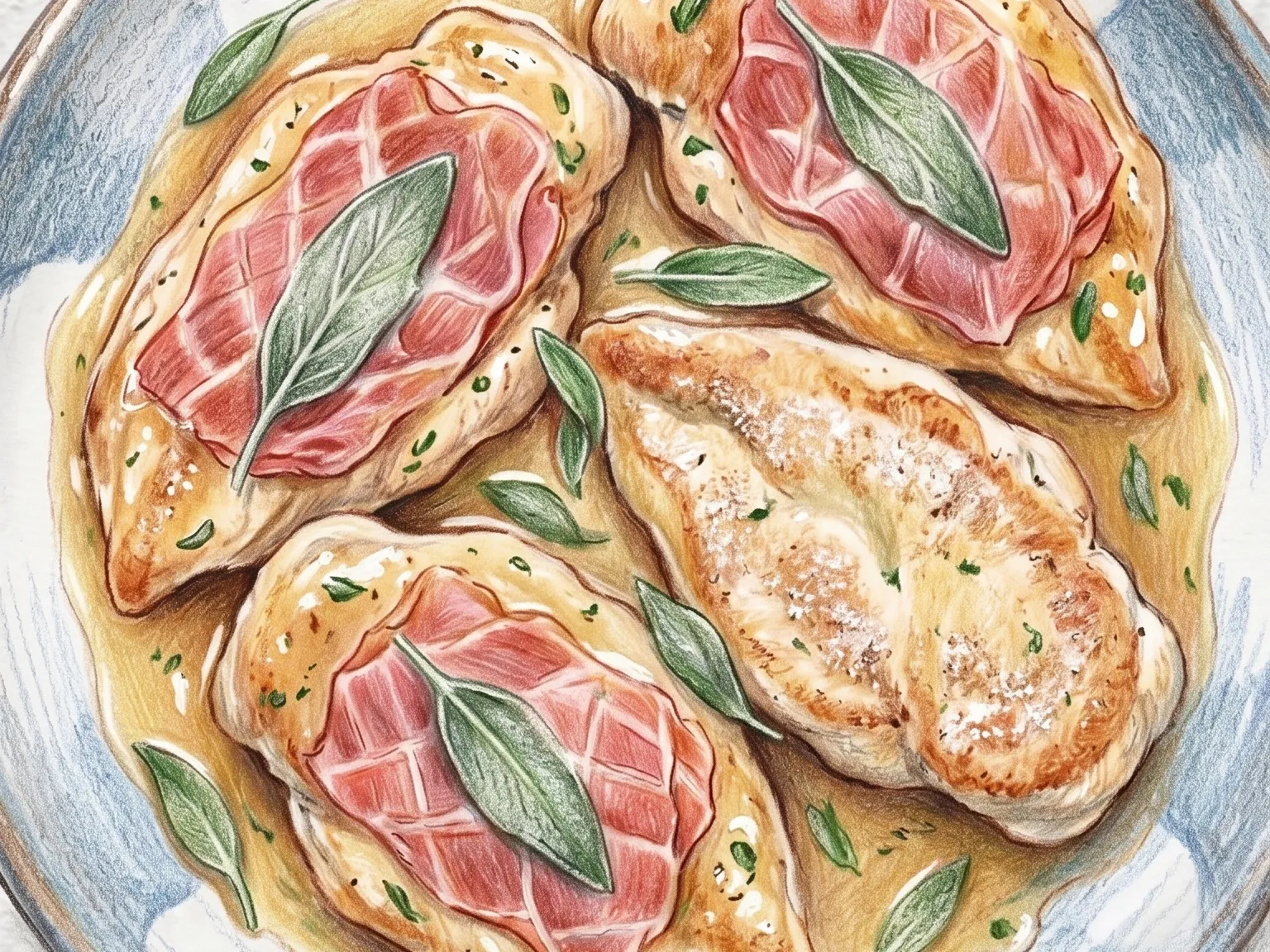
Chicken saltimbocca lays sage leaves and prosciutto over pounded chicken breast, sears the assembly in a pan, then finishes with a sauce made from white wine, chicken stock, and butter. The name means 'jumps in the mouth' in Italian, referring to how the salty depth of prosciutto and the aromatic intensity of sage leap out against the mild chicken. Dusting only the non-prosciutto side with flour gives the pan-contact surface a light crust while the prosciutto side crisps directly and the sage fries in the rendered fat. Deglazing with wine lifts the fond from the pan, and reducing it with stock by half concentrates the sauce into a glossy coating. Whisking in cold butter at the end emulsifies the liquid into a smooth, shiny finish.

Vitello Tonnato (Classic Italian dish)
Vitello Tonnato is a classic Italian dish of chilled sliced veal topped with a creamy tuna-caper sauce.

Ricotta Spinach Gnudi (Naked Ricotta Dumplings)
Ricotta spinach gnudi are Italian dumplings made by mixing ricotta cheese with thoroughly squeezed spinach, Parmigiano Reggiano, egg yolks, and a minimal amount of flour, then poaching in salted boiling water. The name 'gnudi' means 'naked' - these are essentially ravioli filling without the pasta shell, so the cheese and spinach flavors come through directly. Removing every bit of moisture from the spinach is the critical step; any residual water weakens the dough and causes the dumplings to fall apart during cooking. Once they float to the surface, one additional minute of poaching yields a pillowy, crumbly texture. A brown butter sauce with sage leaves adds a deep, nutty richness that complements the mild ricotta.

Osso Buco (Milanese Braised Veal Shank with Gremolata)
Osso buco dredges thick-cut veal shanks in flour and sears them in olive oil on all sides, then braises them with sauteed onion, carrot, and celery in a mixture of white wine, whole tomatoes, and chicken stock at 160 degrees Celsius for one and a half to two hours. The long, slow cooking converts the tough connective tissue around the bone into gelatin, making the meat fork-tender, while the marrow inside the bone melts into the sauce and enriches it with a deep, silky body. A gremolata of finely chopped parsley, lemon zest, and garlic is scattered over the finished dish - the lemon's bright acidity and the raw garlic's sharpness cut through the heavy braising liquid and lift the entire plate. Careful handling of the shanks throughout cooking is important to keep the prized marrow intact inside the bone.

Spaghetti Carbonara
Carbonara is a Roman pasta built on four core ingredients: guanciale, egg yolks, Pecorino Romano, and black pepper. The guanciale is rendered until crisp, and its fat becomes the base of the sauce. Off the heat, a mixture of yolks and grated cheese is tossed with the hot pasta and starchy cooking water to form a glossy emulsion - no cream involved. The dish takes under 25 minutes from start to finish, though temperature control at the sauce stage is critical to avoid scrambling the eggs.

Sweet Potato Gnocchi with Sage Butter
Sweet potato gnocchi with sage butter starts by steaming sweet potato to drive off moisture, then mashing it warm and gently folding in potato starch, flour, and egg yolk to form a soft dough. Minimal kneading prevents gluten development, keeping each piece fluffy and tender on the inside. The gnocchi are boiled until they float, then tossed in butter that has been cooked with sage leaves over medium heat until it turns hazelnut-brown and nutty. Chopped walnuts add crunch against the pillowy texture, and freshly grated Parmigiano Reggiano finishes the dish with a salty, crystalline accent.