Vichyssoise (French and potato soup)
Quick answer
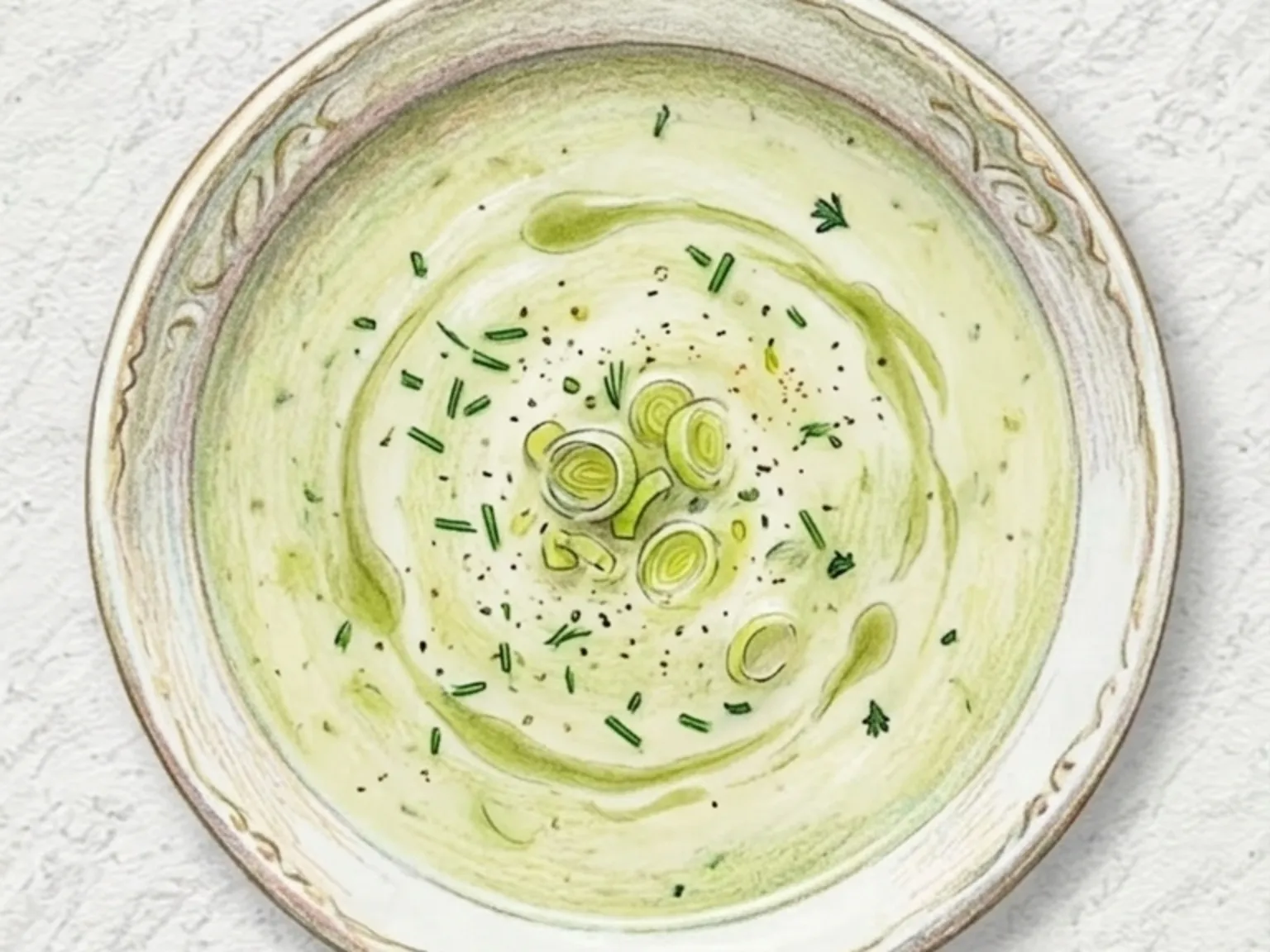
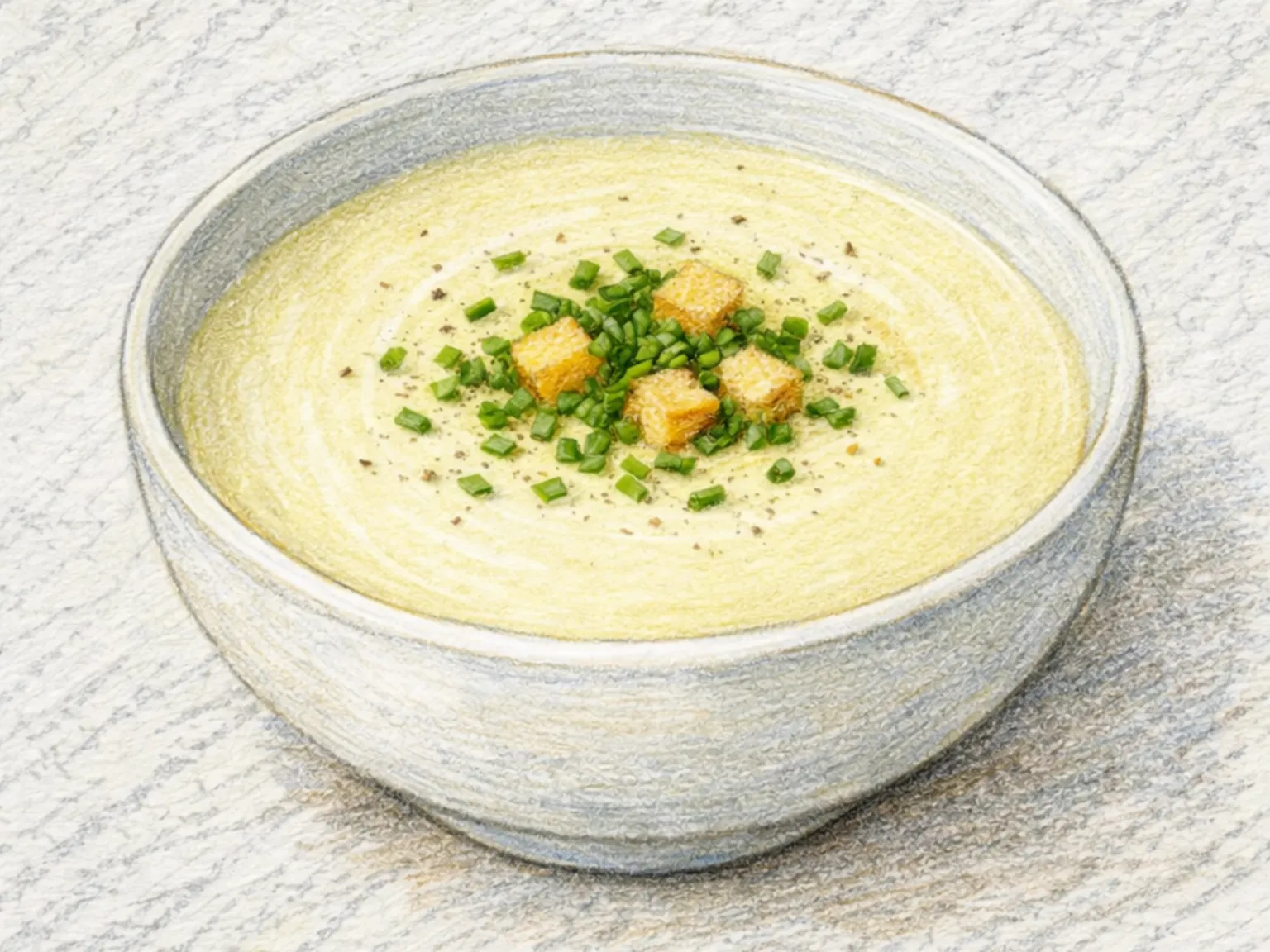
Vichyssoise is a cold French soup made by cooking thinly sliced leeks and cubed potatoes in butter, simmering them in chicken stock, blending the mixture until smooth, an...
What makes this special
- Silky cream and tender white leeks form the pale, chilled base of this French Vichyssoise potato soup.
- Sweating only the white leek portion without browning keeps the soup pale and gently sweet
- Seasoning slightly stronger than usual compensates for the flavor muting that chilling causes
Key ingredients
Core cooking flow
- 1 Split and rinse 250 g leeks well so no grit remains, then slice them thinly.
- 2 Melt 1 tablespoon butter in a pot over medium low heat.
- 3 Add the potatoes and stir for 1 minute so they are lightly coated with butter.
Vichyssoise is a cold French soup made by cooking thinly sliced leeks and cubed potatoes in butter, simmering them in chicken stock, blending the mixture until smooth, and finishing with heavy cream. To maintain the pale cream color and subtle sweetness, only the white parts of the leeks are used and cooked slowly over medium low heat without browning. Straining the blended soup through a fine sieve removes any remaining fibrous pieces from the leeks to create a velvety texture. Since cold serving temperatures dull the tongue's sensitivity to salt, the soup is seasoned with white pepper and salt while still warm to a slightly stronger level than usual. This ensures that the flavor remains balanced after the dish is thoroughly chilled. Serving this soup cold provides a clean, smooth, and gentle start to a multi-course meal.
Instructions
Read the steps as a cooking flow: prep, heat, seasoning, doneness control, and finish.
- 1Prep
Split and rinse 250 g leeks well so no grit remains, then slice them thinly.
Peel or trim the 300 g potatoes, cut them into small cubes, and rinse briefly to remove excess surface starch.
- 2Control
Melt 1 tablespoon butter in a pot over medium low heat.
Add the leeks and sweat them slowly for about 6 minutes, stirring often, until soft and glossy but not browned.
- 3Control
Add the potatoes and stir for 1 minute so they are lightly coated with butter.
Pour in 700 ml chicken stock, scraping the bottom of the pot to release any stuck bits before simmering.
- 4Control
When the soup starts to boil, reduce to low heat and leave the lid slightly open.
Simmer for about 18 minutes, until the potatoes crush easily with a spoon and the leeks look fully tender.
- 5Control
Turn off the heat and cool the soup for 5 minutes before blending to reduce splashing.
Blend until completely smooth, then strain it if a finer texture is desired.
- 6Season
Stir in 120 ml heavy cream, 0.75 teaspoon salt, and 0.25 teaspoon white pepper.
Season while warm so it tastes slightly stronger than usual, then cool and chill thoroughly before serving cold.
After the steps
Pick a recipe that fits this dish.
Continue with shared ingredients, meal pairings, or a similar method.
Recipes That Go Well With This
More Western →Based on shared ingredients and meal pairing
Potato Leek Soup
Potato leek soup is a French home-style cream soup made by sweating leeks and onion in butter over low heat, simmering with diced potatoes in chicken stock, and blending until velvety smooth. Cooking the leeks slowly is essential - it dissolves their raw sharpness into a sweet, mellow base that carries the entire soup. The potato starch provides natural body without any added thickener, and an immersion blender produces a seamless, silky texture. Heavy cream stirred in at the end adds a layer of richness and rounds out the flavor. The soup can be served hot for a comforting meal or chilled as vichyssoise for a refined summer starter.
Potato Au Gratin
Potato Au Gratin is a French baked potato dish where thinly sliced potatoes are layered with cream and Gruyere cheese, then baked until the top forms a deep golden crust. The potatoes must be sliced to a uniform two to three millimeters - a mandoline slicer ensures consistent thickness so every layer cooks at the same rate. A mixture of heavy cream and milk warmed gently with garlic is poured between each layer of potatoes, where it meets the potato starch and thickens into a binding sauce that holds the layers together. Gruyere is the classic cheese choice - it melts into long, stretchy strands and carries a nutty, slightly sweet flavor. It is distributed between the layers for internal richness and piled on top for the signature golden crust. After about fifty minutes at 180 degrees Celsius, the cream bubbles around the edges, the potatoes turn completely tender, and the surface cheese crisps into a crackling, browned cap.
Beet and Goat Cheese Salad
Beet and goat cheese salad begins with whole beets wrapped in foil and roasted at 200°C for forty-five to sixty minutes, long enough for their raw, earthy undertone to convert almost entirely into a concentrated, caramel-adjacent sweetness. Peeling the skins while the beets are still warm requires only the pressure of a paper towel - they slip off cleanly - and slicing them before they cool preserves the vivid crimson-purple cross-section that makes the dish visually striking. Crumbled goat cheese placed on the warm slices softens slightly, and its tangy acidity cuts through the dense sweetness of the roasted root rather than competing with it. Walnuts toasted briefly in a dry pan lose much of their raw bitterness, developing a nuttiness that bridges the mineral quality of the beet and the dairy sharpness of the cheese. Balsamic reduction does more than dress the plate: its concentrated sweet-tart intensity ties the separate components into a coherent whole. Arugula underneath the beet slices provides a peppery bitterness that sharpens the contrast against the sweetness, giving the salad a complexity well beyond what its short ingredient list suggests. A simple dressing of extra-virgin olive oil and lemon juice over the greens keeps the balance light and clear.
Lobster Bisque
Lobster bisque serves as a foundational dish within the French culinary tradition, specifically categorized as a smooth cream soup based on crustacean shells. The preparation begins by roasting the lobster shells in butter until they reach a dark, saturated color, a step that develops the base flavors of the dish. This is followed by a flambe process using cognac, which serves to eliminate any lingering bitterness from the shells while introducing a layer of smoky depth to the mixture. Once the shells are prepared, they are placed in a pot with fish stock, whole tomatoes, and a selection of aromatic vegetables to simmer for a minimum of thirty minutes. This extended simmering time allows for the maximum extraction of flavor from the lobster shells into the surrounding liquid. After the simmering process is complete, the mixture is passed through a fine sieve to remove all solid fragments and ensure a uniform consistency. The resulting broth is then combined with heavy cream, which provides a thick and velvety texture that characterizes the final soup. Fresh tarragon is incorporated to provide an herbal element that balances the concentrated richness of the cream and seafood. The lobster meat, which was set aside earlier in the process, is stirred into the hot liquid at the final stage of preparation to ensure that its texture remains tender and does not become tough. The final result is a soup that features a concentrated essence of the ocean and represents one of the most technical and polished preparations found in French cooking.
Serve with this
Korean Fish Cake Soup (Clear Anchovy Radish Broth)
Eomuk-tang is a Korean fish cake soup in which skewered fish cakes and thick radish slices simmer in a clear broth built from dried anchovies and kelp. The kelp must be removed the moment the water begins to boil, otherwise it releases a slimy texture that clouds the broth. Cutting the radish thick allows it to slowly release natural sweetness over the long simmer. Rinsing the fish cakes in hot water before adding them washes away surface oil and keeps the broth clear and clean. Soup soy sauce adjusts the seasoning, and green onion and black pepper finish the pot. Adding the radish before the fish cakes ensures it has enough time to fully soften and sweeten the broth, since it takes longer than the eomuk to cook through.
Bam Tiramisu (Chestnut Tiramisu)
Chestnut tiramisu is a variation of the traditional Italian dessert that incorporates chestnut puree into the mascarpone cheese filling. This modification transforms a standard cafe dessert into a preparation specifically associated with the autumn season in Korea. The fundamental elements of the recipe remain consistent with the classic version. It utilizes ladyfinger biscuits that have been soaked in espresso, a filling made of whipped mascarpone and cream, and a final layer of cocoa powder. However, the introduction of chestnut puree alters the profile of the cream. Instead of a simple dairy richness, the mixture takes on an earthy quality. Using a puree made from chestnuts boiled at home, rather than a store-bought paste, helps maintain the natural grain of the nut. This provides the cream with a specific texture that is noticeable in every spoonful. When preparing the ladyfingers, the espresso soak requires a high level of precision. Each biscuit should be dipped for approximately one to two seconds. If the ladyfingers are submerged for a longer duration, they absorb an excessive amount of liquid. This leads to a waterlogged consistency which can cause the structural layers of the dessert to collapse while it sits in the refrigerator. The assembly process follows a predictable sequence. A layer of soaked ladyfingers is placed at the bottom, followed by a layer of the chestnut cream. This pattern is repeated once more before the entire dish is placed in the refrigerator to rest for at least four hours. This period of refrigeration is essential to the final outcome. During these hours, the ladyfingers absorb moisture from both the espresso and the cream layer above them. This process changes the biscuits from a crunchy state to a soft texture similar to cake, which allows for clean slices. Just before the dessert is served, a thin layer of cocoa powder is applied to the top. This adds a bitter element that balances the sweetness of the chestnuts. Preparing the tiramisu in individual glass containers or cups ensures that the portions are easy to manage and allows the different layers of the dessert to be clearly visible from the side.
Gochujang Eggplant Ricotta Lasagna Rolls
Gochujang eggplant ricotta lasagna rolls begin by roasting diced eggplant with olive oil and salt at 200 degrees Celsius. Fifteen minutes in the oven drive out moisture and collapse the flesh into a soft, dense interior. The roasted eggplant is combined with ricotta and spread across boiled lasagna sheets, which are rolled tight and arranged in a baking dish. A sauce of tomato puree, gochujang, sauteed onion and garlic, and dried oregano is simmered for ten minutes until the chili paste loses its raw edge and the tomato acidity settles into the mix, producing a layer that is spicy and faintly tangy. The rolled sheets are covered in sauce and topped with mozzarella, then baked until the cheese browns and blisters into a firm crust. Below that crust the eggplant-ricotta filling stays moist and soft, and the contrast between the crisp cheese cap and the tender interior defines each slice.
Similar recipes
Cream of Mushroom Soup
The preparation of cream of mushroom soup begins by sautéing chopped onion and minced garlic to establish a fragrant aromatic foundation for the dish. Once these aromatics have softened, sliced button mushrooms are added to a mixture of butter and olive oil. These mushrooms are cooked for a duration of eight to ten minutes, a process that continues until their internal moisture has fully evaporated and the slices have taken on a deep brown color. Dried thyme is incorporated during the cooking process to provide an earthy herb quality that works in conjunction with the savory profile of the mushrooms. To build the body of the soup, flour is stirred into the fat and cooked for approximately one minute. This step is essential for creating a roux that will thicken the liquid effectively while ensuring the base remains smooth. Chicken stock is then introduced by whisking it in gradually, which prevents the formation of lumps. Heavy cream is added at the final stage of cooking, followed by a brief period of simmering to allow the flavors to combine and the texture to gain its characteristic richness. To achieve the final consistency, only half of the soup is processed in a blender. This technique produces a result that is simultaneously velvety and full of chunky mushroom pieces.
Sweet Potato Cream Cheese Galette
The success of a rustic galette depends on maintaining cold temperatures during the pastry preparation. By rubbing cold butter into flour to create coarse crumbs, the dough bakes into a crisp, laminated shell with distinct layers. This flat pastry base holds a filling of mashed sweet potato combined with cream cheese, honey, and ground cinnamon. The sweet potato offers a mellow sweetness, while the cream cheese introduces a sharp acidity that balances the overall profile. Honey serves as the binding agent that pulls these components into a unified mixture. Cinnamon provides a warm aromatic element that enhances the autumnal quality of the bake. It is essential to handle the dough quickly; if the butter begins to soften, returning the pastry to the refrigerator immediately preserves the flaky texture. When assembling, leaving a clear four-centimeter border around the filling ensures a clean folding process and prevents leakage in the oven. Using a drier variety of sweet potato, such as the chestnut-type, is effective in preventing a soggy bottom as it contains less moisture. For the best experience, the galette should be served while still warm to enjoy the contrast between the brittle crust and the soft, creamy center. Small amounts of ginger or cardamom can be substituted for cinnamon to create different aromatic profiles.
Charlotte Russe (Ladyfinger Bavarian Cream Chilled Dessert)
Charlotte Russe is a chilled French dessert built around a mold lined with ladyfinger biscuits and filled with Bavarian cream. The cream base is a creme anglaise, a cooked custard of egg yolks, milk, and sugar, into which bloomed gelatin is stirred while warm. The mixture is cooled until it begins to thicken at the edges, then folded together with softly whipped cream before it can fully set. This timing matters: too early and the cream deflates the custard, too late and the gelatin seizes before the mousse can be poured. Ladyfingers are arranged vertically around the interior of the mold, their sugar-dusted side facing outward. As the mousse sets over several hours in the refrigerator, the biscuits absorb moisture from the inside and soften while their exterior stays dry. Unmolding reveals a neat cylinder of pale biscuit encasing smooth, ivory mousse. The dessert stands on its own, but a raspberry or strawberry coulis poured alongside adds bright acidity that cuts through the fat and brings the sweetness into balance.