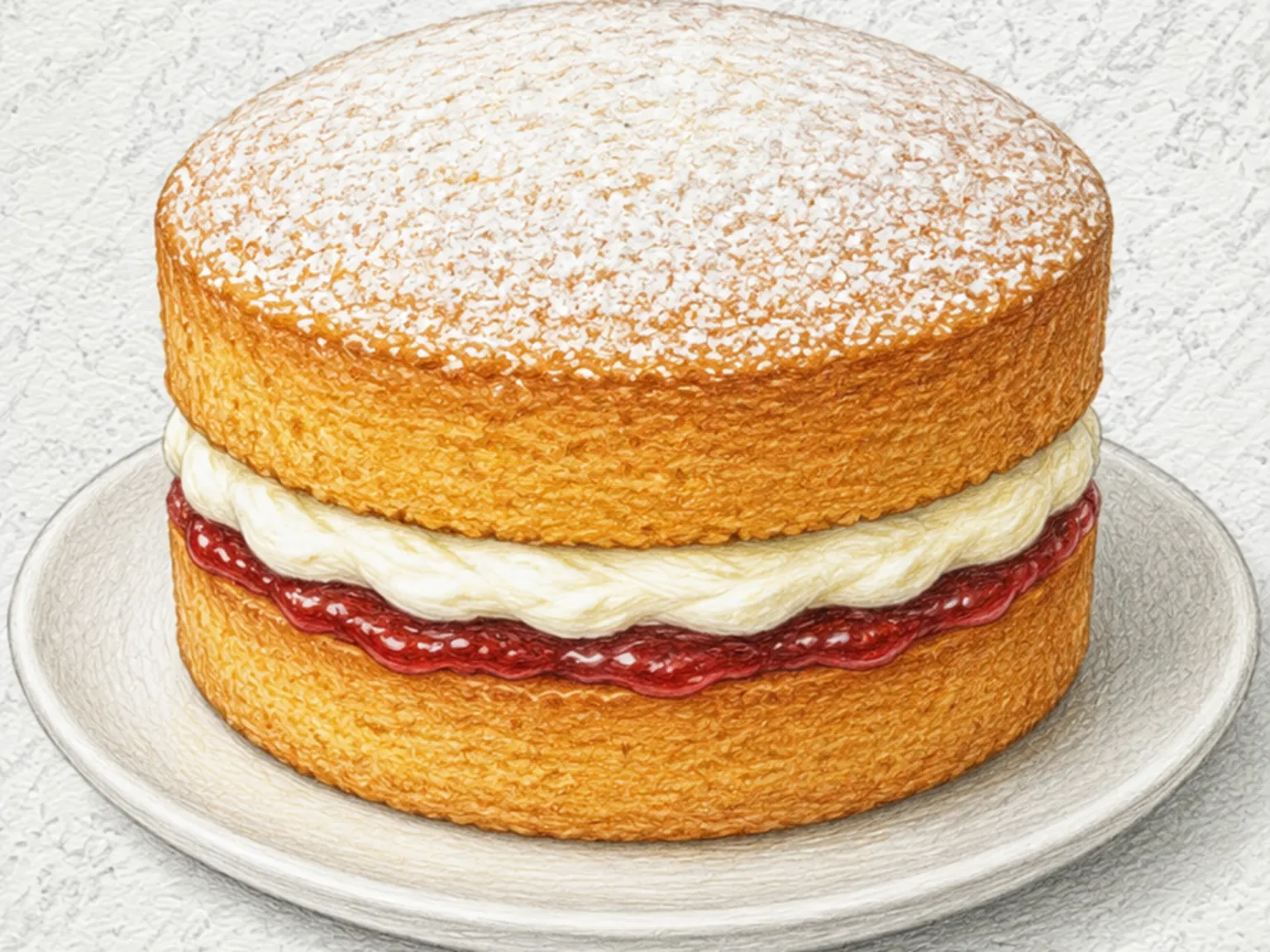
Victoria Sponge Cake (British Jam and Cream Layered Cake)
Equal weights of butter and sugar are creamed together, then eggs and cake flour are added to produce two round sponge layers that are sandwiched with strawberry jam and whipped cream - the defining structure of this quintessential British cake. Named after Queen Victoria, the cake is deliberately simple in presentation: no elaborate frosting or tiered decoration, just a dusting of powdered sugar on top. Thorough creaming is essential to a light rise, and room-temperature eggs integrate into the batter without curdling. The jam provides a bright, tart contrast to the buttery sponge, while the whipped cream softens each bite with cool richness. Both layers must cool completely before assembly, as warm sponge melts the cream and causes the filling to slide. Refrigerated, the cake stays moist through the next day, and the jam and cream flavors deepen as they settle into the sponge overnight. It is the standard cake served at British afternoon teas and garden parties.
Adjust Servings
Instructions
- 1
Preheat the oven to 175C and line two 15 cm round pans with parchment.
- 2
Cream butter and sugar until pale and fluffy.
- 3
Beat in eggs one at a time, then fold in sifted flour and baking powder.
- 4
Divide batter into pans, bake for 22-25 minutes, then cool completely.
- 5
Whip cream to medium peaks, spread jam and cream on one layer, then sandwich with the second layer.
As an Amazon Associate, we may earn from qualifying purchases.
Tips
Nutrition (per serving)
More Recipes

Lemon Drizzle Cake (Syrup-Soaked British Lemon Loaf)
A British loaf cake that owes its lasting moisture to a lemon syrup poured over the surface straight from the oven. Creaming butter and sugar thoroughly at the start incorporates air for a lighter crumb, while lemon zest folded into the batter releases its essential oils during baking, filling the kitchen with citrus fragrance. The critical step comes after baking: a hot syrup of freshly squeezed lemon juice and sugar is drizzled over the cake while it is still warm, and the open crumb absorbs the liquid rapidly. As the cake cools, a thin crust of crystallized sugar forms on top, adding a faintly crunchy texture that gives way to the soft, syrup-soaked interior beneath. A skewer test determines doneness; underbaked cake collapses, while overbaked cake lacks the porosity to absorb the syrup fully. Wrapping the cooled cake and leaving it overnight allows the syrup to distribute evenly, deepening both the lemon flavor and the moist texture. It is a staple of the English afternoon tea table, needing no elaborate decoration to impress.

Sticky Toffee Pudding
Sticky toffee pudding is a British dessert consisting of a moist date sponge cake drenched in a warm, buttery toffee sauce. Chopped dates are soaked in hot water with baking soda, which softens the fruit into a near-puree that distributes through the batter, providing natural sweetness and exceptional moisture. Brown sugar in the batter deepens the caramel character, and eggs give the sponge just enough structure to hold together under the weight of the sauce. The toffee sauce is made by simmering heavy cream with additional brown sugar and butter until it thickens to a pourable consistency that coats a spoon. Poured over the warm cake, the sauce seeps into the crumb and pools around the edges, creating a sticky, glossy finish. Reheating the sauce just before serving ensures it flows freely and releases its full butterscotch aroma. A scoop of vanilla ice cream on the side provides a cold, clean contrast that prevents the richness from becoming overwhelming. The dates must be thoroughly soaked - under-softened pieces leave gritty pockets in an otherwise uniformly tender cake.

Eton Mess (Crushed Meringue, Cream & Strawberry Mix)
Eton mess is a British dessert originating from Eton College, made by roughly combining broken meringue, whipped cream, and strawberries into a deliberate jumble. The name describes the method - there is no careful layering, just a generous pile of ingredients mixed together in a glass or bowl. The meringue is baked until crisp outside and marshmallow-soft inside, then crushed into large, irregular shards. Some strawberries are mashed to create red streaks through the cream while others are left whole for fresh bursts of fruit. The cream is whipped to soft, billowy peaks that fold loosely around the other components. Each spoonful delivers a different ratio of crunch, softness, sweetness, and tartness. Eton mess must be assembled and served without delay, as the meringue begins absorbing moisture from the cream and fruit immediately.

Blueberry Lemon Scones
Blueberry lemon scones bring together the bright zing of lemon zest and the sweet tartness of fresh blueberries in a buttery, crumbly pastry. Cold butter is cut into flour and the dough is bound with heavy cream, producing scones that crack open with a crisp exterior and a layered, tender interior. Lemon zest is distributed throughout the dough, so every bite opens with a citrus fragrance before giving way to the pop of a blueberry and its rush of sweet-tart juice. Sugar is kept moderate, allowing the fruit and citrus to lead the flavor profile, which also makes these scones a welcoming base for clotted cream or preserves.

Bubble and Squeak (Pan-Fried Mashed Potato and Cabbage Cake)
Bubble and squeak is a British kitchen staple that combines mashed boiled potatoes with blanched, chopped cabbage, presses the mixture flat in a hot pan, and fries both sides until a golden-brown crust forms. The name comes from the sound the cabbage moisture makes when it hits the hot fat. Sauteing diced onion in butter before folding it into the potato-cabbage mix adds a caramelized sweetness that lifts the otherwise plain ingredients. Pressing firmly with a spatula while cooking is essential for building a crisp shell, and adding a tablespoon of flour helps bind the mixture if the potatoes are too wet. This dish has been a staple of British households for generations, traditionally made from leftover Sunday roast vegetables.

Bangers and Mash
Bangers and mash is a cornerstone of British home cooking, pairing pan-fried pork sausages with creamy mashed potatoes under a ladle of onion gravy. The sausages are cooked until their casings turn a deep brown and develop a slight snap. Potatoes are boiled until tender, then mashed with butter and warm milk to a smooth consistency. The onion gravy, which distinguishes the dish, is built by slowly caramelizing sliced onions, then deglazing with beef broth and thickening with a small amount of flour. The gravy's depth ties together the saltiness of the sausage and the neutral base of the mash. The complete dish comes together in about thirty minutes and remains one of the most frequently ordered items in British pubs.