Vitello Tonnato (Classic Italian dish)
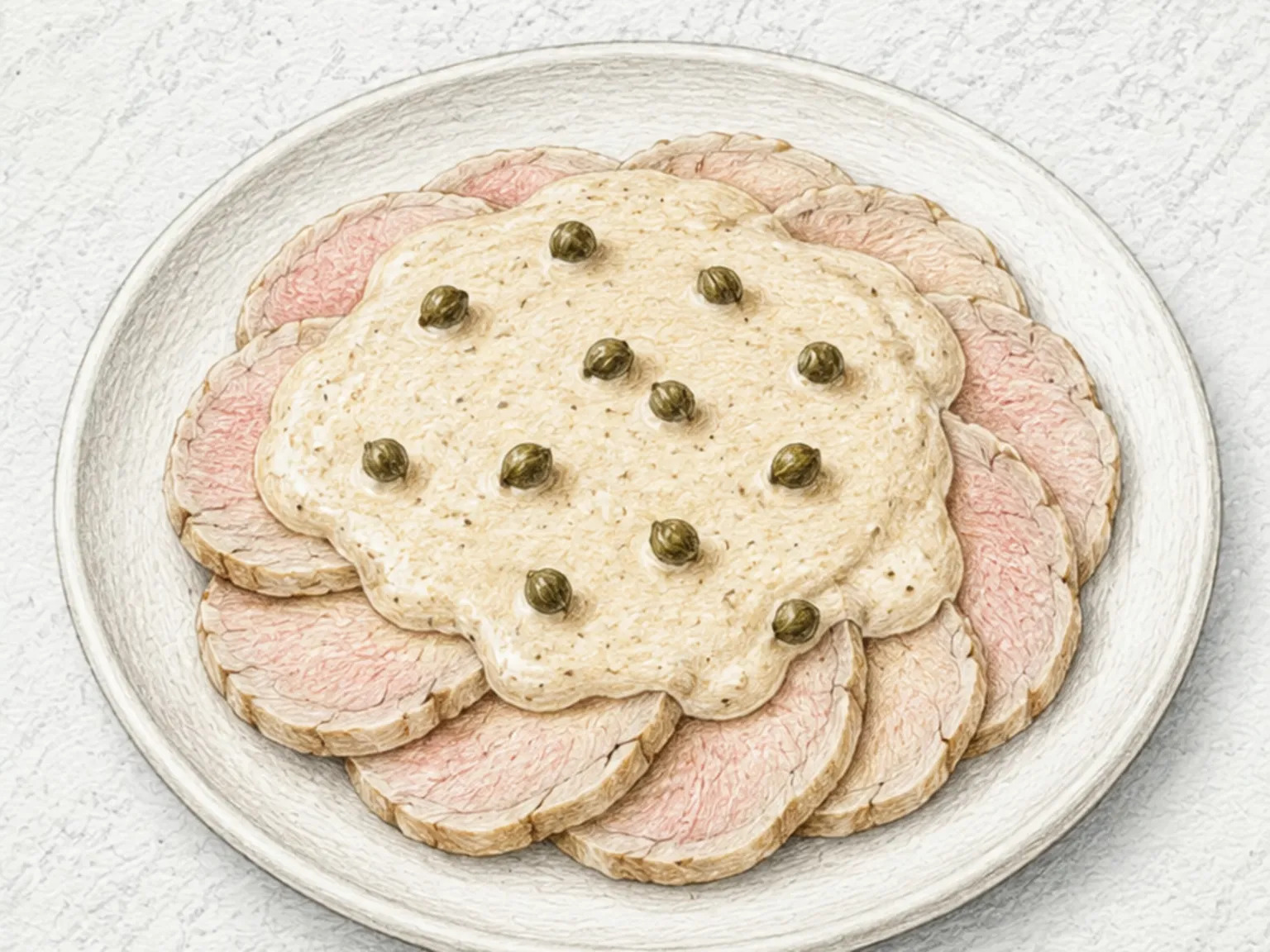
Vitello Tonnato is a classic Italian dish of chilled sliced veal topped with a creamy tuna-caper sauce.
Adjust Servings
Instructions
- 1
Season veal lightly and simmer with onion and wine over low heat until cooked.
- 2
Cool completely, then slice thinly and chill.
- 3
Blend tuna, mayo, capers, anchovy, and lemon juice into a smooth sauce.
- 4
Thin the sauce with a little cooking liquid if needed.
- 5
Arrange veal slices on a plate and spoon the sauce generously over top.
As an Amazon Associate, we may earn from qualifying purchases.
Tips
Nutrition (per serving)
More Recipes

Veal Saltimbocca (Italian Veal Cutlets Dish)
Veal saltimbocca pounds veal cutlets thin, tops each with a sage leaf and a slice of prosciutto pressed firmly by hand, dusts them lightly in flour, and sears them quickly in a hot pan before building a sauce with white wine and butter. Thin cutlets are essential because veal toughens rapidly with prolonged heat - the total cooking time should stay under two to three minutes per piece to keep the meat tender. Starting with the prosciutto side down lets the heat fuse it to the meat without needing toothpicks to hold it in place. When white wine hits the hot pan after the meat is removed, it lifts the caramelized fond from the bottom and forms the base of the sauce, which butter then emulsifies into a glossy, light finish. The sage leaf caught between the prosciutto and veal perfumes the meat with a subtle herbal note that pairs naturally with the prosciutto's cured saltiness.

Salmon Piccata
Salmon piccata is an Italian fish dish where salmon fillets are seasoned, dusted in a thin layer of flour, and pan-seared in olive oil until golden on both sides. The flour coating promotes a Maillard crust on the surface while sealing moisture inside the flesh. Melting butter in the same pan and deglazing with lemon juice and chicken stock dissolves the caramelized fond into a bright sauce. Capers add bursts of briny saltiness that meet the lemon's acidity to create the piccata sauce's signature sharp, savory character, cutting cleanly through the salmon's rich fat. Because salmon dries out quickly when overcooked, the final step of returning it to the sauce should last no more than two minutes.

Chicken Saltimbocca (Prosciutto and Sage Italian Chicken Sauté)
Chicken saltimbocca lays sage leaves and prosciutto over pounded chicken breast, sears the assembly in a pan, then finishes with a sauce made from white wine, chicken stock, and butter. The name means 'jumps in the mouth' in Italian, referring to how the salty depth of prosciutto and the aromatic intensity of sage leap out against the mild chicken. Dusting only the non-prosciutto side with flour gives the pan-contact surface a light crust while the prosciutto side crisps directly and the sage fries in the rendered fat. Deglazing with wine lifts the fond from the pan, and reducing it with stock by half concentrates the sauce into a glossy coating. Whisking in cold butter at the end emulsifies the liquid into a smooth, shiny finish.

Calzone
Calzone rolls pizza dough into a circle, fills one half with ricotta, mozzarella, diced ham, and basil, then folds into a half-moon shape, seals the edges with a fork, and bakes until golden at 220 degrees Celsius. Leaving a two-centimeter border free of filling is critical - overstuffing causes steam pressure to burst the seam during baking. Brushing a thin line of water along the edge before pressing with a fork creates a tighter seal. Fifteen to twenty minutes in a preheated oven produces a crisp, golden exterior while the interior heats the ricotta into a soft cream and melts the mozzarella into stretchy strings. Brushing olive oil on the surface before baking adds a richer color and a slight nuttiness to the crust. Tomato sauce served on the side for dipping provides an acidic counterpoint that cuts through the dense cheese filling.

Antipasto Salad
Antipasto - literally 'before the meal' in Italian - is a course of cured meats, cheeses, olives, and preserved vegetables served at the start of an Italian dinner, and this salad reformats that tradition into a single composed bowl. Crisp romaine or iceberg lettuce forms the base, topped with sliced salami, capicola, provolone, marinated artichoke hearts, roasted red peppers, and briny Kalamata olives. A red wine vinegar dressing with dried oregano and garlic ties the components together with a sharp, herbal acidity. The salad works because every ingredient brings a different intensity - salty cured meat, tangy cheese, sweet peppers, and bitter greens - so no two bites taste the same. Italian-American delis in New York and New Jersey popularized this format in the mid-20th century, and it has since become a fixture of catered lunches and family gatherings.

Sweet Potato Gnocchi with Sage Butter
Sweet potato gnocchi with sage butter starts by steaming sweet potato to drive off moisture, then mashing it warm and gently folding in potato starch, flour, and egg yolk to form a soft dough. Minimal kneading prevents gluten development, keeping each piece fluffy and tender on the inside. The gnocchi are boiled until they float, then tossed in butter that has been cooked with sage leaves over medium heat until it turns hazelnut-brown and nutty. Chopped walnuts add crunch against the pillowy texture, and freshly grated Parmigiano Reggiano finishes the dish with a salty, crystalline accent.