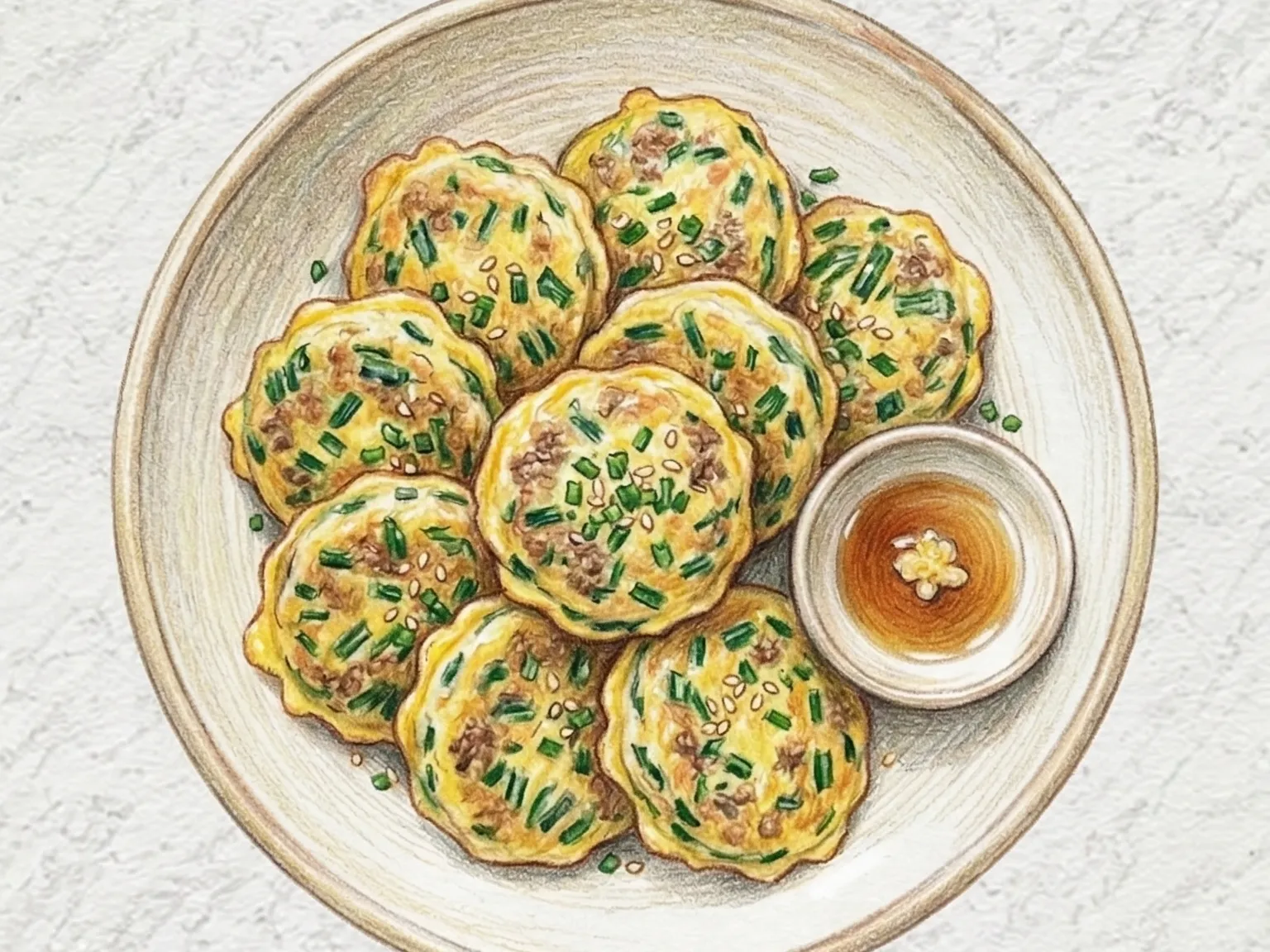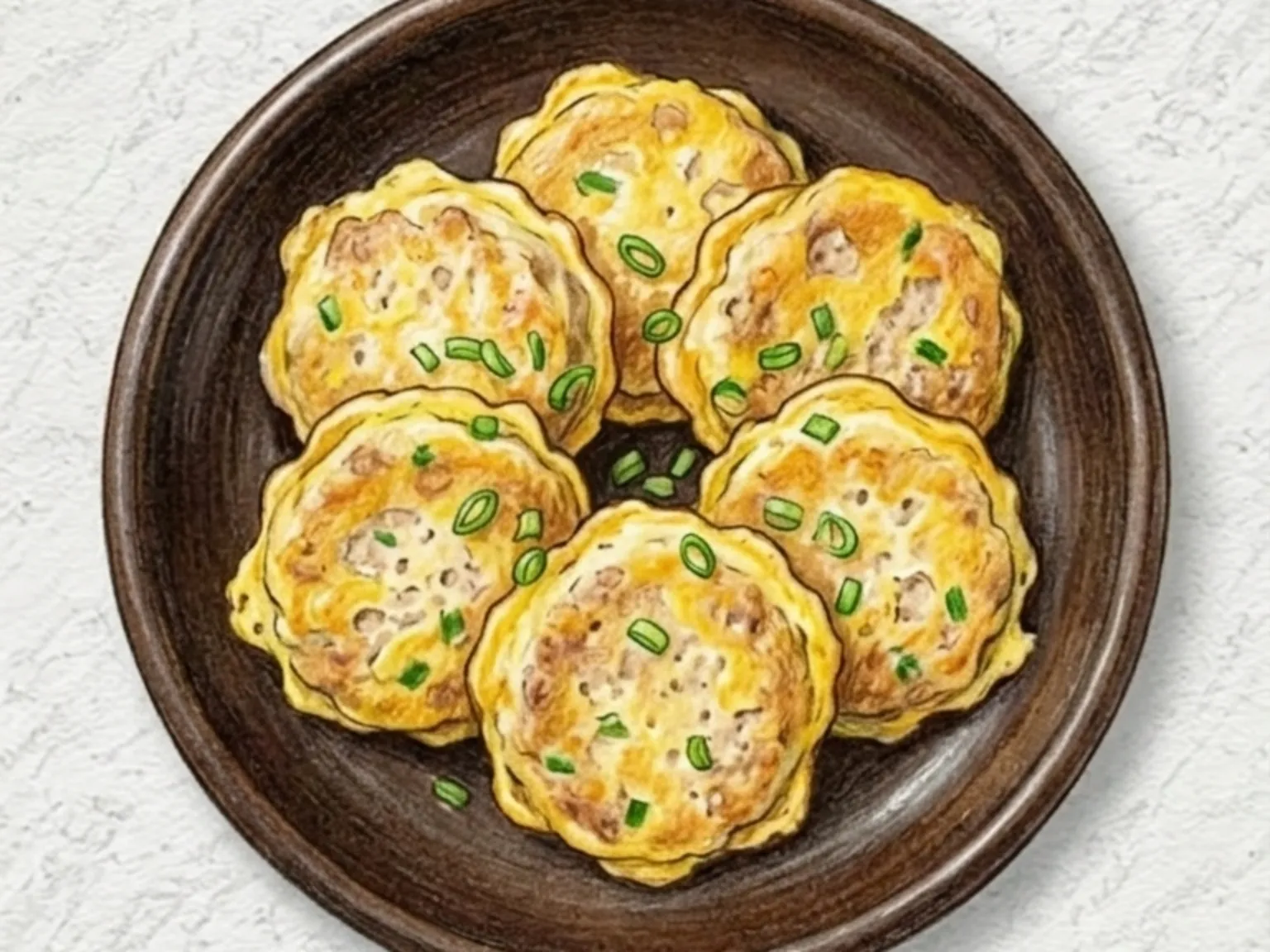
Korean Meatball Jeon (Beef and Tofu Pan-Fried Meatball Patty)
Ground beef is kneaded with pressed tofu, minced onion, chopped scallion, and soy sauce until the mixture becomes sticky enough to hold its shape. Bite-sized balls are flattened slightly, dredged in flour, dipped in beaten egg, and pan-fried on both sides over medium heat. The egg wash forms a thin golden casing that seals in moisture, and the tofu in the filling makes each bite softer and lighter than an all-meat patty. Wanja-jeon is a fixture on Korean holiday tables and ancestral rite spreads, and it travels well in lunch boxes since the flavor and texture hold up at room temperature.
Adjust Servings
Instructions
- 1
Squeeze tofu dry and mash it.
- 2
Mix beef, tofu, onion, scallion, and soy sauce thoroughly.
- 3
Shape into small balls and flatten slightly.
- 4
Coat with flour, then dip in beaten egg.
- 5
Pan-fry both sides over medium heat.
- 6
Remove when fully cooked through and drain oil.
As an Amazon Associate, we may earn from qualifying purchases.
Tips
Nutrition (per serving)
More Recipes

Korean Beef Jeon (Egg-Coated Pan-Fried Thin Beef Slice)
Thinly sliced beef round is seasoned with salt, pepper, and garlic, dusted in flour, then dipped in beaten egg and pan-fried over medium heat. The flour layer bonds the egg batter to the meat, keeping the coating intact through cooking, while a short fry time preserves the beef's soft grain. Yukjeon is a staple of Korean holiday spreads and gathering tables, often served alongside other assorted jeon.

Korean Tofu Jeon (Golden Egg-Coated Pan-Fried Tofu)
Dubu-jeon is a Korean pan-fried tofu dish where firm tofu is sliced into 1 cm thick pieces, seasoned with salt and pepper, dusted in flour, dipped in beaten egg, and fried until golden. Pressing the tofu for at least fifteen minutes under a heavy weight wrapped in paper towels is the most important step-excess moisture causes oil to splatter and prevents the egg coating from adhering properly. Each side needs three to four uninterrupted minutes over medium heat to develop an even golden crust; flipping too often strips the egg batter away. A dipping sauce of soy sauce, vinegar, and chili flakes transforms the mild, nutty tofu into something more complex, adding salt, acidity, and heat that complement the plain simplicity of the base.

Korean Stuffed Chili Pepper Pancake
Gochu-jeon is a Korean holiday pancake made by splitting mild green chili peppers lengthwise, removing the seeds, stuffing them with a filling of ground pork mixed with pressed tofu and garlic, then coating in flour and egg before pan-frying. The pepper's gentle heat wraps around the pork filling's savory richness and the tofu's silky softness, creating a layered contrast in every bite. Filling each pepper to about seventy percent capacity prevents bursting during cooking, and using cucumber peppers instead of regular green chilies eliminates nearly all spiciness for milder palates. This jeon is a fixture on Seollal and Chuseok tables, and it tastes best served warm with a soy-vinegar dipping sauce that brightens the meat filling's umami.

Korean Stuffed Shiitake Jeon
Pyogo-jeon is a Korean holiday dish of fresh shiitake mushroom caps stuffed with seasoned ground pork, coated in flour and egg batter, and pan-fried until golden. After removing the stems, the inner surface of each cap is dusted with flour-this thin starch layer acts as glue that prevents the meat filling from separating during cooking. Placing the meat side down first allows the filling to set from the heat before flipping, so the stuffed mushroom holds its shape throughout. Three to four minutes per side over medium heat is enough to turn the egg coating golden-brown while cooking the pork through completely. The shiitake's deep, earthy umami merges with the pork juices inside the sealed egg shell, delivering a concentrated savory bite.

Korean Perilla Leaf Chicken Jeon
Perilla leaves are stuffed with a mixture of ground chicken and firm tofu, dusted in flour, dipped in egg, and pan-fried. The chicken keeps the filling lean and light, while the tofu adds a soft, creamy texture without heaviness. Perilla's robust herbal scent complements the mild chicken, and minced green onion and garlic round out the seasoning. Each piece is bite-sized and holds up well even after cooling, making it suitable for packed meals.

Korean Eggplant Pancakes (Egg-Battered Pan-Fried Eggplant)
Gaji-jeon belongs to the Korean jeon family - vegetables dipped in egg wash and pan-fried in a thin layer of oil, a technique that appears at ancestral rites (jesa) and holiday tables. Eggplant rounds are sliced about 7mm thick - thin enough to cook through but thick enough to maintain a soft center. A light dusting of flour before the egg wash helps the batter adhere. The egg coating sets into a golden, lacy shell in the pan, while the eggplant inside steams in its own moisture. The result is a contrast between the crisp, slightly eggy exterior and the collapsing, custardy eggplant within. Dipped in a simple soy-vinegar sauce, each piece delivers a clean, understated flavor. Korean families often fry gaji-jeon alongside hobak-jeon and other vegetable jeon for Chuseok.