Korean Meatball Soup
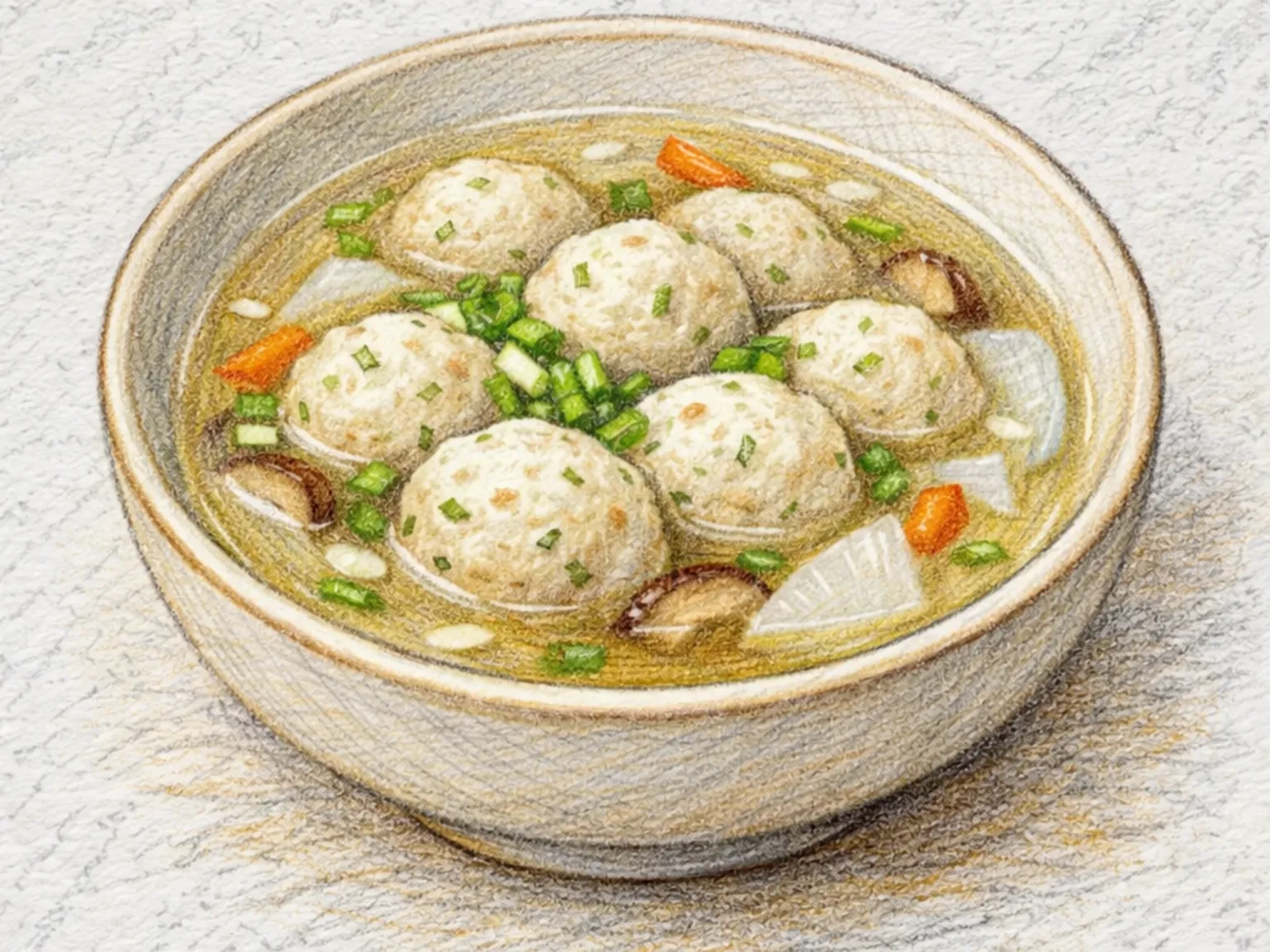
Wanja-tang is a clear Korean soup featuring handmade meatballs of ground beef, crumbled tofu, egg, garlic, and green onion. Each meatball is dropped into simmering anchovy broth, where it floats to the surface as it firms up and then cooks for eight more minutes until done through. Soup soy sauce is the main seasoning, keeping the broth transparent and letting the meaty flavor of the wanja come forward. Kneading the mixture thoroughly before shaping is essential, as it binds the tofu and beef into a cohesive ball that holds together during boiling.
Adjust Servings
Instructions
- 1
Squeeze and crumble tofu, then mix with ground beef.
- 2
Add egg, garlic, and chopped green onion, then form bite-sized meatballs.
- 3
Bring anchovy broth to a boil and drop in meatballs one by one.
- 4
Once meatballs float, simmer for 8 minutes.
- 5
Season with soup soy sauce and add extra green onion before finishing.
As an Amazon Associate, we may earn from qualifying purchases.
Tips
Nutrition (per serving)
More Recipes

Korean Burdock Root Soup (Earthy Burdock and Beef Clear Broth)
Ueong-guk is a clear Korean soup that highlights the earthy, almost nutty character of burdock root. Julienned burdock is first stir-fried in sesame oil with thinly sliced beef until the root's raw edge mellows and a toasted aroma rises from the pan. Water is then added and the pot brought to a simmer, during which the burdock's tough fibers gradually soften while maintaining enough structure to provide a pleasant chew. The broth takes on a light brown tint from the initial stir-fry, carrying the sesame and caramelized burdock flavors through to the last spoonful. Soup soy sauce seasons the liquid with umami rather than straight salt, and minced garlic stirred in near the end adds a quiet warmth. Burdock is naturally high in dietary fiber, giving this soup a reputation as a digestive-friendly choice. The root is at its best from autumn through winter, when its sugars concentrate underground, and the soup's understated flavor makes it an easy complement to a multi-dish Korean meal.

Muguk (Korean Radish Anchovy Broth Soup)
Muguk is the most elemental expression of Korean soup - radish simmered in anchovy-kelp stock until the broth turns clear, sweet, and gently savory. The radish does nearly all the work: as it softens, its natural sugars and starch leach into the water, creating a broth that is mild yet far from bland. Seasoned with nothing more than soup soy sauce, garlic, and sliced green onion, muguk is the canvas upon which countless variations are painted. Add beef and it becomes sogogi-muguk; add dried pollock and it becomes hwangtae-muguk. On its own, it pairs with virtually any banchan because its flavor never competes. The soup's simplicity is also its practical advantage - a single radish, a handful of dried anchovies, and a strip of kelp are enough to produce a pot that feeds a family. Korean households return to muguk again and again precisely because it demands so little yet delivers a clean, warming comfort that few other dishes can match. It reheats without loss of quality and often improves overnight as the radish continues to soften and sweeten.

Dongjuk-tang (Korean Surf Clam Broth)
Dongjuk-tang is a Korean surf clam soup where purged clams simmer with radish in water to produce a briny, naturally sweet broth with almost no added seasoning. The radish goes in first for six minutes to build a sweet base, and the clams follow for three to four minutes - they are done the moment their shells open, and cooking any longer toughens the meat. Clams that remain shut after cooking must be discarded. Water dropwort stirred in at the end contributes a fresh, herbaceous fragrance, and a single cheongyang chili pepper adds a mild, lingering heat that tempers the ocean flavor without masking it.

Korean Beef Bean Sprout Soup
Sogogi sukju-guk is a quick Korean soup where seared beef and crisp mung bean sprouts come together in a clear, invigorating broth. The beef brisket is first stir-fried in sesame oil to render its fat and deepen its flavor, then water is added and brought to a rolling boil. Bean sprouts enter the pot only in the final minutes so they retain their signature crunch - the plump heads snap between the teeth while the slender tails wilt just enough to release moisture that lightens and clarifies the broth. The contrast between the beefy richness and the sprouts' clean, almost grassy freshness keeps the soup feeling bright rather than heavy. Soup soy sauce and a spoonful of minced garlic round out the seasoning without masking the main ingredients. Because bean sprouts lose their texture quickly once overcooked, the soup is best ladled into bowls the moment it is done. Koreans often spoon it over steamed rice for a fast, satisfying meal that feels both nourishing and easy on the stomach.

Korean Andong Guksi (Clear Beef Broth Celebration Noodles)
Andong guksi is a noodle tradition from the city of Andong in North Gyeongsang Province, where it has been served at weddings, ancestral rites, and important family events for centuries - in Korean culture, long noodles symbolize longevity. The broth is made by simmering beef brisket and bones for hours until the liquid is clear yet deeply flavored, with a clean gelatin richness that coats the lips. Wheat noodles - historically hand-pulled but now usually dried - are boiled separately, rinsed, and placed in the strained broth. The toppings are deliberately understated: thin strips of egg jidan, julienned zucchini, and perhaps a few slices of the boiled brisket. Seasoning with soup soy sauce and a touch of garlic keeps the broth transparent and lets the beef flavor speak. Unlike the bold, chili-heavy soups of Andong's other famous dish (jjimdak), guksi is an exercise in restraint and clarity.

Korean Clear Broth Tofu Stew
Tofu simmers in a deep beef stock alongside shiitake mushrooms and zucchini in this clean-flavored stew. The quality of the beef stock drives the entire dish, with shiitake mushrooms reinforcing the umami depth. Soft tofu cubes absorb the rich broth, while zucchini contributes a mild sweetness. Seasoned only with soup soy sauce and salt, this stew showcases a restrained, elegant approach to Korean jjigae without any chili heat.