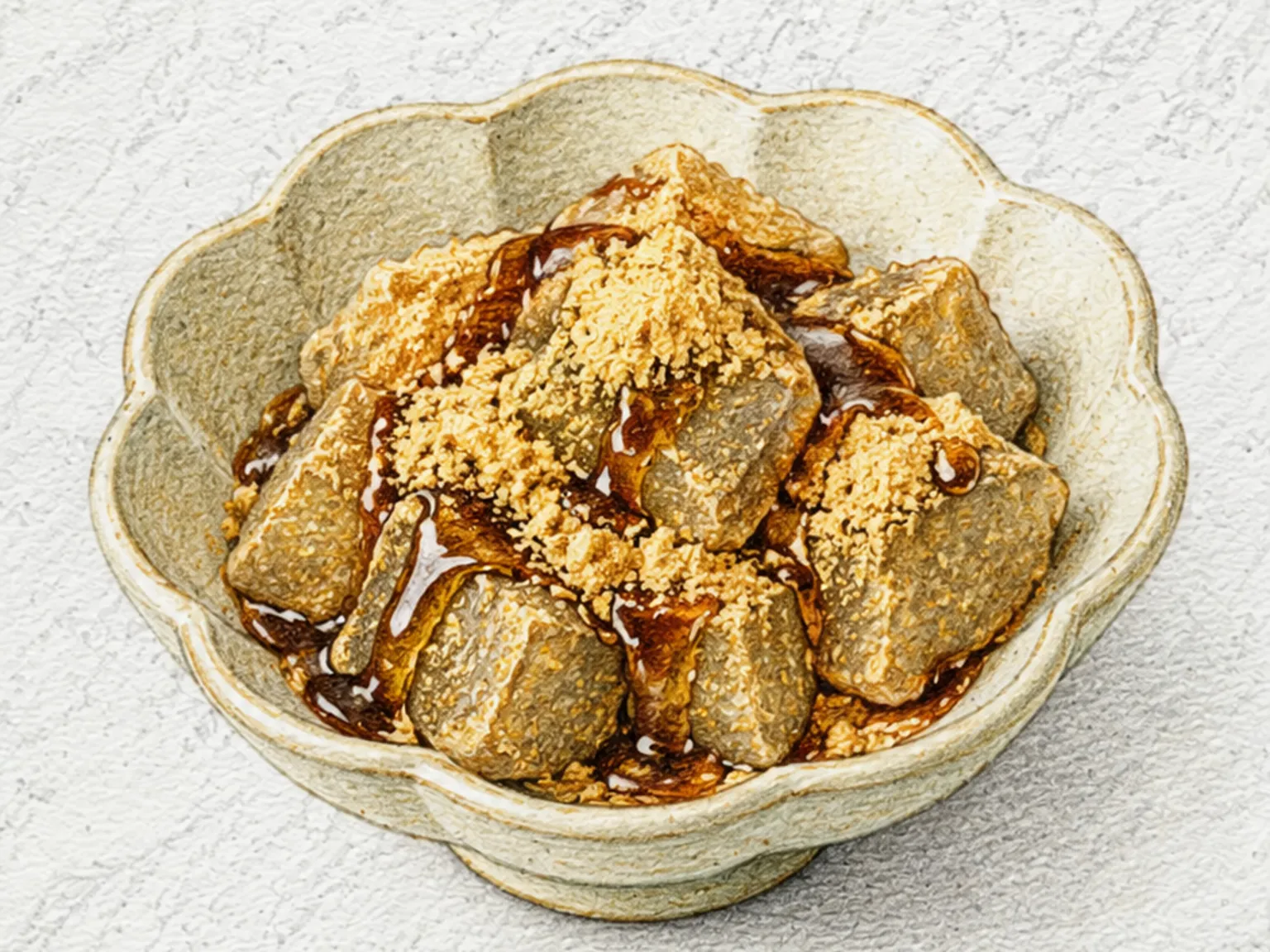
Warabi Mochi (Japanese Bracken Starch Jelly with Kinako)
Warabi starch is dissolved in water with sugar and cooked in a saucepan, stirred constantly, until the mixture turns translucent and pulls away from the sides in a glossy, elastic mass. Once poured into a mold and chilled, it sets into a wobbly, jelly-like confection that is soft and springy on the tongue. Cut into bite-sized pieces and rolled generously in kinako - roasted soybean powder - each piece gains a toasty, nutty coating that contrasts with the clean sweetness inside. A drizzle of dark brown sugar syrup over the top adds a deep, molasses-like sweetness that layers with the kinako. Continuous stirring during cooking is non-negotiable, as the starch scorches quickly on the bottom of the pan. The mixture must reach full translucency; stopping too early leaves a raw starch taste. Pressing plastic wrap directly onto the surface while cooling prevents a dry skin from forming. Warabi mochi is at its most supple and appealing within hours of being made.
Adjust Servings
Instructions
- 1
Whisk starch, water, sugar, and salt in a saucepan.
- 2
Cook over medium heat, stirring until translucent and thick.
- 3
Pour into a tray, cool, then chill for 30 minutes.
- 4
Cut into bite-size pieces and coat with kinako.
- 5
Drizzle with brown sugar syrup and serve.
As an Amazon Associate, we may earn from qualifying purchases.
Tips
Nutrition (per serving)
More Recipes

Anmitsu (Japanese Agar Jelly Red Bean Fruit Dessert)
Anmitsu is a Japanese dessert with roots in the Meiji era, evolving from mitsumame - a simpler dish of agar cubes and boiled peas - when sweet azuki bean paste was added to create a more substantial treat. The base is kanten jelly, made from agar-agar dissolved in water, set into a firm, translucent block, and cut into cubes that have a clean snap unlike gelatin's wobble. Around the jelly, the bowl is arranged with seasonal fruits - mandarin segments, peach slices, cherries - alongside a mound of tsubuan (coarsely mashed sweet red beans) and small balls of shiratama mochi that are chewy and glutinous. A separate pitcher of kuromitsu - dark brown sugar syrup from Okinawa - is poured over at the table, its deep molasses-like sweetness tying the disparate elements together. Each spoonful brings a different combination of textures: crisp jelly, soft fruit, sticky mochi, and grainy bean paste.

Mitarashi Dango (Grilled Rice Dumplings in Sweet Soy Glaze)
Glutinous rice flour is kneaded with water, shaped into small balls, boiled until they float, then skewered and grilled until the surface develops charred spots and a light crust. The contrast between the toasty exterior and the dense, springy interior is the defining texture of mitarashi dango. A thick glaze made from soy sauce, sugar, mirin, and starch is spooned over the hot skewers, coating each ball in a glossy, sweet-savory film. The sauce should be viscous enough to cling but fluid enough to drip slowly - too thin and the flavor washes off, too thick and it overwhelms the delicate chew of the rice. Eaten warm, the dango is at its most pliable and the glaze at its most aromatic, with the soy caramel scent rising visibly in the steam. Street vendors across Japan sell these at temple fairs and festivals, but they are simple enough to replicate at home in under thirty minutes.

Mochi Daifuku (Soft Rice Cake Stuffed with Red Bean Paste)
Glutinous rice flour is mixed with water and sugar, steamed or microwaved until it becomes a translucent, stretchy mass, then dusted with starch and wrapped around a ball of sweet red bean paste. The outer mochi shell is soft and pliable, yielding to the teeth with a slow, elastic pull before giving way to the dense sweetness of the filling inside. Because the dough begins to firm and lose its characteristic chew within hours, daifuku is best eaten the day it is made. Swapping the red bean for fresh strawberry or ice cream produces popular seasonal and modern variations. The starch coating - typically potato or cornstarch - serves a dual purpose: preventing the pieces from sticking to each other and adding a dry, powdery contrast to the otherwise tacky surface.

Japanese Melon Bread (Crispy Cookie-Crusted Sweet Bun)
A Japanese sweet bun that wraps a soft, yeasted bread dough in a layer of cookie dough, then bakes both together so the exterior crisps into a shell while the interior stays fluffy. The bread dough, made with bread flour, milk, and butter, is kneaded and proofed until pillowy; the cookie dough, a simple blend of cake flour, sugar, butter, and egg, is chilled until firm enough to drape over the risen bread rounds. The contrast between the shattering cookie crust and the cloud-soft bread beneath is what defines melon pan. Scoring a crosshatch pattern on the cookie layer with a bench scraper mimics the rind of a melon and gives the bun its name and iconic look. Rolling the tops in granulated sugar before proofing adds sparkle and an extra layer of crunch. Baking at 170 degrees Celsius for 13 to 15 minutes sets the cookie shell without over-browning it; the bread inside continues to steam and rise, pushing against the firming crust and creating the characteristic dome shape. Best eaten within hours of baking, while the crust still audibly cracks.

Korean Black Raspberry Jelly
Bokbunja jelly cups are a chilled Korean dessert made by setting bokbunja (black raspberry) juice with gelatin sheets and a touch of lemon juice for balanced acidity. The gelatin must be dissolved off the heat after sugar water has fully cooled from a boil; adding it to boiling liquid breaks down its setting power. Straining the mixture once removes air bubbles and sediment, producing a glass-smooth surface that shows off the deep purple color of the bokbunja. Topping each cup with fresh blueberries and a mint leaf reinforces the berry flavor while creating a vivid visual contrast against the dark jelly.

Abura Soba (Soupless Noodles in Rich Soy Sesame Oil Sauce)
Abura soba emerged in Tokyo's student districts during the 1950s as a cheaper, faster alternative to ramen - no slow-simmered broth needed. The name translates to 'oil noodle,' and the dish lives or dies on its sauce: soy sauce, sesame oil, oyster sauce, and a splash of vinegar pooled at the bottom of the bowl. Chewy ramen noodles land on top, and the eater mixes everything from below, coating each strand in the concentrated glaze. Toppings - chashu pork, a runny soft-boiled egg, nori, bonito flakes, and sliced scallion - add layers of salt, fat, and umami. The lack of broth means every flavor hits at full intensity, making this a late-night favorite across Japan's izakaya scene.